Economic Observer Follow
2026-05-29 18:24


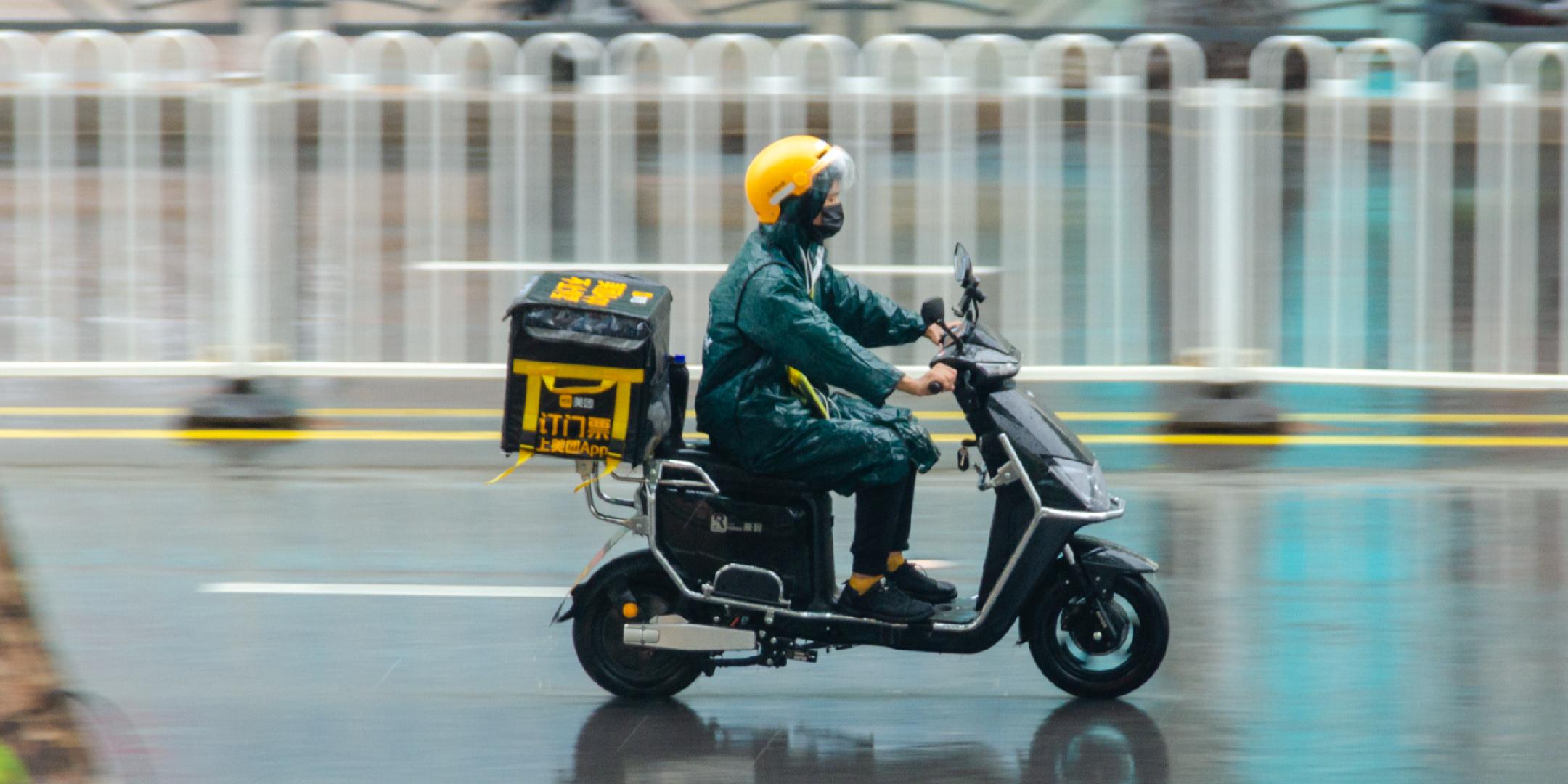
Yuanshan/Wen On May 26th, the Ministry of Human Resources and Social Security announced at the regular policy briefing of the State Council that it plans to expand the pilot program for occupational injury protection for new forms of employment to all provinces in China this year, and to include platform enterprises in the three industries of travel, instant delivery, and local freight transportation as a whole. By 2027, we will also explore the inclusion of other high-risk industry platform enterprises in pilot projects until relevant systems are fully established. This system has moved from partial pilot to comprehensive implementation, with consideration given to the protection of workers' rights and interests under the flexible employment model of the platform economy.
The pilot program began in July 2022 and was first implemented in 7 provinces and cities including Beijing and Shanghai, covering 7 platforms such as Meituan and Ele.me. As of the end of March 2026, the cumulative number of insured persons has reached 27.42 million.
The core breakthrough of the pilot program lies in the principle of "platform payment based on orders, individual workers do not pay". The specific standards are: 0.07 yuan per order for takeaway, 0.01 yuan per order for travel, and 0.18 yuan per order for intra city freight. In Guangdong, reimbursement of small medical expenses below 2000 yuan can be completed within 5 working days; In Chengdu, the average confirmation time for small claims has been compressed to 2.63 days. The 'new job injury' has provided a tangible safety belt for the flexible employment group system of the platform at a lower social cost.
There is always an unavoidable question surrounding this system: if a rider runs a red light and encounters an accident, can they receive compensation?
The answer is not necessarily. According to the pilot policy to be implemented in Henan Province in July 2026, except for the three situations where intentional crimes, drunk drug use, and self harm and suicide are absolutely not compensated, whether traffic accidents caused by illegal riding will be compensated will be divided according to the responsibility of traffic police: if it is determined that the rider bears the main or full responsibility, compensation will usually not be obtained; If the other party also bears significant responsibility, compensation will be made proportionally.
That is to say, illegal riding itself does not directly result in the loss of compensation eligibility, but if the rider is held responsible, the compensation channel will be closed. This design neither denies compensation in a one size fits all manner due to violations, nor objectively condones violations. If a rider has a lucky mentality of "being able to violate rules at will with security", they may ultimately face the triple consequences of "injury to the person, damage to the car, and having to pay out of their own pocket".
On a deeper level, this system is reshaping the risk cost allocation logic of the platform economy. In the past, occupational injury risks were mainly borne by individual riders, and commercial accident insurance often had low compensation limits and complicated claims. The "new occupational injury" has redistributed risks among platforms, society, and individuals: platforms provide workers with a certain cost by paying on a per order basis; The government guides safe behavior through institutional measures.
This new risk cost sharing model, in turn, is forcing the platform to optimize its delivery rules. For example, Guangzhou, Shijiazhuang and other places have explicitly required platforms to set delivery time limits according to the legal speed limit of 25 kilometers per hour; Meituan will launch an anti fatigue mechanism at the end of 2024, which stipulates that orders must be taken offline after 12 hours of running. The protection of "new occupational injuries" together with traffic management, platform algorithms, and occupational prevention form a governance loop.
Looking ahead to the future, fund security is the top priority. Behind the 27.42 million insured people, whether the fund can operate smoothly in the long run is the core test. In the inclusive model of "low payment, high guarantee", in addition to government support, it is also necessary to introduce multiple mechanisms such as rate fluctuations and commercial insurance matching to control risks.
Another challenge is accident prevention. The true value of insurance lies not in post event compensation, but in the reduction at the source. Whether the platform is willing to continue investing in safety training, route optimization, and time pressure relief will directly determine whether the accident rate can be substantially reduced.
Including other high-risk industries in the pilot program after 2027 means that the system needs to have sufficient inclusiveness and adaptability. The employment patterns and risk characteristics of different industries vary greatly, and whether a set of standards can be flexibly applied tests the wisdom of policy design.
In any case, the expansion of protection for "new job injuries" sends a clear signal: a country with a large new employment group is responding to basic rights demands under the new economic form with institutional innovation. This system is a guarantee for the safety of workers' lives and a necessary path for the platform economy to move towards standardized and healthy development.
(The author is a financial commentator)

In the live broadcast of the 2026 Haier Hope Primary School Children's Day Science and Technology Experience Day, Mei Feng, Chairman of the China Youth Foundation, praised Haier: cooperating with Haier for public welfare can be divided into three levels: public donation, resource linkage, and value co creation. Haier adheres to long termism and a sense of social responsibility, making public welfare projects more in-depth and effective.

CEO of Bangyao Biotechnology responds: has never been subject to regulatory interviews due to BD
Computing power leasing 'grabbing the beach' in 2026


 WeChat registration or login