2026-05-29 20:09



On May 28, 2026, Xiaopeng Group released its first quarter financial report for 2026. The delivery volume decreased by 33.3% year-on-year, with a net loss of 1.78 billion yuan and a month on month decline in revenue of 41.4%. In terms of quarterly financial data, this is not an impressive report card.
However, upon closer reading of this financial report, a tension emerged: sales contracted and losses expanded, but gross profit margin improved against the trend to 20.6%, and R&D investment surged by 46.8% year-on-year, reaching a historic high. This tension may be indicating to the market that the conclusions drawn from examining Xiaopeng using the traditional valuation framework of automotive companies are losing their reference value.
In fact, before the release of the first quarter financial report, Citigroup and Goldman Sachs had already released buy in reports after GX went public, with Hong Kong stock targets of HKD 100 and HKD 85 respectively. It is worth noting that Citigroup adopts a segmented aggregation method in its valuation model, giving its robot business a separate 8 times the expected 2026 market to sales ratio outside of its automotive business, which is comparable to the average valuation level of A-share robot concept targets Sanhua and Hengli. The repricing of institutions has been carried out before the release of financial reports.
From vehicle sales to technology licensing: structural migration of revenue structure
To understand this financial report, one needs to start with a data that is easily overlooked.
In the first quarter, Xiaopeng's service and other revenue was 2.03 billion yuan, a year-on-year increase of 41.2%, with a gross profit margin of 66.5%. The core source of this revenue is the authorization of technology research and development services provided to Volkswagen. Starting from 2024, Xiaopeng and Volkswagen will sign and continue to deepen their strategic cooperation in electronic and electrical architecture technology. The jointly developed electronic and electrical architecture will be widely applied across platforms and power sources in Volkswagen Group, covering pure electric, fuel and plug-in hybrid vehicle platforms.
The strategic significance of this revenue goes far beyond the numbers themselves. The revenue ceiling for vehicle sales is determined by one's own sales volume; The revenue ceiling for technology licensing is determined by the scale of the partner's vehicle models. When high gross profit recurring technical service revenue begins to grow on a large scale, the revenue structure of enterprises undergoes a fundamental change, which is the core characteristic that distinguishes technology platform companies from traditional manufacturing enterprises.
From the financial data, this transformation can be traced. The overall gross profit margin was 20.6%, an increase of 5 percentage points year-on-year; The gross profit margin of automobiles was 12.1%, an increase of 1.6 percentage points year-on-year. Despite a year-on-year decrease of 33.3% in delivery volume, the quality of profitability has improved against the trend. Shrinking scale and improving quality are the results of actively managing the pace of operations, rather than being passively pressured. Sales and management expenses amounted to 1.88 billion yuan, a year-on-year decrease of 3.2% and a month on month decrease of 32.5%; We have 42.09 billion yuan in cash on hand, and our financial structure remains stable.
Multi line Implementation of Physical AI: Why Institutions are Starting to Split Valuation
Goldman Sachs lists non automotive businesses such as Robotaxi and humanoid robots as core growth drivers in the medium to long term; Citigroup has taken the valuation model a step further by using the segment aggregation method to separately give the robot business 8 times the expected 2026 market to sales ratio, which is comparable to the average valuation level of A-share robot concept targets Sanhua and Hengli. The judgments of two top institutions jointly reveal the same underlying logic: Xiaopeng is no longer just an automotive company, but a technology group that is simultaneously laying out in multiple physical AI tracks.
In terms of intelligent driving, the second generation VLA will be launched in March 2026, with the proportion of assisted driving mileage exceeding 50% in the first month. Advanced intelligent driving is transforming from an "optional configuration" to a core decision-making factor for users when purchasing a car. The second generation VLA has irregular code, does not rely on high-precision maps, has strong generalization ability, can be quickly deployed to overseas markets, and has global replicability in terms of technical barriers. A new version will be launched in the third quarter to further increase the upper limit of model capabilities.
In terms of Robotaxi, on May 18th, the first domestically developed L4 level Robotaxi by a complete vehicle manufacturer was mass-produced and produced in Guangzhou. It is based on the GX model, equipped with four self-developed Turing AI chips, with a local effective computing power of 3000 TOPS, a system response delay of less than 80 milliseconds, and does not rely on high-precision maps, with cross city generalization ability. The Robotaxi fleet equipped with full redundancy has conducted public road L4 testing in Guangzhou, with the goal of starting passenger demonstration operations in the third quarter. The L4 fully redundant hardware and VLA model carried by GX are decoupled from the vehicle model and can be deployed to any vehicle model, including the MONA series - this means that Robotaxi technology can be scaled up and reused throughout the entire product matrix, forming a business model where hardware sales and Robotaxi operating revenue are parallel. He Xiaopeng stated that in the future, we will create a win-win Robotaxi ecosystem and work together with operational partners to create and share commercial value.
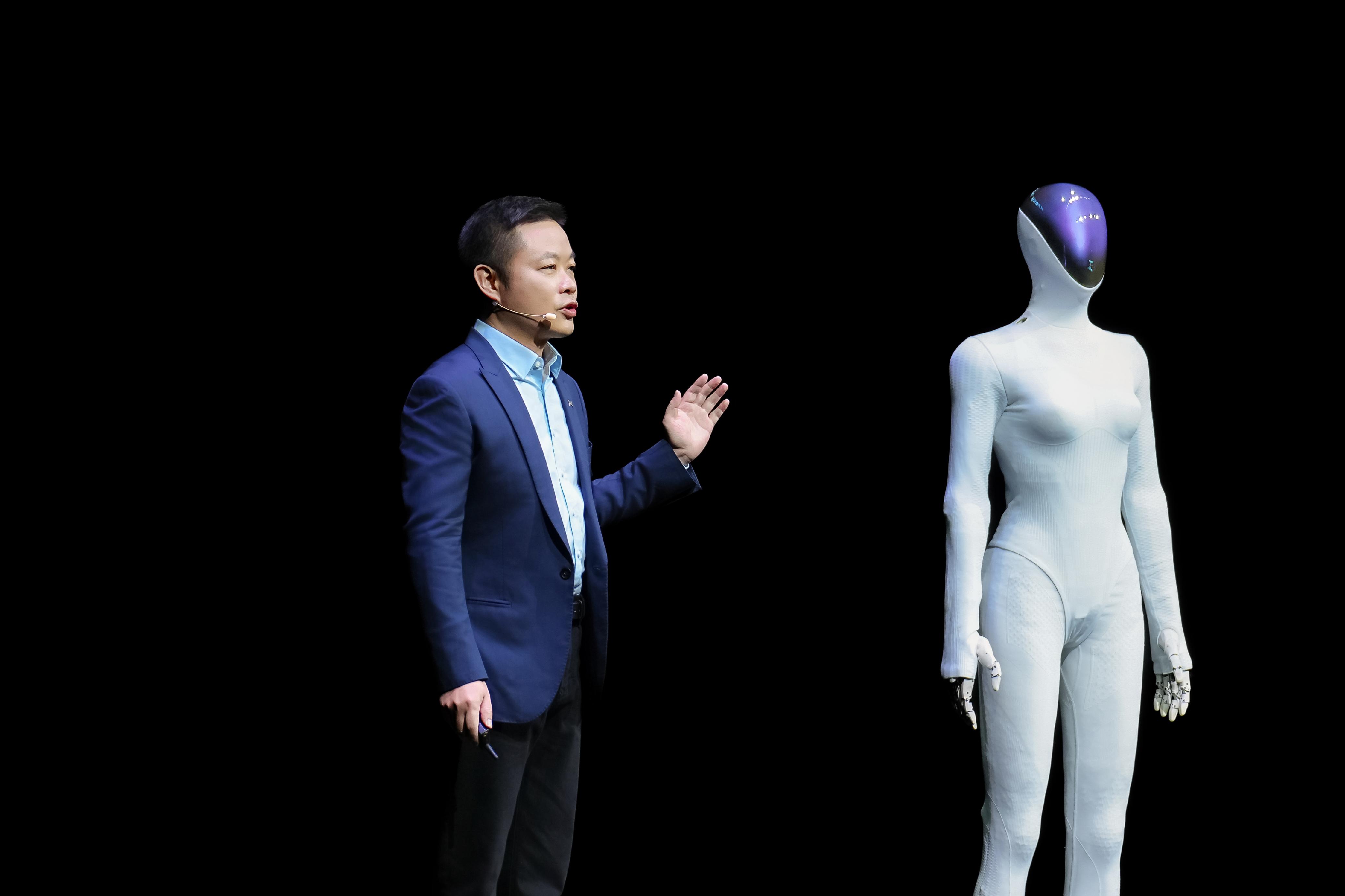
In terms of humanoid robots, the software and hardware development of the production version of IRON is progressing smoothly, with plans to officially debut in the third quarter and achieve mass production by the end of the year. Delivery to commercial customers will begin next year. The Guangzhou Tianhe mass production base started construction in February this year, covering an area of approximately 110000 square meters. He Xiaopeng said, "Once robots are mass-produced, the iteration speed and scale growth of data flywheel driven technology will exceed that of new energy vehicles in the same period. Starting from next year, hardware revenue from humanoid robots and AI model revenue will become important driving forces for the group's revenue and gross profit growth. ”
Three business lines share the same technological foundation - the second-generation VLA physical world foundation model. The cross business reuse of technology has enabled Xiaopeng to expand on multiple physical AI tracks, not by diversifying investments, but by leveraging multiple independent business models with the same foundation. This is precisely the practical basis for institutions to start separately valuing non automotive businesses.
Globalization: The Second Path to Opening the Income Ceiling
If technology licensing is the first path to unlocking the revenue ceiling, then globalization is the second path.
As of the end of the first quarter, Xiaopeng has entered over 60 countries and regions worldwide, with 393 overseas sales outlets and three localized production bases in Indonesia, Austria, and Malaysia. The Munich R&D center continues to expand. In April, overseas monthly sales exceeded 6000 units for the first time, and P7+started overseas delivery; Starting from the second quarter, the contribution of international business revenue is expected to exceed 20%, with the goal of maintaining overseas monthly sales of over 10000 in the fourth quarter and doubling overseas sales for the whole year.
Starting from GX, all new models have been developed according to global standards, significantly reducing the time difference between domestic and international launches. The technology architecture of the second generation VLA naturally supports global deployment, and the advantages of intelligent driving can be replicated in overseas markets without geographical limitations. Robotaxi's overseas commercialization path is also opened up accordingly. Technology authorization and globalization together constitute two paths for Xiaopeng to break through the ceiling of vehicle sales revenue.
The value of long-term layout is being concentrated and realized
Over the past decade, Xiaopeng has continuously invested in AI cars, flying cars, and robots, and gradually established a full stack self-developed physical AI system covering AI chips, large models, operating systems, and intelligent hardware. Each technological investment reflects long-term strategic determination.
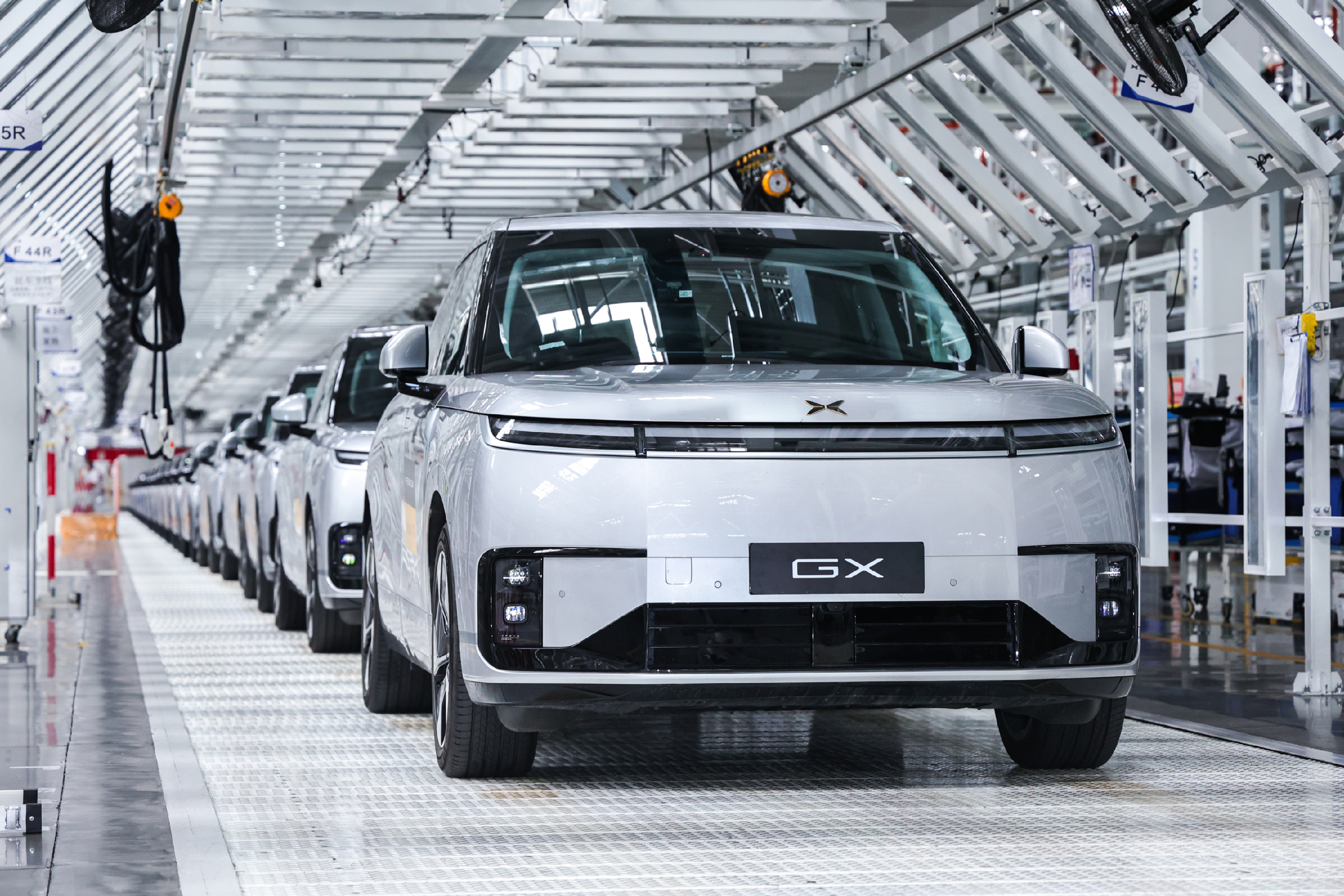
The value of this long-term layout is being concentrated and realized: within 12 hours of GX's launch, nearly 25000 units were ordered, and over 80% of Ultra flagship versions priced at over 350000 yuan were sold, verifying the brand's upward market recognition; Public cooperation continues to contribute high gross profit technology service revenue, and the technology licensing business model continues to be validated; Robotaxi mass production has been launched, and the end of year mass production of robots is approaching. Multiple business lines of physical AI are entering the realization stage simultaneously.
He Xiaopeng stated at the performance meeting that the intelligent electric vehicle business will continue to contribute considerable profits and strong cash flow, supporting research and development investment in physical AI. The application of physical AI is a global strategic opportunity in the next 10 years, and the company will firmly increase its bets. ”
As Robotaxi's platform operation revenue, hardware and AI model revenue for humanoid robots, and cross brand technology licensing revenue enter the stage of scale realization, Xiaopeng Group's revenue structure and valuation framework may face a systematic redefinition.
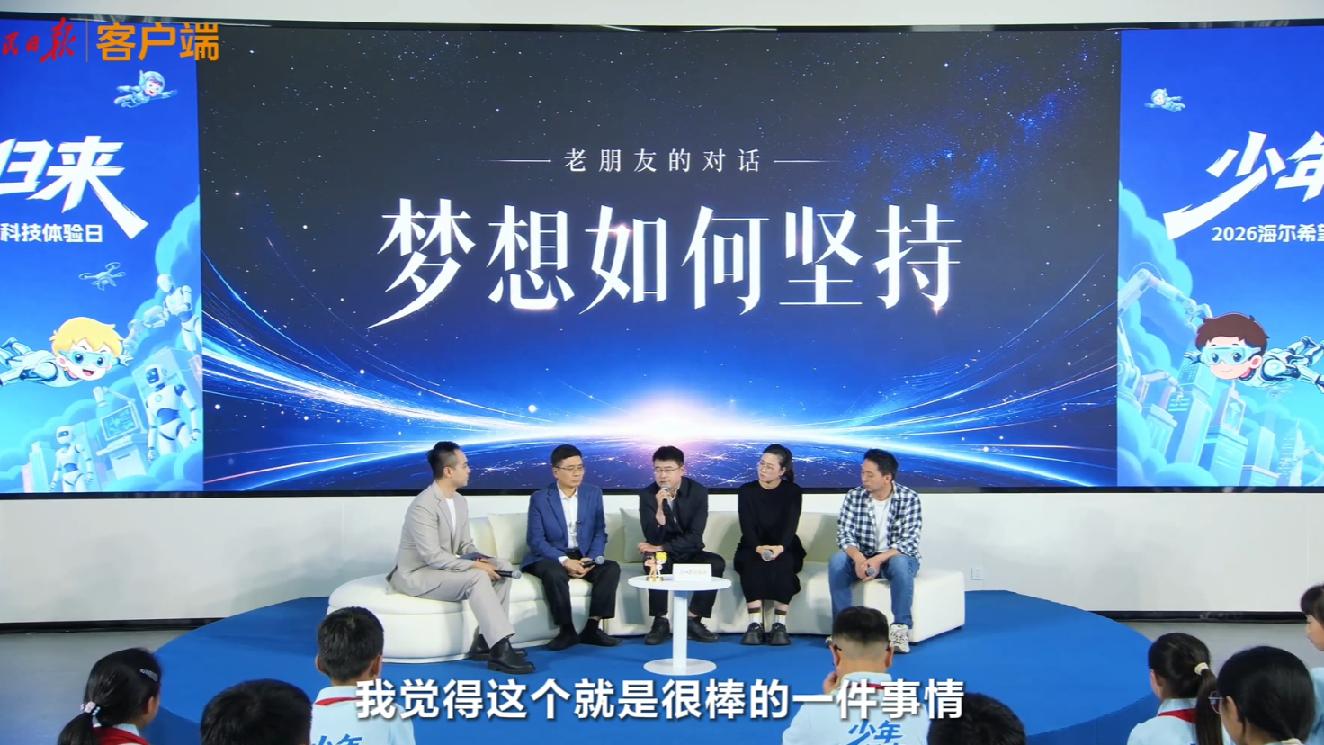
In the live broadcast of the 2026 Haier Hope Primary School Children's Day Science and Technology Experience Day, Mei Feng, Chairman of the China Youth Foundation, praised Haier: cooperating with Haier for public welfare can be divided into three levels: public donation, resource linkage, and value co creation. Haier adheres to long termism and a sense of social responsibility, making public welfare projects more in-depth and effective.

CEO of Bangyao Biotechnology responds: has never been subject to regulatory interviews due to BD
Computing power leasing 'grabbing the beach' in 2026


 WeChat registration or login