2026-05-29 17:08


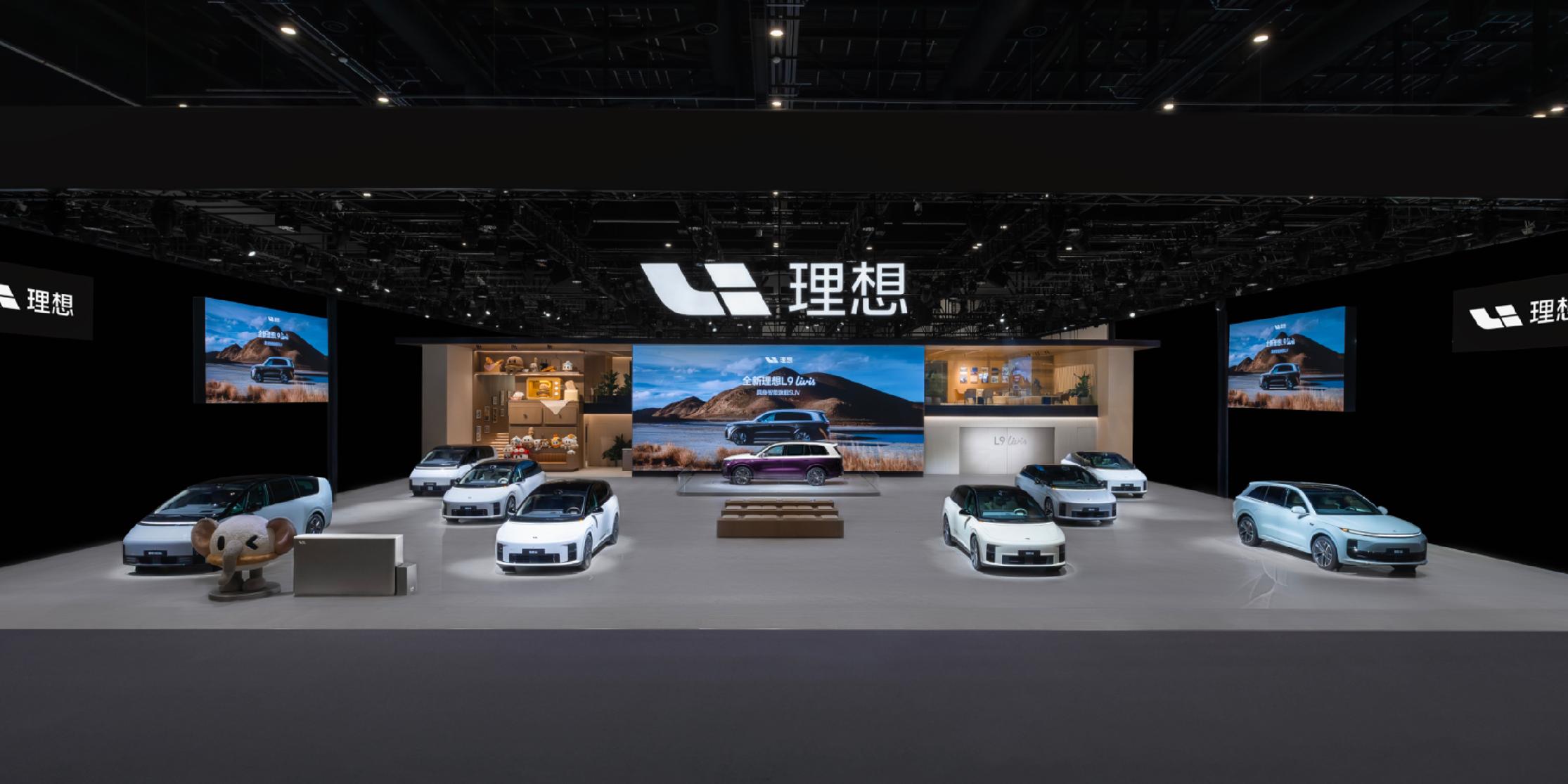
For the just past quarter, Ideal Automobile underwent an "active strategic adjustment period".
In the cold winter of the new energy vehicle market, where retail sales have sharply declined by 21.1% year-on-year, most car companies are busy raising prices to pass on costs, or reducing prices to clear inventory before the replacement.
But Ideal Auto made a series of "counter common sense" decisions: voluntarily stopping the popular L series, paying out of pocket to make up for the purchase tax difference for i6 users who placed orders last year but did not pick up their cars, and not raising prices for all products in the series.
Ideal Automobile would rather endure months of delivery vacuum and revenue losses than rely on large price reductions to sell off old models. This seemingly counterintuitive choice left traces of short-term financial pressure in the first quarter financial report, but it also earned another set of data for Ideal Automobile: in the new energy vehicle market of over 200000 yuan, Ideal has returned to the top of Chinese brand sales.
Behind this, there is a strategy of "delayed gratification", which means not being bound by short-term business benefits, anchoring to long termism, and making three proactive choices.
Two layers of contrast
To understand Ideal Auto's first quarter financial report, we need to first look at the core business indicator - delivery volume.
According to the Automotive Market Research Branch of the China Automobile Dealers Association, the cumulative retail sales of passenger cars in the first quarter of 2026 reached 4.226 million units, a year-on-year decrease of 17.4%, making it the worst opening performance in nearly a decade (except for the special period of the 2020 epidemic).
In this industry context, Ideal Auto delivered 95100 vehicles in the first quarter, a year-on-year increase of 2.5%. This number not only outperformed the market, but also exceeded the company's previous performance guidance of 85000 to 90000 vehicles.
But what is more noteworthy than the growth rate is the composition and acquisition method of the 95100 vehicles delivered. In the first quarter, Ideal voluntarily discontinued the upcoming L series. This means that in the traditional sales window that should have been the main force for extended range vehicles, Ideal has proactively cut off the supply of this core product line.
In other words, the delivery of these 95000 vehicles was not achieved through common means such as price reduction and inventory clearance of old models, or the coexistence of new and old models. Instead, pure electric products played a core supporting role in the absence of the main force in range extension.
In the Chinese automotive industry, few companies take the initiative to create pressure on themselves. But the ideal approach in the first quarter of 2026 is no different from an actively created stress test.
In terms of business logic, this is a seemingly 'arm breaking' operation. But at the strategic level, it creates an excellent experimental environment for controlling variables. Simply put, can pure electric products independently support the brand's sales and market position when the extended range base is temporarily absent?
The delivery data for the first quarter provided the answer, as pure electric models (mainly i6 and i8) successfully filled the market gap and stabilized the ideal base.
A further achievement is that, with the strong performance of the pure electric matrix, Ideal has returned to the top sales range of Chinese brands in the new energy vehicle market with a sales volume of over 200000 yuan during the industry off-season.
This is a landmark node. In the past, the market's perception of the ideal was highly focused on the "extended range" label, and there were always doubts about its pure electric capability.
In the first quarter of this round of stress testing, Ideal demonstrated through its actual market ranking that even with almost no contribution from its extended range models, relying solely on pure electric products, it can still gain a high market share in the fiercely competitive market of over 200000 yuan.
In the pure electric product matrix, i6 plays the most core sales role. Firstly, as the production capacity bottleneck is completely resolved after the Spring Festival, the delivery volume of Ideal i6 exceeded 24000 units in March, firmly ranking among the top three new energy market vehicle sales of over 200000 yuan. Secondly, in April 2026, the 100000th mass-produced vehicle of the Ideal i6 will be officially launched, taking less than 7 months from launch to production. This sets the industry record for the fastest production of 100000 pure electric SUVs priced between 200000 and 300000 yuan.
These two data points together to a conclusion that the ideal i6 is not a product driven by low prices, but has gained large-scale user recognition through its product strength in the core price range of 200000 to 300000 yuan. Completing 100000 units offline in less than 7 months means an average monthly delivery of over 14000 units, which is extremely rare in the pure electric SUV market.
The Ideal i6 is the "flag bearer" of sales, while the Ideal i8 validates the purity of the pure electric strategy in terms of user reputation. The Ideal i8 achieved a high NPS (Net Promoter Score) among mid to large SUV users with a score of 88.1.
NPS (Net Promoter Score) is a core indicator for measuring user loyalty and willingness to spread word-of-mouth, and is generally considered to better reflect a brand's long-term health than sales data.
88.1 points is a very high level in the automotive industry. This data means that i8 users are not only satisfied with the product, but also willing to actively recommend it to others. In the high-value mid to large SUV market, this word-of-mouth effect will continue to translate into sales leads and repeat purchase opportunities.
The success of pure electric products cannot be discussed in isolation from charging infrastructure. As of now, there are over 4077 ideal supercharging stations, and the largest self built supercharging network of car companies in the country has been established. Ideal MEGA, Ideal i6, Ideal i8, the all-new Ideal L9, and even future products can all have a 5C supercharging experience.
The official regards supercharging network as the "core driving force for sales growth". The logic of this judgment is that for pure electric users, charging convenience is a key variable in car purchasing decisions. The ideal self built supercharging network is essentially paving the way for pure electric products, where users not only buy a car, but also have an expected charging experience.
More importantly, this infrastructure layout is still being iterated. Ideal expects to double the number of 5C supercharging guns and exceed 8300 by the end of 2026. This means that as the density of supercharging networks continues to increase, the sales radius and user acceptance of pure electric products will continue to expand.
From a financial perspective, the construction of a supercharging network belongs to a typical infrastructure investment of "investment first, return later". In the past few years, it was a cost center, but as the user base expands and utilization rates increase, it is transforming into a competitive barrier and sales driver. This is also one of the reasons why Ideal dares to continue to invest in the pure electric field.
Three times' active '
If delivery volume is the "face", then profit is the "inside". In the first quarter of 2026, the profit side of Ideal Automobile did indeed come under pressure. But by dissecting the structure of the income statement, it can be found that this pressure does not come from the deterioration of business capabilities, but from the strategic costs of three proactive payments.
The first cost is to voluntarily cease production and give up short-term revenue and gross profit.
In the Chinese automotive industry, it is almost a common practice to have "new and old models at the same time" before product upgrades - old models are sold at a lower price and coexist with new models in the market. This strategy can maximize short-term sales, digest inventory, and avoid market share and profit losses for enterprises.
But Ideal chose another path: actively gradually stopping production and sales of the Ideal L series, not lowering prices to clear inventory, and not choosing to have both new and old products in the same store.
What does this mean? It means that Ideal has voluntarily given up the revenue, profit, and gross profit margin contributions of its core products. During the replacement window period, even if the exhibition car is sold short, the old model will not be produced. This is a direct, quantifiable, and entirely chosen short-term financial sacrifice by the company. The payment of this cost is in exchange for old car owners not being "backstabbed", and users' trust in the brand is maintained and strengthened.
The second cost is self funded to make up for the purchase tax difference for the user.
In 2025, the Ideal i6 model exceeded expectations and exploded in sales. Starting from 2026, the purchase tax policy for new energy vehicles will be adjusted from "full exemption" to "halved collection". This means that users who place orders in 2025 but fail to complete the delivery before the policy window will face additional purchase costs exceeding 10000 yuan.
In the common practice in the industry, the risk of such policies crossing the year is usually borne by users. But the ideal choice is to take the initiative to provide a purchase tax subsidy for Ideal i6 users who have not yet picked up their cars by 2025, and to bear the increased user costs caused by the policy rollback with the company's profits. This is a direct transfer of corporate profits, with a scale exceeding 500 million yuan.
It is worth noting that this decision was not a passive response, but was made against the backdrop of the industry's collective price increase and cost shifting. In the first quarter of 2026, the sales volume of new energy vehicles in the market decreased by 21.1% year-on-year, and the costs of batteries and chips rose. More than ten mainstream brands increased their prices to pass on the costs. Ideal chose another path and did not pass on the pressure to users.
The third cost is to increase research and development against the trend, rather than shrink to maintain short-term profits.
When industry profits are generally under pressure, a common financial operation is to cut research and development expenses to beautify current profits. But the ideal approach is exactly the opposite.
As the most steadfast and largest enterprise in R&D investment among new energy vehicle companies, Ideal Automobile has continuously increased its R&D investment for six consecutive years. The R&D expenses in the first quarter were 2.7 billion yuan, a year-on-year increase of 8.3%, maintaining a high-intensity R&D investment of around 3 billion yuan for five consecutive quarters. The R&D investment will reach 11.1 billion yuan in 2024, 11.3 billion yuan in 2025, and 12 billion yuan in 2026. The R&D expenditure will remain around 12 billion yuan for three consecutive years, with AI related investment accounting for over 50%. At the same time, year-on-year sales and management expenses
Decreased by 19%.
This fluctuation clearly reflects the ideal cost control discipline and resource allocation priority: during the cold winter period, restrain marketing related expenditures, but never reduce future oriented research and development investment.
The scale of R&D investment is one thing, while the direction and conversion efficiency of investment are another.
From a total perspective, Li Xiang, CEO of Ideal Auto, revealed in March 2026 that Ideal Auto's annual R&D budget is about 12 billion yuan, of which AI related investment accounts for over 50%. This means that the ideal is not pepper noodle style research and development, but to concentrate more than half of resources on the core direction of artificial intelligence.
From the perspective of achievements, the high R&D investment in the past few years has been concentrated in the all-new Ideal L9- self-developed Mach M100 chip, Mach VLA large model, "complete body" wire controlled chassis, 800V active suspension, star ring OS, etc.
These technologies are not concepts, but product capabilities that have already been installed in mass-produced vehicles and delivered to users.
A 'trump card'
The income statement displays what a company is willing to do, while the balance sheet and cash flow statement reveal what it can do. Ideal Automobile dared to take the initiative to bear pressure in the first quarter, and the most direct confidence came from its cash reserves in its accounts.
As of the end of the first quarter, Ideal Auto's cash reserves reached 94.3 billion yuan, ranking among the top players in the automotive industry. What does this number mean? Against the backdrop of overall profit pressure and continued price competition in the industry, Ideal Automobile still maintains a relatively sufficient safety cushion.
But the absolute value of cash reserves is not the only measure. The more critical indicator is net cash, which is the balance of cash reserves minus interest bearing liabilities. This number represents how much freely deployable funds a company can still have after repaying its financial debts. At the end of the first quarter, Ideal Auto's net cash reached 83.3 billion yuan, still maintaining a relatively stable positive level.
This means that the ideal car not only does not have obvious debt pressure, but also has stronger financial autonomy. It does not require frequent financing to repay debts, nor does it need to passively adjust operating actions for short-term cash flow pressures. This financial autonomy is the fundamental prerequisite for making long-term decisions such as "voluntary shutdown" and "voluntary payment".
In addition to cash reserves, the ideal debt structure is also worth further analysis. At the end of the first quarter, Ideal Auto's asset liability ratio was optimized to 51.2%, approaching the relatively healthy range of the industry. But what is more indicative of the problem than the asset liability ratio is the composition of liabilities. In the debt structure of an ideal car, interest bearing liabilities only account for 15% of total liabilities, resulting in extremely low financial costs.
This means that the ideal liabilities are almost entirely operational liabilities such as accounts payable to suppliers, rather than financial liabilities such as bank loans or bonds. The former is a liability that arises in the normal course of business and does not require payment of interest; The latter requires timely repayment of principal and interest, which will continue to consume cash flow.
A car company with an annual delivery volume of nearly 100000 vehicles (per quarter) almost does not rely on any interest bearing loans, which is extremely rare in the heavy asset automotive manufacturing industry. Most peers will use financial leverage to expand their scale and accelerate expansion, but the ideal choice is exactly the opposite: actively deleveraging and maintaining extremely low financial risk.
This financial structure has two direct consequences: firstly, the financial expenses are extremely low, and there are almost no interest expenses in the income statement; Secondly, in the downward cycle of the industry, companies have a great margin of safety and strategic flexibility, and do not need to be forced to lower prices, clear inventory, dilute equity, or sell assets at a low price due to concerns about debt maturity.
In addition to long-term leverage levels, short-term solvency is also an important dimension for measuring financial health. The current ratio reflects a company's ability to repay short-term debts with current assets. It is generally believed that 1.5 times or more is healthier, while less than 1 times means greater short-term debt pressure.
The ideal current ratio is 1.88 times, while BYD is 0.82 times, NIO is 1.01 times, Sylphy is 1.07 times, and Xiaopeng is 1.09 times. The ideal current ratio is in a relatively healthy range, which means that even in extreme situations, the company has sufficient current assets (such as cash, accounts receivable, inventory, etc.) to cover short-term liabilities.
This indicator is highly consistent with the ideal ample cash reserves and low interest bearing debt structure, pointing to the same conclusion: the ideal financial chassis is extremely robust and there is no short-term liquidity risk.
An easily overlooked but crucial question is: Where does the cash in the ideal account go? In addition to directly seeing heavy R&D positions, it also includes share repurchases.
In March 2026, Ideal Auto launched a share buyback program worth up to $1 billion. As of now, $139.7 million has been repurchased, and approximately 14% of the amount has been completed within two months. Against the backdrop of profit pressure in the first quarter, launching a large-scale repurchase is a signal that the management is sending to the market with real money: the company's stock price is undervalued, and the management has full confidence in long-term development. At the first quarter performance meeting, Li Xiang, Chairman and CEO of Ideal Auto, stated, "With the steady implementation of core technologies and a new product matrix, we maintain our annual sales growth target of 20%." This once again demonstrates the management's confidence in the overall upward trend of the company.
These two cash flows, research and development towards the future, and buyback to shareholders, are not short-term operating expenses. They clearly indicate that ideal cash is not passively hoarded, but actively allocated towards creating long-term value.
Against the backdrop of overall profit pressure and tight cash flow in the industry, most car companies have been forced to adopt defensive strategies such as raising prices to pass on costs or shrinking research and development to ensure profits. They have to focus on "survival", and Ideal Auto's financial backing is precisely the confidence behind a series of anti common sense "proactive choices".
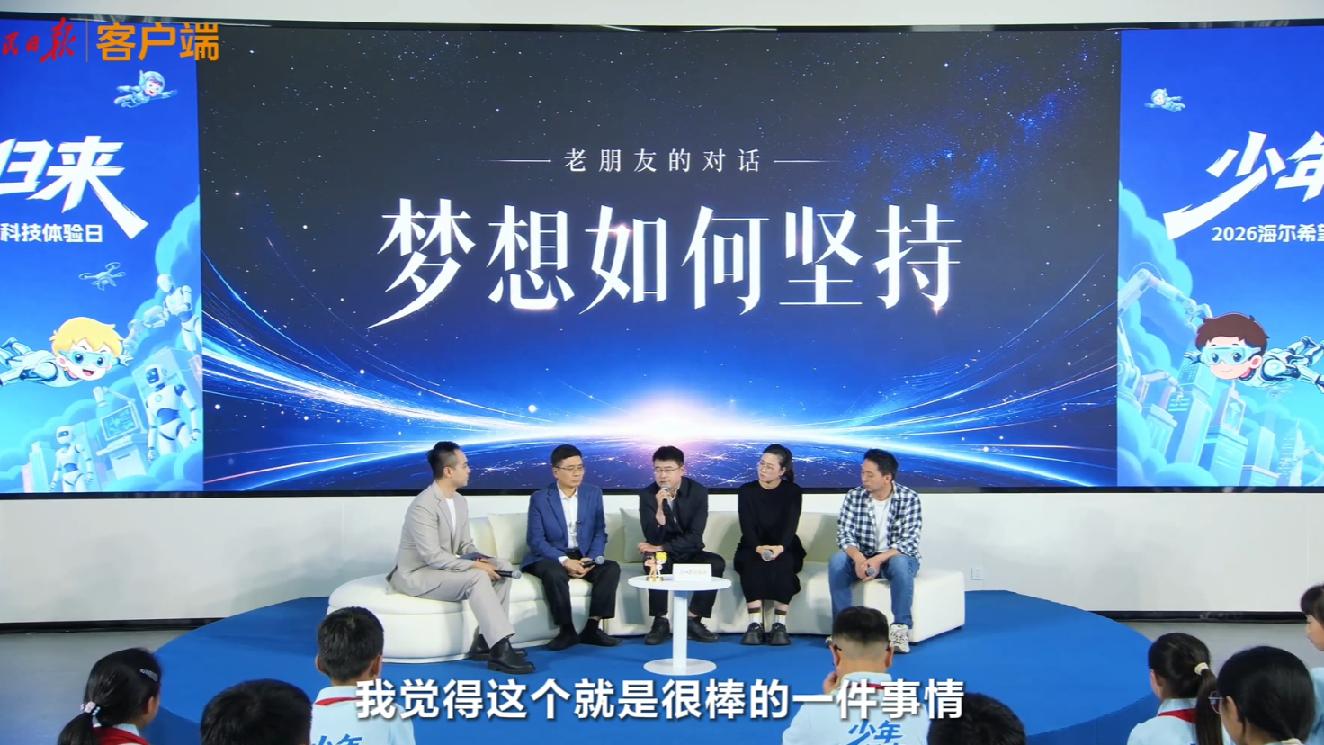
In the live broadcast of the 2026 Haier Hope Primary School Children's Day Science and Technology Experience Day, Mei Feng, Chairman of the China Youth Foundation, praised Haier: cooperating with Haier for public welfare can be divided into three levels: public donation, resource linkage, and value co creation. Haier adheres to long termism and a sense of social responsibility, making public welfare projects more in-depth and effective.

CEO of Bangyao Biotechnology responds: has never been subject to regulatory interviews due to BD
Computing power leasing 'grabbing the beach' in 2026


 WeChat registration or login