2026-05-28 19:01


Recently, there has been a major breakthrough in the field of commercial satellites in China. The Taijing-3 05A and 05B twin satellites, independently developed by Beijing Weina Starry Sky Technology Co., Ltd., were successfully launched into orbit aboard the Zhongke Aerospace Power Arrow 1 Y13 carrier rocket. In this mission, Double Star achieved the ultimate result of less than 2 hours from rocket launch to high-definition image transmission. This efficient practical performance not only demonstrates the hard core technology strength of domestic commercial satellites, but also serves as an authoritative verification of the micro nano starry sky system's ability for coordinated operation between heaven and earth.
The field of remote sensing satellites has always had the industry norm of "orbit insertion and subsequent operations". After traditional satellites are launched into orbit, they often need to go through a long cycle of system debugging, equipment integration, attitude calibration, and parameter optimization, which takes several days or even months to officially carry out imaging observation tasks. The rapid imaging of the Taijing-3 05A and 05B dual satellites this time is not a coincidence of technology, but an inevitable result of the long-term cultivation of integrated technology and the refinement of a systematic operation system for micro nano stars, completely breaking the shackles of traditional remote sensing satellites' in orbit operations.
It is reported that Double Star has completed high-definition imaging tasks in multiple regions during its rapid operation in orbit, covering core scenes in multiple parts of the world, and the imaging results have been efficiently implemented. On May 17, 2026, it successfully obtained high-definition images of the West Bay Coastal Business District in Doha, Qatar and Cape Town Airport in South Africa; On May 20, 2026, precise imaging observations of the Kalgoorlie Boulder super open-pit gold mine in Australia were completed, fully verifying the dual star's global, fast, and high-precision remote sensing capabilities.

Target point: Australia Kalgoorlie Boulder super open-pit gold mine Imaging time: May 20, 2026


Target point: West Bay Coastal Business District, Doha, Qatar
Imaging time: May 17, 2026
Process pre installation - satellite "start working as soon as it enters orbit"
The core confidence of high-speed imaging comes from the front-end and intelligent layout of the entire task process. Based on years of accumulated experience in satellite in orbit missions and launch operations, Micro Nano Starry Sky has optimized and iterated the mission mode for the Taijing-3 dual star system, and built a lightweight pre intelligent in orbit operation system. During the rocket launch phase, the technical team has completed the full process mission planning for the first orbit of the binary satellite. Through high-precision orbital dynamics deduction and intelligent imaging attitude pre planning, the optimal operational plan has been identified.
After the separation of the star and arrow, the binary star can quickly and autonomously establish its in orbit state and control its attitude stability, without the need for manual intervention, and can enter the standby operation state. At the same time, the integrated intelligent scheduling system of micro nano starry sky, sky and earth synchronizes and links, relying on the real-time uplink operation instructions of the initial orbit measurement and control window, to drive the satellite to complete the full process operations such as payload startup, autonomous imaging, and data collection, truly achieving a new breakthrough of startup upon entering orbit and imaging upon first orbit.
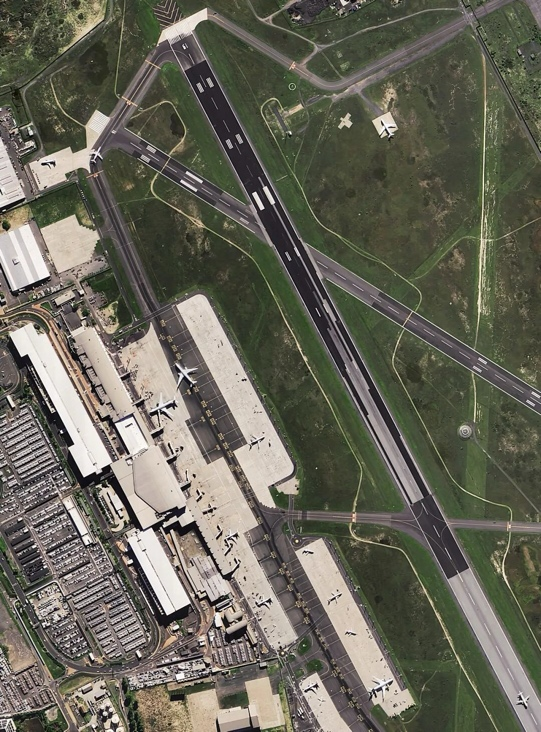
Target point: Cape Town Airport, South Africa
Imaging time: May 17, 2026
Sensing, computing, transmitting, and utilizing - another guarantee of ultimate efficiency
Behind the 2-hour rapid mapping record this time is the comprehensive application of the "sensing, computing, transmitting, and using" integrated real-time intelligent remote sensing technology independently developed by Micro Nano Starry Sky. Relying on this technology, Shuangxing has established a closed-loop system for intelligent imaging, real-time intelligent computing processing, high-speed data transmission, and rapid landing applications in orbit, achieving zero blind spots and zero errors in data transmission between the satellite and the ground. The seamless integration of this technology and capability has led to an exponential increase in data acquisition efficiency.
For a long time, after the launch of conventional remote sensing satellites into orbit, the sequence of "first in orbit system debugging, equipment running in, attitude calibration, parameter optimization; then starting imaging observation tasks" has been followed. The Taijing-3 05A and 05B dual satellites rely on advanced technology solidification, standardized ground joint testing, intelligent in orbit autonomous operation and maintenance core technology, and systematic scheduling operation system, successfully skipping the lengthy in orbit debugging cycle of traditional satellites. The first round of in orbit flight completes the full process autonomous closed-loop operation, and elevates the in orbit response efficiency and practical high-speed delivery capability of remote sensing satellites to a new height.
The successful high-speed imaging of the dual star system not only confirms the high reliability and precision performance of the Taijing-3 series satellites, but also fully validates the mature engineering application value of the micro nano starry sky sky sky integrated intelligent scheduling system. At present, the enterprise has achieved standardized and systematic implementation of the entire process of ground joint testing, pre positioning of satellite ground technology status, and intelligent scheduling of space earth cooperation. Combined with an independently iterated satellite intelligent algorithm cluster, it has formed a replicable and scalable commercial satellite operation model.
Industry analysts say that breakthroughs in satellite technology for rapid orbit insertion and real-time operations will effectively compensate for the shortcomings of traditional remote sensing services that lag in response. In the future, with the comprehensive application of the micro nano starry sky standardized operation system, its satellite remote sensing services will be deeply adapted to diverse scenarios such as urban fine governance, land and resources monitoring, major engineering observation, and ecological environment inspection, injecting strong impetus into the industrialization, scale, and efficient development of commercial remote sensing in China.

In the live broadcast of the 2026 Haier Hope Primary School Children's Day Science and Technology Experience Day, Mei Feng, Chairman of the China Youth Foundation, praised Haier: cooperating with Haier for public welfare can be divided into three levels: public donation, resource linkage, and value co creation. Haier adheres to long termism and a sense of social responsibility, making public welfare projects more in-depth and effective.

CEO of Bangyao Biotechnology responds: has never been subject to regulatory interviews due to BD
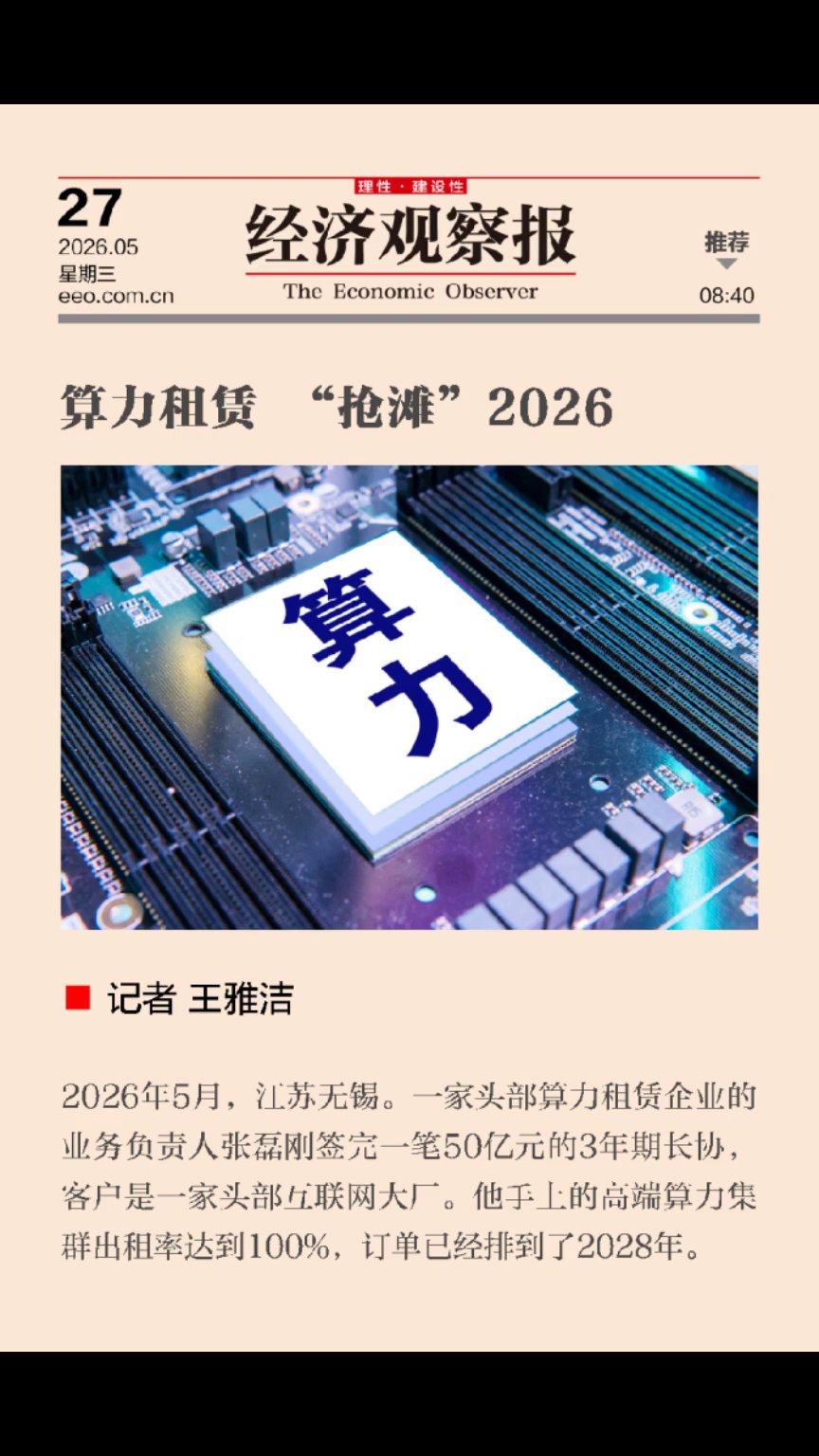
Computing power leasing 'grabbing the beach' in 2026


 WeChat registration or login