Economic Observer Follow
2026-05-22 20:49


Liu Sixuan, intern journalist at the Economic Observer
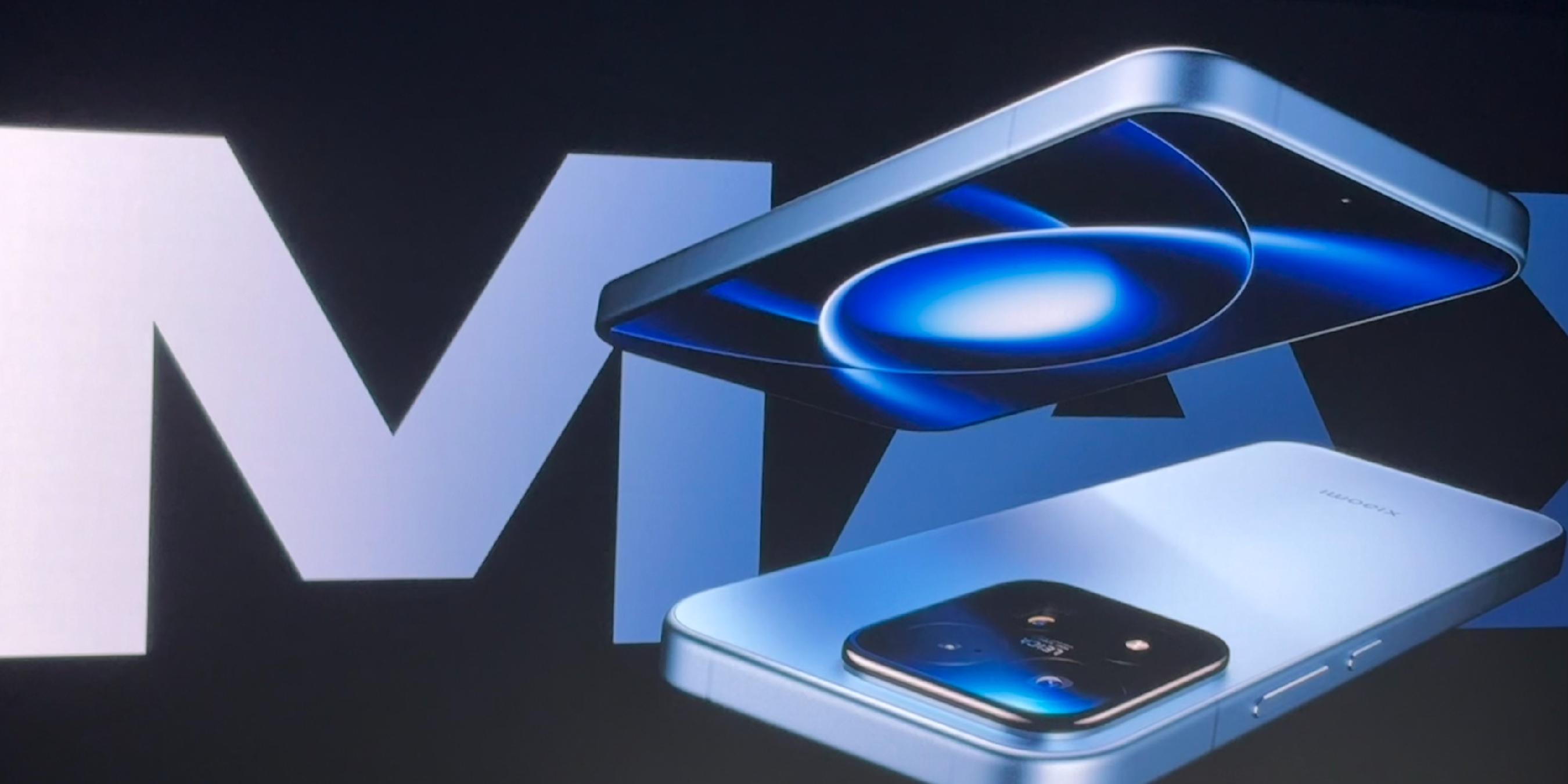
On May 21st, at the Xiaomi "Human Car Home Full Ecology" new product launch event, Xiaomi's new mobile phone product 17 Max was officially released. Eight months after the launch of the Xiaomi 17 series, the "Miaoxiang Back Screen", which was once certified by Xiaomi Group founder Lei Jun as the "biggest feature" of the Xiaomi 17 Pro series, disappeared from the 17 Max.
This back screen was a new feature introduced by Lei Jun in over 5 minutes last September, including personalized clock, AI portrait/cute pet wallpaper, dynamic notifications, main camera selfies, sticky notes, and more. Lu Weibing once stated in a live broadcast that Xiaomi's next generation smartphones will continue to use the back screen design and plan to increase related research and development investment to further expand market expectations for continuous upgrades to the back screen function.
However, at this press conference, Lei Jun did not mention a word about the back screen.
Back screen battery life swap
The back screen is a major selling point of Xiaomi 17 Pro, and some users appreciate its personalized decoration function, which adds more emotional value and social attributes to the phone. During the first sales period, the sales of Xiaomi 17 Pro Max accounted for over 50% of the entire series.
The latest Xiaomi 17 Max has removed the back screen to save space and make way for a large battery.
In 2016, Xiaomi's first generation Max was released, with a 4850mAh large battery that claimed to support one charge every two days, significantly exceeding the battery level of mainstream flagships at that time. The first year sales of the first generation Max exceeded 3 million units, which also verified the feasibility of the large screen long battery life strategy.
In the following three years, as mainstream models in the mobile phone market grew larger and fast charging became more popular, the two major advantages promoted by the Max series gradually became standard in the industry. In December 2019, a netizen asked when the large screen Max would be released, and Lu Weibing replied, "It won't happen again," announcing the suspension of the Max product line.
After an eight year hiatus, the Xiaomi 17 Max did not continue the stacking strategy commonly used by flagship models in recent years, and almost completely returned to the design concept of the Max series: a 6.9-inch large straight screen, with an extremely narrow fourth class edge to increase the screen to body ratio; Equipped with an 8000mAh battery, the battery life during testing is more than twice that of the iPhone 17 Pro Max.
For Xiaomi, which has always been keen on benchmarking against Apple, the Xiaomi 17Max does not follow the thin and light route, with a body thickness of about 8.2mm. In September 2025, after the release of the iPhone Air with a thickness of only 5.6mm, making the body thinner and lighter has become the direction that many mobile phone manufacturers are aiming for, such as the Huawei Mate 70 Air with a body thickness as thin as 6.6mm.
In a live broadcast on May 16th this year, Lu Weibing responded to the plan for lightweight models, stating that the new product has reached a state close to mass production, but due to difficulties in balancing battery life and core performance, the company voluntarily terminated the project and instead promoted the Max series.
From Xiaomi 12 to Xiaomi 17, we have launched a total of five generations of small screen standard versions. Is it possible to make a large screen standard version? "Lu Weibing explained in the live broadcast that the launch of Max was in response to user needs." The larger the phone size, the more sufficient the internal available space, the stronger the battery life, and the more thorough the performance release
Restrained Increase
In addition to the return of the Max series, the market is also very concerned about pricing.
After experiencing a sharp rise in storage chip prices and price hikes for the three REDMI models, there are many speculations in the market about the pricing of Xiaomi's new models. The mainstream market expectation is that the starting price for the 12+256GB version will be between 4999 yuan and 5199 yuan. When the final price of 4799 yuan was revealed, the audience at the scene responded enthusiastically.
In March of this year, manufacturers such as OPPO and Vivo raised prices to varying degrees. When asked by netizens whether REDMI K90 will increase in price, Lu Weibing said, "I understand the price increase of our competitors very well. It's difficult for everyone, and we are also struggling to bear it. In April, Xiaomi released an official statement announcing price increases for three popular REDMI models.
On May 16th, Lu Weibing also predicted that "from the second half of this year, especially until the end of the year, the prices of some domestic flagship straight plate phones may exceed 10000 yuan
This wave of mobile phone price increases has taken a turning point near the e-commerce promotion "6.18". On May 15th at midnight, Apple officially announced a price reduction, with the iPhone 17 Pro series dropping 1000 yuan across the board, and the iPhone 17 also experiencing its first price reduction since its release.
As usual, the positioning of Xiaomi 17 Max as the "flagship with a large screen" is usually accompanied by a premium. This time, Xiaomi offered a starting price of 4799 yuan, which is only 300 yuan more expensive than the Xiaomi 17 Standard Edition, exceeding market expectations.
Lei Jun expressed his expectation that memory prices may still rise: "In the next two years, according to our predictions, memory prices will continue to rise, and mobile phone prices will have to follow suit. If you have plans to replace your phone in the next year, I strongly recommend that you do so now." He said that Xiaomi is working internally to improve efficiency and try to digest the cost increase factors as much as possible.
In the live broadcast of the 2026 Haier Hope Primary School Children's Day Science and Technology Experience Day, Mei Feng, Chairman of the China Youth Foundation, praised Haier: cooperating with Haier for public welfare can be divided into three levels: public donation, resource linkage, and value co creation. Haier adheres to long termism and a sense of social responsibility, making public welfare projects more in-depth and effective.
CEO of Bangyao Biotechnology responds: has never been subject to regulatory interviews due to BD
Computing power leasing 'grabbing the beach' in 2026


 WeChat registration or login