Economic Observer Follow
2026-05-18 10:09



Economic Observer reporter Zheng Chenye
On May 17th, Changxin Technology updated its IPO prospectus on the Science and Technology Innovation Board and disclosed its latest performance. In the first quarter of 2026, this company's revenue was 50.8 billion yuan, with a net profit attributable to the parent company of 24.76 billion yuan, and a loss of 1.56 billion yuan in the same period last year. The company expects a net profit attributable to the parent company to reach 50 billion to 57 billion yuan in the first half of 2026.
As a reference, the three major A-share storage module manufacturers, Baiwei Storage (688525. SH), Demingli (001309. SZ), and Jiangbolong (301308. SZ), had a total net profit attributable to their parent company of approximately 10.1 billion yuan in the first quarter of 2026, which was 2.4 times their total for Changxin Technology during the same period.
Changxin Technology is the only IDM (Integrated Design and Manufacturing) enterprise in China with large-scale DRAM production capabilities.
The company plans to raise 29.5 billion yuan in this IPO. Among them, 7.5 billion yuan is used for upgrading and transforming wafer manufacturing production line technology, 13 billion yuan is used for upgrading DRAM technology, and 9 billion yuan is used for forward-looking technology research and development.
DRAM is the core category of storage chips, which is indispensable for smartphones, computers, and servers. The global DRAM market has long been monopolized by Samsung, SK Hynix, and Micron, with a combined market share of over 90%. Chinese companies' presence in this field was once close to zero.
But now it's not. According to Omdia's data, Changxin Technology's global share in the fourth quarter of 2025 has risen to 7.67%, which was 3.97% six months ago and nearly doubled in six months.
At present, as the global storage industry enters its strongest business cycle ever due to AI demand, China finally has a company that can participate in global competition on this track and achieve rapid growth in performance.
For an industry that has invested billions of yuan and suffered losses for several years, this is a long-awaited turning point.
Main product prices skyrocket
The distribution pattern of the current AI semiconductor dividend is already very clear by the first quarter of 2026.
At Samsung Electronics' Q1 earnings conference call, the company disclosed a quarterly operating profit of 53.7 trillion Korean won for its semiconductor business, compared to only 1.1 trillion Korean won in the same period last year, a year-on-year increase of over 48 times. SK Hynix's operating profit for the same quarter was 37.6 trillion Korean won, with an operating profit margin of 72% and a net profit margin of 77%.
16 months ago, SK Hynix's market value was less than $100 billion, but now it is approaching $1 trillion. If it breaks through the trillion dollar market value with Samsung Electronics, South Korea will become the first country after the United States to have two trillion dollar companies.
Or, in the first half of this semiconductor cycle, the dividends of computing chips went to Nvidia, wafer foundry went to TSMC, and storage went to Samsung and Hynix. Most of the profits obtained by Chinese companies in this cycle are concentrated in supporting links such as optical modules and server assembly.
But now, in the field of storage chips, Changxin Technology is emerging. So, why did Changxin Technology's performance experience such a strong outbreak?
The full name of DRAM is dynamic random access memory, which is used for temporary storage and fast reading and writing of data when running apps on mobile phones, opening web pages on computers, and running AI models on servers. It, together with CPU and GPU, constitutes the three most core types of chips in all computing devices.
The demand for DRAM in AI models is particularly high, as the more model parameters and the denser the simultaneous processing of requests, the higher the required memory capacity.
At SK Hynix's 2026 Q1 earnings conference call, the company's management made a judgment: AI is rapidly transitioning from the big model training stage to the inference and Agenetic AI stages, with the amount of data in each stage growing and the demand for various storage products also increasing synchronously. The management of the company believes that this structural demand growth will continue for many years.
According to Omdia's data, in the global DRAM market by 2025, Samsung Electronics will account for 33.96%, SK Hynix will account for 34.48%, Micron will account for 23.41%, and the total of the three companies will exceed 90%.
After the outbreak of AI demand, the three major original manufacturers made a choice and concentrated their advanced production capacity on HBM - HBM stands for High Bandwidth Memory, which is directly attached to the GPU chip of AI servers for high-speed transmission of massive data. This type of chip has a complex manufacturing process and high yield requirements, but its unit price and profit are far higher than ordinary DRAM.
While pursuing HBM profits, the three major original manufacturers have significantly reduced the production capacity of conventional DRAM. For example, Samsung Electronics has terminated its 24 year old 2D NAND (a traditional planar structure flash memory chip widely used in USB drives, solid-state drives, etc.) production line and transformed related facilities into DRAM backend factories; The production proportion of DDR4 by SK Hynix decreased to 20% in the fourth quarter of 2024.
That is to say, the supply of conventional DRAM is shrinking, but demand is growing, so prices are rising.
According to well-known market research firm Counterpoint Research, the average contract price of 1GB consumer grade DDR4 was $1.8 in the first quarter of 2025, and rose to $11.4 in the first quarter of 2026, an increase of more than six times in one year.
According to data from TrendForce, consumer DRAM prices have risen by 75% to 80% in the first quarter of 2026, marking the largest quarterly increase in nearly five years. TrendForce estimates that DRAM contract prices will increase by another 45% to 50% in the second quarter, with the average selling price of LPDDR4X expected to increase by at least 70% to 75% quarterly, and LPDDR5X expected to increase by 78% to 83% quarterly.
TrendForce consulting analyst Xu Jiayuan told Economic Observer that from the second quarter to the second half of 2026, DDR5 contract prices are expected to rise quarter by quarter, with demand mainly from American and Chinese cloud service providers (CSPs) continuing to increase.
How tight is the current supply of storage chips?
In February 2026, the management of SK Hynix stated at an investor exchange meeting that the company had only about 4 weeks of DRAM and NAND inventory left, and no customer demand could be fully met. SK Hynix Chairman Choi Tae won publicly stated in March this year that the global shortage of memory chips may continue until 2030. Samsung revealed during its Q1 2026 earnings conference call that some customers have started to demand for 2027, and the company is signing multi-year supply agreements with customers, with stronger constraints than ever before.
At SK Hynix's 2026Q1 earnings conference call, the company's management made a summary of the current market: customers are now prioritizing getting the goods first, and price is no longer the top priority.
Samsung Electronics' management also mentioned a noteworthy signal during the earnings call - the profit margin of traditional DRAM has approached HBM. The reason is that HBM usually locks in prices annually, while traditional DRAM negotiates prices quarterly. In an environment of rapid price increases, the price of traditional DRAM rises even faster.
This means that traditional DRAM categories such as DDR5 and LPDDR5X happen to be one of the most profitable storage products currently available. And these are the main products of Changxin Technology.
Gross profit margin equaling Samsung
According to the information in the prospectus, Changxin Technology has three 12 inch DRAM fabs in Hefei and Beijing, and its end customers include Alibaba Cloud, ByteDance, Tencent, Lenovo, Xiaomi, Transvoice, Glory, OPPO, vivo, etc.
In other words, major Internet companies and mobile phone manufacturers in China are using DRAM of Changxin Technology. In addition, according to Omdia's data, Changxin Technology is already the first DRAM manufacturer in China and the fourth in the world in terms of production capacity.
In fact, the process by which Changxin Technology has reached its current position is much more difficult than the numbers presented above.
From the second half of 2022 to the first half of 2023, the global DRAM industry experienced a deep downturn cycle, with related product market prices falling by 50% from their previous highs.
The above prospectus information also shows that Samsung Electronics, SK Hynix, and Micron experienced historically rare losses and negative gross margins in 2023, while Changxin Technology's net profit for the same year was a loss of 19.2 billion yuan and a provision for nearly 11.5 billion yuan in inventory depreciation losses. After excluding the impact of the write down provision for sold inventory, Changxin Technology's comprehensive gross profit margin for the year was -112.71%, and the production cost of the product was much higher than the selling price. As of the end of 2025, Changxin Technology's undistributed profit remains at -36.65 billion yuan.
But in the worst year of the industry, Changxin Technology made a choice - not to reduce production capacity, but to insist on expanding production. The company's original statement in its prospectus is: "By firmly implementing an expansion strategy, it has ensured the growth of revenue and the expansion of market share
This confidence is related to sustained research and development investment.
From 2023 to 2025, Changxin Technology has accumulated a research and development investment of 20.6 billion yuan, accounting for 21.67% of the same period's revenue. In 2025, Changxin Technology's R&D rate is 15.52%, while Samsung Electronics is 11.31%, SK Hynix is 6.66%, and Micron is 10.16% during the same period. That is to say, Changxin Technology's R&D investment is much higher than the industry average.
This R&D investment intensity corresponds to Changxin Technology's "leapfrog R&D" strategy - not catching up generation by generation, but jumping forward. According to the prospectus, the company has completed mass production of its first to fourth generation process technology platforms, covering products from DDR4 and LPDDR4X to DDR5 and LPDDR5/5X.
At the end of 2024, Changxin Technology made a key product switch: DDR4 was completely discontinued, and production capacity shifted to DDR5 and LPDDR5/5X. The company's latest DDR5 product has a speed of 8000Mbps and a maximum capacity of 24Gb per chip; The maximum speed of LPDDR5X is 10667Mbps, which is 66% higher than the previous generation.
Looking back, discontinuing DDR4 and fully transitioning to DDR5 was a bet - if the market demand for DDR5 does not rise, this batch of production capacity will face embarrassment. But the demand for AI just exploded at this point in time, and the demand for DDR5 was quickly boosted. In 2025, Changxin Technology's DDR series product revenue increased by 515% year-on-year.
So, Changxin Technology's revenue curve in 2025 is not growing at a constant rate, but accelerating quarter by quarter: 6.1 billion yuan in the first quarter, 9.1 billion yuan in the second quarter, 16.5 billion yuan in the third quarter, and 29.6 billion yuan in the fourth quarter. The revenue of the fourth quarter is close to the total of the first three quarters.
In 2025, Changxin Technology achieved a revenue of 61.799 billion yuan and a comprehensive gross profit margin of 40.99%. During the same period, Samsung Electronics' semiconductor business had a comprehensive gross profit margin of 39.38%.
From -112.71% to 40.99%, in two years, the gross profit margin curve of this Chinese DRAM company has completed a leap from the bottom to comparable to the world's largest storage manufacturer.
Industry giants officially emerge
By the first quarter of 2026, this acceleration will continue. During the quarter, Changxin Technology achieved a revenue of 50.8 billion yuan, equivalent to 82% of the total revenue for the year 2025; The net profit attributable to the parent company was 24.76 billion yuan, and the operating cash flow was as high as 42.57 billion yuan.
In the prospectus, Changxin Technology expects its revenue to reach 110 billion to 120 billion yuan in the first half of 2026, with a net profit attributable to shareholders of 50 billion to 57 billion yuan.
What is the concept of this profit scale in the A-share storage sector?
In the first quarter of 2026, the performance of the three major storage module manufacturers in the A-share market also experienced explosive growth. Among them, the net profit attributable to shareholders of Baiwei Storage was 2.899 billion yuan, Demingli was 3.346 billion yuan, and Jiangbolong was 3.862 billion yuan, totaling about 10.1 billion yuan.
Changxin Technology's net profit attributable to the parent company during the same period was 24.76 billion yuan, which is 2.4 times the sum of the net profits of the three module manufacturers.
At present, the storage chip concept stocks with high market value in the Shanghai and Shenzhen stock markets are mostly module manufacturers, and module manufacturers engage in the business of purchasing chips, assembling them into memory modules and solid-state drives, and then selling them in the industrial chain. Unlike this, Changxin Technology designs and manufactures its own wafers using IDM mode.
During the same price increase cycle, the industry chain is like the food chain, where your position determines whether you eat meat or drink soup.
At present, Changxin Technology's global market share is still growing rapidly - according to Omdia's data, its market share was still 3.97% in the second quarter of 2025, and it has reached 7.67% in the fourth quarter, nearly doubling its market share in six months.
Omdia also predicts that the global DRAM market size will grow from $150.5 billion in 2025 to $571 billion in 2030, with an average annual compound growth rate of over 30%.
At present, the domestic storage industry chain is also accelerating its aggregation around Changxin Technology.
Zhaoyi Innovation (603986. SH) is an affiliated company of Changxin Technology, with Zhu Yiming serving as the chairman of both companies. Zhaoyi Innovation is expected to purchase approximately RMB 5.7 billion of OEM DRAM from Changxin Technology in 2026, and RMB 1.18 billion in 2025.
Zhaoyi Innovation's revenue for the first quarter of 2026 was 4.188 billion yuan, a year-on-year increase of 119%, with a net profit attributable to the parent company of 1.461 billion yuan, a year-on-year increase of 523%, and a gross profit margin of 57%. This also indicates that the domestic storage ecosystem surrounding Changxin Technology is benefiting as a whole from this prosperous cycle.
Changxin Technology plans to raise 29.5 billion yuan in its IPO, which is also the first project to be implemented under the "pre review" system of the Science and Technology Innovation Board. The speed from application to acceptance reflects the regulatory support for hard tech companies going public.
According to the prospectus information, of the above-mentioned fundraising amount, 7.5 billion yuan will be used for upgrading and transforming wafer manufacturing production line technology, 13 billion yuan for upgrading DRAM technology, and 9 billion yuan for forward-looking technology research and development.
Regarding this, a securities analyst who has long been concerned about the semiconductor industry told Economic Observer reporters that if Changxin Technology successfully lands on the Science and Technology Innovation Board, it means that for the first time in the A-share market, a company that is truly in the upstream of the AI semiconductor value chain and has sufficient performance volume will appear, and market funds are likely to concentrate and flood in.
In her opinion, compared to companies that provide industrial chain support in the fields of optical modules and PCBs, storage chips are one of the most profitable links. According to Changxin Technology's own forecast, its revenue in the first half of 2026 alone will reach 110 billion to 120 billion yuan, with a net profit attributable to the parent company of 50 billion to 57 billion yuan. This net profit volume is among the top in the entire A-share market. Once successfully listed, Changxin Technology is likely to become the company with the largest market value on the Science and Technology Innovation Board.
Among the top companies in the current A-share AI sector by market value, Zhongji Xuchuang (300308. SZ) specializes in optical modules, Industrial Fulian (601138. SH) specializes in server assembly, and Shenghong Technology (300476. SZ) specializes in PCB production. These companies are all involved in the supporting links of the industry chain, responsible for data transmission, circuit board manufacturing, or installing chips designed by others into chassis.
These companies benefit from the demand for AI and have achieved rapid growth in performance, but their profit margins depend on the pricing of upstream chip manufacturers. Changxin Technology's industrial chain position is completely different from theirs, as it is the designer and manufacturer of chips itself.
From the information in the prospectus, Changxin Technology has rapidly grown into an industry giant - the gross margin is on the same line as Samsung, the customer list covers almost all major Internet and consumer electronics companies in China, and the global share has nearly doubled in half a year.
Of course, this company still has a considerable gap to catch up with: after all, compared to the three giants' market share of over 90%, a market share of 7.67% is just a starting point.
However, in any case, Changxin Technology has "set a good example" - proving that Chinese semiconductor companies can also stand upstream in the industry value chain and participate in the cake distribution of core links.

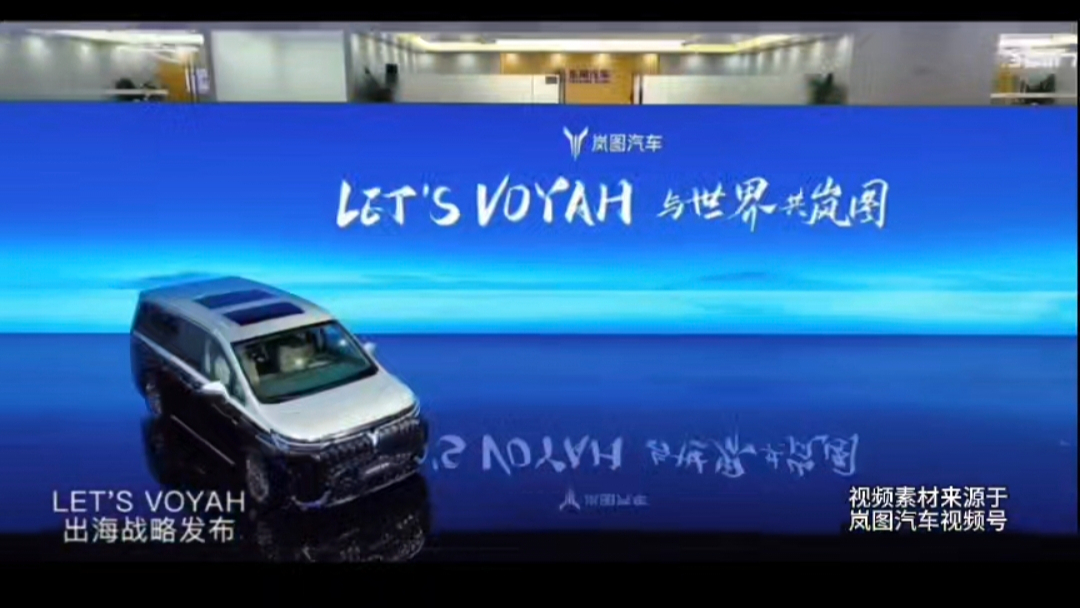
Lantu imitates Zero Run and leverages Stellantis to expand into the European market

The dust of the "BAIC" dispute has settled, and the Beijing Intellectual Property Court upheld the original judgment in the second instance that BAIC Group won the lawsuit. Beijing Automotive Manufacturing Plant cannot continue to be referred to as "BAIC"
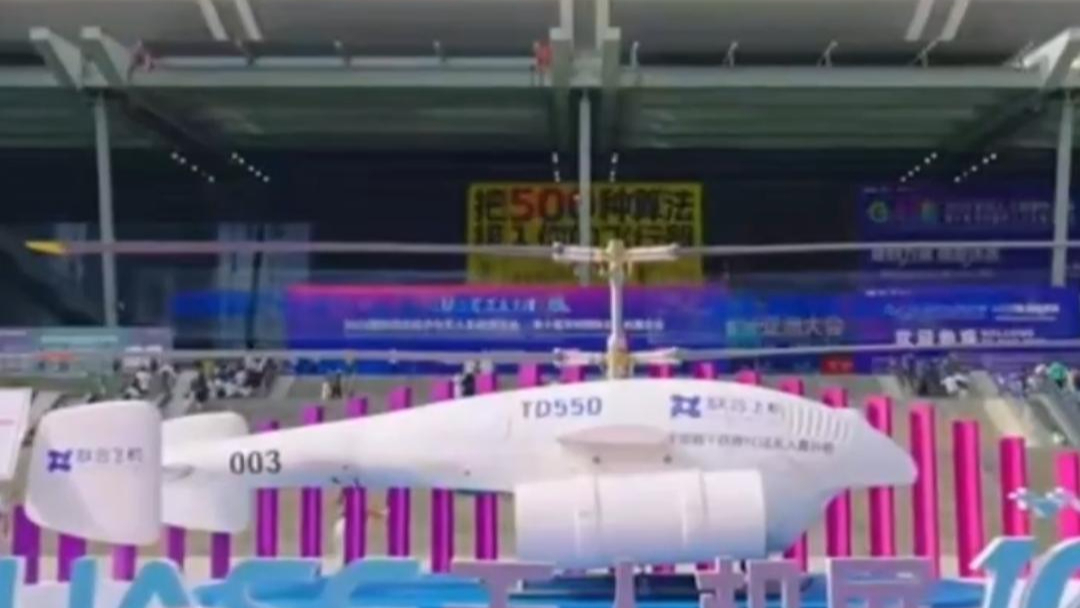
The 2026 World Drone Conference is about to open in Shenzhen, with 400 companies showcasing 3000 drones


 WeChat registration or login


 Subscribe