Economic Observer Follow
2026-05-06 11:07


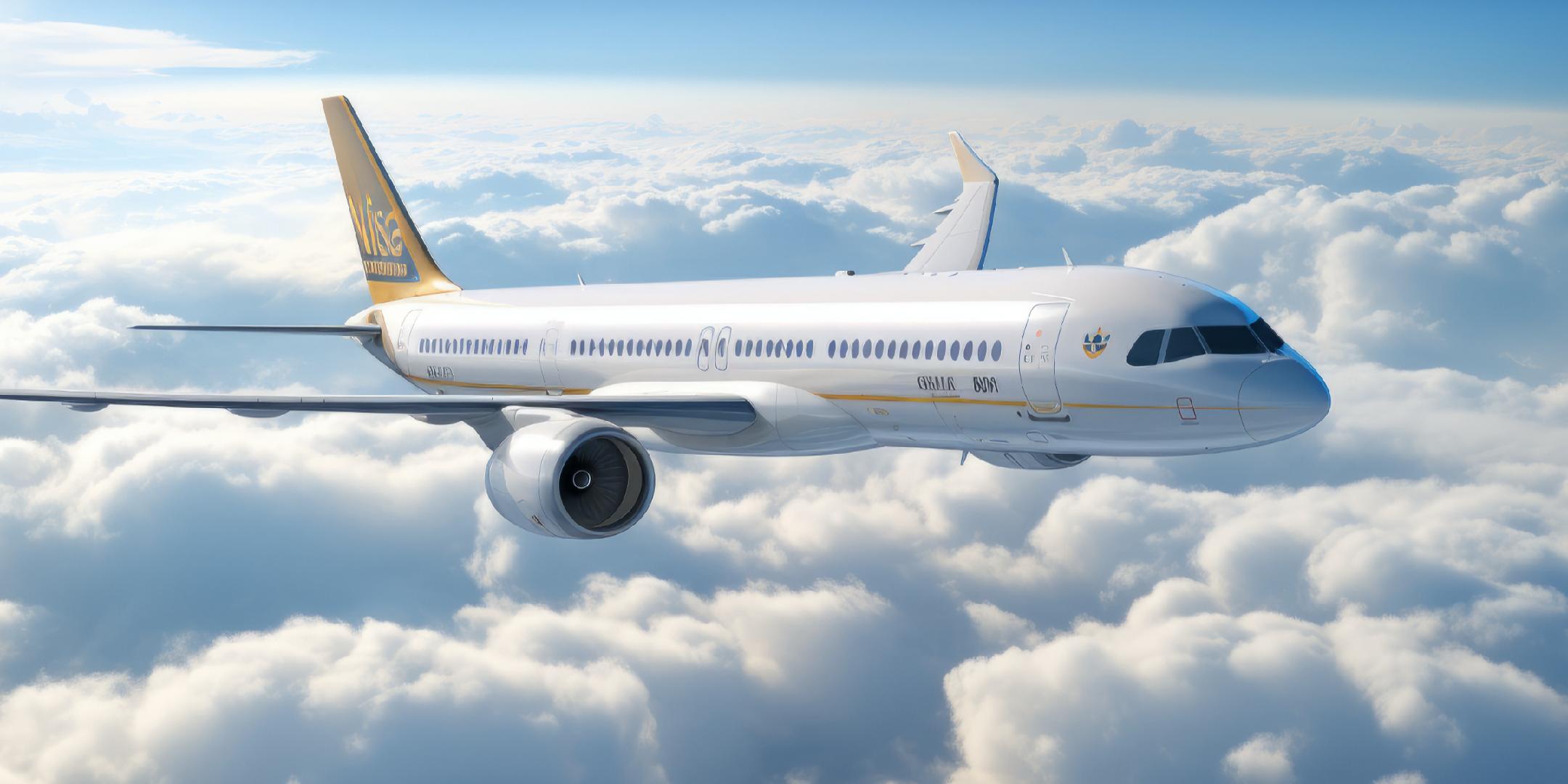
As the May Day holiday approaches, Xiao Xiao, the head of a large airline ticket agency group in Beijing, received the "China Eastern Airlines OTA Platform Cooperation Specification (2026)" from the marketing department of China Eastern Airlines (600115.SH/00670.HK, hereinafter referred to as "China Eastern Airlines").
The document clearly states that from April 27th, China Eastern Airlines strictly prohibits agents from supplying goods on OTA (online travel platform). This means that the Eastern Airlines tickets sold by Xiao Xiao on the OTA platform have entered the countdown to delisting. Once overdue is discovered, his company will face a fine of 20000 yuan per ticket from the airline (hereinafter referred to as the "airline"), and may even lose its agency qualification.
Prior to this, Xiao Xiao had received notices from Air China (601111.SH/00753.HK, hereinafter referred to as "Air China") and China Southern Airlines (600029.SH/01055.HK, hereinafter referred to as "China Southern Airlines"): it is strictly prohibited for agents to supply goods on OTA and third-party platforms. Violators will be fined 20000 yuan per ticket by OTA and agents, and sales on related routes will be blocked.
The effective time of penalties varies slightly among airlines, with China Southern Airlines on April 25th and Air China on April 26th, but both are stuck before the peak travel period on May 1st. Consumers who open the OTA platform before traveling on May Day may see a significant reduction in the available flight tickets displayed on the page.
Taking the "Beijing Chengdu" route displayed by Ctrip as an example, previously there were a large number of tickets published by ticket agents with different prices and policies. Now, the main source of tickets comes from Chengdu Ctrip Travel Agency Co., Ltd. Beijing Branch, which is a travel agency under Ctrip Group. In addition, there are also airline tickets directly operated and flagship stores.
Xiao Xiao has been working in the airline ticket agency industry for over a decade, experiencing the industry reshuffle caused by the State owned Assets Supervision and Administration Commission's proposal to "increase direct sales and reduce agency fees" (to increase direct sales ratio and reduce agency fees) for airlines in 2015. He has seen many ticket agency peers switch careers and close down. But this time, he felt that the storm came even more fiercely than before.
How much profit can be made from selling a domestic plane ticket, and who can withstand a fine of 20000 yuan? "Xiao Xiao said that his company's business is quite diversified, and OTA supply only accounts for less than 10% of the company's total revenue, so the impact is still within an acceptable range. But those small ticket agents who rely solely on supplying OTA for a living may have to close down.
The goal of "improving direct sales and reducing agent sales" has been proposed for ten years, and airlines have once again thrown a heavy punch at distribution channels, far exceeding the previous efforts. What can be changed this time?
Strike with heavy blows
On April 20th, a communication meeting between China Eastern Airlines, OTA, and agents was held at the headquarters of China Eastern Airlines.
An OTA participant revealed that staff from China Eastern Airlines introduced the latest OTA platform cooperation standards and details of breach handling. The terms on the screen are becoming stricter one by one: all China Eastern Airlines flights sold through the cooperative OTA platform are not allowed to be supplied through any third-party channels; OTA platforms are not allowed to use overseas configurations to sell tickets for China Eastern Airlines; OTA needs to self monitor sales behavior on the platform.
The relevant person in charge of China Eastern Airlines emphasized at the communication meeting that without the consent of the airline, the OTA platform shall not use technical means to crawl or collect various types of airline data; It is not allowed to obtain flight updates, flight seats, passenger itineraries, membership information, and other data on the airline's official website and app by simulating passenger login; It is not allowed to use the seat selection and check-in functions on the airline's official website and app by simulating passenger login; It is not allowed to register airline members for passengers without their consent.
The cost of violating regulations is also clearly priced. In the event of the following situations, China Eastern Airlines will charge a penalty of 5000 yuan per ticket to the OTA platform: selling unauthorized self owned channel tickets of China Eastern Airlines on the OTA platform; The ticket issuance deadline exceeds 1 hour (excluding force majeure factors such as system failures); Not truthfully displaying the ticket price, cabin class, and refund/change rules of China Eastern Airlines; OTA platform independently packages and sells "machine+X" packaged products, etc.
This is not the first time that airlines have declared war on OTA. In early 2016, Air China, China Southern Airlines, and China Eastern Airlines successively closed their official flagship stores on Qunar. At that time, the State owned Assets Supervision and Administration Commission had just proposed the goal of "increasing direct sales and reducing agency fees" to major airlines: to increase the proportion of direct ticket sales to 50% within three years, and to reduce agency fees by 50% on the basis of 2014. But ten years have passed, and this direct sales goal has not yet been fully achieved.
For a long time, the main sales models of Chinese airline tickets have been airline direct sales and agency distribution. Airline ticket agents have customer resources and distribution capabilities, which can save costs such as space and labor for airlines, and were once relied upon by airlines. For a long time, airlines have relied heavily on agents, not only paying fixed ticketing agency fees, but also various sales rewards such as pre refund and post refund. With the increasing cost of agency sales, airlines' profits are also beginning to be eroded. In the early years, working as a ticket agent was very profitable. Selling a ticket could earn a basic agent fee of 3 points, and an 800 yuan ticket was equivalent to a basic agent fee of 24 yuan. Adding back and forth, the profit was considerable. "Xiao Xiao recalled that in the 1990s, airline tickets were still torn apart by hand, and" the face price was written by the agent themselves, without any regulations. An airline sold a ticket for 300 yuan, and the agent dared to raise the price by 800 yuan, and the profit even doubled. At that time, there were fewer people flying, but the profit was high.
After 2004, OTA gradually rose and airfare prices became transparent, and the markup sales model exited the historical stage.
With the rectification of agency fees by the Civil Aviation Administration of China in 2016, the survival mode of ticket agents has once again changed. The Civil Aviation Administration of China issued a notice on issues related to domestic air passenger transportation sales agency fees that year, which required ticket agents to not increase prices, bundle sales, or maliciously alter ticket prices and applicable conditions, and to change the payment of air passenger transportation agency fees from a proportion of sales revenue to a fixed amount per ticket. In the middle of the same year, the three major airlines announced the cancellation of basic agency fees for domestic ticket sales.
Nowadays, domestic ticket agents mainly adopt a service fee model: B-end customers pay, rather than the airlines of the past. Xiao Xiao said that a ticket can only charge a service fee of 10 to 20 yuan, as well as payment terms and advance payments to customers, including labor, rent, and system usage fees of China Aviation Information Corporation. The cost of operating an account for one month is close to 1000 yuan. "The profit is as thin as paper, it all depends on volume," and many ticket agents have switched careers and stopped doing it.
In fact, the "upgrading of direct landing" that airlines have been promoting in recent years has not been smooth either. At present, there are over 40 airlines in China, and it is impossible for passengers to download all airline apps; Meanwhile, China also has convenient and developed OTA platforms.
Although airlines have previously compressed their agency channels, after the closure of flagship stores, ticket agents can still sell through the platform, with limited actual impact. In the opinion of civil aviation expert Lin Zhijie, this year's punishment has been upgraded from "closing flagship stores" to a fine of 20000 yuan per ticket, and the enforcement intensity is incomparable.
The 'OTA ban' this time is targeting the supply model, where ticket agents sell tickets on the O-TA platform. This is not only the main source of a large number of low-priced tickets on OTA platforms, but also a major disaster area for sales chaos. In order to gain a price advantage, some airline ticket agents may resort to illegal means such as refunding high and buying low, bundling sales, and reselling mileage points.
During the interview, the reporter learned that Mr. Liu, a citizen, purchased a flight ticket for "Shanghai Sanya" through an OTA platform in January this year, paying 2170 yuan. However, the ticket was refunded before the trip and reissued at a price of 1520 yuan. Xiaoqi purchased a ticket for "Tianjin Changsha" on another OTA platform and paid 1708 yuan. However, she also encountered a "refund for high and buy for low" situation. According to Hanglv Zongheng, the tax inclusive price of the new ticket was only 520 yuan. After several struggles with the airline ticket agent, she finally received a refund of the price difference and additional compensation.
There is also a more covert operation among them. Mr. Chen purchased a plane ticket on the OTA platform and paid a total of 1247 yuan. However, when issuing the invoice, he found that the actual ticket price was only 844 yuan. The extra 403 yuan was split into a 365 yuan travel package and a 38 yuan delay insurance. The platform customer service claimed that Mr. Chen "clicked to confirm the purchase" on his own, but Mr. Chen claimed that he had never actively purchased such products.
The similar series of operations carried out by ticket agents on OTA platforms are within the scope of this rectification. An insider from a medium-sized airline told Economic Observer that the airline's operations have always been very standardized, but the chaotic ticketing on OTA has brought a large number of complaints to the airline. A former OTA insider said that there is a lot of pressure to handle customer complaints, and airlines must rectify the market. After cutting off unreasonable low-priced tickets, the market will also be rectified.
After the three major airlines, Hainan Airlines, Shenzhen Airlines, Shandong Airlines and other airlines have also followed up and requested agents to remove their OTA tickets. Among them, Hainan Airlines and Shenzhen Airlines will take effect on April 24th, while Shandong Airlines will take effect on April 26th.
Choosing to enforce rules before May Day is not accidental. As the peak of domestic travel, the air ticket market during the May Day holiday is a typical seller's market. Civil aviation expert Li Hanming said that there is a natural guarantee for the passenger load factor of flights during peak seasons. At this time, by cutting off the supply of agents, airlines can intercept the profits originally distributed to agents and test the carrying capacity and user conversion rate of their own direct sales channels.
Affects Geometry
In this round of rectification, high fines are undoubtedly a sharp blade hanging over the heads of airline ticket agents: a fine of 20000 yuan is ten or even dozens of times the face value. As long as they are caught violating the rules, they may have to sell thousands of tickets to recoup their costs. A small and medium-sized airline ticket agent who supplies OTA told reporters that it has a great impact and pressure, and is unwilling to discuss further.
In Li Hanming's view, the traditional B2B2C model (obtaining tickets from airlines and selling them on OTA) will be completely ineffective, and the survival space of small and medium-sized ticket agents will be further compressed, and they can only transform into non-standard services such as TMC (Corporate Travel Management) or customized tours. In addition, airlines not only have to punish the supplying agents, but also penalize the displayed OTA platforms, which forces the platforms to remove third-party agents who violate regulations and assume a regulatory role.
For Xiao Xiao, the sales volume of domestic OTA channels accounts for less than 10% of the total revenue, so the impact of this downgrade measure is not significant. But he thinks that those ticket agencies that only provide OTA supplies may have to close down. In Xiao Xiao's opinion, the profit margin of domestic air tickets is extremely thin, and the real profit of ticket agency business comes from the price difference and rebates of international complex itineraries. As "downgrading" becomes a long-term trend, his company's business is also accelerating its shift towards international air tickets, corporate travel management, charter flights, and GSA (foreign airline operations in China).
At present, there are three sources of airline tickets on OTA platforms: official flagship stores of airlines, OTA self operated (holding ticket agent qualifications), and third-party agents. After the third-party agent is removed, the first two still exist.
Tuniu stated that its flagship store and OTA self operated account for 55% and 45% respectively in its ticket channel, and there are no third-party agents for ticket issuance, so it is not affected.
Li Hanming stated that in the short term, the inventory of third-party agents' airline tickets on the platform has significantly decreased, which may affect the comparative advantage and transaction volume. In the long run, OTA will rely more on direct system integration with airlines, or become a "traffic channel" and "packaged product provider". For consumers, downgrading means fewer choices, and the opportunities for cross platform price comparisons and missing agent discounted tickets in the past have almost disappeared. In the long run, the ticketing environment has become cleaner. In the past, agents set overbearing terms, bundled sales, and even bought and sold point tickets, which led to the inability to board the plane. This chaos will decrease with the establishment of a formal direct sales system.
In this channel restructuring, Hanglv Zongheng has become a part of the direct sales system of major airlines. Hanglv Zongheng is an APP developed by AVIC Mobile Technology Co., Ltd., which can be called the civil aviation version of "12306".
In July 2025, Hanglv Zongheng launched the "Civil Aviation Official Direct Sales Platform" on the basis of providing travel services such as flight dynamic query, automatic import of itinerary, mobile check-in, and electronic boarding pass. Several airlines, including Air China, China Eastern Airlines, and China Southern Airlines, have issued announcements expressing their support for integrating direct ticket resources from multiple domestic airlines and supporting price comparisons and purchases. By January 2026, Hanglv Zongheng will achieve full coverage of all domestic airlines.
According to an economic observation report by Hanglv Zongheng, the platform does not charge agency fees to airlines, with the goal of addressing a series of pain points in the current market and providing users with a new direct ticket purchase option. But in the eyes of a former OTA insider, OTA is a very market-oriented platform with fast response times and sound mechanisms. It is not easy for the national team to provide top-notch services.
Next Step
In public, airlines have issued "OTA bans" one after another, transforming into a survival problem that ticket agents must do.
In early 2026, Xiang Weiwei, General Manager of the Greater Bay Area of Meiya Airlines, stated at the white paper launch conference on the "Evolutionary Blueprint of Airline Agents" that the traditional agent's single profit model relying on ticket price differences is unsustainable, and accelerating transformation has become an inevitable choice. The white paper also points out that the opportunities for agents in the future should shift from simply "selling tickets" to providing "value-added services".
Xiao Xiao's company is taking several actions: continuing to expand its corporate travel service business, with customers covering state-owned enterprises and Fortune 500 companies, including high-speed rail, hotels, car services, etc. Air tickets are only one link in the service chain; Operating charter flights, mainly undertaking charter flights from foreign airlines; Provide general sales agency services for foreign airlines in China and assist them in their market operations in China.
In recent years, airlines have achieved certain results in promoting the "upgrading, lowering, and replacing" technology, but there are still pain points in the market that need to be addressed.
Lin Zhijie said that facing more than 40 airlines, consumers cannot download all apps, but the demand for price comparison naturally exists; There is no such powerful OTA platform as China in overseas markets, and official platforms like Hanglv Zongheng still have a long way to go; In addition, in overseas markets, the direct sales capability of Chinese airlines is still weak, and at present, they mainly rely on agents to seize the market.
In Li Hanming's view, the existence of platforms is due to market demand. Whether it is the cost control needs of enterprises or the price comparison needs of individuals, airlines attempting to control O-TA are actually unable to do so.
When the airline swings the knife towards the channel again, where will this downgrade go? As of press time, the three major airlines, as well as Ctrip, Qunar, Tongcheng Travel, Fliggy, and others, have not responded.
(At the request of the interviewee, Xiao Xiao is anonymous)


In the live broadcast of the 2026 Haier Hope Primary School Children's Day Science and Technology Experience Day, Mei Feng, Chairman of the China Youth Foundation, praised Haier: cooperating with Haier for public welfare can be divided into three levels: public donation, resource linkage, and value co creation. Haier adheres to long termism and a sense of social responsibility, making public welfare projects more in-depth and effective.

CEO of Bangyao Biotechnology responds: has never been subject to regulatory interviews due to BD
Computing power leasing 'grabbing the beach' in 2026


 WeChat registration or login


 Subscribe