2026-04-07 19:15


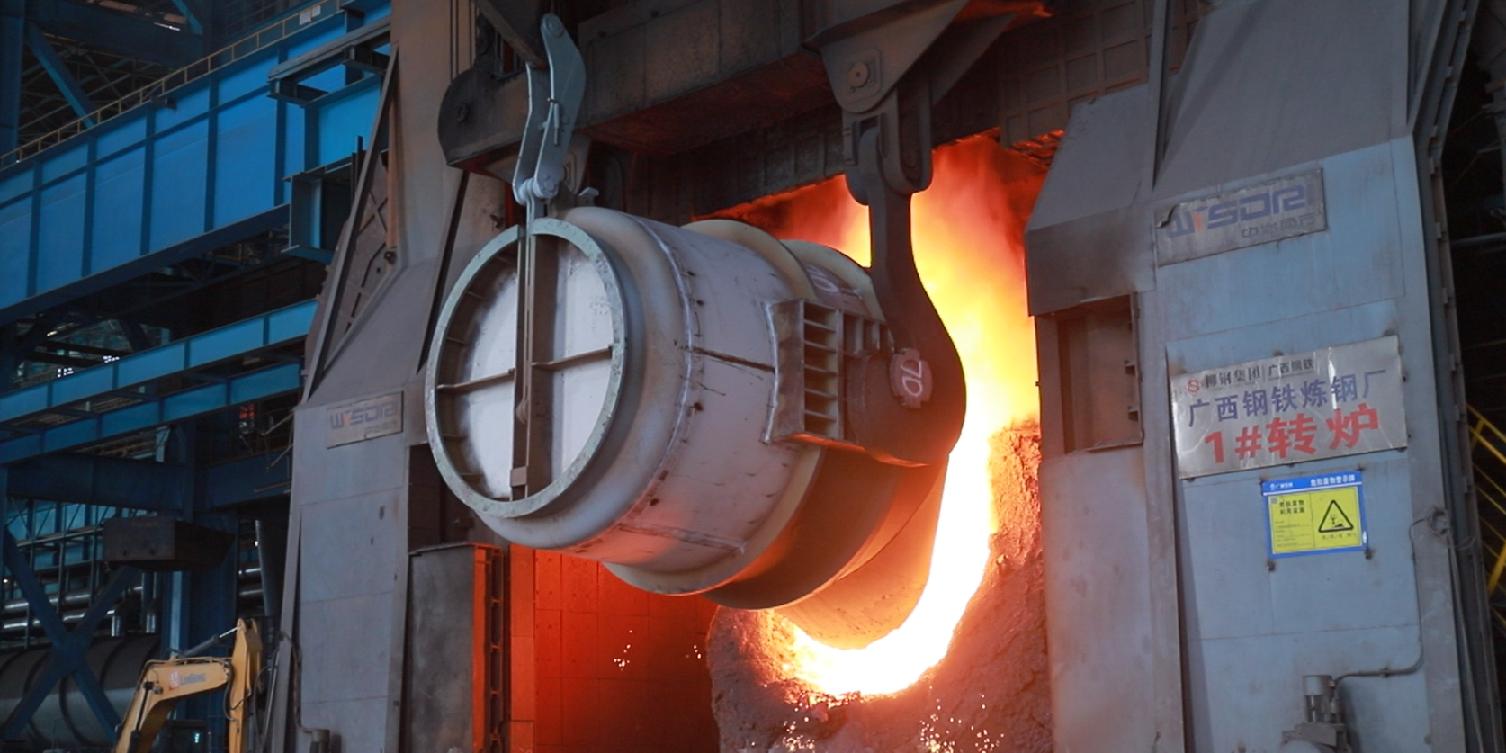
In 2025, an unprecedented event occurred in China's steel industry, where the amount of steel used in manufacturing exceeded that used in construction for the first time in over twenty years.
The proportion of steel used in the construction industry has decreased from 58% in 2020 to 49%, while the proportion of steel used in the manufacturing industry has increased to 51%.
Over the past two decades, building buildings, repairing roads, and constructing bridges have been the largest buyers of steel in China. Now, automobiles, shipbuilding, new energy, and aerospace are taking over this position.
This is not just about the buyer changing a batch, the rebar used for building construction is limited in variety and simple in specifications, and the focus is on quantity and price; The steel used in high-tech manufacturing industry has a wide variety of varieties, strict performance indicators, short delivery cycles, and focuses on precision and management capabilities.
The competitive logic of the entire steel industry is changing, while at the same time, the total market volume is also shrinking.
According to data from the National Bureau of Statistics, the national crude steel production in 2025 is 961 million tons, a year-on-year decrease of 4.4%; The apparent consumption of crude steel was 829 million tons, a year-on-year decrease of 7.1%.
The simultaneous decline in production and consumption is not common in the Chinese steel industry over the past two decades.
Li Yiren, Vice President of the China Iron and Steel Industry Association, believes that the industry has entered a new stage of "reduction adjustment, stock optimization, and quality upgrading".
Demand is changing, total volume is decreasing, and the steel industry no longer relies on building more blast furnaces to grow. Steel companies need to squeeze efficiency from every existing process.
How can we increase the qualification rate of each furnace of steel a little more? How can we reduce a little bit of waste every time we schedule production? Can each transportation segment save a little more energy consumption?
These questions used to be answered by experienced masters and lean management, but now there is a new tool available.
On March 31st, at the "Guangxi Traditional Manufacturing Industry Artificial Intelligence Innovation Application and Liugang Large Model Release Conference" held in Nanning, Guangxi Liuzhou Iron and Steel Group Co., Ltd. (hereinafter referred to as "Liugang Group"), together with Huawei and China Mobile Guangxi Company, released Guangxi's first steel industry large model - the "Xuantie" Steel Large Model, and simultaneously established the "Guangxi Liugang Artificial Intelligence Research and Innovation Center".
Liugang Group is a steel enterprise with an annual revenue of over 100 billion yuan, a Fortune 500 company in China, and a vice president unit of the China Iron and Steel Industry Association. It has been rated A+for the competitiveness of Chinese steel enterprises for many consecutive years.
This old steel company has 27000 employees and over 250000 sets of equipment in operation every day, producing more than 1000 varieties of steel.
According to the data disclosed by Liugang Group at the press conference, the "Xuantie" steel model has now covered multiple core links from ironmaking to steel rolling. With the empowerment of the "Xuantie" steel model, Liugang's crude steel production cost can be reduced by nearly 100 million yuan per year with only the full process intelligent steelmaking.
When production no longer increases, cost reduction is growth.
The next story is how this Guangxi steel company uses AI to find space for improving quality and efficiency in every process.
After 961 million tons
In 2025, the national crude steel production of 961 million tons has decreased for the second consecutive year.
But the peak in production is only a superficial phenomenon, and deeper changes are downstream. The steel used in real estate continues to shrink, while manufacturing industries such as automobiles, shipbuilding, and new energy have put forward higher requirements for the variety and performance of steel.
At the same time, the carbon emissions of the steel industry account for more than 15% of the total national carbon emissions, and the pressure to reduce emissions is also forcing changes in production methods.
According to the China Iron and Steel Industry Association, over 95% of steel companies have incorporated digital transformation into their overall development strategy.
This proportion is relatively high among various sub sectors of the manufacturing industry, one of the reasons being that the process of steel production itself is already complex, with multiple processes, parameters, and sensitivity to accuracy. The space for manual management optimization is becoming smaller and smaller.
From iron ore to finished steel, it is a long process.
Iron ore is first refined into molten iron in a blast furnace, which is then blown into molten steel in a converter. The molten steel is then refined in a refining furnace to adjust its composition and temperature, and then continuously cast into steel billets. Finally, it is sent to a rolling mill to be rolled into various specifications of steel plates, coils, or profiles.
From ore to finished product, there are dozens of processes, each with a large number of parameters that need to be controlled in real time. The quality of the steel produced varies depending on the temperature difference and the amount of alloy added.
Every additional energy savings and increase in yield, multiplied by a steel mill's annual output of several million or even tens of millions of tons, is a significant amount of money.
This means that steel production is naturally suitable for AI intervention, as it involves multiple processes, parameters, large amounts of data, and is sensitive to accuracy.
Liugang Group was founded in 1958, initially as a small steel plant with only a few hundred employees.
Over 60 years have passed, and this company has grown into one of the largest manufacturing enterprises in Guangxi, ranking among the top 50 global steel companies.
Liugang Group's products have been supplied to major projects such as the Hong Kong Zhuhai Macao Bridge, the "China Eye", and the Pinglu Canal, as well as supplying steel for automobiles and household appliances to companies such as BYD, BAIC, and Midea.
Li Bin, Secretary of the Party Committee and Chairman of Liugang Group, mentioned at the press conference that the 14th Five Year Plan is the most difficult period in the development history of China's steel industry. Liugang Group has completed product structure adjustment and production line equipment upgrade during this industry downturn, and achieved profitability by 2025.
However, although profits have been achieved during the industry downturn, there is not much room left for traditional management methods to dig.
Shen Min, Deputy General Manager of Liugang Group, introduced at the press conference that currently more than 90% of Liugang Group's production lines have completed automation transformation, and traditional automation can do things very solidly.
In the past few years, Liugang Group has also implemented some AI applications, but the scenarios are fragmented, with one model deployed in each workshop, data barriers between workshops, and algorithms managed separately.
For example, there are steelmaking models in the steelmaking workshop and rolling models in the rolling workshop, but there is no collaboration between the two workshops, and production scheduling and quality control cannot be linked.
This is the starting point of Liugang Group's collaboration with Huawei to create the "Xuantie" steel large-scale model, integrating scattered AI capabilities into one platform.
The 'Xuantie' steel model is based on the Huawei Pangu model.
First, conduct a round of training using data from the steel industry to teach the model the basic laws of steel production; Use the production data accumulated over the years by Liugang Group to make fine adjustments and adapt the model to the specific working conditions of Liugang Group; Finally, generate lightweight small models for each specific process scenario to execute.
Simply put, one brain is responsible for overall planning, while a group of cerebellum tubes each process.
This system covers six aspects: pre iron production, steelmaking, steel rolling, logistics, environmental protection, and safety. It plans for "20+N" application scenarios, of which 20 are already mature scenarios and N are new scenarios that are constantly expanding based on actual production.
In terms of computing power, the entire system uses a full stack localization solution, including Huawei's Kunpeng processor and Ascend AI chip.
In the first batch of intelligent application scenarios released by the "Xuantie" steel model, two key applications, LF refining furnace optimization and intelligent plate and billet assembly, have been deployed and put into use at the Fangchenggang base.
How can AI be deployed in the workshop?
Liugang Fangchenggang Base is about 200 kilometers away from Nanning and adjacent to Beibu Gulf.
This is the coastal production base of Liugang Group. The layout of the base is U-shaped, with raw materials entering the port from one end and being pushed through iron smelting, steelmaking, and steel rolling in sequence. Finished products leave the factory from the other end without going back, with the shortest transportation distance.
The multiple AI application scenarios for the implementation of the "Xuantie" steel model are distributed in various workshops of this base.
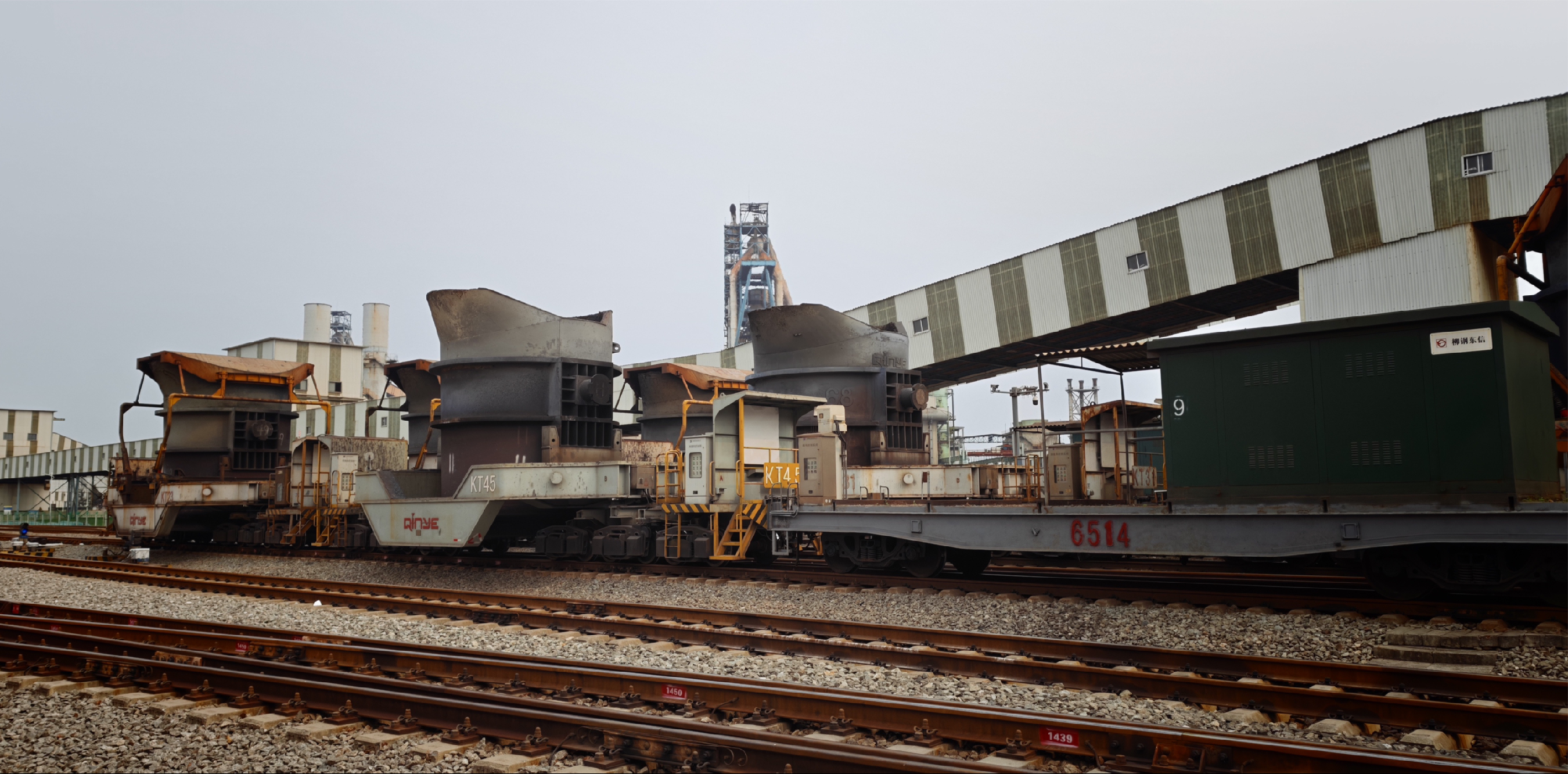
Following the process of steel production, the first step is the transportation of molten iron. After the blast furnace produces molten iron, it should be sent to the converter for steelmaking as soon as possible.
The Fangchenggang base has 10 locomotives and 51 molten iron tank trucks, with each locomotive transporting approximately 3600 tons of molten iron per day. The temperature of the molten iron exceeds 1400 degrees Celsius. It takes a 2-kilometer transportation line from the blast furnace to the converter, passing through three railway crossings along the way, and the entire journey takes about 28 minutes.
In the past, this transportation line was one of the most labor-intensive links in the entire base.
Liao Liuqiang, director of the railway transportation workshop at the Port Center of Liugang Fangchenggang Base, introduced that in the past, there were four troubles in the transportation of molten iron. More than 70 people, including drivers, shunters, and dispatchers, were on duty in shifts, resulting in high labor intensity; Scheduling relies on walkie talkies to transmit instructions, and information often lags behind; The molten iron tank is transported open, and the temperature of the molten iron continues to decrease during transportation. When it reaches the converter, the temperature is not enough, and additional heating is required during steelmaking, which increases costs; The operations such as unhooking and parking are all completed manually, and working next to the thousand degree molten iron poses a high safety hazard.
Starting from 2020, Liugang Group, in collaboration with Huawei and China Mobile Guangxi, began the intelligent transformation of this transportation line.
Mo Keyi, the train driver team leader of Liugang Fangchenggang Base, went through the entire renovation process.
He introduced that the specific intelligent transformation mainly involves three steps.
The first step is to figure out where the molten iron is, install a positioning device on each molten iron tank, and the dispatcher can see the real-time position of all tank trucks on the screen, without having to rely on walkie talkies to confirm back and forth.
The second step is to maintain the temperature of the molten iron by adding an automatic insulation cover to the molten iron tank. After the cover is added, the temperature drop is reduced by 35 degrees Celsius.
The third step is to achieve unmanned driving. All 10 locomotives are equipped with autonomous driving devices, and with the help of an intelligent scheduling system, the system refreshes the transportation plan every minute. After receiving instructions, the locomotives automatically complete the entire process of tank hanging, transportation, and unloading.
Mo Keyi said that in the past, drivers worked in shifts 24 hours a day, but now the locomotive runs on its own and the driver is transferred to the central control room for monitoring.
Liao Liuqiang introduced that after the launch of the intelligent transportation system jointly developed with Huawei, the turnover rate of molten iron tanks increased from 3.5 tanks per day to 4.5 tanks, an increase of about 30%. The temperature drop of molten iron has decreased by 35 degrees Celsius, and the temperature of molten iron is higher when it reaches the converter, which means that an additional 20 kilograms of scrap steel can be added per ton of molten iron during steelmaking, directly reducing raw material costs.
The original transportation team of over 70 people now only needs about 10 people to do monitoring and maintenance in the central control room. The entire system generates an annual efficiency of approximately 35 million yuan.
After the molten iron is transported to the converter, the next step is steelmaking.
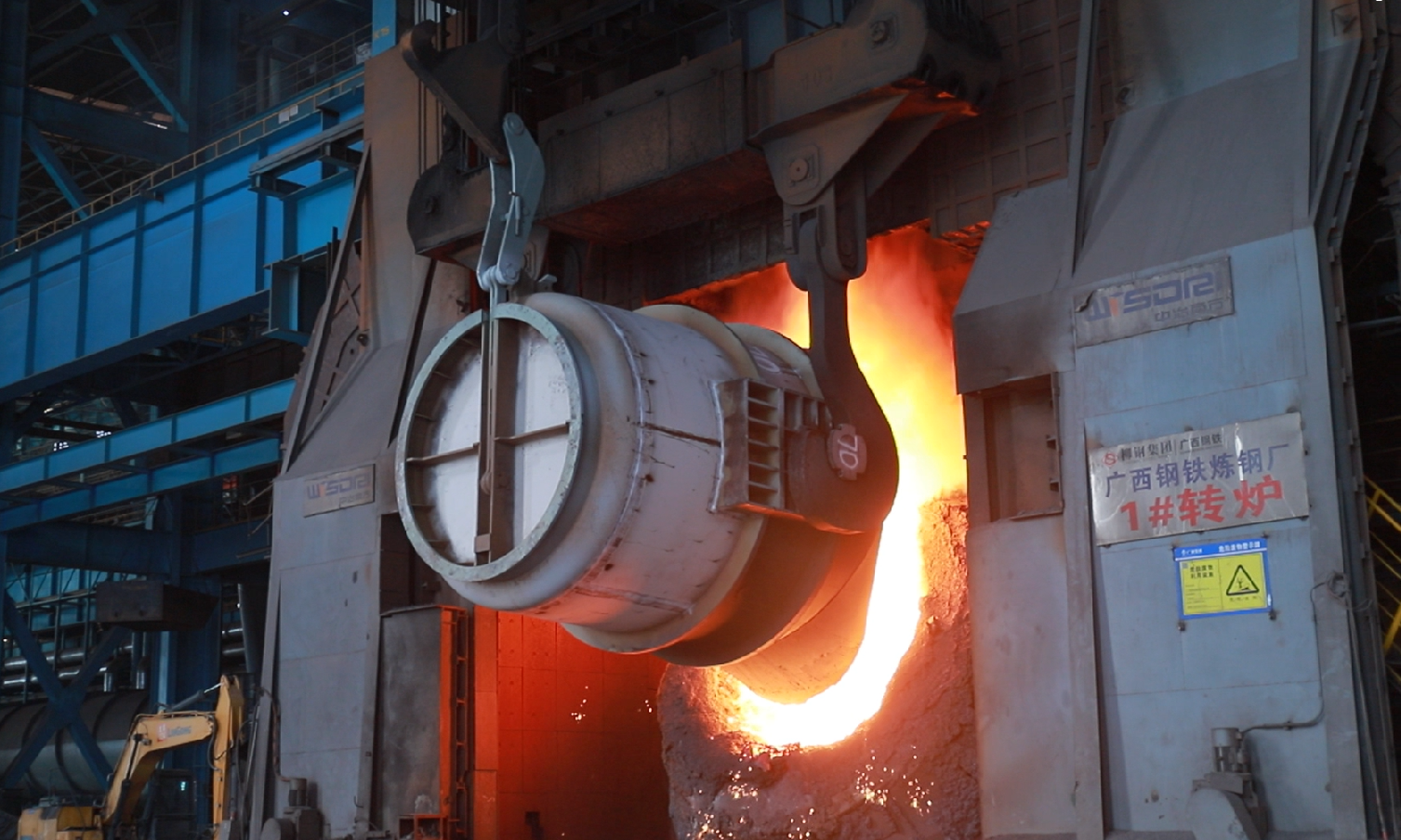
The core of converter steelmaking is to use oxygen to melt molten iron, removing excess carbon and impurities from the iron.
This process requires real-time monitoring of the temperature and carbon content inside the furnace to determine when to add materials, when to stop blowing, and when to start steelmaking.
The traditional practice is called "watching the fire", where the master stands in front of the stove, wearing sunglasses, staring at the flames spewing out from the stove.
The flame turning white and glaring indicates high temperature and the carbon is almost burned out; The flame turns red and dark, indicating that the temperature is not high enough; The spark is long and forked, indicating that the carbon content is still high; The spark becomes shorter, rounder, or even disappears, indicating that the carbon has gone almost completely.
An experienced furnace operator can make judgments within seconds by observing flames.
But this skill heavily relies on personal experience, is difficult to standardize and inherit, and is also affected by a person's physical condition. When night shift fatigue occurs, the accuracy of judgment will decrease.
According to Luo Chunhong, an expert at Liugang Intelligent Manufacturing Center, the AI fire monitoring system of Liugang Group now captures real-time information such as the color, shape, and brightness of flames through high-definition cameras installed at the furnace mouth. The system is then analyzed and judged by image recognition algorithms and operates 24 hours a day without being affected by fatigue.
Luo Chunhong also mentioned a change: in the past, when scheduling production, dispatchers had to take notebooks to the sintering, blast furnace, and steel rolling workshops to collect data one by one; At the intelligent manufacturing center of Fangchenggang Base, the production status of the entire base can be seen on a large screen.
After the molten steel comes out of the converter, it needs to enter the refining furnace (LF furnace) for final temperature and composition adjustment.
The difficulty of refining lies in the large number of variables. Liugang Group has hundreds of steel grades, each with different composition requirements and process paths.
In the past, refining mainly relied on manual judgment, first detecting the composition of molten steel, and then determining how much alloy to add and how long to blow argon gas based on experience. When the test results are released, refinement is already underway, and often it is "post validation" rather than "pre control".
Liugang Group and Huawei have jointly developed an LF furnace refining optimization plan, which describes the basic physical and chemical laws of molten steel using mechanism formulas, predicts temperature and composition changes based on real-time data using AI prediction models, and calculates the optimal operating parameters using a solver.
The combination of the three has achieved a transformation from "post inspection" to "process control".
The effect of this plan is to shorten the refining time by 2 minutes and reduce the cost of alloy addition by 2 yuan/ton.
From the perspective of the entire steelmaking process, Liugang Group has currently deployed 33 AI models, covering multiple processes such as converter blowing, LF refining, and ladle argon blowing.
After these models were put into use, the production efficiency of the converter increased by 8.5%.
After the molten steel is refined, it is continuously cast into steel billets and then enters the steel rolling process.
Rolling steel billets into various specifications of steel plates or coils required by customers on a rolling mill. Simply put, rolling steel is divided into two steps: first, hot rolling, which rolls the steel billets into rough shapes and sizes at high temperatures of thousands of degrees; Another step is cold rolling, which involves further fine rolling at room temperature to achieve thickness accuracy and surface smoothness.
The working environments of the two are completely different, so when you walk into the cold rolling mill at Fangchenggang Base, your first impression is cleanliness. The workshop floor is covered with green epoxy paint, and silver steel coils are arranged in rolls in the warehouse area. There is a blue projection sign on the ground that reads "Unmanned Crane Area". Looking up, a yellow overhead crane is moving along the track. The clamp automatically picks up a coil of steel and slowly lifts it to the designated position, without any operator involved in the entire process.
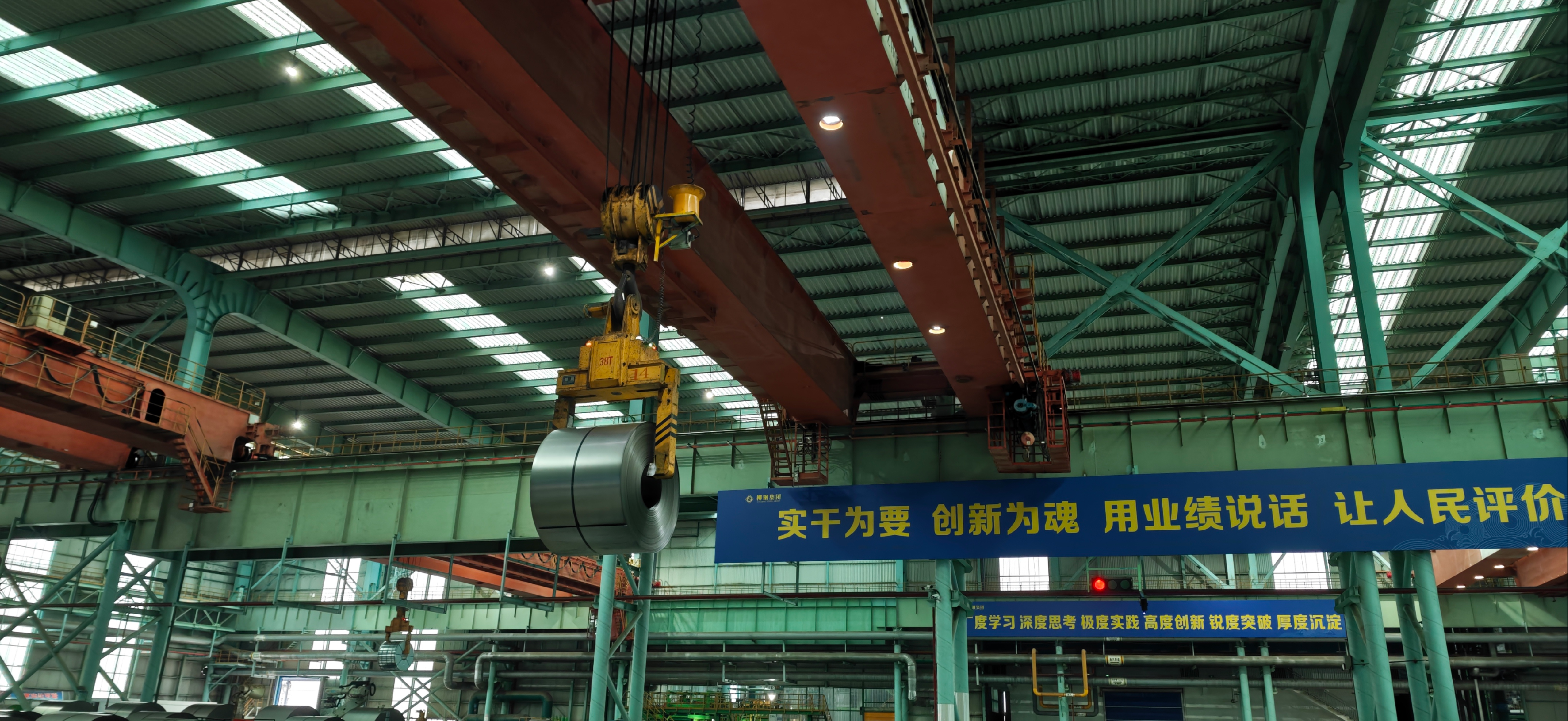 According to Su Hui, a technical expert at the cold rolling mill, there is a three or four story high equipment in the workshop called the "Cloud Vision" heavy-duty truss manipulator, jointly built by Liugang Group, Huawei, and China Mobile Guangxi.
Its job is to lift the rollers from the storage area to the production line. In the past, this action required three people to cooperate on-site and operate in a high-temperature and dusty environment.
In 2020, Liugang Group took the lead in a transformation and achieved remote control through 5G network.
But remote control still requires someone to keep an eye on it, so the Liugang team teamed up with the Huawei team to continue tackling the problem and equipped the robotic arm with a binocular vision system and AI algorithm.
Su Hui introduced that during the tough period, the Liugang team and Huawei team iterated over 10000 lines of code and processed more than 1 million image data, ultimately increasing the success rate of roller grasping from 85% to 99.5%, with accuracy controlled within 15 millimeters. After the renovation was completed, the personnel cost of this position decreased by 83%.
At the entrance of the galvanizing production line in the cold rolling mill, there is also a double line truss type intelligent unbinding robot.
Before the steel coil is put online, it is necessary to remove the strapping first, which used to be a manual operation.
Now this robot is equipped with a millimeter level laser positioning system, with a positioning error of less than 0.5 millimeters. The success rate of unbinding has reached 99.5%, and each shift completes the automatic unbinding of 60 steel coils, covering 4 production lines.
The cold rolling mill produces thin sheets and galvanized sheets. Liugang's Fangchenggang base also has another important production line, the 3800mm wide and thick sheet production line, which will be put into operation in November 2024. The products cover fields such as ships, marine engineering, and wind power.
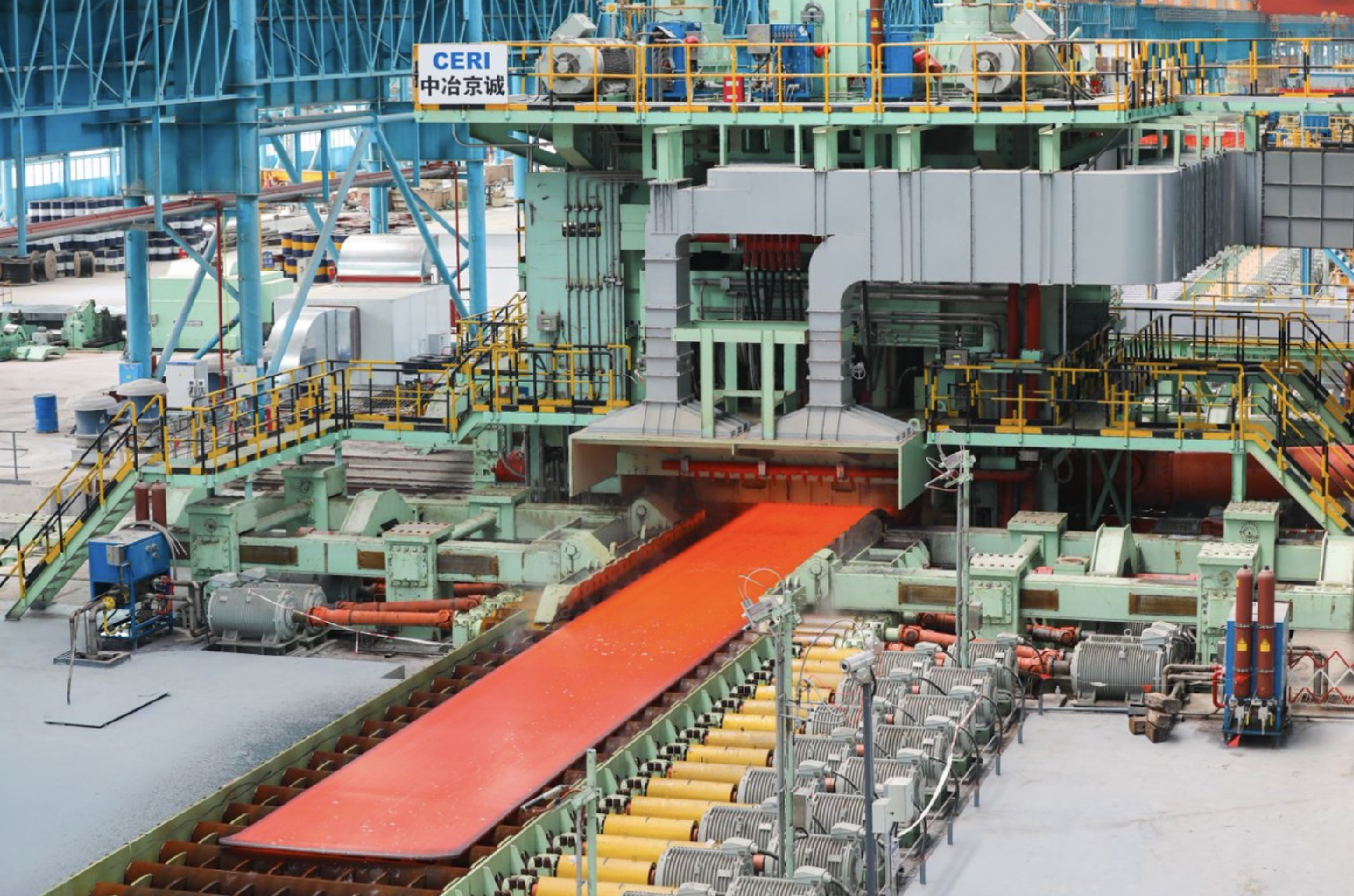
The orders for wide and thick plates have a characteristic known as "traditional Chinese medicine orders" in the industry, with a wide variety, diverse specifications, and small batch sizes. Each order has different requirements for the length, width, and thickness of the steel plate.
Chen Peizhi, the technical supervisor of the wide and thick plate production line model at the Hot Rolling Plant, introduced that in the past, engineers had to manually match customer contracts with the slabs to be rolled in the system. They had to determine which orders could be cut using the same slab and how to arrange the cutting plan to minimize material waste. Processing thousands of contracts could take several hours, and it was difficult to find the global optimal solution.
Now, Liugang Group has developed an intelligent plate and billet assembly system based on Huawei's Tianchou solver.
The system converts human experience into computable rules and models, taking into account multiple objectives such as delivery time, production line load, energy consumption, etc., and can complete the calculation of over 1000 contract layout plans in just a few minutes.
Chen Peizhi said that currently more than 90% of contracts can be automatically matched, and the yield and yield have both increased by more than 1%.
1% may not sound like much, but for a production line with an annual output of over 2 million tons, for every 1 percentage point increase in yield, more than 20000 tons of steel are saved in a year.
Next Three Years
Li Bin introduced the company's plan for the next three years at the press conference held on March 31, stating that Liugang Group will invest over 3 billion yuan to promote the construction of "Smart Liugang".
For a steel company, 3 billion yuan is not a small amount, and this investment indicates that the management's expectations for the return on AI cost reduction are clear enough.
So, where will these 3 billion yuan be spent?
According to Li Bin's introduction, some will be invested in the continuous construction of computing infrastructure and large model platforms, some will be invested in the development and implementation of specific scenarios, and some will be spent on people.
Liugang Group has launched a plan called "Ten Thousand AI Employees", which has two layers of meaning. The first layer is to enable real employees to master AI development capabilities. So far, Liugang Group's employees have independently built 2082 AI assistants.
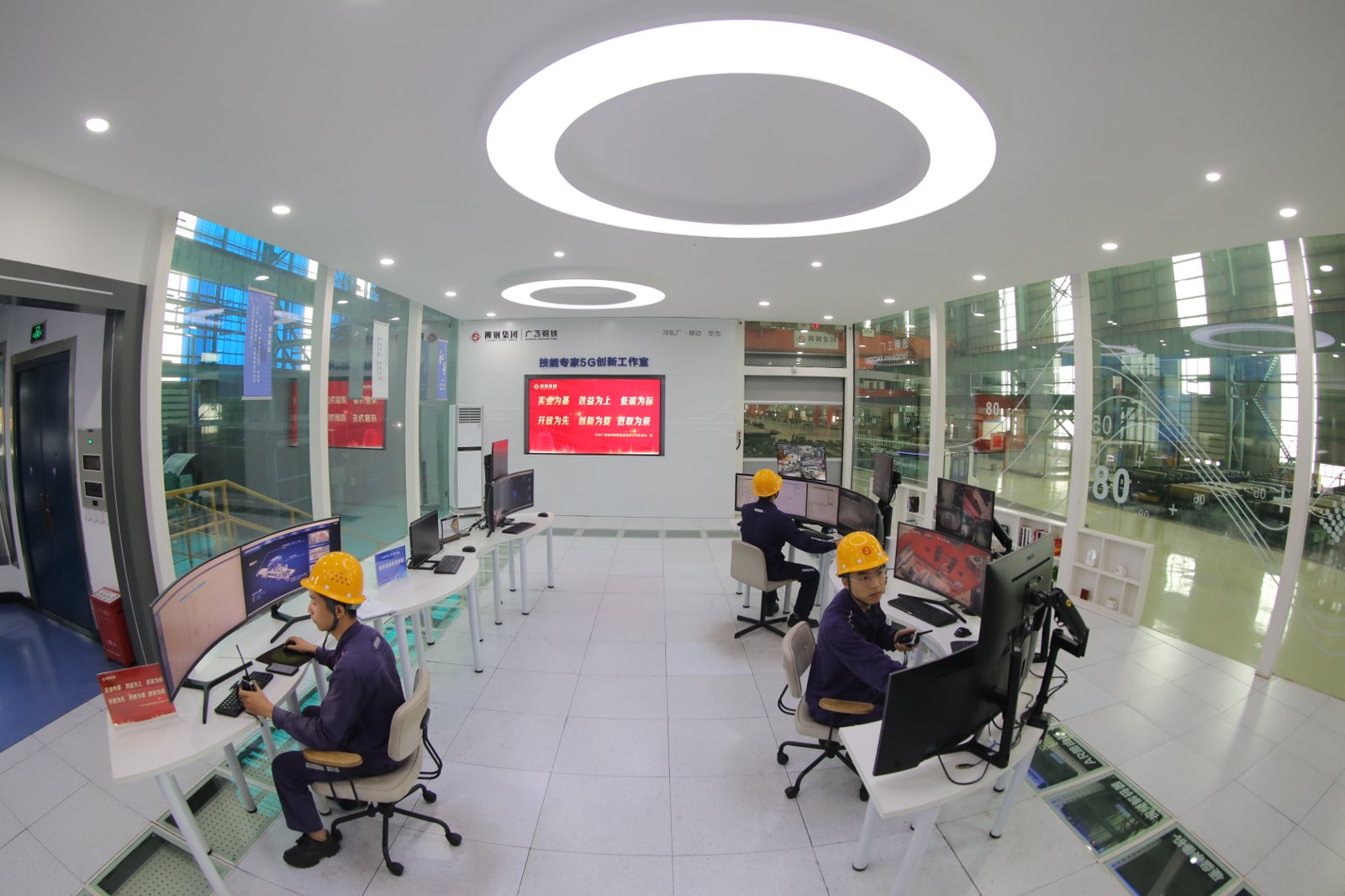
Liugang's sales center in Fangchenggang has an employee who previously had no IT development foundation. Using the ability of large models combined with the company's sales knowledge base, an intelligent quotation assistant was built to solve the problem of low efficiency in manual accounting and easy errors in quotation for the company's sales personnel.
The second layer is to deploy intelligent agents in various stages of production, allowing AI to participate in scheduling, scheduling, quality inspection, and other work in the form of "digital employees".
According to the plan, Liugang Group's goal is to achieve a full process intelligent coverage rate of over 80% within three years, build more than 10 production line level industrial intelligent agents, construct over 30 high-quality industrial datasets, and continue to implement 20 benchmark AI scenarios by 2027.
Liugang Group is not the only steel company doing this.
Li Yiren mentioned at the press conference that just a week before the conference, the China Iron and Steel Industry Association held a closed door seminar on the development of the "AI+steel industry" in Nanjing, with top steel companies such as Baowu, Ansteel, Shougang, Hegang, and Nangang participating in the seminar.
At present, the China Iron and Steel Industry Association is commissioned by the Ministry of Industry and Information Technology to organize enterprises such as Liugang Group, Baowu, Ansteel, and Nangang to compile the "AI+Steel Industry Implementation Guidelines".
Huawei is also increasing its investment in the steel industry.
Huawei Steel Nonferrous Legion was established in 2025 and has collaborated with over 300 companies worldwide, including more than 120 steel and non-ferrous metal enterprises, developing over 100 AI scenarios covering the entire smelting process.
Huawei Vice President Jiang Wangcheng introduced the implementation of other industries at the press conference. Baowu Group relies on the Pangu large model to predict the temperature of blast furnaces, which can reduce costs by 5 to 10 yuan per ton of molten iron; Hailuo Cement optimized global energy consumption through a predictive large model, resulting in a 1% reduction in standard coal consumption and an annual carbon reduction of over 4500 tons per production line.
Huawei Steel Nonferrous Corps CEO Shi Mao stated at the press conference that in the current rapidly evolving AI technology, the "Xuantie" steel big model architecture and the certainty of industry partner development system should be used to cope with the uncertainty in technological development.
For Liugang Group, the efficiency improvement brought by AI has an additional significance, as the company is accelerating its global expansion.
Guangxi is the only province in China that is connected to ASEAN countries by land and sea. Relying on the coastal advantages of the Fangchenggang base, Liugang Group has experienced rapid growth in product exports in recent years. Its product structure has expanded from traditional bar materials to wide and thick plates, ship plates, automotive steel, and other varieties, with export markets covering the ASEAN, the Middle East, and South America.
The 3800mm wide and thick plate production line, which will be put into operation in November 2024 at Liugang Fangchenggang Base, fills the gap in the production of wide and thick plates in Guangxi. Currently, the products have obtained global mainstream classification societies and EU CE certification.
Liang Lei, Deputy Secretary General of the People's Government of Guangxi Zhuang Autonomous Region, stated at the press conference that Guangxi is implementing a development path of "research and development in Beijing, Shanghai, and Guangzhou+integration in Guangxi+application in ASEAN". Frontier technologies are being developed in Beijing, Shanghai, Guangzhou, and other places, integrated and deployed at production sites in Guangxi, and then exported to ASEAN countries.
At present, more than 100 leading artificial intelligence enterprises in Guangxi have settled in Nanning, and the core industrial output value of artificial intelligence in the industrial field has exceeded 89 billion yuan.
At the press conference of the "Xuantie" steel model, Liugang Group, Huawei, and China Mobile Guangxi signed a deepening cooperation agreement.
According to the plan, by 2027, the application scenarios of the "Xuantie" steel large-scale model will cover the main production and operation links of Liugang Group.
In the future, Liugang Group's goal is to work with partners such as Huawei to seize opportunities and gradually move towards a national leading intelligent factory with international competitiveness based on artificial intelligence technologies such as the "Xuantie" steel model.
ST Qingyue fined 172 million yuan for suspected fraudulent issuance and illegal letter disclosure
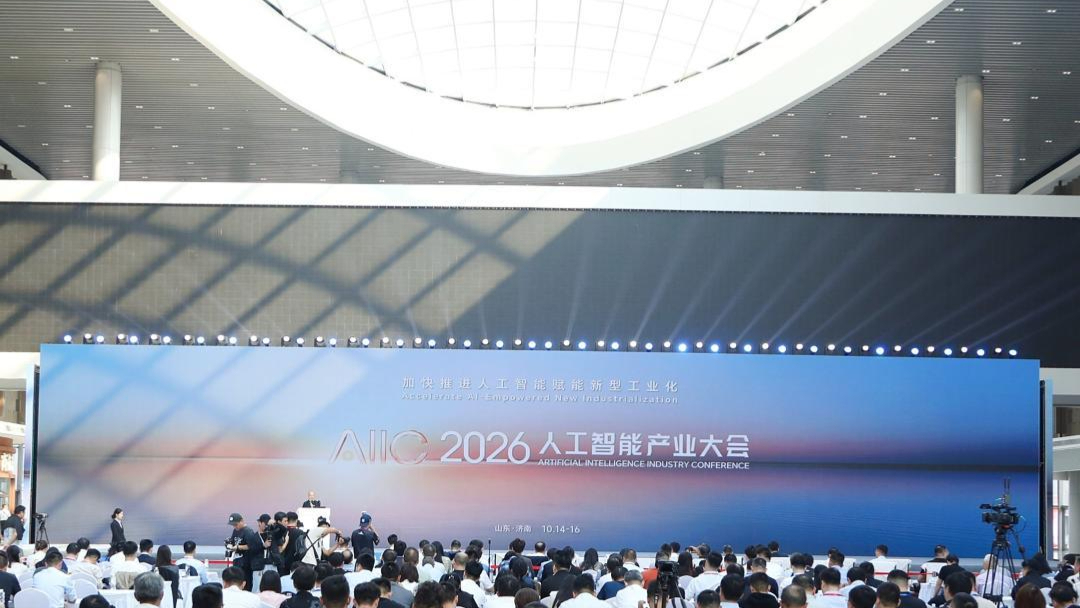
Focusing on "Artificial Intelligence Empowering New Industrialization", the 2026 Artificial Intelligence Industry Conference opens in Jinan
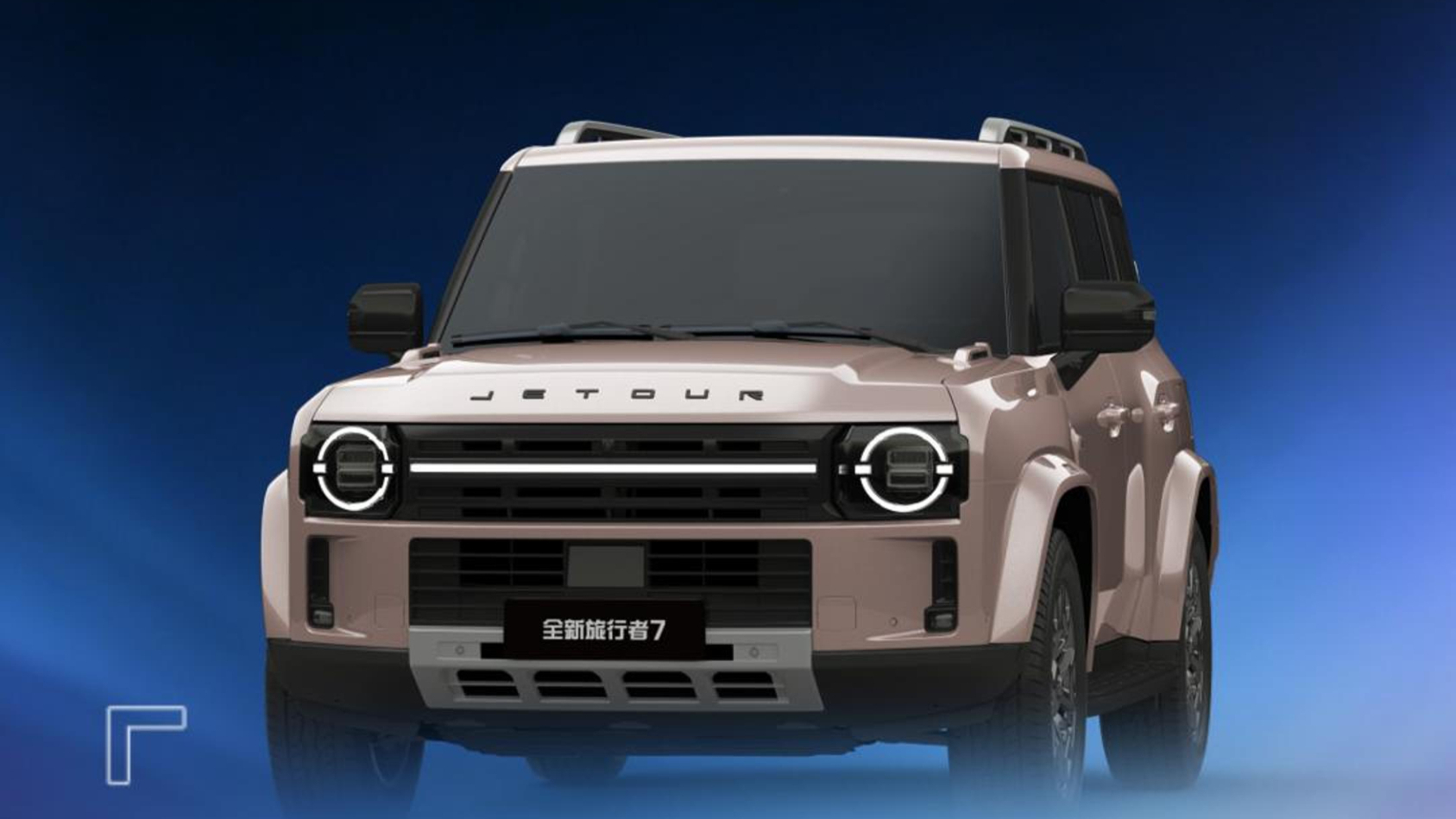
Can Traveler 7 take care of both commuting on weekdays and mountain trips on weekends? This time, the all-new Jetour Traveler 7 will focus on its "Keyo" # Smart Beauty Travel Champion Box # Kecheng Keyo Keyo Travel # 7 Series Square Box New Benchmark # New Traveler 7 Renewal Surprise Price Starting from 125900 yuan