2026-04-07 10:34


On April 3, 2026, Tianbing Technology carried out the first orbit test mission of the Tianlong-3 carrier rocket at the Jiuquan Satellite Launch Center, but failed to fully achieve the predetermined mission objectives. The specific reasons are currently being comprehensively analyzed and investigated.
Public information shows that in the past two years, domestic commercial aerospace has entered a stage of high-intensity research and intensive testing, and many mainstream private rocket companies have encountered setbacks in the development or launch of different models. In January 2026, the first flight mission of the Star River Power Ceres 2 carrier rocket was abnormal and the launch mission failed; In December 2025, the first flight and recovery of the Blue Arrow Space Zhuque-3 Yao-1 carrier rocket failed; In November 2025, during the final stage of its flight, the Star River Power Ceres 1 Y19 rocket shut down prematurely due to abnormal conditions, failing to send the satellite into orbit; In August of the same year, the improved Y3 rocket of Blue Arrow Aerospace Zhuque 2 failed during its flight test mission. In December 2024, an abnormality occurred during the flight test of the Zhongke Aerospace Lijian-1 Yao-6 rocket.
Industry signal behind frequent setbacks: Commercial aerospace enters a 'deep water battle period'
From the perspective of industrial development stages, the frequent setbacks encountered by mainstream domestic commercial aerospace enterprises are not an accidental phenomenon, but reflect that the entire industry has moved from the early stage of verification flights to a concentrated period of higher technological complexity such as large capacity and recyclability. At this stage, the scale of system integration significantly expands, the degree of engineering coupling significantly increases, and any deviation in a single link may be amplified as a system level problem.
In recent years, China's aerospace industry has developed rapidly, with "mission success" and "record breaking" becoming the norm, seemingly causing us to forget the inherent high-risk nature of the aerospace industry.
The first launch of the Tianlong 3 carrier rocket is a large capacity reusable liquid carrier rocket independently developed by Tianbing Technology to meet China's future large-scale satellite Internet networking needs. The rocket has a total length of 72 meters and a takeoff weight of about 600 tons. It is equipped with 9 Tianhuo-12 engines in the first stage and can carry up to 22 tons in low Earth orbit. It has the capability to launch 36 satellites with one rocket. Developing a large liquid rocket of this scale with reusable technology is one of the most technically challenging and system complex engineering challenges in the current commercial aerospace field.
What is the value of the first flight? ??The technological closed-loop from "validation limit" to "data-driven"
A senior industry analyst who has been observing the aerospace industry for a long time pointed out that to view the first flight mission of commercial aerospace, it is necessary to distinguish its nature. He stated that the core objectives of the first flight of Tianlong-3 are payload insertion into orbit and system flight verification. Its essence is to serve as a technical closed-loop verification node for subsequent large-scale launch missions, with the aim of testing the reliability of the new rocket system throughout the design, manufacturing, and launch chain in a real flight environment, and exposing potential hazards.This is different from the commercial flight missions of mature rocket models, which not only suffer greater economic losses but also reflect reliability issues that have not been exposed even after the technology has been fully validated and solidified.
Especially for a high-capacity reusable liquid rocket like Tianlong-3, which is highly integrated with hundreds of thousands of components, it requires highly coordinated operation of multiple systems such as power, structure, control, and separation. Any slight deviation may trigger a chain reaction in the complex system, ultimately leading to deviation. What is more important than a 'successful first flight' is to establish an efficient technology iteration mechanism - accumulate data, expose problems, optimize solutions through repeated flight tests, and ultimately form a mature technology system that meets the needs of China's aerospace industry, "the analyst emphasized.
Tianbing Technology stated that the first flight test has obtained key process parameters and a large amount of measured data in the real flight environment, providing an irreplaceable verification basis for understanding the performance boundary of the product under extreme working conditions, further optimizing the design, and providing rocket reliability.
Space laws from a global perspective: tolerating 'trial and error' is necessary to move towards' reliability '
Throughout the global development of commercial aerospace, technological evolution has never been smooth sailing. According to Xinhua News Agency, in March of this year, the Japanese commercial space company "Space One" failed to launch the small rocket "Kailos" 3. This is the third launch failure in this series of rockets after two launches and two losses in 2024. In January 2026, an abnormality occurred during India's polar satellite launch mission, with the third stage of the rocket deviating from orbit after ignition, resulting in the failure of the satellite launch mission.
Even in mature space systems, high-capacity reusable launch vehicles have also experienced multiple experimental setbacks in the early stages of development or technological transition. For example, SpaceX, the world's leading commercial aerospace company, had three consecutive launch failures of its early Falcon 1 rocket before achieving large-scale success with the Falcon 9 rocket. Exposing problems through experiments and rapidly iterating improvements is a necessary path for carrier rockets to move from blueprints to maturity and reliability, which has become a universal law in the development of global commercial aerospace.
From a broader perspective, maintaining strategic determination in the face of technological setbacks in commercial aerospace development stems from the national strategic significance it carries.
Currently, the competition for low Earth orbit satellite orbit and frequency resources is becoming increasingly fierce worldwide, and "occupying frequency and maintaining orbit" has become an important issue in the construction of a space power. As a part of the overall development of the national aerospace industry, commercial rocket companies undertake the important task of high-density and low-cost launch of tens of thousands of satellites in the future. It is worth noting that this year's Government Work Report proposes to build emerging pillar industries such as "aerospace". Encouraging private enterprises that master the core technology of reusable liquid rockets with large capacity to continue testing and accelerate iteration has become an important supporting force for China's participation in the competition for space "new infrastructure".
Therefore, for the first flight test that undertakes key technology verification tasks, its value should not be simply judged by a single result. Only by facing risks squarely, accepting trial and error, and continuously optimizing with data-driven approaches can commercial aerospace move from being "able to fly" to being "reliable and scalable", and achieve a leap in capabilities in higher dimensions.
In response to the failure to fully achieve all the predetermined goals during the maiden flight, Tianbing Technology stated that the company will face up to the problems exposed in the test. The company has organized a research and development team and collaborated with experts in relevant fields to conduct systematic analysis and in-depth investigation of all maiden flight data, accurately identify the reasons, continue to promote optimization and improvement work, steadily advance the follow-up go around and development process of Tianlong-3, and contribute to the development of China's commercial aerospace industry.

ST Qingyue fined 172 million yuan for suspected fraudulent issuance and illegal letter disclosure
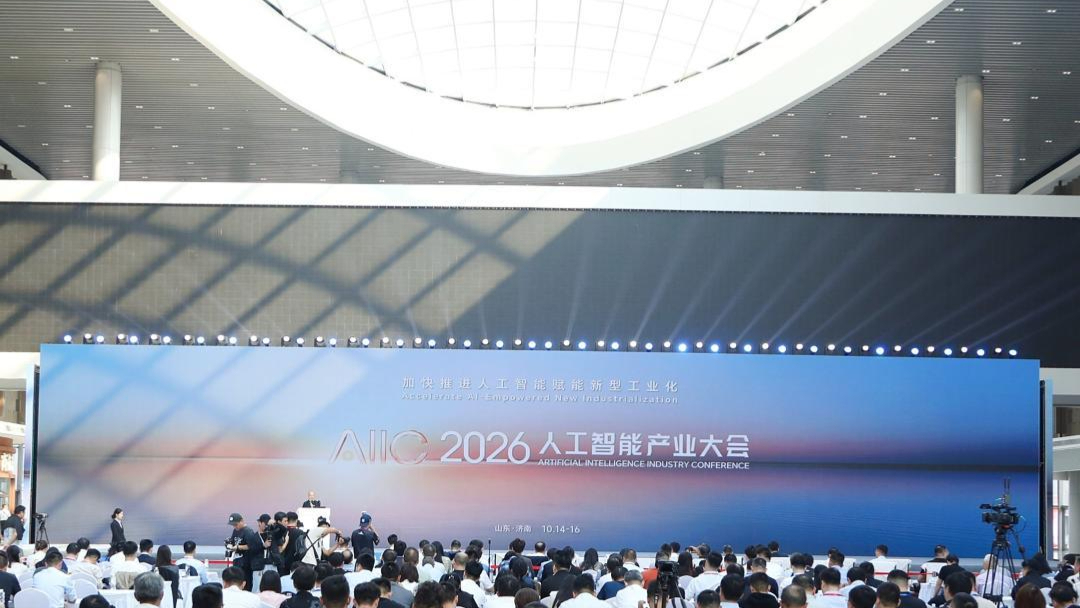
Focusing on "Artificial Intelligence Empowering New Industrialization", the 2026 Artificial Intelligence Industry Conference opens in Jinan

Can Traveler 7 take care of both commuting on weekdays and mountain trips on weekends? This time, the all-new Jetour Traveler 7 will focus on its "Keyo" # Smart Beauty Travel Champion Box # Kecheng Keyo Keyo Travel # 7 Series Square Box New Benchmark # New Traveler 7 Renewal Surprise Price Starting from 125900 yuan