2026-11-26 11:41

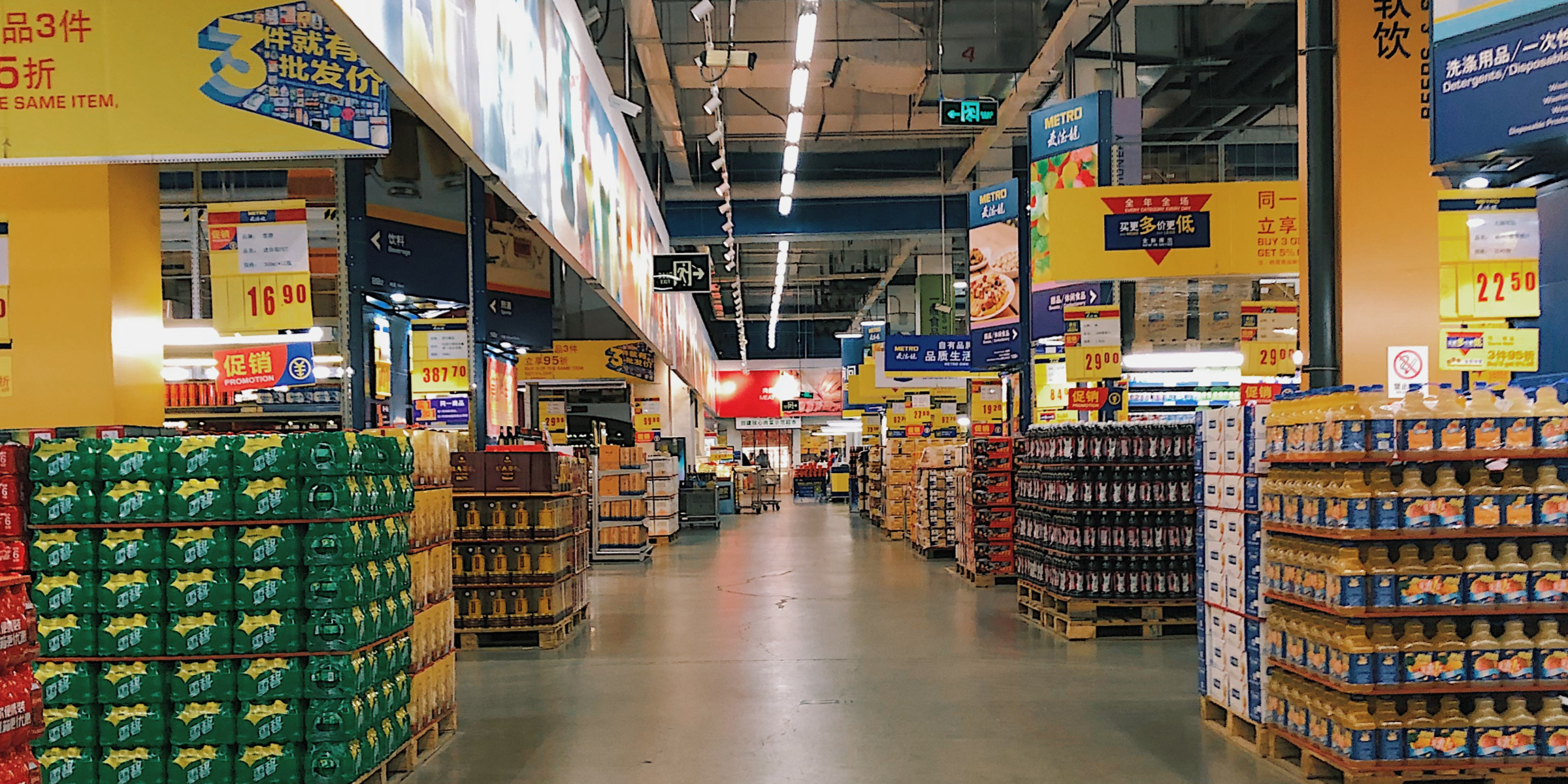
The brands on the shelves are gradually being replaced by channel owned brands, and more and more manufacturing companies are becoming their contract manufacturers, including both large enterprises and less well-known small and medium-sized enterprises.
Sam's Member's Mark plus fresh oyster sauce is manufactured by Haitian, and the DL black bean brewed soy sauce from Pangdonglai comes from Maruzhuang Golden arowana, Hema, Wal Mart Wojixian, Dingdong V5 and other private brand fresh milk are backed by Mengniu, Yili, Junlebao and other leading dairy companies. After Sam's, an internet famous Apple product that once sold 200000 units per month, was taken down, it was replaced by Member's Mark's own brand, and the manufacturer remained the same factory
The "Turning Point Has Arrived: 2026 China Private Brand Development Report" released by the China Chain Store Association and Boston Consulting Group in August this year shows that the private brands of Chinese supermarkets have entered a window of rapid development, and the penetration rate is expected to increase from the current 8% to 20% -30% in the next five years.
The power relationship on the shelves is being redefined.
OEM: Capacity reallocation
In recent years, the role of retail channels has undergone profound changes. From Sam's Club, Orozi, Hema and Wal Mart, more and more retailers are no longer just playing the role of "selling", but are directly involved in the production process in the form of their own brands. This is essentially an extension of retail channels to the "production side", with outsourcing becoming the core lever for scheduling production capacity.
In the past, the value of channels was mainly in selling goods. It has stores, shelves, and foot traffic. The brand hands over the goods to it, which distributes them to various stores and sells them on shelves to consumers. But with the rise of e-commerce, instant retail, and hard discount formats, the efficiency advantage of traditional selling has been systematically weakened. Channel providers have found that instead of relying on external brand premiums, it is better to directly integrate the production capacity of high-quality factories and reconstruct product strength using the logic of "big brand quality, factory price".
Under this structure, outsourcing has become a means for channels to accurately schedule and reconfigure the production capacity of the food processing industry. The platform or channel party extends its supply chain by outputting standards, formulas, and even packaging design requirements, making the OEM factory an extension of its supply chain.
Manufacturer Differentiation
In various fields such as daily necessities, beverages, snacks, etc., top brands will have a considerable concentration of channel outsourcing by 2026.
Libai once customized laundry detergent for Pang Donglai, Jinmailang OEM bottled natural water for Hema, Ganyuan Food provides customized nuts for Sam, and Taoli OEM bagels for Sam in some areas
Unified Enterprise has established an independent first level department, the "Strategic Alliance Development Department," to coordinate channel customization and outsourcing. In the first half of 2026, this business generated revenue of 671 million yuan. In the frozen market, top frozen enterprises such as Anji, Sanquan, and Qianwei Central Kitchen have also established their own brand OEM business in supermarkets.
For these types of enterprises, undertaking some channel OEM business is more about realizing surplus production capacity and diversifying revenue sources. Although they have hidden their names on shelves in some channels, this has not shaken their dominant position in traditional distribution systems, online flagship stores, and consumer minds, and the brand foundation remains solid.
What has truly been rewritten by this wave are small and medium-sized manufacturers who already have no brand or low brand awareness.
What are the challenges faced by small and medium-sized contract factories? High channel costs, low price competition, and platform pressure.
When channels control traffic entry and pricing power, contract manufacturers lacking brand advantages have almost no bargaining power. Under pressure, small and medium-sized contract manufacturing enterprises have taken two different paths.
The first type is to deeply rely on channels and engage in large-scale contract manufacturing. They rely on contract manufacturing as their absolute main source of income, and their business is highly concentrated in the competition of order size. On the surface, the factory appears to be operating at full capacity, but in an environment of abundant production capacity and strong substitutability, its bargaining power is continuously being diluted. The biggest risk for these types of enterprises is not earning less, but their irreplaceability always lies in the hands of the channel partners. The cost of changing suppliers for channel partners is much lower than the cost of losing orders.
The second type involves both outsourcing and developing one's own brand. They already have a certain brand foundation or regional influence, and choose to exchange outsourcing for incremental retail channels. For example, on the one hand, Jiale Dairy has taken orders from leading retailers such as Orozi, Hema and Wal Mart, and its OEM business revenue has reached 1 billion yuan; On the other hand, we have established our own low-temperature dairy brand through the layout of "Jiufeng Ranch".
It should be pointed out that the volume and cash flow brought by outsourcing have fed back supply chain capabilities and brand investment. But there are also hidden concerns on this path: if the incremental outsourcing is overly concentrated in a single channel, private brands will never be able to grow independent "roots".
Names are earned, not given by channels
From the "stranger" behind the shelf label to the front of the stage, there are two directions for OEM companies: developing brands or pursuing high "technology".
Direction one, taking the branding route, is the choice of many factories. Fino and Chuanwazi are both examples of suppliers moving from behind the scenes to the forefront. Feno was a coconut based raw material supplier for top coffee brands in its early years, relying on thick coconut milk to create explosive products, but it was difficult to replicate similar products in the future; Chuanwazi roasted pepper sauce has achieved a sales volume of billions, and its growth is highly dependent on a single explosive product. They have all achieved results in segmented markets, but their overall size is not large, and cross category expansion is difficult. They have not yet grown into brands with strong enough influence.
Many contract manufacturing companies tend to fall into a misconception when turning to their own brands: thinking that with excellent quality and low costs, they can win the market. In fact, production enterprises need to convert their production capacity into differentiated advantages that consumers can see and taste in order for their brands to stand firm.
Direction two, strive for advanced "technology". The development of new products for Sam's and Hema in 2026 relies heavily on factories with research and development capabilities. Anjing Food has established a customization department to provide dedicated customization teams for core supermarkets such as Sam's and Hema in the research and development stage. We promote flexible production of small and multiple batches, and shift our customization business from inventory production to order production.
When channels establish their own brands, what they lack is not only production capacity, but also product definition and formulation capabilities. Once the OEM factory grasps this part, changing channels and suppliers is no longer as simple as changing production lines.
The ultimate position of a contract manufacturing enterprise is never determined by how many channel orders it receives, but by whether it holds something that retail channels cannot take away: trust, differentiation, and cost efficiency, all of which are indispensable.
(The author is a researcher at the Jingguan Research Institute)
Overseas contract manufacturing is restricted, who will take on orders for domestically produced chips?

Financial institutions prepare for a 'good start', marketing workshops become popular

Automobiles hit 'patent wall' while going abroad: BYD accused of appearance infringement, Ti7 temporarily banned from sale in 27 EU countries