Economic Observer Follow
2026-11-19 16:20

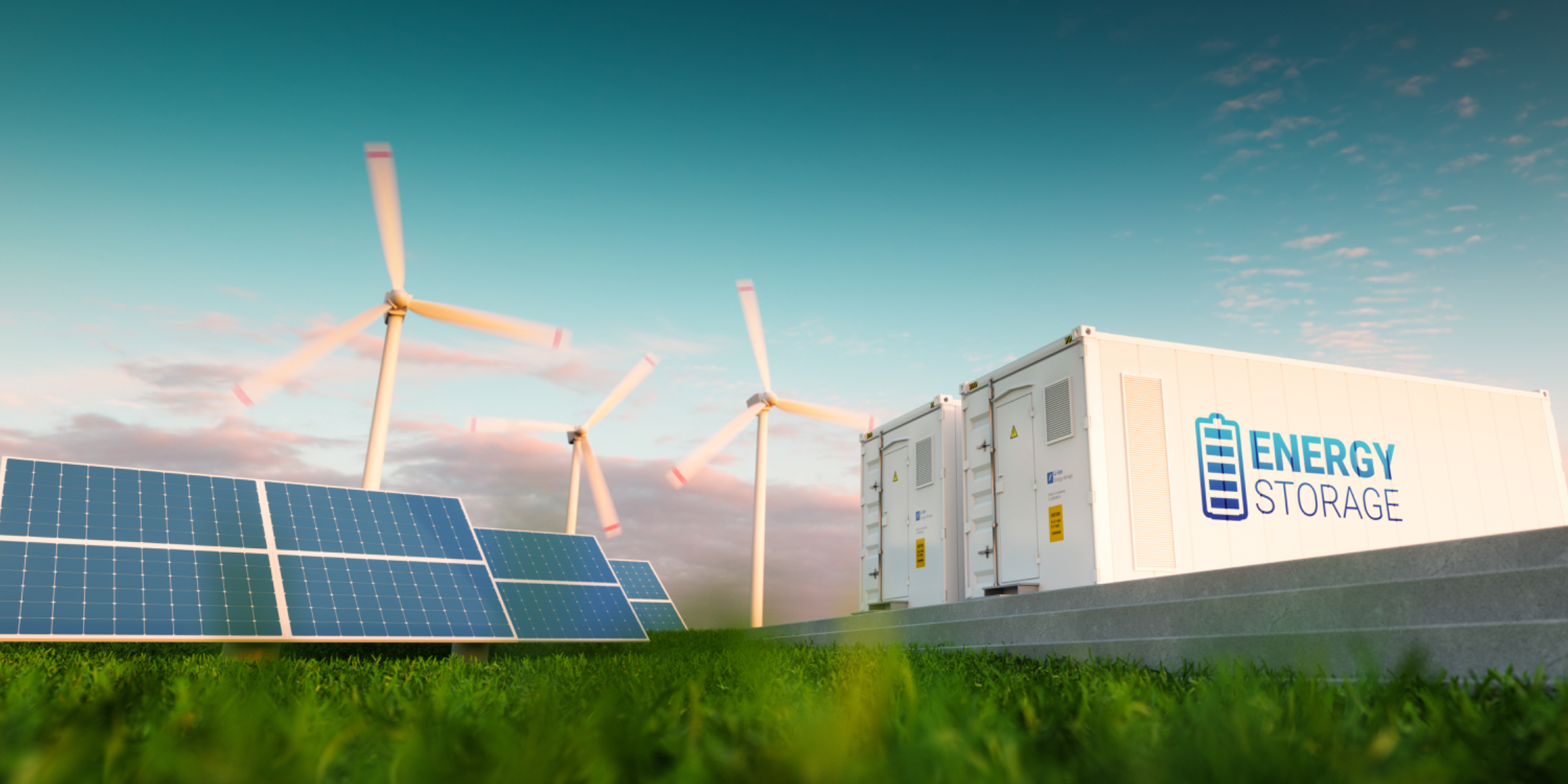
On November 18th, a public announcement from the Hengshui Development and Reform Commission showed that a 100MW/200MWh independent energy storage project in the local area was planned to be cancelled due to "not meeting the substantive construction standards". On the same day, the construction subcontracting procurement of a 1.4GWh energy storage project in Shanxi was terminated due to "insufficient effective suppliers and obvious lack of competition". These are just two cases of the energy storage industry's "hot bidding and cold installation" in 2026.
According to a research report by Guosen Securities, from January to September this year, the bidding (including centralized procurement) for domestic energy storage systems and EPC (Engineering General Contracting) reached 451.9 GWh, a year-on-year increase of 48%; During the same period, the newly installed capacity was only 102.3GWh, a year-on-year increase of 6%.
Is the difference of about 4.4 times due to artificially high demand or a stuck conversion process?
4.4 times the drop
From the perspective of industrial laws, 'bidding first, installation lagging' itself is not abnormal. Because bidding only represents the completion of investment decision-making intention and procurement scope locking by the owner, and installation is the physical result at the end of the chain, which also involves equipment scheduling and delivery, site implementation, access system review, grid scheduling agreement signing, financing lease arrangement, and final acceptance and operation. Cross year completion is the norm. The conversion cycle of independent energy storage is generally between 6 to 12 months, and the high base formed by the two rounds of rush installation in May and December 2025 will further amplify the surface contrast.
But the problem lies in the magnitude. Yuan Shuai, Deputy Secretary General of Zhongguancun Internet of Things Industry Alliance, has classified the current state as "partially normal, overall abnormal", based on three criteria: firstly, the normal time delay is manifested as a mild lead in bidding and a subsequent catch-up in installation, while the current situation is a high-speed expansion of the bidding end and almost stagnation of the installation end, with divergent growth directions at both ends, indicating that the problem is not in the timing sequence but stuck in the conversion stage; Secondly, there is an expansion in the scope of bidding, such as the centralized procurement framework, multi section splitting, mixed packaging of wind and solar facilities and independent energy storage, and repeated inclusion of the same project in the pre research and formal bidding stages, which will make the front-end data system more systematic than the real demand; Thirdly, the previous centralized grid connection before the policy node overdrawn the ability to undertake subsequent orders, and the bidding did not fall synchronously, resulting in the accumulation of existing "paper projects".
Gao Chengyuan, the director of the Tianyuan Influence Research Institute, summarized it as "reasonable timing difference, distorted water level difference". He told the Economic Observer that the difference of about 4.4 times between 451.9 GWh and 102.3 GWh has exceeded the scope that can be explained by pure construction period. "There are a large number of paper orders mixed in: duplicate statistics, unfilled flow standards, occupying pits without construction, and waiting for electricity prices to be connected.
According to a research report by Guoxin Securities, the gap between bidding and installation "means that the scale of grid connection is expected to continue to grow in 2027". In other words, a low current installed capacity does not mean that demand has disappeared, but it takes time and conditions to convert it into physical installation.
Why do homeowners take the initiative to "cover up projects"
The more fundamental reason than time delay is that the project benefit model has undergone changes. After the weakening of mandatory storage requirements, energy storage revenue has shifted from "policy support" to market-oriented trading, while the coverage level of capacity compensation, fluctuation range of spot prices, frequency of auxiliary service calls, and settlement rules have not yet stabilized in most regions.
The pressure on the revenue side is supported by clear data. According to a research report by CITIC Securities, the slower than expected growth rate of installed capacity from January to September 2026 is mainly due to the narrowing of peak valley price differences in the northwest region. The average peak price in Mengxi from January to April decreased by about 40% to 47% year-on-year, which is due to the slower growth rate of load in the northwest, Inner Mongolia's energy storage capacity in operation has reached 22GW, while the peak load in Mengdong and Mengxi is about 51GW, and the "anti peak regulation" characteristics of wind power suppress the late peak period.
According to statistics from the Zhongguancun Energy Storage Industry Technology Alliance, the peak valley price difference in the three provinces of Northeast China has generally decreased significantly, with a decrease of 31.1% in Liaoning; The year-on-year decline in Mengxi, Ningxia, and Xinjiang in the northwest is 22.8% to 60.2%, and the maximum peak valley price difference in most regions has fallen below 0.4 yuan/kWh. UBS's calculations show that from the beginning of 2026 to the present, the internal rate of return (IRR) of total investment ranges from 0.9% in Xinjiang to 8.0% in Mengxi, spanning over 7 percentage points.
In addition, the cost side of energy storage systems is also being squeezed. According to data from July 2026, except for eastern Inner Mongolia, system operating costs in 17 regions doubled year-on-year, with Anhui increasing by 118% and Qinghai increasing by 881%. China CITIC Securities converted it into "an average increase of 3 cents/kWh in operating costs of various provincial systems nationwide compared to last year, which is equivalent to reducing the peak valley price difference that can be obtained from the actual operation of energy storage".
There is also a gap between the "nominal" and "received" capacity electricity prices: as of October 2026, 14 provinces in China have introduced capacity electricity prices or compensation rules, with nominal standards ranging from 100 yuan/kW · year in Hebei (later raised to 150 yuan) to 330 yuan/kW · year in Gansu and 370 yuan/kW · year in the draft for soliciting opinions in Liaoning, with a gap of more than twice; However, due to factors such as the duration of peak net load, capacity supply and demand coefficient, and utilization rate assessment, 2-hour energy storage generally only receives one-third of the nominal compensation. The capacity leasing market is also collapsing, falling from 200-300 yuan/kW · year to the range of 50-150 yuan/kW · year. China CITIC Securities clearly pointed out that the actual implementation progress of capacity electricity pricing is slow, and there is a problem of delayed issuance.
Yuan Shuai also pointed out the reverse effect of the price mechanism: the industry has entered a stage of deep price competition, and owners expect equipment prices to continue to decline, so they intentionally extend the bidding period, purchase in batches, or even re tender, resulting in a repeated amplification of the bidding volume; The delivery quality concerns and performance risks brought about by low price bidding have also prompted the owners to slow down the pace of on-site progress. In addition, development entities generally face leverage pressure and rising financing costs, and project IRR is highly sensitive to funding costs. Once the financing plan cannot match the yield curve, the project will be stuck in a "tendered but not yet started" state.
Paper projects are being cleared out
The physical bottleneck of grid connection and consumption is the most difficult part of the scissors gap to be digested by a single investor. Yuan Shuai pointed out that the carrying capacity of local power grids is limited, the scheduling and calling are insufficient, and the actual arbitrage space is compressed. Existing projects are facing the dilemma of "less calling after completion and low returns after calling". Therefore, owners are more cautious in promoting new projects. Gao Chengyuan directly pointed out the universality of "preparing projects without milestones" and used the concentrated clearance of overdue projects in Hebei and Shanxi as evidence.
Micro cases are more persuasive than macro data. The total investment of Yongzhen Group's Baotou 300MW/1.8GWh project is approximately 1.31 billion yuan, and the grid connection time will be postponed from December 31, 2025 to September 30, 2026; As of September 30th, the station and supporting 220kV lines, as well as the 500kV collection and boosting station in the park, have basically met the grid connection conditions. However, the construction of the external transmission line from the 500kV collection and boosting station in the park to the Burhantu 500kV substation has been delayed, and the project still cannot be connected to the grid as scheduled. The reason for the delay is not due to a lack of money or equipment on the project side, but rather the progress of public supporting facilities on the grid side.
A 1 billion yuan energy storage EPC project in Shandong was put on the internet on October 8th and announced its termination on October 11th due to the inability to implement the access conditions on schedule. On August 20th, Hebei Province announced the centralized disposal of 85 projects with a total scale of 11.66GW/37.71GWh: 69 projects were postponed to start construction before January 31, 2027, and 16 projects were directly cancelled from their construction plans. Earlier special investigations in 7 cities showed that out of 100 projects with a capacity of approximately 14.85GW/45.6GWh, only 4 were successfully connected to the grid, with a scale of approximately 0.4GW/1GWh and a grid connection rate of 4%. The fifth round of Shanxi has 429 projects in stock with a total reserve of 173.49 GWh, but the actual implementation rate is less than 15% and the actual grid connection rate is less than 10%.
These cases collectively point to one point: the water between the scale of filing/signing and deliverable assets is being squeezed out by local inventory systems and inspections.
The 'scissors gap' will not automatically narrow
At the same time as the domestic installation slows down, the shipments of Chinese energy storage companies have not slowed down synchronously, but have flowed overseas. In the first three quarters of 2026, the total overseas orders of Chinese energy storage companies reached 584.6 GWh, with a single quarter high of 295.9 GWh, a month on month increase of 68%. The proportion of overseas shipments of Sunshine Power's energy storage products is as high as 83.7%, and the overseas gross profit margin of the energy storage system is 40.36%, with a gap of more than 20 percentage points compared to China.
In this reality, part of the reason for the slow installation of domestic capacity also points to the choice made by enterprises between higher gross profit markets overseas and the profit mechanism that is still being adjusted domestically, rather than solely due to problems with domestic demand itself.
But overseas diversion cannot replace domestic conversion. The direction proposed by Guoxin Securities, 'The scale of grid connection is expected to continue to grow in 2027', is consistent with the direction proposed by CITIC Securities, 'There is still growth momentum in 2027'. The 451.9GWh tender constitutes the "order reservoir" for 2027, but the opening speed depends on three variables: whether the peak valley price difference can take over in non northwest regions such as North China, South China, and Northeast China, whether the actual proportion of capacity electricity prices obtained can increase with the optimization of the list system and assessment rules, and whether the decline in lithium carbonate prices can push the IRR back to the feasible operating range.
A noteworthy detail is that the capacity compensation standard in Inner Mongolia has been lowered from 0.35 yuan/kWh to 0.28 yuan/kWh in 2026, a decrease of 20%. This means that the pace of transformation in 2027 will diverge between provinces along the line of "maturity of income mechanisms".
Yuan Shuai is more cautious about the future of the industry. He believes that the key to changing the "scissors gap" lies not in the scale of bidding itself, but in the pace of conversion of existing indicators, the clarity of the implementation of profit mechanisms, and the direction of capital costs. "If these three aspects cannot be improved synchronously, the conversion of paper orders to physical installations will continue to be delayed, and the indicative significance of bidding data for real demand will continue to decline.
Gao Chengyuan compressed the observation window into two leading indicators: "How much will be released from 2026 to 2027, not based on the number of bids, but on who comes first between the grid approval and the electricity pricing mechanism


 Subscribe