Economic Observer Follow
2026-11-22 09:27

Emerging Ornithologist
After more than a year of recuperation, Lord Sven never stopped writing and academic exchanges.
In 1863, Lord Sven believed that he had recovered his health and resumed his journey back to China. Not long after, in February 1964, he returned to Taiwan Island and resumed his exploration journey outside of official duties.
The one-year academic trip to London has thoroughly broadened Sweeney's academic horizons and career. In the following years, Svenhou continuously published papers. Exploring and writing at the same time became his full life state thereafter.
In May 1964, Swinhoe explored Keelung, Suao and other places by sea, collecting bats in a cave in Keelung and various flora and fauna on Sheliao Island (also known as Heping Island).
In August 1864, in order to prepare for the establishment of a consulate in Kaohsiung, Marquis Sven was transferred from Tamsui to Kaohsiung in the southern part of Taiwan Island. In 1865, the 29 year old Marquis Sven was promoted to the position of formal consul.
Svenhou continued his work of exploration and paper writing. The reputation gradually accumulated around him formed a circle of collectors and informants from all over Europe, including a French pastor named P è re Armand David who also came to China in 1862 and discovered giant pandas in 1869.
In 1865, Marquis Sven translated the descriptions of animals in the official Chinese gazetteer "Taiwan Prefecture Gazetteer", which classified and catalogued the native wildlife of Taiwan Island in a Western way. Sven Hou raised his doubts during the translation:
The author is not a naturalist because in most cases, they have not seen the animals they describe.
Obviously, Sven Hou, who was passionate about wilderness exploration, had not yet officially introduced scientific exploration to China.
In February 1866, Marquis Sven went on an expedition near Yushan on Taiwan Island and observed some large animals such as water deer.
Later, Sven Hou wrote the book "Taiwan Ornithology". Although this is an academic work, while describing these birds, it often touches upon some important social ecology of Taiwan Island. For example, he mentioned the parrot billed bird, which is a warning bird for the indigenous people of Taiwan before fighting against neighboring tribes, and is also a highly valued combat pet by tribal leaders. Sven Hou wrote:
This bird perfectly embodies the violent spirit exhibited by all Taiwanese birds.
The illustrations provided by Swinhoe in describing this bird also leave readers with no doubt about its appropriateness.
In the spring of 1866, Marquis Sven received a message requesting him to return to Xiamen on the first warship and take charge of the work of the Xiamen Consulate.
I will say a long goodbye to Taiwan Island in a few days.
Lord Sven continued to exercise consular power over Taiwan Island in Xiamen, but at this time, his interest in scientific exploration shifted to the wider regions of China:
After successfully researching Taiwan Island, I have decided to visit Hainan Island.
This visit opportunity appeared in 1868. At that time, the British ambassador to Beijing, Rutherford Alcock, sent Lord Sweyn to visit Hainan Island and determine its potential for commercial trade. The footsteps of Lord Sven were further expanded as a result.
Lord Sven always systematically collects specimens during field investigations. His visit to Hainan lasted from January to the end of April 1868, after which he went to Beijing.
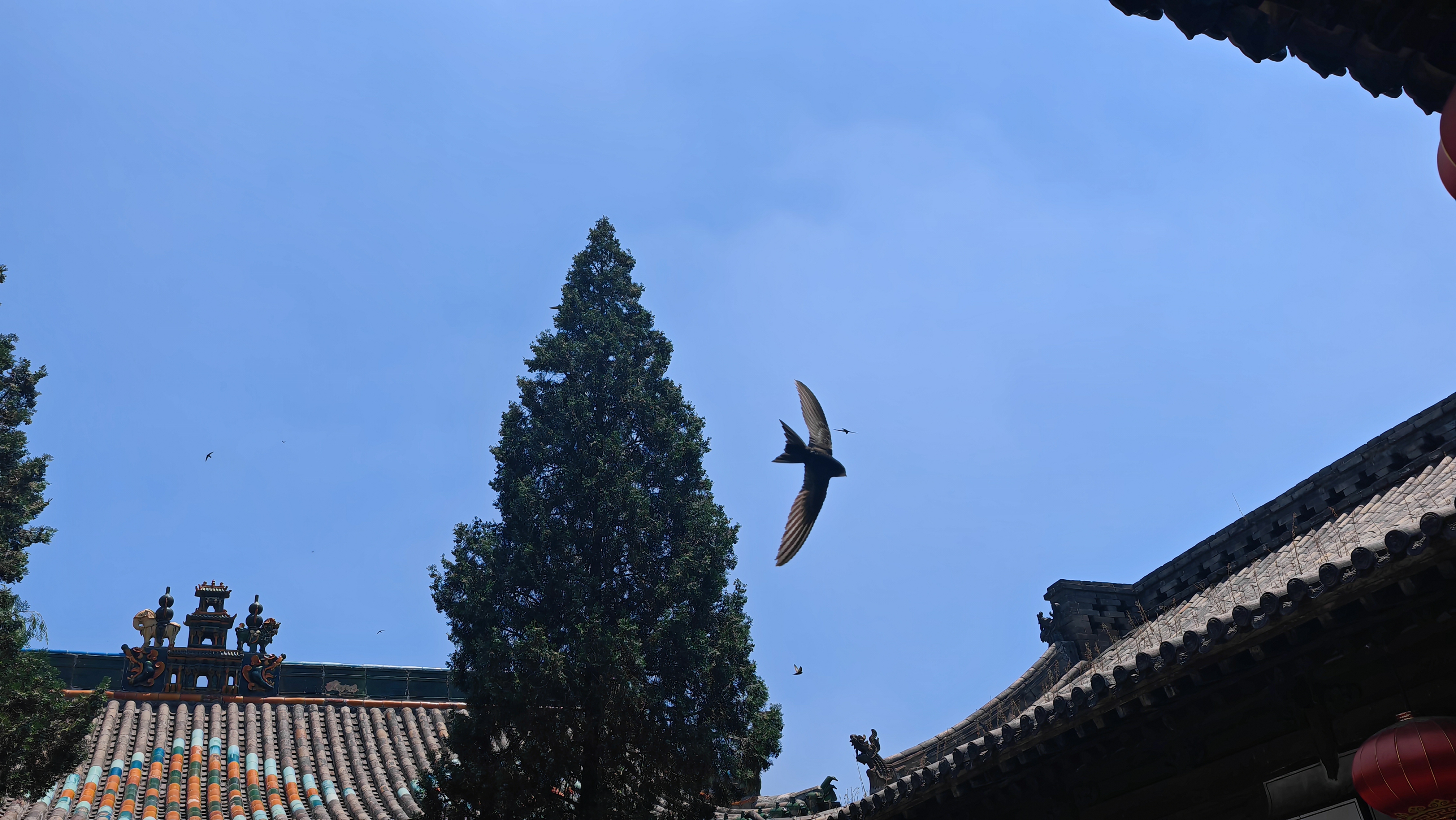
This is the second time that Marquis Sven has come to Beijing, and this time his itinerary should be to report in detail to Ambassador Alcock about his inspection on Hainan Island. Wen Wenhou arrived in Beijing around mid May, which is the time when Beijing swiftlets are building nests and raising chicks.
In 1968, the British Embassy located near the Imperial City of Beijing had been established for seven years. This is directly related to the war that Lord Sven participated in seven years ago. The most important provision of the 1958 Sino British Treaty of Tianjin was that Britain would send envoys to Beijing and establish consulates at various trade ports. British people can travel and trade in the mainland, and can rent land, build houses, establish churches, hospitals, warehouses and other institutions at various trading ports. In the Beijing Treaty between China and Britain two years later, these provisions were also reiterated.
In March 1859, the British Foreign Office appointed Frederick Bruce as the first ambassador and commercial director to China. Bruce was Ergin's brother and the British negotiator for the Treaty of Tianjin between China and Britain. It was Bruce's refusal to land in Beitang, Tianjin and enter Beijing for a treaty change that provoked the Second Battle of Dagu. After suffering a disastrous defeat, Britain and France organized an expeditionary force and eventually invaded Beijing.
After the signing of the Treaty of Beijing, British diplomats negotiated with Prince Gong Yi to rent the Lianggong Mansion (Chunqin Mansion) on the north side of the Dongjiang Mi Lane and the west bank of the Yuhe River in Beijing at a price of 1000 taels of silver per year as the residence of the British Embassy. So, Liang Gongfu became the first foreign embassy established in Beijing.
On March 26th of the following year, Bruce officially entered here.
The Lianggong Mansion is located at No. 5 Courtyard on the west side of Zhengyi Road, Dongjiaominxiang, Dongcheng District. This mansion was first built in the first year of the Yongzheng reign of the Qing Dynasty (1723) and was the residence of Aisin Gioro Yinyou, the seventh son of Emperor Kangxi. This Wangfu's original street facade faces the Imperial River, and its architectural layout is divided into three roads. The middle road is a palace style green glazed tile roofed building complex, divided into two courtyards: the front hall and the back bedroom.
After the establishment of Liang Gong Mansion as the British Embassy, the basic layout of the mansion did not change significantly. This courtyard is a typical royal palace building. The gate is located on the middle road. There are five front and rear corridors and a mountaintop building. There are three gates in the middle. Under the eaves, there are five heavy arch of wooden architecture arches. The main hall is five rooms wide, surrounded by corridors and buildings on the top of Xieshan Mountain. It is covered with green glazed tiles. Under the eaves, it is single and heavy, with seven steps on arch of wooden architecture. Nowadays, buildings such as the ceremonial gate, main hall, wing tower, sleeping hall, and annex hall have still been preserved.
This architectural form is the best habitat for Beijing swiftlets. Presumably, Marquis Sven, who came to Beijing to report to the envoy, must have noticed the Beijing Swift hovering and chirping above his head.
The main purpose of Sven Hou's visit to Beijing this time is to report on his inspection of Hainan Island. Although Hainan Island was ultimately deemed unsuitable for establishing a British consulate, Swinhoe believed that Hainan Island also contained rich scientific and cultural materials - and he had also written numerous articles.
In "On the Ornithology of Hainan", Svenhou listed 172 species of birds (including 15 new species), which were published in IBIS in 1870. The "Hainan Expedition Record" and "Hainan Indigenous People" were published together in an issue of the "North China Branch Journal of the Royal Asiatic Society" in 1872.
Lord Sven stayed in Beijing for at least 5 months, and this trip to Beijing gave him more ample time for investigation and exploration. Although there is no clear record, we can infer from the behavior and habits of Marquis Sven that during his stay in Beijing, he must have deeply observed the Beijing Swift and made specimens. Unfortunately, there is no record of how Sven Hou observed the Beijing Swift during his stay in Beijing.
In the 19th century, explorers from Europe and America came to China one after another, and they sent back the collected animal and plant specimens to their homeland, achieving their reputation in the scientific community of their own country. But besides sending the specimens back to England, Sven Hound also named many animals using the internationally recognized "binary classification system" proposed by Swedish botanist Linnaeus, which combines a signature with a specific epithet to form a scientific name.
Svenhou officially named the Beijing Swift: the Beijing subspecies "Apus apus pekinensis", which is based on Beijing as the type locality, was named in this way.
In the autumn of 1868, Lord Sven accepted a new mission and crossed the Great Wall with two linguists to conduct trade investigations in Zhangjiakou. In his travel report submitted to the Royal Geographical Society in the UK, he emphasized the impact of Russian trade on Zhangjiakou, mainly focused on the export of Chinese tea, but with almost no signs of importing Russian goods. The only evidence of British goods is' drill bits and opium brought from Tianjin '.
In early 1869, the British Embassy in China organized a large-scale survey of the Yangtze River, and Lord Sweyn was once again ordered to go there.
For a long time, British merchants have been seeking to establish an open port in the upper reaches of the Yangtze River. Under pressure from the British Shanghai Chamber of Commerce, Alcock agreed to their request and confirmed the possibility of steam navigation about 800 miles upstream of Yichang.
This time, the British expedition was equipped with three small steamships, and the members of the expedition included two naval surveyors, a special task force from the Chamber of Commerce, and Sweyn, who served as the touring consul of Alcock at the time. Sweyn not only had language expertise, but was also highly praised for his unparalleled observation ability.
The inspection team departed from Shanghai on March 8th and arrived in Yichang on April 9th. The rapids above Yichang forced them to switch to sailing. The surveyors inspected the rapids and reported that no matter how explosive they were, they could not change the uncontrollable nature of the river water here. Lord Sven and the merchants continued to sail to Chongqing and arrived on May 12th.
On the second day of arriving in Chongqing, the servants of the British inspection team bought a pheasant back. Fortunately, this pheasant was seen by Lord Sven before being handed over to the chef: it had no collar, so Lord Sven tried to find some more specimens of pheasants, but was unsuccessful. The locals say they have never seen a pheasant with a white collar. Lord Sven named this bird Phasianus decorlatus, also known as the Chinese Ring necked Pheasant.
In addition, the inspection team successfully captured 4 rare elk, but by the time Sven Hou arrived, two of them had already died from malnutrition. Sven Hou replaced the remaining feed for the male and female deer from grains and grass with elm branches and thorns - these two deer had a passionate response to this.
Under the care of Lord Sven, these deer later crossed the ocean to England and became the first group of elk to settle in Europe. The herds that still roam on the grounds of Woburn Abbey in Bedfordshire are their descendants.
In July 1969, after about four months of exploration of the Yangtze River, Marquis Sven returned to Shanghai with the inspection team. Perhaps it was the long-term wilderness exploration that damaged the health of Lord Sven, who immediately returned to England for vacation without making too many stops. This time, he chose to pass through Japan, San Francisco, and the Pan American Railway, and arrived in London at the end of September.
After returning to London, Swinhoe immediately entered the peak of his creative career.
In 1870 alone, he published 18 articles related to Hainan Island, the Yangtze River, and China. He also wrote the final draft of the monumental book "Revised List of Birds in China", which listed 675 species of birds. On May 9, 1870, his speech "The Special Mission of the Upper Yangtze River" was published in the Proceedings of the Royal Geographical Society, accompanied by a folded map drawn by surveyors in 1869.
It is in these works that Marquis Sven officially named the Beijing Swift "Apus apus pekinensis". From then on, this name became the official name of the Beijing Swift in the bird science spectrum, and was recognized by the mainstream natural science community at that time.
There are many documents that claim that the Swiftlet was discovered and named the Beijing Swift in 1970, but this statement is not accurate. In 1870, Lord Sven was actually in London, and he carefully observed the Beijing Swift, probably in 1869. Even when he first entered Beijing with the Anglo French coalition, he had already noticed the Beijing Swift. And he officially named it in a series of articles published in London in 1970.
So, how did Swinhoe name the Beijing Swift based on Carl Linnaeus' principles?
In fact, the discovery, naming, and classification of natural species have been underway since ancient times. However, it was not until the publication of Swedish biologist Carl von Linn é's "Natural Systems" in 1735 that the birth of the dual naming convention for animals and plants was marked. At this point, taxonomists can use international naming conventions to "name" new species.
Linnaeus lived in the 17th century, which was the Age of Discovery in Europe. Many biologists and naturalists who returned from their voyages brought back animals and plants from all over the world, enriching people's understanding and making them realize that different continents have vastly different worlds of flora and fauna; On the other hand, people name things according to their own preferences, which leads to a chaotic phenomenon where one object has multiple names or foreign objects have the same name.
Linnaeus discovered order and structure in the seemingly disordered natural world. He established a system for naming and classifying animals and plants, conceptually distinguishing different types of animals and plants. This system helped scientists gain a deeper understanding of botany, biology, ecosystems, and biological structures. Because any organism belongs to a certain realm, phylum, class, order, family, genus, or species, and is subordinate to the kingdom of flora and fauna - just as the branches, leaves, and trunk of a tree are all part of it.
Linnaeus once wrote: Through organized classification and precise naming, we can distinguish and understand objects... Classification and naming are the foundation of science. After the Latin two names of each species, there is another word that is the surname of the species' designated person. That is to say, only those who scientifically describe and name this species have the right to put their surname after the name of the species.
The naming 'Apus apus pekinensis' follows this method. The term 'Apus apus' in' Apus apus pekinensis' refers to the species name of the common swiftlet, “Apus”, The Latin word means' without feet '. And 'pekinensis' refers to a subspecies of the common swiftlet, specifically the Beijing subspecies. The Beijing Swift is still a popular term, according to scientific translation, we should call it the "Beijing subspecies of common Swift".
For naturalists, placing their surname after a newly discovered species is undoubtedly a supreme honor, and they will be remembered by subsequent researchers as the species is named.
Due to the unknown distribution of a large number of species around the world, numerous amateur nature enthusiasts have the opportunity to name and describe new species and gain authoritative recognition.
In 19th century China, British people living in "foreign lands" had a close network of connections. Due to the reputation accumulated by Lord Sven in the field of museums, he often receives animal specimens or related clues. British people in China give rare animals to Lord Sven as much as possible. And through the naming of Lord Sven, the donor is likely to name a certain animal or plant after his name - what a glorious thing it is.
At that time, an engineer from the British Consulate in Shanghai, Robert Henry Boyce, brought back a pair of "cranes" from Japan and kept them in the consulate's garden. However, these cranes were unfriendly to Japanese visitors and often attacked the Chinese cranes in the garden. So, the bullies were kicked out of the garden by Bois and sent to Lord Sven, who discovered that they were not cranes, but storks, a new species that had not yet been named.Lord Sven named it Ciconia boyciana (Eastern White Stork), and Boyce's name has also been preserved in the naming of this new species.
Lord Sven also requested a specimen of a deer from Henry Charles Joseph Kopsch, a British man who worked at the Chinese Customs. This deer often appeared in the mountainous areas between Poyang Lake and Wuhu, and Kopsch was working at the Jiujiang Customs. Therefore, Lord Sven promised that this new deer species would be named after Ge Xianli.
Finally, with the help of Ge Xianli, Marquis Sven successfully obtained a specimen of the deer in 1873 and confirmed it as a new breed. He also fulfilled his promise and named this deer Cervus nippon kopschi (South China spotted deer), leaving a mark on the biological world as a result of Ge Xianli's name.
After Linnaeus established the binomial system, researchers in ornithology have assigned scientific names to some previously known birds according to the naming convention. The Victorian era in Britain was a period of colonial expansion for several powerful capitalist countries. Scientists, explorers, and missionaries from these countries venture into various parts of the world to explore unknown things in different fields. Among them, discovering new species of wild animals and plants is something they never tire of.
On the one hand, these new species are scientifically named and published in professional journals, which enhances people's understanding of the new species; On the other hand, a large number of animal and plant specimens flowed into the private collections of museums and collectors of capitalist powers, promoting the development of museum studies. Ornithology also experienced vigorous development during this period. In 1858, the British Ornithologists' Union was established in London, making ornithological research stand out from zoological research and form its own system.
In 1859, the journal IBIS of the British Ornithological Society was founded, and it, along with the London Zoological Society Journal founded in 1830, is one of the oldest academic journals in the world. Therefore, this period of time is known as the "Great Naming Age" in the history of ornithology.
Lord Sweyn mocked the naturalists who stayed in the UK, saying that they always indiscriminately used the word 'Sinensis' to refer to everything that came from China, perhaps because the British still lacked awareness of China's vast territory. He explained that a specimen might come from an isolated corner of this huge empire, or even from a remote place in Xizang or Manchuria. Lord Sven can use very clear and specific names, for example, he named a rodent found on Taiwan Island after Zheng Chenggong, because he believed that this rodent migrated from the mainland to Taiwan Island and dominated the rodent population on Taiwan Island.
After his expedition to Hainan Island, Marquis Sven proposed naming a bird species discovered on the island after Su Dongpo, who had lived there for many years. These ideas sound somewhat imaginative and have sparked considerable controversy in the field of natural history in the UK, with both supporters and opponents. But Lord Sven supports using local elements to name newly discovered animals and plants, in order to preserve their origins.
In an article published in 1870, Swinhoe also proposed the idea that tapirs once existed on Chinese soil, as he discovered paintings based on this animal while browsing ancient books.
This time back in England, Lord Sweyn's vacation lasted nearly 18 months and he set off again for China in April 1871.
The passionate years of Lord Sven
In May 1871, Lord Sweyn returned to China and was appointed as the Acting Consul of the British Embassy in Ningbo.
The exploration journey of Lord Sven has certainly begun again. He discovered several new bird species in the mountainous areas near Ningbo, including two magnificent pheasants. He named one of them Pucrasia Darwin in honor of the great British biologist and theorist Charles Robert Darwin.
At this time, Darwin was already renowned in England. Darwin's field research began earlier, in 1831, five years before the birth of Lord Sweyn. As a naturalist, Darwin boarded the HMS Beagle and conducted a five-year global scientific expedition, publishing "The Origin of Species" in 1859.
Swinhoe was one of Darwin's 90 colleagues and friends who gifted him the first edition of "On the Origin of Species," and he quickly embraced Darwinism. Afterwards, Darwin and Swinhoe frequently exchanged letters.
As a naturalist, Darwin was a revered predecessor of Swinhoe. In fact, Swinhoe also caught Darwin's attention. In Darwin's 1871 treatise "The Origin of Man and Sexual Selection," he repeatedly mentioned Swinhoe and his discoveries. The core idea of Darwin's work is to illustrate the crucial role of sexual selection in animal evolution. The specimens of the Deshengbird and the pond heron discovered by Lord Swinhoe in China provide evidence for Darwin's viewpoint. Because these birds always have more males than females, Darwin used the theory of evolution to explain it:
It is precisely because of the imbalance in sex ratio that the males of these birds have evolved more beautiful feathers in order to obtain mating opportunities with females.
Another species of pheasant named Syrmaticus ellioti by Lord Sven was named after an American ornithologist. This bird has been praised by discoverers endlessly: 'This is truly a beautiful pheasant, perhaps the cutest of its kind.'. Overall, Lord Sven was responsible for naming or discovering 6 out of 56 members of the pheasant family.
The scientific career of Duke Sven, like his consular career, reached a peak. Some works say that during this period, the Swinhoe neglected his wife due to his obsession with exploration and ornithological research.
However, an unspecified paralyzing disease forced Sven Hou to slow down his pace. In early 1873, Lord Sven left Ningbo and was sent to Yantai, Shandong Province in April of that year to serve as the British Consul in Zhifu (Yantai).
According to the Treaty of Tianjin signed in 1858, Ningbo and Yantai were both newly added trading ports. As an early consul, Lord Sweyn was tasked with exploring more commercial and trade possibilities for the British Empire.
Although Yantai was praised by the British for its "spawning" waters and pleasant beaches, it did not bring relief to Sven's illness, and Sven's health deteriorated day by day - he fell ill.
In October 1873, Lord Sven had to bid farewell to China, retired, and returned to London with 3700 specimens belonging to 650 bird species that he had collected.
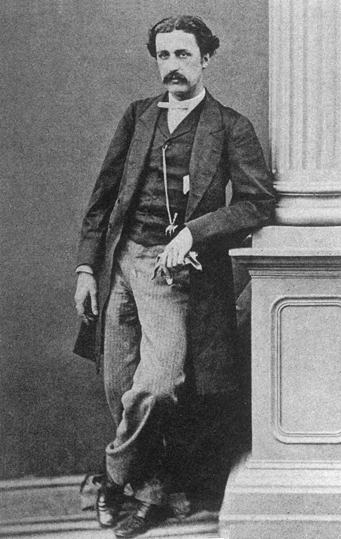
After returning to the UK, Swinhoe remained actively concerned about the surrounding scientific community and frequently appeared at meetings of the Zoological Society of London. In his annual speech as the president of the society, Slater described Swinhoe as "one of the most dynamic and successful exploratory naturalists of all time".
Between 1874 and 1877, Lord Sven systematically organized and studied the animal specimens he brought back. During this period, Svenho has been racing against his deteriorating physical condition.
In 1876, Lord Sweyn was elected as a member of the Royal Society of England. In the first half of 1877, he set up a Formosan Booth at the London Exhibition of 1877, showcasing indigenous cultural relics and bird specimens, and was awarded medals and prizes for it.
Until October 1877, Swinhoe published an article in IBIS describing a new bird species discovered by an American zoologist on the island of Taiwan.
On the 28th of the same month, with an unfinished dream of studying natural history, Marquis Sven passed away at the age of only 41.
Christina, the wife of Swinhoe, returned to England and lived there until her death in Brighton in 1914. They have a total of six children. Contemporary naturalists commented that Svenho neglected his life with his family due to long-term wilderness exploration. However, Lord Swinhoe once named a sunbird named "Mrs. Swinhoe's Sunbird" (Aethopyga Christinae) after his wife - perhaps this was his "privilege" as a naturalist.
Anyway, Svenhou was the earliest naturalist to attempt to answer the question of "how many bird species are there in China".
At the age of only 27, Sir Sven published the Catalogue of the Birds of China and its Islands in the Proceedings of the Zoological Society of London, which was the first list of bird species in China and included 454 species. In 1871, he published a revised edition in the same journal, which included 675 species of birds.
During his 4-year stay on the island of Taiwan, Sven Hou's vitality was at its peak, making significant contributions to the field of natural history there. The animals he collects or observes on the island include mammals, birds, reptiles, amphibians, fish, insects, mollusks, and marine invertebrates, and even plants. The first report on animals in Taiwan by Lord Sweyn was "On the Mammails of the Island Formosa" published in 1862. This report presented 17 species of mammals with exquisite illustrations and was the first scientific report on animals in Taiwan.
In this report, Svenhou recorded four new species of animals, including the water deer (Cervus unicolor), the prickly rat (Rattus coxinga), the yellow throated mink (Martes flavigula xanthospila), and the Taiwan flying squirrel (Petaurista pectoralis). Among them, the Taiwan flying squirrel was a super precious specimen he collected in the southern part of Taiwan Island, and no second one has been collected so far.
The Ornithology of Formosa, or Taiwan, published in IBIS in 1863, is the most core and important literature on bird species in Taiwan published by Sir Sven. The article describes 186 species of birds, of which he discovered more than one-third of the known bird species. He has continued to supplement and publish since then. In total, there are 227 bird species directly or indirectly named after the Marquis of Sven. So far, the total number of recorded bird species in Taiwan has reached 686, of which about 33% are related to Sven Hou.
In his book "Taiwan Ornithology," Swinhoe wrote that birds were his favorite animals, and he did his best to collect local bird specimens and information. He also proposed what he considered to be a "fairly complete list of birds," and was proud of it.
At that time, when naturalists published new species, they had to attach the pictorial form of the species. The photography technology of the 19th century was not yet very advanced, and in order to present animals in a lifelike way, it was necessary to rely on hand drawing. Therefore, in addition to naming species, Sven Hou also personally or by hiring painters to hand draw animals, showcasing their body shape and fur color characteristics.
British zoologist Alfred Wallace, in reviewing this pioneer of field research, pointed out the important contribution of Swinhoe to the science of animal geographic distribution:
Due to Mr. Swinhoe's own efforts, without including Europe, North America, and British India, our understanding of warm blooded vertebrates in any part of the world may not be as comprehensive and accurate as our understanding of the coastal areas and islands of China.
At the beginning of the 20th century, the name of Lord Sven occasionally appeared in ornithological publications in Japan and Europe. For many years, naturalists have been interested in the condition of a species he mentioned in his first book "Xiamen Ornithology" (1860) - the Chinese egret (Egretta eulophotes). This bird is often confused by ornithologists due to its rarity and similarity to other species - it was almost wiped out by the feather trade of the 20th century.
It was not until 1913 that this bird species was recognized as an "excellent" species, also known as the "Swinhoe White Egret", and it remains an endangered species to this day.
The hunter I hired told me that a bird called Wa koe (Wa chicken, Minnan dialect) was found in the mountains. This bird often lives in deep forests and rarely goes down to areas where the pheasant is distributed at low altitudes. Every morning and evening, male birds always stand on branches or high places like roosters, spreading out their beautiful tail feathers and making high pitched calls with a majestic aura.
Svenhou realized that this may be a large pheasant species that has not been scientifically described, and he asked hunters to make every effort to help him collect specimens of Wa koe. Sven Hou often crouched in the woods where Wa koe appeared, but never caught a glimpse of its beauty.
On April 1, 1862, hunters finally captured a female blue pheasant. They were afraid that the hot weather would cause it to rot, so they peeled off the meat of this specimen. When they brought it to the hands of Lord Sven, the blue pheasant was only one skin. A few days later, Lord Sven obtained a complete male specimen, but unfortunately, after the hunters caught the bird this time, it always pecked itself, and the hunters shot it to preserve its feathers. On December 8th of the same year, the hunter finally brought a live male bird. This blue pheasant had shiny and intact feathers, and it was not easy to obtain. The hunter almost lost his life because it was robbed by bandits.
Lord Sven sent this male bird from Hong Kong, China and India back to London for free range. Subsequently, Lord Sven successively captured some live animals and sent them back to England. In multiple letters he sent to IBIS, he described some of the behaviors and molting of the blue pheasant in captivity, which can be said to be the earliest data in the biology and captive research of the blue pheasant. This bird is the elegant blue pheasant, also known as the Lophura swinhoii, depicted in the bird painter John Gould's "Birds of Asia" earlier.
In the 1960s, the Swinhoe pheasant was successfully bred by the Pheasant Foundation. The organization collaborated with biologists on the island of Taiwan to reintroduce 15 pairs of Swinhoe pheasants to restore the population on the island, which is also considered to highlight the uniqueness and value of Taiwan's bird species.
Throughout his life, Lord Sven published a total of 120 monographs on zoology, geography, and anthropology, as well as 200 new species of birds and dozens of mammals. Some species are still the subject of further research by ornithologists to this day. For example, research on the Beijing Swift has also clearly entered the fast lane in recent years.
At the same time, Svenhou also collected a large number of specimens of fish, reptiles, insects, and invertebrates, and transported them back to China to be studied by taxonomists who conduct indoor research. That is also why Svenho is hailed by the President of the Zoological Institute of London as "one of the most successful nature explorers to date".
Today, when we look at the life of Marquis Sven at the age of 41, we cannot help but feel a little regretful. He once invaded the Yuanmingyuan as an aggressor, while also being passionate about discovering China's flora and fauna, and made vivid interpretations of China's vast land and abundant resources. This exotic perspective, whether based on the UK's resource survey of China or a strong personal interest, has brought China's flora and fauna, especially birds, into the spectrum of world animal science.
(British writer Cui Ying also contributed to this article)


 Subscribe