2026-11-19 10:35

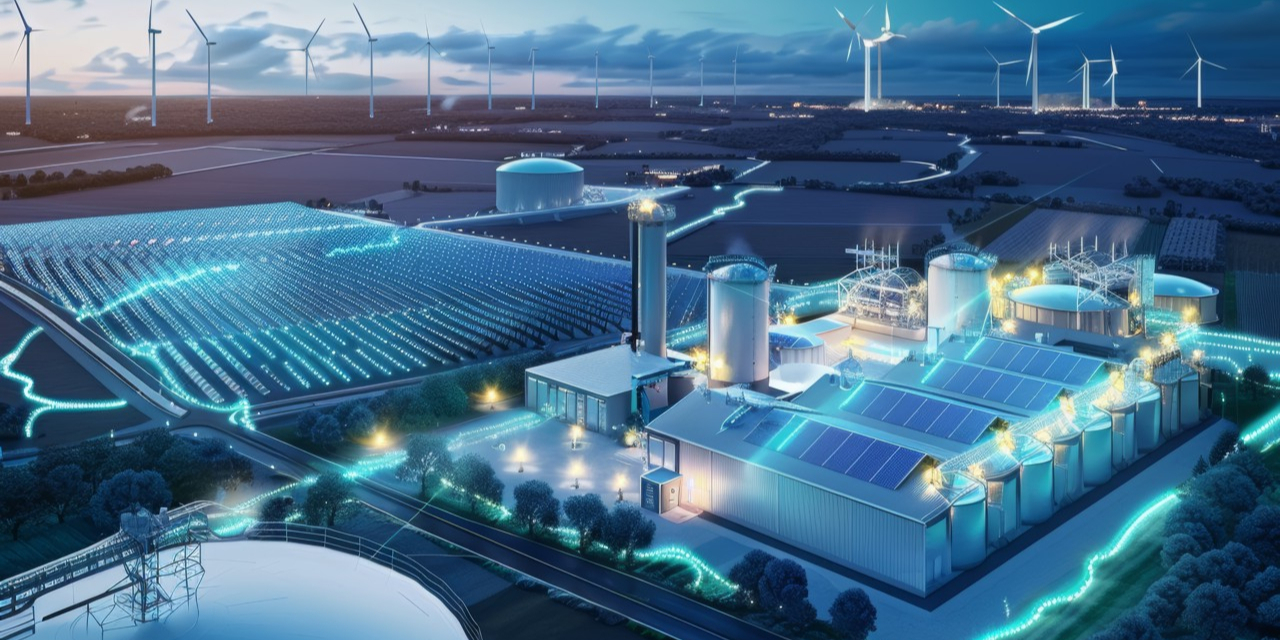
Economic Observation Network According to the website of the National Energy Administration, Fan Pengfei, Director of the Energy Policy and Market Research Institute of the Electric Power Planning and Design Institute, interpreted the "China Virtual Power Plant Development Report (2026)".
In November 2026, the National Energy Administration released the first national level development report in the field of virtual power plants - the "China Virtual Power Plant Development Report (2026)" (hereinafter referred to as the "Report"). The report systematically summarizes the achievements of China's virtual power plant construction since 2025, reviews the progress in policy, operation, market, technology and other fields, clarifies the development direction of the industry during the "15th Five Year Plan" period, and is of great significance for improving the subsequent institutional mechanisms, consolidating industry consensus, clarifying the development path, and promoting the standardized and high-quality development of virtual power plants.
1、 The policy system continues to be sound, and the construction achievements are constantly highlighted
The continuous improvement of top-level design provides fundamental guidance and institutional foundation for the scale, standardization, and orderly development of virtual power plants in China. The Report has identified three major highlights of the top-level design of virtual power plants at the national level: the introduction of the first national special policy, inclusion in the national power development plan for the first time, and the announcement of the first batch of national virtual power plant pilots. From policy to pilot, a clear development path has been proposed for virtual power plants in the "15th Five Year Plan" and the medium to long term. The "15th Five Year Plan" for the construction of a new power system, which was released in June 2026, for the first time included virtual power plants in the development plan and positioned them as the core carrier of power side collaborative interaction. It proposed the development goal of having the maximum regulating capacity of virtual power plants in China exceed 50 million kilowatts by 2030.
The continuous improvement of local policy system and supporting special documents provide strong guarantees for the implementation of virtual power plants. The report points out that under the guidance of national policies, as of the end of June 2026, 23 provinces (regions, municipalities) have issued special documents such as development plans and construction and operation management measures for virtual power plants with their own characteristics based on local conditions. The policy focus has shifted from overall planning to adjustable capacity verification, access and call control, transaction settlement and other links, and is accompanied by financial support policies, providing implementation details and supporting guarantees for accelerating the landing and construction of virtual power plants in various regions.
Under the coordinated driving of national and local policies, the construction of virtual power plants in China has achieved remarkable results. As of the end of June 2026, the number of virtual power plant projects that have been built and put into operation nationwide has reached 592, a year-on-year increase of 78.9%; The maximum regulating capacity reached 20.428 million kilowatts, a year-on-year increase of 62.7%, and the target of regulating capacity not less than 20 million kilowatts by 2027 proposed in the Guiding Opinions on Accelerating the Development of Virtual Power Plants was achieved ahead of schedule. At the same time, the aggregation resources of virtual power plants in China have gradually expanded from a single type of adjustable load to multiple types such as adjustable load, distributed power generation, energy storage, and electric vehicle charging and swapping facilities.
2、 Steady improvement in operational management, increasing value of multidimensional regulation
The construction and integration of various platforms are accelerating, providing solid support for the standardized operation and management of virtual power plants. The report points out that various regions are actively promoting the integration of virtual power plants into the new power load management system, completing project filing, load information collection, and forecasting analysis; More than 100 projects in provinces such as Shanxi, Jiangsu, and Guangdong have been connected to the power dispatch automation system through network testing, achieving precise control at the dispatch end. By the end of June 2026, provincial-level virtual power plant management platforms have been established in provinces (regions, cities) such as Shanxi, Shanghai, and Zhejiang, with functions such as operator registration, resource monitoring, data exchange, and regulatory evaluation, laying a solid foundation for the large-scale development of virtual power plant business.
Multi party collaboration to build a full chain security control system, ensuring the safe and reliable operation of virtual power plant aggregation resources. The report proposes that local regulatory authorities, power grid enterprises, and virtual power plant operators should work together to coordinate the implementation of systems, access control, and platform security protection. By implementing network access testing and certification, signing grid scheduling agreements, conducting network security level protection evaluations, and supporting regular operation evaluations and exit mechanisms, we will strengthen the security responsibilities of all participating entities, achieve measurable and controllable aggregation of resources, effectively prevent network security and network security risks, and build a secure bottom line for virtual power plants to participate in the electricity market on a regular and large-scale basis.
The continuous implementation of multi scenario demonstration applications has fully verified the regulatory value of virtual power plant systems through practical testing. The report shows that the role of virtual power plants continues to be prominent in four typical scenarios. During the peak electricity period, Shanghai has extensively deployed virtual power plants, effectively alleviating the tight supply and demand of electricity under high temperatures; During the period of rapid development of new energy, Zhejiang relies on market-oriented valley filling to respond and improve the level of new energy consumption; Guangzhou aggregates charging station resources during peak hours to mitigate the risk of heavy load on the main transformer of the power grid; Hubei promotes the participation of virtual power plants in frequency regulation services to improve the power quality of the system. Various practices have shown that virtual power plants can carry out resource aggregation and regulation in response to the differentiated needs of the power grid, and are important entities supporting the safe and efficient operation of the new power system.
3、 The market mechanism continues to expand, and the business model iterates and innovates
The participation path in the diversified electricity market is gradually being opened up, and value-added services continue to enrich the profit channels of virtual power plants. The report points out that virtual power plants are gradually expanding from mainly participating in demand response to various types of electricity markets such as medium and long-term, spot, and auxiliary services. They can participate in spot trading according to the mode of quoting or not quoting, and obtain regulatory benefits in the peak shaving and frequency regulation auxiliary service markets. At the same time, virtual power plants in various regions are actively expanding value-added comprehensive energy services such as energy efficiency diagnosis, energy hosting, and energy conservation and carbon reduction, opening up multi-dimensional value realization paths and creating favorable conditions for the industry to cultivate sustainable business models.
Various market entities actively invest and inject diversified capital vitality into the development of the virtual power plant industry. According to the report, various types of social capital are actively investing in the field of virtual power plants, with private enterprises accounting for 45.3% of investment projects. In areas with a high degree of marketization such as Shanghai, Jiangsu, and Guangdong, more than half of the projects are invested and constructed by private enterprises. Foreign enterprises are also optimistic about the opportunities in the domestic market and are introducing advanced algorithms and operational experience through joint ventures and cooperation. The joint participation of state-owned enterprises, private enterprises, and foreign capital has enriched the project construction and operation capabilities, expanded the sources of industrial investment and financing, and provided strong financial support for the normal operation and large-scale development of virtual power plants.
The deep coupling between virtual power plants and emerging business models has given rise to a number of collaborative innovation application scenarios and models in the power system. The report points out that virtual power plants have become an important carrier for the landing of multiple new business models, forming innovative practices in the fields of zero carbon parks, computing and power collaboration, and vehicle network interaction. Relying on the ability to aggregate diverse and adjustable resources, virtual power plants support the integrated operation of source, network, load, and storage in the park; Realize "computing power follows electricity" through flexible scheduling of computing power load; Aggregate charging and swapping resources to carry out vehicle network interactive discharge regulation. The integration of new business models further expands the application boundaries of virtual power plants, providing a new path for the collaborative interaction between supply and demand in the new power system.
4、 Technological equipment iteration and upgrading, standard system gradually becoming complete
Continuous iteration and breakthroughs in key core technologies have solidified the foundation of large-scale reliable operation technology for virtual power plants. The report points out that research institutions and market entities have carried out technological breakthroughs around the entire chain of virtual power plants, and have achieved multiple innovative results in terminal perception collection, decentralized resource aggregation regulation, market transaction decision-making, core equipment development, platform system construction, and other aspects. Constructing a multi-dimensional resource global perception system at the terminal perception level; Adopting cloud edge collaboration and multimodal prediction algorithms to improve control accuracy in resource aggregation control; Research and development of simulation decision-making system for trading operations to support market strategy optimization; At the same time, equipment systems such as 5G edge terminals and domestic operation platforms are accelerating their implementation and application, providing strong support for massive dispersed resources that are observable, measurable, and controllable.
Accelerate the construction and improvement of a multi-level standard system, providing institutional and technical basis for the standardized development of the virtual power plant industry. The report proposes that the National Energy Administration will coordinate and promote the construction of a virtual power plant standard system that integrates national standards, industry standards, landmarks, and group standards, covering the entire business process of resource access, aggregation regulation, grid testing, operation management, and safety protection. The three national standards of "Virtual Power Plant Management Specification", "Virtual Power Plant Resource Allocation and Evaluation Technical Specification", and "Virtual Power Plant Technical Guidelines" have been successively released. Industry standards such as "Virtual Power Plant Terminology" have been officially introduced. Local standards have been formulated based on actual conditions, and more than 30 group standards have been released to supplement industry technical rules from multiple dimensions, guiding the orderly and healthy development of the industry.
5、 Focusing on the weaknesses and shortcomings, we will work together to promote the high-quality development of virtual power plants
Scientifically coordinate the scale layout and focus on improving the comprehensive ability of virtual power plant operation and management. The report points out that during the 15th Five Year Plan period, the scale of virtual power plant resource aggregation and market participation will continue to expand, but there are still problems in the industry such as low operational level of some entities and insufficient ability to finely regulate resources. To achieve the development goal of a maximum regulatory capacity of over 50 million kilowatts by 2030, we need to scientifically plan the industry's development layout, strengthen policy guidance and supply, continuously cultivate high-quality operator entities, enhance the evaluation and verification of resource aggregation capabilities, improve real-time collaboration and precise response to regulation levels, orderly promote industry scale expansion, and consolidate the operational foundation for high-quality industry development.
Continuously improve the construction of market mechanisms, deepen the integration and innovative development of virtual power plants and emerging business models. The report proposes that the trading rules of virtual power plant markets in some regions still need to be improved, which restricts the industry's normal and large-scale participation in the market. We need to implement the relevant deployment for the construction of a unified national electricity market, refine the registration and access, declaration and trading, and measurement and settlement rules for virtual power plants to participate in medium and long-term, spot, and auxiliary service markets, explore cross provincial and cross regional trading mechanisms, and enrich market trading varieties. At the same time, we will continue to expand diversified business models, promote the deep integration of virtual power plants with new formats such as zero carbon parks, computing and power collaboration, and vehicle network interaction, and continuously expand industry application scenarios.
Strengthen collaborative research on technical standards and strictly adhere to the safety bottom line of large-scale operation of virtual power plants. The report points out that there is still a gap in the supply of standards in some key areas, making it difficult to fully match the needs of rapid industrial development. We should carry out collaborative research and development around key aspects such as accurate load forecasting, adjustable capacity evaluation, and hierarchical collaborative control, and promote the deep empowerment of virtual power plants with new generation information technologies such as artificial intelligence. Accelerate the improvement of a multi-level collaborative supporting standard system, fill in the gaps in standards in terminal equipment, market transactions, capacity assessments, and other fields, strengthen network and network related security control, and build a solid technological and security foundation for the development of the virtual power plant industry.
The report relies on national statistical data and practical cases from various regions to systematically demonstrate the evolution of China's virtual power plants from scattered resource aggregation to large-scale scheduling and calling, and from single demand response to multi category electricity market transactions. It is an important reference for analyzing the development trend of the industry. Facing the overall situation of the construction of the new power system in the 15th Five Year Plan, it is necessary to coordinate the development layout of the industry, continuously fill in the gaps in operation, market, technology, and standards, continuously activate the flexible adjustment potential of the user side, fully release the regulatory efficiency of virtual power plants in power supply guarantee, new energy consumption, and safe operation of the power grid, promote the standardized and refined development of the industry, and provide strong support for accelerating the construction of a new power system and assisting the construction of an energy powerhouse.