Economic Observer Follow
2026-11-17 20:01

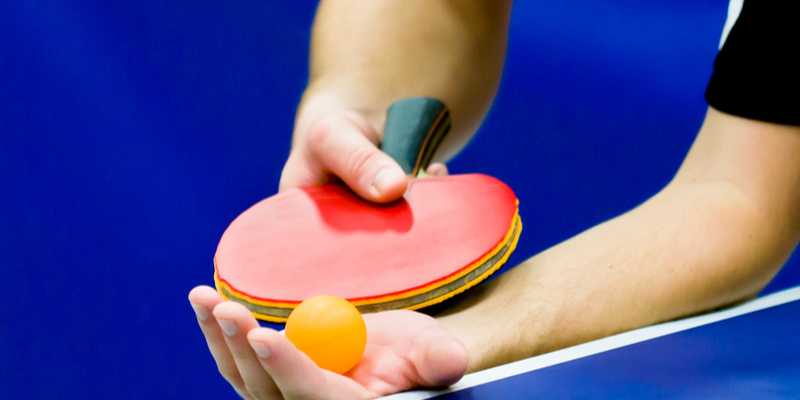
Wu Lichuan/Wen The World Table Tennis Federation (WTT) Regular Challenge Istanbul Station will end on November 15th. Chinese table tennis veteran Fang Bo, representing the Kazakhstan team, defeated South Korean player Kang Dong soo 4-1 in the men's singles final and won his first championship since his comeback.
Fang Bo, 34 years old, won the team championship of the 2016 World Table Tennis Championships with the Chinese men's table tennis team. In 2021, Fang Bo retired. Afterwards, he participated in the establishment of the World's Explosive Table Tennis Club, engaged in youth training and equipment promotion, and gained considerable popularity in the industry. In April 2026, Fang Bo officially announced his comeback and partnered with Nomad Table Tennis Academy in Kazakhstan to participate in the WTT Challenge series of events as a registered foreign association, retaining Chinese nationality and not competing in the Olympic Games, World Table Tennis Championships, and World Cup.
After many years, Fang Bo is still "very good at playing", showing strong game control and on-site adjustment ability, which has made many fans call for him to return to playing for table tennis.
When Fang Bo won the championship, it coincided with the setback faced by the Chinese men's table tennis team. The Chinese table tennis team competed in the Istanbul Station with a second tier young lineup, but all five events missed the finals. Li Tianyang, who won the runner up at the Asian Championships last month, was highly anticipated, but this time he lost to Japanese player Yoshiyama by one in the quarter finals. Chen Junsong and Huang Youzheng stopped in the second round, while Chen Yuanyu and Yuan Licen encountered a "round of swimming". The one who defeated Chen Junsong in straight sets in the quarterfinals was Fang Bo, who participated as a wildcard player.
The gains and losses of a single race are certainly not enough to explain the problem. Moreover, since the Paris Olympic cycle, the Chinese men's table tennis team is in a period of transition from old to new. However, extending one's gaze reveals that this is not considered an accidental loss. This year's WTT high-level event record shows that only Wang Chuqin won the men's singles championship at the Singapore Grand Slam. In many other high-level events, the Chinese table tennis team failed to win the championship. For example, in early November, at the WTT Montpellier Championships, five Chinese men's table tennis players participated, but three of them finished in the quarterfinals and none made it to the semifinals; On November 7th, in the quarterfinals of the men's singles at the World Table Tennis Federation (WTT) Frankfurt Championship, none of the Chinese table tennis team advanced to the quarterfinals of the men's singles.
Don't say that winning or losing in commercial competitions doesn't matter, no one can expect players who have repeatedly failed in commercial competitions to suddenly explode in major events such as the Olympics and World Championships. In fact, in the current men's singles world ranking list, only Wang Chuqin and Lin Shidong are in the top ten of the Chinese table tennis team, while the rankings of the other young players are far behind the first team. This also indicates from one aspect that the Chinese table tennis reserve team's "long ball" speed has failed to keep up with the fierce competition in the international table tennis world.
In the situation where the team is running out of resources, having veteran players return to support, stabilize and lead the team is a solution. Many years ago, there was also a case of letting veteran players "hold the field" in Chinese table tennis. This is also a common practice for some foreign associations to deal with personnel crises. The Table Tennis Association may consider adjusting its employment strategy, activating internal competition mechanisms, relaxing age barriers, and promoting the "best players" to the forefront by reducing talent without any restrictions, thus reversing the unfavorable situation.
However, bringing the veteran back is only an emergency measure, not a routine one. Time does not spare, even the most powerful veteran cannot escape the law of metabolism, and there will eventually be a time of exhaustion. To truly solve the problem, it still depends on the shoulders of the new and middle-aged players.
This requires targeted treatment. Nowadays, some young players may have strong talents and abilities, but they always fail to make it up at critical moments, indicating that there are problems in our reserve force cultivation.
The training level of Chinese table tennis is undoubtedly world-class, and with a mature training mechanism, there are constantly emerging "thigh level" figures. However, it is an undeniable fact that some young players nowadays lack the temperament to fight tough battles and are prone to falling out during the stalemate stage. In September of this year, Deng Yaping stated in a media interview after watching the Asian Games that "some team members are not excited enough and the gods will disperse". The problem revealed by this statement is: insufficient ability to adjust state and insufficient focus on the game. This is the main reason why some young players repeatedly fail, and it cannot be solved solely by the application of advanced technology. Even if Deng Yaping's physical condition was poor after the defeat, she immediately reflected and adjusted her state through hard training, eventually growing into a generation of "war gods". This case is sufficient to illustrate the problem. If young players cannot possess the spirit and determination to endure hardships and endure hardships, it will be difficult for them to advance.
Improving player performance is a crucial aspect of a team's regular development. The Chinese table tennis team should conduct a scientific analysis of the phenomenon of young players easily falling out of control, and then make up for the deficiencies in training management, psychological construction, personnel allocation, and other aspects.
The strengthening of the national table tennis team ultimately depends on the promotion of table tennis reform. For the Chinese table tennis industry, firstly, it is necessary to take table tennis reform as the driving force and vigorously improve the management and competitive level of domestic leagues. Actively responding to the global trend of table tennis marketization, by promoting table tennis marketization, attracting more talents and capital to enter, activating domestic leagues, and allowing more outstanding talents to stand out; Secondly, we need to deepen the youth training mechanism, smooth the channels for talent selection, and expand the platform for player competition and development; The third is to adopt a mutual learning attitude and actively "go out". Nowadays, the world table tennis world has gradually entered the era of "rising stars", and high-level table tennis leagues have emerged in Europe with few layouts. In the spirit of inclusiveness and self-awareness, selecting players to study abroad and actively accepting the baptism of the globalization of table tennis is a feasible path.
Chinese men's table tennis is facing an unprecedented crisis, but as long as it responds effectively, it is still expected to overcome the difficulties.
(The author is a senior media professional)