Economic Observer Follow
2026-11-15 22:07

Economic Observer reporter Zheng Chenye
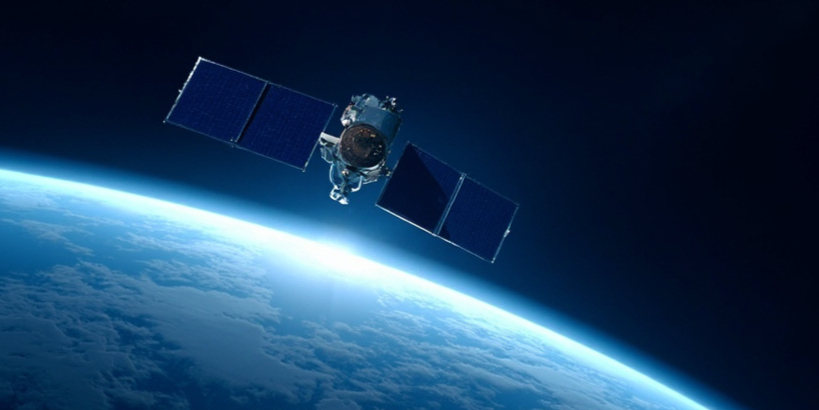
At 8:15 am on November 3rd, a Lijian-2 carrier rocket was ignited and launched into orbit at the Jiuquan Dongfeng Commercial Aerospace Innovation Experimental Zone, sending 18 Qianfan Constellation satellites into orbit. This is the 11th launch of the Thousand Sails constellation this year.
After the launch, the operator of the Qianfan constellation, Shanghai Yuanxin Satellite Technology Co., Ltd. (hereinafter referred to as "Yuanxin Satellite"), increased its number of in orbit satellites to 274. Shen Hongbo, CEO of Yuanxin Satellite, publicly stated in June this year that the Qianfan Constellation will complete the first phase of networking 324 satellites by the end of the year, providing services to the world and launching commercial operations.
The Thousand Sail Constellation is currently 50 satellites away from the first stage goal. Based on launching 18 missiles each time, at least three more launches are needed, and there is only over a month left this year.
In addition to launching satellites, other preparations before commercialization are also underway: the satellites of the Qianfan constellation have obtained space radio licenses and frequency usage permits issued by the Ministry of Industry and Information Technology in bulk; In August of this year, Yuanxin Satellite completed a capital increase of 6.976 billion yuan; On October 19th, a user terminal of the Qianfan constellation passed the certification of the Brazilian National Telecommunications Administration.
However, based on public progress, ordinary consumers in China currently do not have access to the services of the Thousand Sail Constellation. The leading landing market is Brazil, which is already the largest market for SpaceX's Starlink outside of the United States. Starlink has been in service since 2020, 6 years earlier than the commercial use in the Thousand Sail Constellation Plan. A professional investor who has long been interested in the commercial aerospace market told the Economic Observer that in his opinion, the first stop for the commercial use of the Chinese version of "Starlink" is likely to be the market where American Starlink has already reached one step ahead.
As the year-end deadline approaches, the commercial use of domestically produced low orbit constellations is facing scrutiny in three aspects: satellites, users, and revenue.
We still need 50 more
324 are the conditions set by the Yuanxin satellite for providing services to the Qianfan constellation. Xu Yunxiang, Vice President of Yuanxin Satellite, stated in July this year that the goal of the Qianfan Constellation is to accumulate 324 satellites in orbit within the year, establish a supporting ground system, achieve global basic coverage of low orbit broadband, and have the ability to provide preliminary commercial services to downstream customers.
As early as February this year, the Brazilian National Telecommunications Administration approved the operation of the Qianfan Constellation in the local area, but Yuanxin Satellite applied for 648 satellites and was approved for 324. The reason given by the Brazilian National Telecommunications Administration is that the number of foreign constellations approved locally cannot exceed the number already approved in the country. In other words, 324 were also the approved size for the Thousand Sails constellation in China at that time.
Hu Haiying, the commander-in-chief of the Qianfan Constellation Satellite System, publicly wrote in January this year that if the goal is to fully achieve commercial use, the number of 324 satellites will double. According to the public plan for the 2024 Yuanxin satellite, the doubling of 648 satellites was originally scheduled to be launched by the end of 2025, but by the end of 2025, only 108 satellites had actually been put into orbit.
Regarding the difficulties encountered in networking, Zhang Qi, Chairman of Yuanxin Satellite, stated during the National "Two Sessions" in March this year that low-cost rockets with large capacity and recyclability are still in the experimental stage, and launch and control resources are tight, which cannot fully meet the needs of rapid networking for giant constellations. A rocket capable of launching 18 Qianfan satellites at once, compared to only a few models in China such as Long March 6A and Long March 8, and also has to take into account the launch tasks of other constellations, "a technology analyst from a large securities firm in southern China told Economic Observer.
During the interview, the reporter learned that the number of launches from major commercial launch stations in China this year has significantly exceeded that of last year. It has become the norm for a single station to launch twice a month, and it is expected to increase to three times a month next year.
For the remaining three launches of the Thousand Sail Constellation within the year, the aforementioned analysts believe that the Long March 6A, Long March 8 series, and Lijian-2 can all be undertaken and theoretically feasible to complete before the end of the year. "The market's previous estimate of the Thousand Sail Constellation's ability to obtain transport capacity was conservative.
However, there is currently no public information on whether all three launches have been scheduled before the end of the year. During the interview, the reporter also learned that the main commercial launch stations in China have basically filled their schedules this year and next year, and the newly added launch demand will be scheduled for the following year; There are newly built workstations with launch capabilities, but due to the development progress of supporting rockets, there is no scheduled launch this year; The first launch of a new model of rocket into the firing range usually requires two to three months of adjustment.
In addition, after entering orbit, the satellite needs to undergo orbit phase adjustment and in orbit testing before being integrated into the network.
Looking at the entire industry, these 50 gaps are only a small part. The Qianfan Constellation and the GW Constellation constructed by China Satellite Network Group Co., Ltd. (hereinafter referred to as "China Satellite Network") have planned more than 10000 satellites. The GW Constellation has launched 12 sets of satellites this year, with the latest launch on November 9th. According to the rules of the International Telecommunication Union, if the declared constellation cannot be deployed on schedule, the corresponding frequency and orbit resources will be correspondingly reduced.
The aforementioned analyst estimates that China will launch between 400 and 500 satellites this year, and is expected to reach 800 to 1000 satellites next year. The demand is certain, and the gap is also obvious, "Geng Jiashuai, Managing Director of Wanchuang Investment Bank, told Economic Observer. If we proceed according to the plan, we will need to launch thousands of satellites per year, corresponding to hundreds of launches. Recyclable rockets cannot make up for the capacity gap in the short term, and 2027 to 2028 will be a critical period for capacity improvement.
That is to say, even if the year-end goal of the Thousand Sail Constellation is achieved as scheduled, it will only support the initial stage of commercial use. After that, for every additional batch of satellites, the transportation capacity problem still needs to be solved first.
The first batch of users
In terms of commercial preparation for domestic low orbit constellations, overseas markets are ahead of the domestic market.
The satellites of low Earth orbit constellations orbit the Earth and are mostly not in the domestic airspace. They only focus on the domestic market, and most of the constellation's capacity is idle, making it difficult to recoup this investment, "the market manager of a leading satellite company in China told the Economic Observer.
The initial positioning of the Thousand Sails constellation was overseas. In October 2024 and January 2025, the Ministry of Industry and Information Technology twice reported the launch of Qianfan Constellation, which mainly provides broadband satellite Internet services for overseas users. However, in subsequent relevant circulars, the restriction of "overseas users" no longer appears, and the expression is changed to "mainly providing broadband communication, Internet access and other services".
Xu Yunxiang said in July this year that Yuanxin Satellite mainly provides services around the "the Belt and Road" initiative and the overseas needs of Chinese enterprises.
As for ordinary domestic consumers, there are still three conditions to use the LEO satellite Internet.
One is a satellite that can directly connect to mobile phones. At present, the satellites in the Qianfan constellation network are aimed at dedicated terminals and do not support direct connection with ordinary mobile phones. Direct connection with mobile phones requires a separately designed satellite. The first mobile phone direct connection test satellite of Yuanxin Satellite was launched on June 9th this year. On June 19th, Yuanxin Satellite connected satellite voice and video calls with unmodified 5G mobile phones, but the timing of service provision has not been announced.
According to the guidance issued by the Ministry of Industry and Information Technology in August 2025, the domestic mobile phone direct satellite communication business for the public is mainly operated by basic telecommunications operators, and satellite enterprises can jointly build and share satellite infrastructure with them. At present, all three telecom operators have obtained corresponding operating licenses. China Unicom launched a bidding for a mobile phone direct connection test star at the end of September this year, with a maximum price limit of 78 million yuan.
The second is an affordable terminal. If not connected directly through a mobile phone, users will need to equip another dedicated terminal. Yuanxin Satellite exhibited the terminal of the Qianfan constellation for the first time in June this year, but the price has not yet been announced. In the view of the aforementioned investors, in order to lower the price of terminals, it is necessary to wait for the mass production of related chips. According to their understanding, domestic enterprises have completed chip assembly (trial production) for this type of terminal, and plan to ship in small quantities in the first half of 2027 and in large quantities in 2028. The investor estimates that the market space for such terminals is around 20 million units.
The third is the business license. The radio licenses and frequency usage permits for the Thousand Sail Constellation satellite have been issued in bulk, but there is no public information on the licenses required for operating telecommunications services to the public obtained by Yuanxin satellite. The aforementioned analyst predicts that both Yuanxin Satellite and China Star Network may obtain relevant licenses in the near future. However, in his opinion, the current customers of constellation operators are mainly industry users and overseas markets, and the impact of licenses on their current business is limited.
One of the latest relevant information is that on October 26, Shanghai issued the Shanghai Satellite Internet Industry Innovation and Development Action Plan (2027-2030), which proposed to support individual users to access the LEO satellite Internet through mobile phone direct connection or portable terminals, and support operators to launch preferential packages. By 2030, the total number of satellites in orbit in Shanghai will exceed 3000.
Before the above three conditions are met, domestic demand mainly comes from industry users. According to data from the Ministry of Industry and Information Technology, as of the end of September this year, the total number of 5G base stations in China was 5.254 million, and the ground network is already very dense. The market leader of the aforementioned satellite company stated that the real lack of network in China is in flights, ocean going ships, and energy and mining projects in remote areas. These scenarios have strong payment capabilities, but the number of users is limited. Among them, the in-flight networking of civil aviation aircraft currently mainly relies on high orbit satellites.
The Thousand Sail Constellation has also publicly announced industry collaborations in aviation and maritime. In December 2025, Yuanxin Satellite signed a contract with Airbus, and the services of the Qianfan constellation will be integrated into Airbus' in-flight connectivity solution. In January this year, Yuanxin Satellite cooperated with CCCC Shanghai Waterway Bureau Co., Ltd. to use the LEO satellite Internet for remote dredging operations and marine mapping. But neither of these collaborations has yet announced the opening time.
In contrast, the progress in overseas markets is faster. As of July this year, Yuanxin Satellite has launched landing promotion work in more than ten countries, with Brazil being at the forefront of the progress, and its operating license was approved in February this year. According to the requirements of Brazilian regulatory agencies, the Thousand Sail Constellation must open its services within two years. Public information shows that the ground station of Qianfan Constellation in Brazil has completed debugging, and the user terminal has also passed the certification of local regulatory agencies. This terminal weighs about 4 kilograms and has a maximum downlink speed of 400Mbps.According to the plan proposed by Yuanxin Satellite during the approval process, commercial services will be launched in the fourth quarter of this year, and the tariff and specific date have not yet been announced.
In fact, other domestic satellite companies have also conducted verification overseas. For example, on November 5th, Galaxy Aerospace (Beijing) Technology Group Co., Ltd. (hereinafter referred to as "Galaxy Aerospace"), together with local communication service providers in Indonesia, completed the first application verification in Indonesia using its low orbit broadband test constellation, and deployed terminals in Jakarta and West Java.
Indonesia is an archipelago country with many islands and a wide geographical area. Remote areas have strong demand for satellite communication due to network coverage, maritime communication, energy mining, and emergency communication, "said Xu Ying, General Manager of Galaxy Aerospace Public Affairs, to the Economic Observer. According to his introduction, in September this year, Galaxy Aerospace completed the test verification of low orbit satellite Internet in Vientiane, Laos.
The advantage of 'latecomers'
Most of SpaceX's Starlink has already reached the overseas markets where domestic constellations are going. For 'newcomers', Starlink is both a competitor and a precedent that can be learned from.
The leadership of Starlink is first reflected in its scale. According to data released by SpaceX, as of March 31 this year, Starlink has approximately 9600 satellites in orbit, which is more than 30 times the current number of satellites in orbit for the Qianfan constellation; By the end of September, Starlink had covered 174 markets with 13.6 million consumer users, adding 1.6 million in the third quarter alone. In the aviation market where the Thousand Sail Constellation has already signed contracts, SpaceX President Gwen Shotwell announced in October this year that Starlink has signed contracts for approximately 12000 aircraft.
Starlink is still launching cheaper packages. In the third quarter of this year, the average monthly revenue per user for Starlink consumers was $69, a year-on-year decrease of 16.9%. SpaceX explained in its financial report that it has entered more countries and added low-priced packages.
Starlink arrived first and also verified several things for newcomers.
One is demand, which is user education. Michael Nichols, Vice President of Starlink Engineering at SpaceX, stated earlier this year that Brazil has become Starlink's second largest market after the United States. According to data from the Brazilian National Telecommunications Administration, in August of this year, Starlink's fixed broadband access in the local area reached 936800; According to data from network speed testing agency Ookla, in the first half of this year, Starlink's share of fixed broadband in rural Brazil was 9.3%, higher than two major local operators. That is to say, whether users in remote areas are willing to pay for satellite internet access no longer requires later proof.
The second is regulation. What approvals are required for foreign low Earth orbit constellations to land in Brazil. The Thousand Sails constellation took about three months from application to approval, and regulatory agencies used existing rules. The attitude of the landing country is also quite clear. In December 2024, the then Brazilian Minister of Communications, Giusellino Filho, wrote that cooperating with the Thousand Sails constellation is to expand competition and give Brazilians more options.
When there is only one low orbit constellation to choose from, the landing country lacks room for negotiation in terms of price and data security, and naturally has the motivation to introduce another one, "said the aforementioned investor.
The third is profitability. In the third quarter of this year, SpaceX's Starlink based connectivity business generated revenue of $5.248 billion, a year-on-year increase of 69%, with an operating profit of $2.367 billion. The aforementioned investors believe that Starlink's profits provide a comparable sample for newcomers, which is also one of the reasons why capital is willing to continue investing in the constellation.
However, the implementation work still needs to be done country by country. The market leader of the aforementioned satellite enterprise told reporters, "To land in a country, it takes time to coordinate frequencies, apply for operating licenses, select sites to build ground stations, and find local partners. The cycle is calculated annually." For example, in Brazil, it took two years for the Qianfan constellation to sign a memorandum and plan to open services.
Income also needs to start from scratch. According to the financial data released by Yuanxin Satellite during its capital increase listing on the Shanghai United Property Exchange this year, its operating revenue for 2024 was 1.15 million yuan, zero for the first 11 months of 2025, and net losses for the same period were 811 million yuan and 404 million yuan, respectively. In its capital increase in August this year, the consortium led by the National Development and Reform Commission's Phase II Collaborative Development Fund contributed approximately 5.76 billion yuan.
In addition, after the constellation is built, satellites need to be replaced regularly. Hu Haiying publicly announced in June this year that the cost of a single satellite in the Qianfan constellation has been reduced to over 10 million yuan, with a designed lifespan of 7 years.
Anyway, the commercial prospects of domestic constellations are gradually becoming clear. According to the estimate in the relevant report of the International Telecommunication Union at the end of last year, 2.2 billion people in the world still have no access to the Internet. Most of these people are in areas that are hard to reach by ground networks, which is also the incremental market targeted by LEO satellite Internet.
The space left for newcomers in this market is still considerable.



 Subscribe