Economic Observer Follow
2026-11-06 17:10

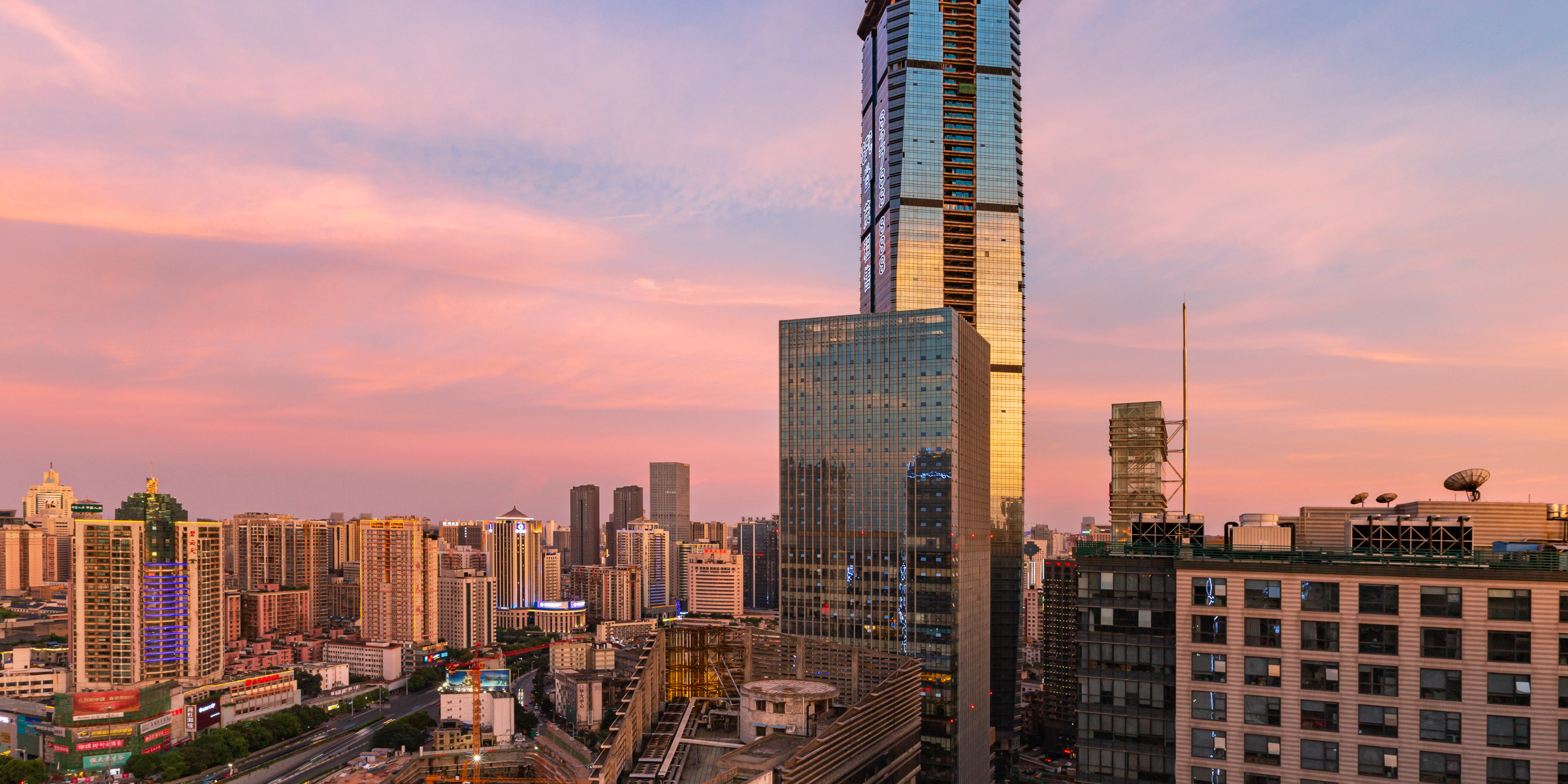
The pursuers behind Changsha are accelerating their pace.
In the first three quarters of 2026, Changsha achieved a regional gross domestic product (GDP) of 1223.91 billion yuan, a year-on-year increase of 1.6%, ranking second to last among the 29 trillion GDP cities in China, only higher than Foshan, and 3 percentage points lower than the national GDP growth rate.
Among the provincial capitals in central China, Changsha, Zhengzhou, and Hefei rank 15th, 16th, and 17th respectively. Changsha has a volume advantage of 37.7 billion yuan over Zhengzhou and 105.9 billion yuan over Hefei, with the gap narrowing compared to the same period last year. The overall ranking has not changed, but the contrast in growth rates is quite prominent: Zhengzhou and Hefei achieved growth rates of 4.9% and 6.5% respectively in the first three quarters.
On October 29th, the economic situation analysis meeting for the first three quarters of Changsha proposed to "promote economic recovery and improvement with extraordinary efforts and measures". Behind this somewhat urgent statement is the harsh reality that Changsha is currently facing.
Under Pressure
The sluggish industrial growth is an important reason for the slowdown in economic growth in Changsha.
In the first three quarters of 2026, the added value of the secondary industry in Changsha reached 429.285 billion yuan, with a growth rate of 0%. The added value of industrial enterprises above designated size in the city increased by 0.6% year-on-year, with a growth rate 2.8 percentage points lower than the first half of the year.
Fu Yi, an associate professor of economics at the School of Business at Central South University, believes that zero growth in the secondary industry does not mean stagnation in the industrial sector. Its essence is to offset the decrease with incremental growth, and emerging industries are not yet sufficient to cover the decline gap of traditional pillar industries. This indicates that Changsha's industrial structure adjustment is in a critical period, and poor data is a normal performance at this stage.
Changsha is a traditional manufacturing hub in China, with construction machinery as its pillar industry. The scale of Hunan's construction machinery industry has ranked first in the country for 15 consecutive years, and by 2025, this cluster will exceed 250 billion yuan. On the list of the top 50 global construction machinery manufacturers in 2026, a total of 13 Chinese companies were selected, including 5 from Changsha, including Sany Heavy Industry, Zoomlion Heavy Industry, and Shanhe Intelligent.
The vast industrial base also makes it difficult for urban economies to break free from industry cycle constraints. Associate Professor Ding Changfa from the School of Economics at Xiamen University believes that the demand for construction machinery is highly tied to the real estate and infrastructure cycles. As the domestic real estate and construction industries enter a new normal, this pillar industry is undergoing deep adjustments.
Besides construction machinery, automobile manufacturing is also a billion dollar manufacturing industry track in Changsha. The automobile production capacity in the whole province is highly concentrated in Changsha, with vehicle projects such as BYD, GAC Aion, and SAIC Volkswagen gathered. The vehicle data in Hunan can basically reflect the current industrial situation in Changsha. According to data from the National Bureau of Statistics, Hunan's automobile production in the first three quarters was 1.0074 million units, a year-on-year decrease of 14.5%; The production of new energy vehicles was 638100 units, a year-on-year decrease of 14%.
In addition to the weakening of industrial fundamentals, the contraction of investment has further amplified economic pressure. In the first three quarters, fixed assets investment in Changsha decreased by 21.9% year on year, 4 percentage points more than that in the first half of the year.
The two experts mentioned above both believe that the core contradiction behind the significant decline in fixed investment is that the exit speed of the old investment model is faster than the pace of cultivating the new model. The investment in land transfer, infrastructure, and urban renewal continues to shrink, and the investment volume in emerging industries is limited, making it difficult to support the overall market. There is a clear investment gap during the transition period from old to new.
In Fu Yi's view, the new investment directions for Changsha in the future can focus on equipment renewal, industrial technology transformation, and urban renewal, but currently Changsha has shortcomings in these three areas. For example, Changsha can rely on the accumulation of power battery industry to promote the transformation of traditional automobile production capacity, expand the application of new energy vehicles, and complete the stock upgrade of the automobile industry through technological transformation.
Compared to the pressure of industry and investment, foreign trade is one of the few areas that has performed relatively well. But compared to some provincial capitals in central China, Changsha's performance is not outstanding. In the first three quarters, the total import and export volume of Changsha was 238.22 billion yuan, a year-on-year increase of 12.2%; Among them, exports amounted to 141.25 billion yuan, with a growth rate of 1.6%; During the same period, the export growth rate of Hefei reached 62%, while that of Wuhan was 17.6%. Changsha's export driving ability was significantly weaker.
Upon closer examination of export types, Changsha's construction machinery exports in the first three quarters amounted to 29.36 billion yuan, a year-on-year increase of 26%; The total export value of the "new three types" consisting of electric vehicles, lithium batteries, and photovoltaics is 11.56 billion yuan. Construction machinery still occupies the majority.
Ding Changfa pointed out that this round of national foreign trade dividends is mainly driven by high-tech products such as the "new three types", and Changsha's export structure still relies heavily on traditional categories, failing to fully grasp this round of industry going global window.
Fu Yi believes that the current export data may seem impressive, but a considerable portion is concentrated in mid to low end products, and the overseas market for high value-added products such as electric heavy-duty trucks and electric excavators has not yet been truly opened up. The next focus of export efforts should shift towards increasing the proportion of high value-added products exported to overseas markets. After the increase in added value, the value of exports will increase.
Transformation
In recent years, Changsha has been continuously promoting industrial transformation. The "15th Five Year Plan" of Changsha City proposes to accelerate the layout of future industries such as artificial intelligence, quantum technology, and genetic technology, establish supporting mechanisms for future industry investment growth and risk sharing, promote the implementation and empowerment of technologies such as AI big models, embodied intelligence, quantum communication, and cell engineering, expand application scenarios, and cultivate new economic growth points.
There are already many layouts in Changsha on the forefront track. Changsha is one of the few cities in China that has independently designed three major chips: CPU, GPU, and DSP. In the field of embodied intelligence, Lansi Technology has formed an annual production capacity of 500000 embodied intelligent robots, and the shipment of related complete machines will exceed 10000 units by 2025; Zoomlion has independently developed 8 humanoid robots and built a embodied intelligent training ground with 120 workstations.
However, the restructuring of the industrial chassis is a long-term process, and it is difficult to achieve rapid growth through short-term adjustments.
The Changsha Evening News pointed out in the article "Decoding Changsha Economic Half Year Report" that the current increment of emerging industries can only make up for about 60% of the contraction gap of traditional industries. This type of cutting-edge track has a long investment cycle and slow returns, making it difficult to form a sufficient scale in the short term to hedge the downward pressure on traditional industries.
Ding Changfa believes that although there has been progress in Changsha's new energy sector, it is overall large but not strong, and there is a problem of high value-added links flowing out. Emerging industries such as electronic information and new energy are mostly concentrated in the manufacturing sector, while high value-added sectors such as research and development and headquarters operations are heavily deployed in other regions, with limited impact on driving the local economy.
Fu Yi further summarized the contradiction of poor continuity between new and old driving forces into a three-layer structural mismatch: first, the mismatch of volume. Construction machinery accounts for a relatively high proportion in Changsha's manufacturing industry, and a single industry deeply affects the industrial market. The city urgently needs to cultivate new pillars of volume matching; The second is the breakpoint of transformation. Changsha is rich in scientific and educational resources, but there are shortcomings in the industrialization of scientific and technological achievements, making it difficult to efficiently transform scientific research advantages into industrial output; The third is the mismatch of factors. In the past, resources and investments were more inclined towards real estate and infrastructure, and the investment and financing system for hard technology still needs to be improved. The supply of patient capital and venture capital to support long-term innovation is insufficient.
The next stage of industrial focus in Changsha is to promote the transformation and upgrading of construction machinery itself; On the other hand, we need to focus on strengthening the new energy and new materials tracks, which is also the breakthrough point for Changsha to create the next billion level industrial cluster.
Retention
In addition to the pressure on the manufacturing industry, the consumption flow brought by the internet celebrity economy has not been fully transformed into economic growth, which is another set of contradictions in Changsha's economy.
In the first three quarters, the total retail sales of consumer goods in Changsha increased by 0.7% year-on-year, which was lower than the national growth rate of 1.1%. Among them, retail sales of goods increased by 0.4%, and catering revenue increased by 3.1%. As an "internet famous city", Changsha relies on the cultural and creative industries such as Malanshan, performing arts and variety shows, as well as new consumer brands such as local tea, beauty, culture, and snacks. Its attractiveness continues to be online, but the huge check-in traffic still has limited driving effect on the social retail market.
It can be said that the popularity of Changsha has always been high, but the driving effect of consumption on the economy seems not significant.
Ding Changfa analyzed that Changsha's cultural tourism, catering, and nighttime economy are prominent, but the weak zero social growth is not an exception. Cities such as Beijing and Shanghai are also facing pressure from a slowdown in consumption recovery. From a horizontal comparison perspective, the core weakness of Changsha is the low level of service consumption. Compared to first tier cities, the support for high-end service consumption comes from the high-income group brought by the agglomeration of high value-added productive service industries. At present, the scale of such industries in Changsha is limited, lacking sufficient high-income consumer groups and unable to support the landing of top luxury and high-end consumer brands, resulting in a mismatch between consumption supply and consumption capacity. In addition, the conversion efficiency of cultural and tourism traffic in Changsha is relatively low, with a large number of tourists coming to Changsha, but the overnight rate is less than 20%. The large number of visitors belong to one-day tours, making it difficult to extend the consumption chain and increase per capita consumption.
In Fu Yi's view, most of the foreign passenger flow is low priced check-in style consumption, which is difficult to justify the long-term growth of the cultural and tourism industry. To achieve the economic value of large-scale cultural tourism, it is also necessary to activate the local consumer market.
Both experts believe that to transform customer flow advantages into stable consumer competitiveness, multidimensional collaborative efforts are needed. On the one hand, we need to continuously cultivate local new consumer brands, promote the localization of processing links for brands such as Cha Yan Yue Se, Wen He You, and Snacks Busy, and keep output value, tax revenue, and employment locally; At the same time, on the basis of mass consumption, the supply of mid to high end and top luxury consumption is supplemented, and the agglomeration of high-end brands relies on the growth of productive service industries and the expansion of high-income groups, which support each other.
On the other hand, the night economy in Changsha is still relatively single, mainly focused on catering and night markets, check-in and sightseeing. It is also necessary to expand the categories of night time cultural and creative, performing arts, immersive experiences, etc., and extend the consumer industry chain. In addition, the consumption scene in Changsha is overly concentrated in the May Day commercial district, with prominent single center characteristics. Multiple secondary commercial districts should be cultivated to create a consumption pattern supported by multiple points and unleash the potential of overall consumption.
On this basis, it is also necessary to promote the transformation of traffic towards the industrial end. Relying on the Malanshan Video Cultural and Creative Industry Park, we will promote the coordinated development of the short video content industry and audio and video equipment manufacturing, avoiding traffic only staying at the content dissemination stage. At the same time, we will make good use of urban traffic to develop the headquarters economy, increase the introduction of first stores, first launches, and professional exhibitions, and create opportunities for Changsha's subsequent industrial transformation.
In fact, the economic growth rate in Changsha has been slowing down for several years. From 2021 to 2025, Changsha will only outperform the national GDP growth rate in 2022; Entering 2026, the slowdown in growth rate will continue: 3% in the first quarter, 2.5% in the first half of the year, and 1.6% in the first three quarters. The 2026 Changsha Municipal Government Work Report has set an expected target of GDP growth of over 5%. Compared with the performance of the first three quarters, it will be difficult to fill the gap and achieve the target set at the beginning of the year in the fourth quarter.
Both experts believe that in order to achieve the annual growth target, the core is to seize the fourth quarter window period and make targeted efforts to approach the goal, while paving the way for long-term transformation. Especially in foreign trade, on the one hand, we need to continue to grab overseas orders and expand export growth; On the other hand, we also need to continue to deepen our cultivation of overseas markets, accelerate the layout of overseas warehouses, and steadily carry out foreign investment, using overseas markets to digest the surplus production capacity of domestic construction machinery and hedge the domestic demand pressure brought by the domestic infrastructure and real estate cycles.
Old players looking for an exit, new brands looking for an entrance: Two companies in the CIIE will join the framework
From exhibits to proposals, the answers to the nine year "full-time students" admission to the CIIE from two companies
CIIE Entry Time | CIIE Full Diligent Student Heliang, turning the booth into a health station this year