2026-11-05 18:50

Economic Observer reporter Zhang Rui
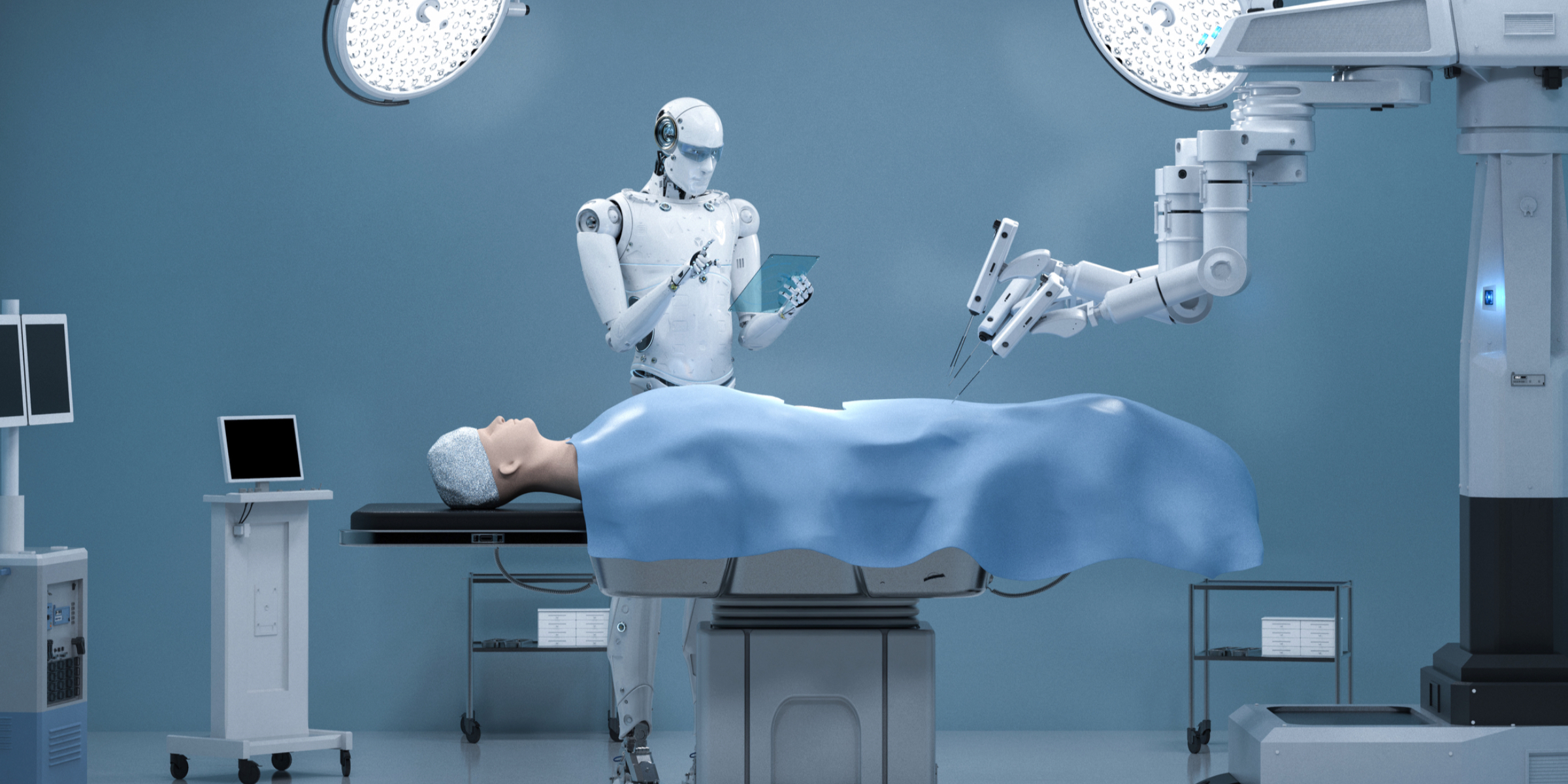
Taking endoscopic surgical robots as a breakthrough point, domestic surgical robots are "tearing open" a path for going global.
On the morning of November 3rd, at the 140th China Import and Export Fair (referred to as "Canton Fair") Smart Medical Zone, foreign doctor Melisa was sitting in front of a surgical robot console, performing surgical operations through hand movements: accompanied by small movements of her fingertips, a large device with multiple cantilevers on the right side was linked, and a slender robotic arm penetrated into a semi-circular simulated human cavity to perform delicate suturing movements.
At the same time, an image processing platform is presenting enlarged 3D high-definition intracavity images in real time. Behind Melisa, there are overseas buyers standing around watching digitally.
The device operated by Melisa is a laparoscopic surgical robot called Kangduo, independently developed by Harbin Sizherui Intelligent Medical Equipment Co., Ltd. (hereinafter referred to as "Sizherui"). According to the staff of Sizherui, the endoscopic surgical robot is a minimally invasive surgical platform that integrates robot control, high-definition 3D vision, precision machinery, surgical instruments, and intelligent assistance technology. It is mainly used to assist doctors in completing complex endoscopic operations such as tissue separation, resection, suturing, knotting, and reconstruction.
In addition to the aforementioned endoscopic robots, Melisa is also interested in the Smart Patrol Capsule Gastroscopy Robot from Guangzhou Side Medical Technology Co., Ltd. (hereinafter referred to as "Side Medical"). She told the Economic Observer reporter that the advantages of Chinese medical robots in portability and intelligence are what attract her the most.
The popularity on the exhibition booth is a glimpse into the current trend of domestic surgical robots entering overseas markets. According to data from the General Administration of Customs, the export value of surgical robots in China reached 480 million yuan in the first half of this year, a year-on-year increase of 3.3 times, and the export market increased from 23 in the same period last year to 49; In the first three quarters of this year, China's export of surgical robots to countries jointly building the "the Belt and Road" increased by 2.9 times.
Breaking through the segmented track first
In the process of domestic surgical robots going global, the endoscope track has taken the lead in "tearing open" the market gap. For example, taking Minimally Invasive Robotics (02252. HK) and Jingfeng Medical (02675. HK) as examples, public information shows that the two companies have made breakthrough progress in overseas revenue.
Among them, the financial report data related to minimally invasive robots shows that in 2025, thanks to the commercial volume of the core product Tumai endoscopic surgical robot, the annual overseas market sales revenue will be more than five times that of 2024; In the first half of 2026, the company achieved its first semi annual profit, with Tumai's overseas market revenue increasing by over 450% year-on-year.
The mid-term report of Jingfeng Medical in 2026 also shows a similar growth trend: as of June 30, 2026, thanks to the sales growth of Jingfeng porous endoscopic surgical robots, the company achieved a revenue of 319 million yuan, a year-on-year increase of 113.8%; The company has obtained registration approval for porous endoscopic surgical robots in 37 overseas jurisdictions including Europe, Asia Pacific, Middle East, Africa, and South America, covering a total of 63 countries and regions.
Sizherui, which belongs to the field of endoscopic robots, is currently in the process of preparing for an IPO. On November 3rd, Jia Lichao, one of the marketing department heads of Sizherui, also stated in an interview with the Economic Observer that "in terms of surgical robots going global, laparoscopic surgical robots are now running faster than other surgical robots
Jia Lichao further explained that currently, in addition to endoscopic surgical robots, there are also orthopedic surgical robots and neurosurgical surgical robots on the market. Among them, endoscopic surgical robots are a type of equipment that can directly and effectively bring real benefits to surgical procedures. He also stated that the endoscopic surgical robot not only enlarges the doctor's field of view, but also has an advantage in accuracy during fine operations.
Jingfeng Medical also stated in its 2026 midterm report that the company's surgical robots have been applied in multiple specialties, including urology, general surgery, gynecology, and thoracic surgery, and have accumulated real-world clinical evidence in complex tumor resection, organ reconstruction, and challenging minimally invasive surgeries.
The breakthrough of domestic endoscopic surgical robots was not achieved overnight. Jia Lichao recalled that over the past many years, Intuitive Surgical (an American company specializing in da Vinci surgical robots) has dominated the global market for endoscopic surgical robots. Da Vinci surgical robots may have once accounted for over 98% of the domestic market, but in recent years, with the development of domestic surgical robots, they have gradually been able to share the world in terms of new transaction volume
Jia Lichao told reporters that the founding team of Sizherui Company comes from the Robotics Research Institute of Harbin Institute of Technology. Compared with Da Vinci Robot, the company's Kangduo Endoscopic Surgical Robot adopts an open design in the doctor's console, which is more convenient for doctors to operate and observe in real time compared to the traditional "head buried" frame design.
When it comes to breaking through in overseas markets, Jia Lichao said that the company gradually achieved initial promotion through participating in foreign industry exhibitions and medical exchanges, relying on medical experts and doctors. "The earliest was the Indian market, and last year the European market also began to make efforts. This year, we have set up training centers in France and Poland to serve EU countries
In mid September, the China Chamber of Commerce for Import and Export of Medical and Health Products released the "Analysis of China's Surgical Robot Import and Export in the First Half of 2026", which believes that behind the rapid growth of surgical robot exports is the continuous improvement of domestic industrial competitiveness and the continuous release of overseas medical terminal market procurement demand. At present, China has established a relatively complete supporting system for the medical device industry chain, and multiple product pipelines such as laparoscopy, orthopedics, and general surgery have successively achieved clinical implementation and commercial application.
However, third-party consulting firm Sullivan believes in the "2026 Global Medical Robot Industry Development Blue Book" released in October that overall, Chinese surgical robots are still in the early stages of industrialization.
Catch up with 'differentiation advantage'
Against the backdrop of the breakthrough of endoscopic surgical robots, medical device companies in other fields such as orthopedic surgical robots are also following this trend at their own pace.
On November 4th, a reporter from the Economic Observer called the secretary's office of Tianzhihang (688277. SH) in the field of orthopedic surgical robots as an investor. While the relevant staff were cautious about the commercialization progress of surgical robots, they also believed that from a technical perspective, domestic equipment was not inferior to foreign equipment.
The staff member stated that on the one hand, mature manufacturers represented by Da Vinci surgical robots have been continuously developing since the 1990s and entered the market around 2000, accumulating a large amount of clinical experience. This is an objective gap that exists among domestic manufacturers; On the other hand, in the field of remote surgery, the development speed of domestic manufacturers is very fast. For example, as early as 2021, Beijing Jishuitan Hospital completed the first "5G+orthopedic surgical robot" remote orthopedic surgery in Beijing and Tibet, becoming a benchmark case for Tianzhihang Company.
In terms of overseas markets, the staff of the Tianzhihang Executive Office also hold an optimistic attitude. She stated that the company's management believes that the overseas market has huge potential, and the company is promoting cooperation with MicroPort Robotics, focusing on the latter's channel resources in the European and American markets. "However, it is still in the due diligence stage, and the specific cooperation method needs to be determined through formal proposals in the future.
On November 4th, when the reporter inquired about the surgical robot business of Mindray Medical (300760. SZ) as an investor to the staff of the company's secretary's office, the other party also expressed optimism.
The staff member stated that minimally invasive surgery is one of the fastest-growing businesses in the company's emerging business segment. According to its introduction, surgical robots are usually composed of imaging systems and robotic arms operating surgical instruments. Mindray Medical has accumulated underlying technologies and products in the fields of endoscopes, energy platforms, and surgical instruments. By adding robotic arms or robotic operations on this basis, a complete surgical robot system can be formed.
Our surgical robot related products are currently under development and are expected to be launched next year, "said the aforementioned staff member.
On October 30th, in response to an investor announcement, Mindray Medical mentioned that in the first three quarters of 2026, the company's overseas revenue accounted for approximately 53%. Among them, emerging businesses achieved a revenue of 4.735 billion yuan, a year-on-year increase of 20.52%, accounting for 17% of the company's overall revenue. We expect the international business to continue its rapid growth trend throughout 2026, with Europe, Latin America, and Asia Pacific expected to lead the growth, and the proportion of international business revenue to the company's overall revenue will further increase, "Mindray Medical said in the announcement.
Regarding competition in overseas markets, the staff of Mindray Medical's Executive Office stated that the overall market capacity in the field of surgical robots continues to expand, and although Da Vinci surgical robots are industry leaders, they are not an absolute oligopoly. He believes that with the increase in surgical volume and the decrease in machine costs, the application of surgical robots will become more widespread, and the entry of more market participants will further enhance market activity.
In addition, relevant personnel from companies such as Sizherui, Tianzhihang, and Side Medical have also told Economic Observer reporters that China's medical robots and medical devices are gradually moving away from the logic of simply "competing on prices" and "doing flat replacements" when going global. They are now focusing on real pain points in clinical scenarios, improving existing products, and combining China's rapid development in artificial intelligence (AI) to establish new competitive advantages through differentiated innovation.
For example, Liu Qiong, a staff member of the marketing department of Side Medical, told reporters that taking the company's Smart Patrol Capsule Gastroscopy Robot as an example, this product is similar in appearance to a disposable capsule that can be excreted with feces, and the examination process does not require anesthesia or intubation. She believes that the reason why traditional electronic gastroscopy is difficult to popularize at the grassroots level is that the equipment is expensive and grassroots medical institutions have no budget; Secondly, the coverage rate of endoscopists in China is extremely low, less than 1/10 of Japan and 1/5 of South Korea, and the talent training cycle is extremely long. But using capsule gastroscopy only requires simple training for nurses or doctors to operate it, and one-time use avoids cross infection, while also having extremely low requirements for the site, "she said.
Liu Qiong told reporters that the company's product has a high usage rate in remote areas such as India, Vietnam, and Africa, as the local conditions are harsh and require high equipment prices and ease of operation. In China, the product has been tested in more than 500 medical institutions, and overseas intention orders are expected to land by the end of this year to early next year.
The rapid application of AI has also added an extra layer of competitiveness to the update and iteration of Chinese medical robots. Zhuang Xiaodan, the head of the sales department of Guangzhou Ruixing Information Technology Co., Ltd., told the Economic Observer that the company has developed an AI cardiopulmonary resuscitation teaching robot this year. The device divides the standardized cardiopulmonary resuscitation process into steps through an AI system, and through 3D animation demonstration and video analysis, allows students to self-study and provide real-time feedback without the presence of a teacher.
In terms of venue deployment, we adopt an integrated design that is easy to carry and deploy, and can also reduce the requirements for a large number of professional guidance personnel, "said Zhuang Xiaodan." From the perspective of product informatization development, Chinese enterprises have already taken the lead in many fields in the world. "When we went abroad to participate in exhibitions, we saw that many leading manufacturers in the industry were still relatively traditional models, so we have great confidence in going global
However, the road to going abroad is not always smooth. Jia Lichao from Sizherui admitted that the company currently sells a lot of equipment in India, and the cost and difficulty of round-trip for Chinese engineers are high. Therefore, they are vigorously training Indian engineers to undertake local surgical robot maintenance, and have already recruited maintenance engineers from Mexico.
Jia Lichao believes that from "selling equipment" to "building an ecosystem", localized services are still the threshold that medical equipment companies must cross when going global.


Old players looking for an exit, new brands looking for an entrance: Two companies in the CIIE will join the framework
From exhibits to proposals, the answers to the nine year "full-time students" admission to the CIIE from two companies

CIIE Entry Time | CIIE Full Diligent Student Heliang, turning the booth into a health station this year


 Subscribe