Economic Observer Follow
2026-11-06 12:28

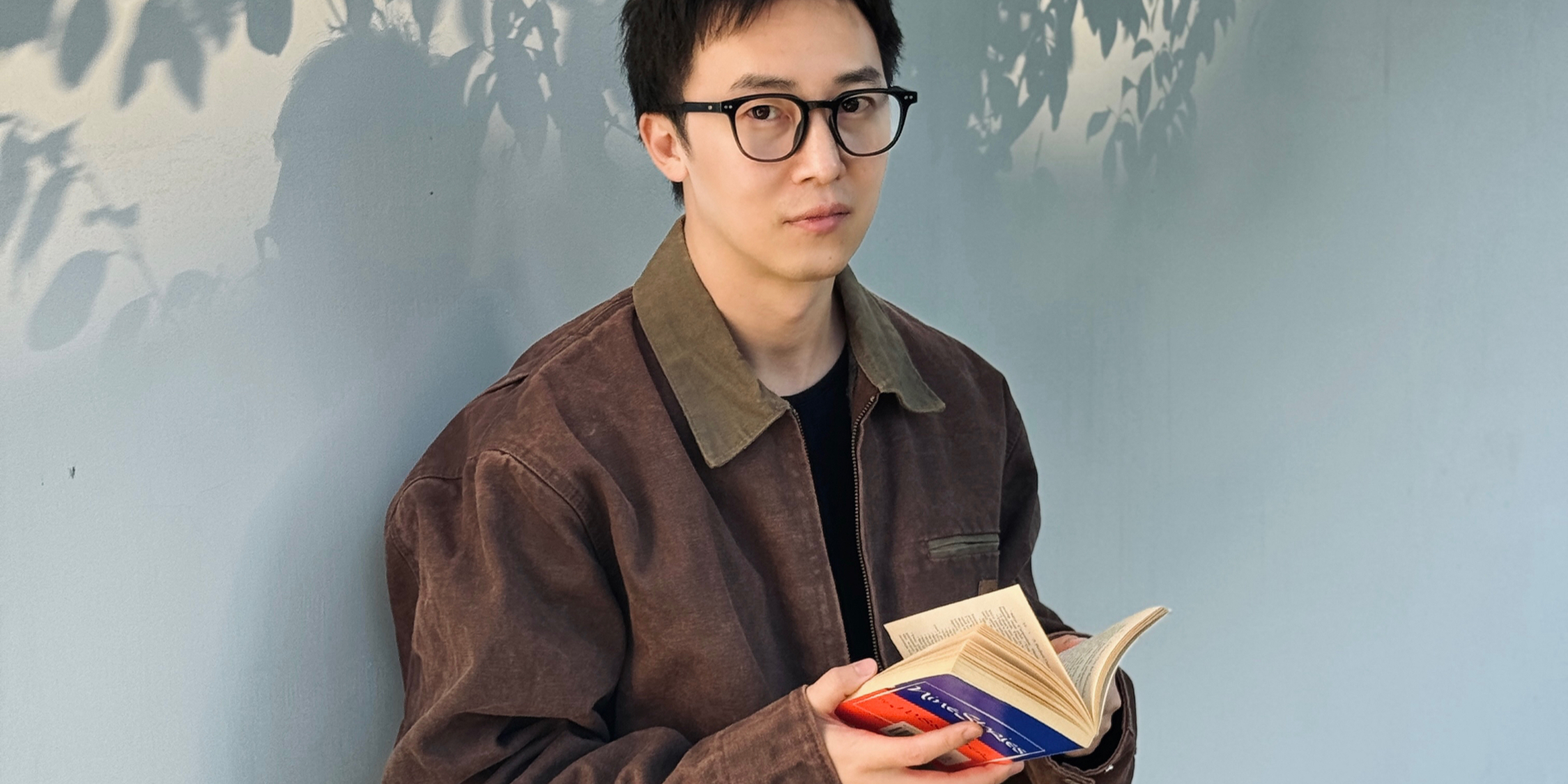
Among young authors, Zhou Hongxiang is one of the few who excels in long novels. After publishing "Dang Ran" in 2024, he released a new work "Joy Club" this year. Like its predecessor, the new work still focuses on the mountain city and presents the most current narrative in terms of geography and urban areas.
Female characters are the focus of Zhou Hongxiang's novels. They often experience indescribable pain and eventually overcome difficulties and their trapped selves with a tenacious force. In 'Joy Party', the power of women is more fully demonstrated - two generations of women are entangled in the test of fate together.
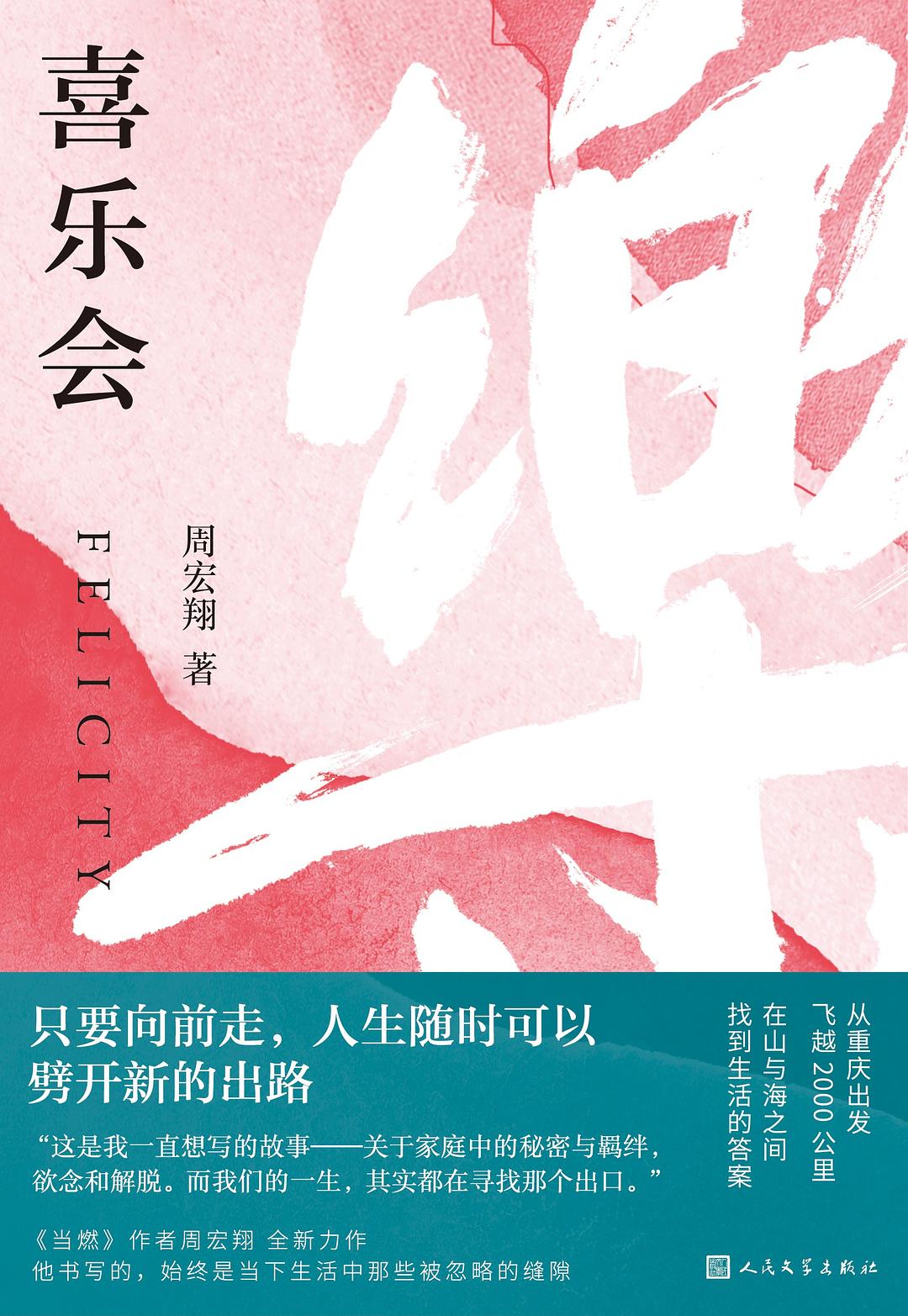
Joyful Meeting
Written by Zhou Hongxiang
People's Literature Publishing House
August 2026
From publishing his first full-length novel in his youth to now, Zhou Hongxiang's observations have gradually extended from personal emotions to the interaction between people and the times, which has made his novels more open and have received increasing praise from readers and the market. This time, taking the opportunity of the publication of the new book, we talked to him.
True sadness is very private and immeasurable
Economic Observer: You said a sentence at the book launch event: "I have been thinking about how long sadness should last. When family members leave, how long does it take for a person to be qualified to move forward?" Is this question the original seed of "Joy Party"? Did it hit you at a specific moment, or did it slowly settle down?
Zhou Hongxiang:I don't know if you have noticed, but in today's society, small and trivial troubles are always expressed tirelessly, and can be amplified through self narrative in various channels. A little bit of vulnerability seems to resonate countless times, making everyone anxious and nervous. However, in reality, true grief is difficult to express, and even that kind of sadness is difficult for others to approach. Even comforting words seem bland.
So in fact, true sadness is very private, personalized, immeasurable, and not something that can be expressed in a few words or sentences that resonate. On the contrary, true sadness cannot be resonated with too many people, it depends on when and how the person ends the sadness, and there is no absolute duration. This is what I thought when my friends around me encountered heavy setbacks a few years ago.
I'm not sure if it's the seed that gave birth to 'Joyful Society', but it was indeed a question that kept popping up in my mind while creating 'Joyful Society'. I like to write with questions in mind, although often it's not about solving them.
Economic Observer: There is a contrast between the title of the book "Joy Club" and the heavy issues of widowhood, loss of only one child, and elderly childbirth that you have written about. How did you decide to use this book title at that time?
Zhou Hongxiang:At the beginning, this novel was not called 'Joyful Meeting', but 'Joyful Noise'. To be honest, it's a bit clich é, and at the time it was just a tentative name, but it was clear that the intention was to write about "happy events". The beginning of the novel begins with a conversation between the mother-in-law and daughter-in-law, one wanting to get married again and the other wanting to have children again. From the traditional Chinese perspective, both of these events are definitely happy events. I even hope to help them complete their respective "happy events" in the novel, and then use "happy events" to dilute their original sadness, and then face a pile of chicken feathers on the way to the happy events. This is indeed the initial idea.
But as the characters were shaped and the plot deepened, the originally meager wishes were shattered. I realized that the death they faced together was not a simple thing, and even simple happy events could easily erase the traces of their sadness. The obsession and emotional retention were much more complex than I imagined, so "joy" and "happiness" became my vision for the characters in the story.
In the middle and later parts of the story, I basically followed the characters in the story. I know they didn't have a very happy or even difficult time, but I hope they don't have to work so hard. Therefore, 'Joy Club' is actually my wish for the characters in the story.
Economic Observer: The novel begins with a bizarre murder case and uses suspenseful narrative to guide the entire text. However, suspense is not the core, but rather the incision that tears open the hidden wounds of the family. Do you integrate the complex structure of suspense, common sense, and ethical dilemmas to adapt to the reading habits of current readers, or to present the theme you want to express more profoundly?
Zhou Hongxiang:I am someone who has been writing long novels for a long time, so I am well aware that the first thing a novel should attract is not the reader, but oneself. In order to make the creator have the desire to create this story, there must be an entrance that arouses the creator's own interest.
When I was a teenager, I read Eileen Chang's "Half Life", which actually conveyed a sense of spy fiction. Later, I learned that Eileen Chang loved John le Carr é, and I became a loyal reader of Le Carr é. In Le Carr é's works classified as spy novels, I read very complex human nature and worldviews, which far exceeded the scope of spy fiction itself. Just like when I read "Half Life", I didn't think it was a romance novel.
Later on, many novels that were classified into a certain category, such as Ted Jiang and Chandler's novels, were actually difficult for me to define their category after actually reading them, but they all had a particularly attractive entrance into the text to some extent. So I actually don't like to simply and roughly summarize a certain "way of attraction" with a specific term. It may be suspense, heterogeneity, or a strong atmosphere. I think the entrance to the text itself is very complex.
So when I create my own work, the first thing that comes to mind is how to pull myself into the world of the novel at the beginning. If I keep wandering outside the door, then the novel is probably a failure. It may not be related to the theme of expression, but it may be an important narrative motivation for me and a technique for explaining the story.
Novels do not solve life problems, they raise and present problems
Economic Observer: As a male writer, writing about female characters can easily be "revealing". Do you have any methods or beliefs when writing about female characters? How do you empathize and delicately depict the trauma of middle-aged women, avoiding stereotypical biases from a male perspective?
Zhou Hongxiang:'Being timid' is inevitable, and physiological barriers cannot fully familiarize me with women. However, when writing, I am actually creating gender neutral works. Perhaps characters have their own biological gender, but more importantly, how to write their own 'human' parts as closely as possible to fit women's consciousness may not be perfect, and may even be criticized. But what I want to express is the part of women I have recognized in my life experience. It is great to be able to express this understanding through my own techniques.
For me, when creating, I first have a strong sense of awe towards women, and of course, a large part of this awe comes from the attitude I have in my life. As for trauma, there is actually no gender bias. This kind of trauma comes from the person themselves, but women and men handle it differently, which depends entirely on life experience. I have seen my own mother go through the moment of a loved one's death, and I have also seen how female elders save themselves and get back up in grief. Those shocking feelings have always been engraved in my heart.
Economic Observer: The mother-in-law daughter-in-law relationship is one of the most easily labeled relationships in Chinese family narratives. In the new work, you write about Huang Zitong and Ye Yongzhen breaking free from the opposition between secular mother-in-law and daughter-in-law, and forming a profound friendship that transcends blood ties. How do you avoid turning this friendship into another idealized 'adult fairy tale' in practical writing?
Zhou Hongxiang:When it comes to "fairy tales", I even believe that they may be the earliest life of us people. The stories we have heard since childhood, the ancient legends that are far away from us, there are many ways in which people interact with each other that we cannot understand, such as joining the army for our father or lying on ice begging for carp. Speaking of these stories, I believe that when told to people today, they will feel like fairy tales.
We don't talk about the social system or the Three Cardinal Guides and Five Virtues at that time, but we may overlook the fact that some people's interactions with each other may have been beyond the norm and not within the framework.
In today's society, many sincere and genuine friendships between people can easily be seen as a "fake" because there is a natural disregard and distrust towards emotions. However, I believe in emotions and have always had an optimistic tendency towards interpersonal communication. I do not believe that all communication is about exchanging benefits. I believe in human kindness, which is not a fairy tale, and of course, it is easily seen as such by those who care about gains and losses.
Economic Observer: Writer Qiao Ye commented that this novel "expresses the complexity, diversity, and vastness of love, as well as the powerlessness of love and whether the ability to love still exists". In your opinion, what answers did Huang Zitong and Ye Yongzhen give to the question of whether the ability to love still exists?
Zhou Hongxiang:What I really appreciate is that the characters in my novels are people who have not lost their ability to love, and they almost still hold onto a passion to love. This love does not refer to love, but rather an unconditional emotional investment in a self affirming relationship. Huang Zitong's road to remarriage was very bumpy, but she cares about her current daughter seriously, and even has no hatred towards her current ex-wife who repeatedly harassed her. It's not that she is completely noble and doesn't hate her, but that she feels it's unnecessary.
On the other hand, Ye Yongzhen repeatedly persuades those around her to want a child out of love. She is not afraid of not having enough energy when she gets old. She just wants to find a new projection of love, love him with all her heart, cultivate him, take care of him, and regain her identity as a mother. In other words, both of them are actually brave. Today, there are not many people who can love or dare to love, so I admire them.
Economic Observer: The two core female characters in the novel choose two different ways to restart their lives. You did not judge the right or wrong of the two choices, but presented their respective difficulties and struggles. What kind of female survival and life values do you want to convey through this?
Zhou Hongxiang:I never evaluate the choices of the characters in my writing, and I even fully anticipate their choices. Therefore, as an observer and creator, I often want to hear the opinions of others on their choices in the text. Because my creative philosophy has always been: novels do not solve life problems, novels raise and present problems; The real solution lies in returning to life itself - the so-called 'solution' is actually everyone's unique experience, which is their own solution.
So in this novel, I just want to showcase their problems and confusions, as well as what they will encounter, what they will encounter, what they will think, and what values they will convey. I think it's too grand. What I want to express the most is the embarrassment that people feel when searching for a way out on their own. It's that embarrassment that lives up to the taste of being "human".
Economic Observer: You revealed that the character Ye Min in the book was not originally set, but naturally developed during the writing process, and is also the most healing character for you. In the process of creative advancement, how does this character break through your preconceptions and even reverse the narrative direction and spiritual core of the entire novel?
Zhou Hongxiang:After writing so many novels, I am increasingly looking forward to unexpected characters appearing, which excites me, just like meeting new people in real life always makes people want to explore. Ye Min is such a character, and her appearance makes me curious. I am curious about the stories and experiences behind her.
In this way, many people may be confused. Do I not know the story of the character I wrote myself? Actually, I don't know because I often follow the plot to let the character grow and develop on their own. But I am too eager to know the secrets behind Ye Min, so when writing, I am like a detective constantly searching for clues. But I am the opposite of the characters in the text, which means I am the one who is searching for clues while also providing clues to the characters in the story, which is interesting.
When I began to realize that the secret behind Ye Min might affect the entire story, I took a deep breath and felt that the story was right. What I needed was that thing. Later on, Ye Min completely lost control and I couldn't control her. It was her eagerness to tell me her story, and I could only listen. This was a strong dialogue with the characters, a moment that a novel really needed. In fact, it was Ye Min who told me what the novel should write about. At first, I thought it was a joyful thing, but it was actually a human suffering.
What hasn't changed is that strength
Economic Observer: Chongqing is your literary base, from "Dang Ran" to "Xi Le Hui", the mountain city has always been in your texts. But "Joy Party" introduces a new geographical coordinate of Dalian, where one mountain and one sea mirror each other. Is this your attempt to enrich the narrative of the mountain city?
Zhou Hongxiang:I just don't want to be confined to a comfort zone. I hope that the stories in my writing have a sense of spatial strangeness, because I have never really accepted the terms "southern writing" or "regional writing". I think this division will make the narrative narrower and narrower. I still hope that the world in my writing is broad, even boundless.
Economic Observer: The Sichuan Chongqing dialect appears extensively in "Joyful Gathering", and you also write in Chongqing dialect in "Dangran". But there is a risk with dialect writing, as non Sichuan Chongqing readers may be blocked. How do you balance when writing?
Zhou Hongxiang:Although I use dialects, I have also made some modifications. My dialect retains more of the rhythm, punctuation, and intonation of local languages, and actually follows a common language style. Of course, when expressing local language, I mainly use specific expressions and more words and phrases that can be mixed with common language. I will make adjustments. I hope that local people can read warmly, but outsiders can also find it interesting to read.
Economic Observer: You published your debut novel at the age of 19, but when it was discovered by the publishing house, you were still a high school student. Looking back at your writing during your teenage years, what has been your biggest change? Is there anything that hasn't changed for you?
Zhou Hongxiang:I started writing youth novels when I was young myself (laughs), so what I could see, see, and feel was the simple and youthful atmosphere that originated from campus. However, when I started writing career novels, there were already significant changes. Firstly, my understanding of "people" became richer and more complex. In recent years, there have been obvious changes in my works, not only at the level of "people", but also at the level of "people" and the times. What hasn't changed all along is actually the passion that I have for writing, which has never changed.
Economic Observer: There is always a saying that long novels are no longer suitable for today's fast-paced era, and it is difficult for people to have enough energy to immerse themselves in a novel. And your creations are mainly long novels. What do you think is the joy of writing and reading long novels?
Zhou Hongxiang:It's about immersion. I am someone who loves to immerse myself. Apart from creating and reading novels, it's not easy to find something particularly immersive now. Everyone's attention is easily interrupted by their phones, which almost control our minds. I think reading novels is a kind of confrontation, not only against the technological constraints on humanity, but also against time, because you can always read more multiples of time in novels.
Economic Observer: Your novels have all sold their film and television copyrights. Do you think that the film and television adaptation has had an impact on your novel creation? For example, when choosing a topic, structure, language, etc., do you consider the issue of film and television at the beginning of writing?
Zhou Hongxiang:For me, when I switched from being a screenwriter to writing novels in 2016, I was greatly influenced by scripts. The works I created during that time would unconsciously remind me of the logic of script creation. Of course, in recent years, I have gradually balanced the relationship between drama and literature.
For me, I am a person who grew up completely influenced by drama. I have been interested in various dramas since I was young, and in fact, I have watched more than read. In addition, I have always wanted to draw comics and play games in my early years. I am a person who particularly enjoys popular entertainment. However, I know that good novels, or literary novels, actually deviate from these things. But deep down, I definitely cannot completely deviate from them because I just love drama, so I can only achieve balance, which may also be one of my styles.
But before I started writing novels, I didn't really consider the possibility of film and television adaptation. The final presentation of the text was based on my inherent understanding of the way the story was told. Of course, I am happy that novels can be made into film and television, as their audience is naturally much larger than the original reading group. However, in recent years, especially after starting to write short stories in 2024, my understanding of novel creation has also undergone significant changes. I have started to want to abandon some of the dramatic elements and turn to more pure novel creation. These subsequent attempts may take some time to be seen by everyone, including my upcoming new novel, which may be quite different from the past.
The emotional concentration in human hearts is difficult for AI to achieve
Economic Observer: In today's world where AI can write fluent novels, what do you think are the specific parts of human writing that cannot be replaced? Is there any paragraph in "Joy Club" that you think AI can never write? Will you try using AI to write in the future?
Zhou Hongxiang:I think what AI cannot replace is precisely the emotional part, the form, sentence structure, grammar, all of which may be imitated, but it is difficult for AI to achieve due to the emotional concentration in human hearts. We can say that AI writing a novel is very exciting, but currently I have not seen anyone say that AI writing a novel moves me deeply and makes me want to cry, or that it makes him feel human like. Currently, there is no such thing. I don't know if there will be any next.
The scene in "Joy Party" where Ye Min suffered immense pain and went to a banquet is a part of my own experience. It is a very difficult but memorable part for me to write, and I believe AI cannot write it because it has no idea that I have experienced a more unbearable story than that. I have never used AI to interfere with any of my creations, and I feel very shameless because I don't want my little joy as a human to be plundered by machines. I think AI is often quite shameless.
Economic Observer: What do you think are the biggest advantages and challenges for young writers to write about the times and intervene in reality?
Zhou Hongxiang:The obvious advantage is youth, with energy and time, but at the same time it is also a disadvantage, with insufficient inventory and limited experience. But the better thing is that the times are developing rapidly, and young people can always keep up with the pace of the times. Their observation perspectives can also be constantly updated. This is the advantage and ability of young writers, but it takes some strength to fully integrate this observation with true emotional concentration.
Economic Observer: Currently, many readers have reservations about domestic original literature. Whether from the perspective of work quality, influence, or the recent "plagiarism" controversy, the reputation and market of original literature have been challenged. As a young creator, how do you view this phenomenon?
Zhou Hongxiang:Like peace talks and AI creation, writing is an original game of creation. The joy of being a creator should not be plundered, nor should it be interfered with by other things. I think the most important thing for young creators is that sometimes they may be clumsy, and their limited abilities can be openly admitted. However, what truly belongs to them is hard things, and what they ultimately strive for in their creation is that hard thing.
Economic Observer: Finally, recommend a book that you think is good recently to the readers of Economic Observer!
Zhou Hongxiang:I am currently reading "The Sympathizer" by Vietnamese writer Nguyen Thanh Ngoc, which is also an award-winning work at the 100th Pulitzer Prize. It tells the story of the mid to late Vietnam War, and the male protagonist is also a "double agent". The story is profound and meaningful, with a rich set of characters.


 Subscribe