Economic Observer Follow
2026-11-06 12:27

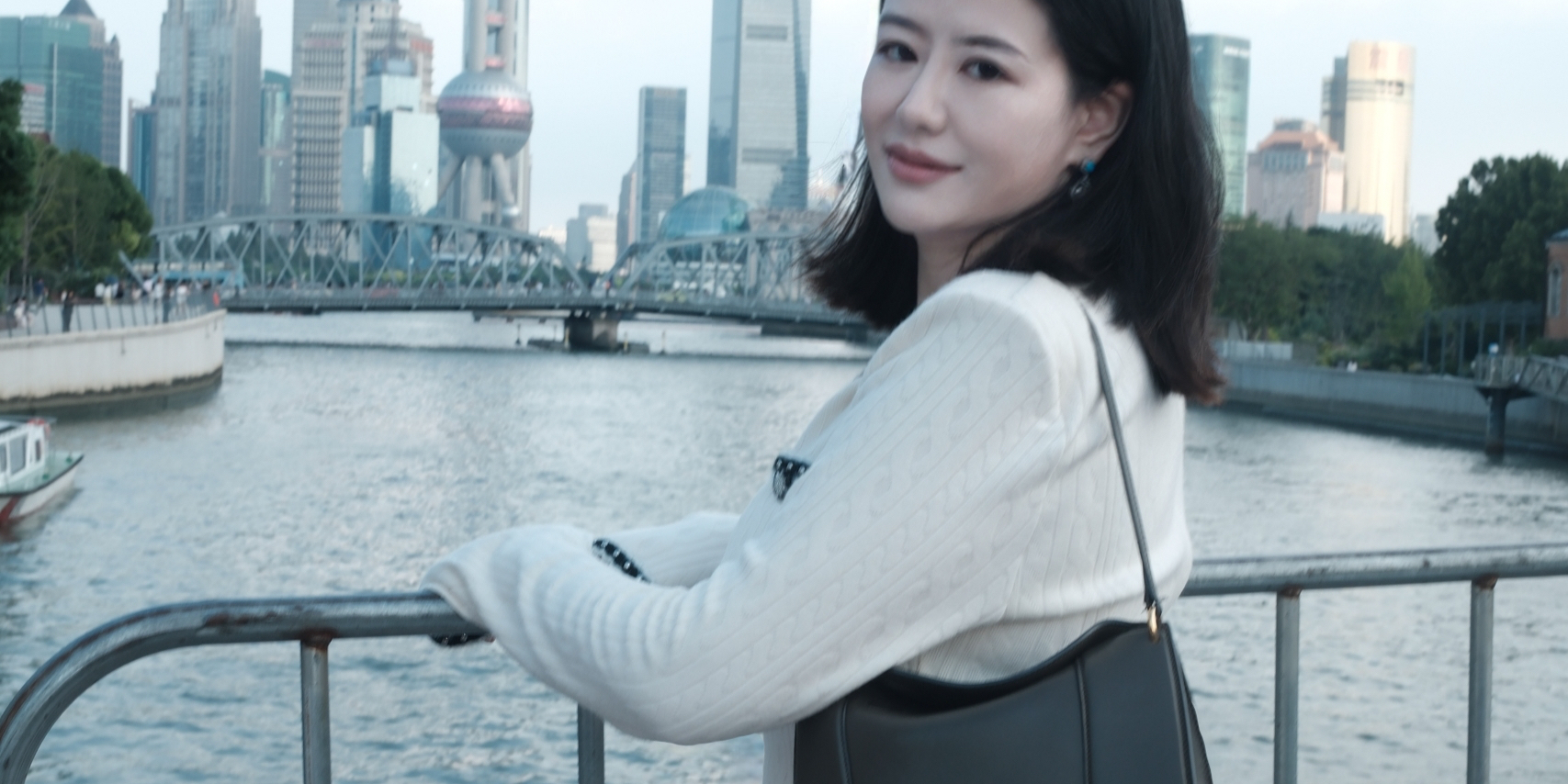
Wang Suxin was born in 1991, but it has been 16 years since the publication of her first novel. As a friend I have known for a long time, like many readers, I can clearly see the trajectory of Wang Suxin's writing changes - from a somewhat surreal and avant-garde writing style at the beginning, to a more profound and "melting" style now. Her novels are very contemporary, but they do not simply replicate reality, but rather describe everything she has experienced to us like a person returning from the future. Therefore, even when writing about the closest reality to the present moment, Wang Suxin's novels still have a gray "science fiction feeling".
Her latest published novel is "A Day to Wake Up Again", which she has been writing for 4 years. At first, I was a bit surprised to hear that she was writing about short video professionals, but after reading it, I felt that it was in line with Wang Suxin's long-standing concern about the "human condition". Life experiences, self questioning, and changes in the times... These are rarely conclusive answers in her works, but the process of exploration is precious and important.
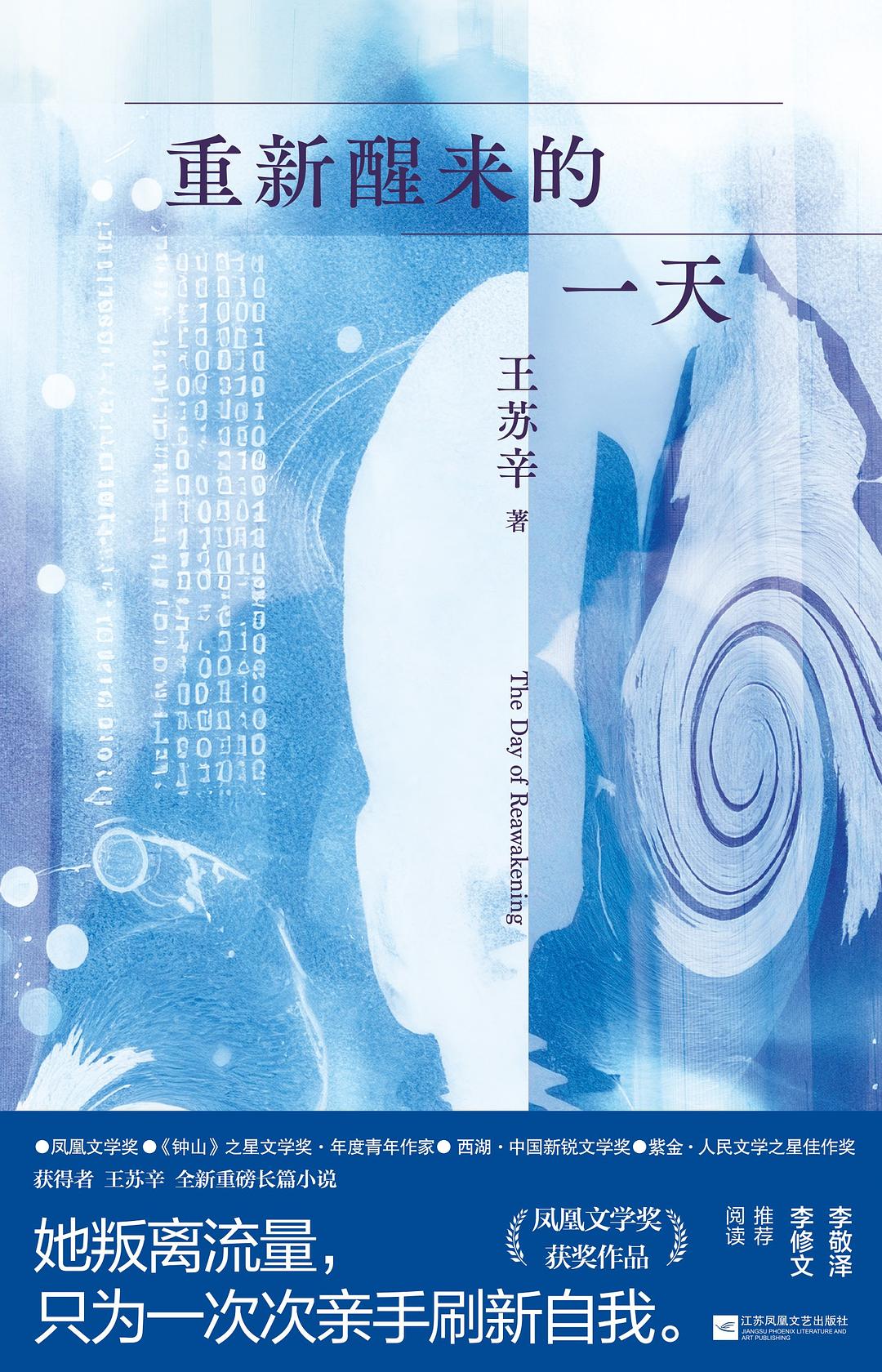
A Day to Wake Up Again
Written by Wang Suxin
Jiangsu Phoenix Literature and Art Publishing House
February 2026
Media is no longer just a tool, it is shaping my 'existence' itself
Economic Observer: At what moment did you want to become a writer and start creating in a true sense? Who are your early writers?
Wang Suxin:I started writing novels around middle school. I wrote a sequel to an animated film and unknowingly filled several notebooks. I started writing complete short and medium length stories as well as long ones in high school, and the total number of words I wrote at that time was several hundred thousand. But the real novel that can be considered as a creation is probably the short story "Suona" published in the "Youth Literature" magazine in early 2010. The novel was written during the summer vacation of senior high school, and this publication gave me great encouragement. It is included in the novel collection "The Past and Present of Ma Lingzhi".
My writing inspiration was Pamuk. When I was 15 years old, he had just won the Nobel Prize in Literature, and his books were prominently displayed in bookstores. I hadn't read many serious literary works at that time, so I continued reading his books all the way, and my favorite was' Istanbul: Memories of a City '. Pamuk's expression of "sorrow" in Istanbul particularly attracted me, and also aroused a desire to write - to connect hometown and growth into the novel. Because I think the hometown of modern people is not a geographical concept, but closer to a spiritual concept. Hometown is a whole formed by a person's wandering life in different places. Not long ago, at a new book sharing event in Wuhan, Teacher Li Xiuwen said that there is homesickness in "A Day to Wake Up Again". I was very touched because this layer of content is already quite obscure in my current novel, but he keenly saw it.
Yu Hua was also one of my enlighteners, but besides his short stories, my favorite at the time was his literary essay "Can I Believe in Myself?", which I used as my signature title for a long time. For a period of time, I was also addicted to writing magical stories about county towns and loved works like 'Pedro Balamo'. If I were to restore my writing to the present, Flaubert's "Bouvard and Pequech é" would be even more important to me - the precision of the world constructed through language.
Economic Observer: Your latest work is the recently published novel 'A Day to Wake Up Again'. Can you tell us the reason for writing this novel? This is also your first long novel. Compared to short stories, what do you think is the most difficult part of the writing process?
Wang Suxin: WritingThe impulse behind this lengthy work actually stems from a feeling gap. As I am bombarded with current information, I can't help but wonder what is the difference between the information surrounding us now and the information we came into contact with 20 years ago. So from the beginning, I wanted to incorporate this span into the novel - from the BBS era to before the widespread application of AI, presenting about 20 years of information technology changes through the growth and exploration of a girl. The protagonist Yue Yutong started from a small town in southern Henan, traveled through different cities, and finally settled in Shanghai, becoming a short video blogger. She is a microcosm of some contemporary youth - experiencing ecstasy and loss in the fluctuations of traffic, enjoying the weight of loneliness when traveling alone.
The characters in this novel start from the connections established in cyberspace and gradually spread to various parts of the country, including their life experiences in some other parts of the world. It was because of the Internet that I made many friends in my adolescence, and gained information and emotional companionship from afar. The topics that can be deeply discussed online and the special emotional connections gave me great comfort during my adolescence. Until now, I still feel that these relationships are like bricks, stacked one by one to form my understanding of my own life. I don't shy away from the fact that this long novel is a spiritual coming of age story, but rather a journey from one person to a group of people in a world connected by social networks, using each other's eyes to keenly perceive and see the changes in the world of life.
Compared to short stories, the most difficult aspect of a long form is its structure. Short stories can be condensed and sliced, using a scene and a moment of emotion to complete the entire piece, but long stories need to expand a state into a continuous process. When writing this novel, I tried to see myself as a "visual artist", borrowing from the narrative logic of art, visual communication, and even film and television. At the same time, I used a framework similar to the ancient Greek drama "chorus" to give the novel a new structure, attempting to resist the "no prelude, direct climax" mode of short videos. But there is a long process of balancing and modifying between this architecture design and actual execution.
Economic Observer: The book title "A Day to Wake Up Again" is also the short video account name of the protagonist Yue Yutong. The book mentions that she constantly "cancels, regenerates, cancels, and regenerates". Why is it 'waking up again' instead of 'truly' waking up? How do you understand the meaning of're '?
Wang Suxin:There is a big difference between're 'and' real '. 'Truly awakened' seems to imply a perfect, completed state of awakening, as if there is an endpoint waiting for you to arrive. But I don't believe in this kind of endpoint. The poet Yu Youyou said very well in a sharing that the hero kept canceling and registering his account, seemingly updating himself, but the trauma in reality did not disappear, she just "woke up again" in an infinite cycle on the Internet.
This cycle itself is a reflection of our era. Every waking up is not a final solution, but a new beginning, accompanied by the same confusion and anxiety, but different from the previous one. In the once popular Taiwanese drama 'I Want to See You', the male protagonist discovers subtle changes in his behavior between each iteration and the previous one, as he goes through repeated time loops. Yue Yutong and the people around her are the same. There is a desire to break free in're ', as well as the honesty of the difficulty of breaking free.
Economic Observer: This work is called an attempt to "create a biography for the short video era". You have arranged a complete history of Internet media changes from BBS, social networking sites, peer forums, campus networks to video numbers and short videos. As a post-90s writer who also grew up in the Internet wave, when did you begin to realize that these media forms are not just tools, but are reshaping the perception and emotional structure of a generation? Does this ambition to establish a biography also include a sense of resistance to the algorithmic era?
Wang Suxin:I have had a vague intuition for a long time - there is a 'screen' blocking my relationship with the world. This consciousness truly became clear, probably one day after short videos swept through daily life. I suddenly realized that the way I obtain information, the way I perceive time, and the way I understand others have all been recoded. Media is no longer just a tool, it is shaping my 'existence' itself.
This ambition of "establishing a biography" certainly includes a certain "resistance consciousness" towards the algorithm era, but this resistance is not just shouting slogans like "I don't want to use my phone" - that would be too self deception. What I would rather do is to use literary structures to resist the rhythm of short videos. Short videos pursue a seamless and direct climax, capturing your attention instantly, but literature is the opposite, it requires patience and time to settle. My novel adopts a "songwriting" narrative framework, which to some extent uses the volume of a long novel to combat the attention grabbing of algorithms - not against the device itself, but against the discipline it imposes on the mind.
Economic Observer: You mentioned that online friendships during adolescence were like "bricks" stacked to form your self-awareness. Did Yue Yutong really find a way to reconcile with this' virtual link 'at the end or during the process of the novel? In the era of AI and algorithmic recommendation, what is the essential difference between the quality of these links and the links in the BBS/forum era?
Wang Suxin:Yue Yutong did not find a 'perfect solution'. She executed her ideas on the ground while moving forward, and also struggled to overthrow her past self. This novel does not provide a standard answer and does not even require a warm ending. The more important question is whether she can have more self-awareness in the loop, and whether she can find a subtle balance between "longing to be seen" and "fear of being seen clearly". Many inner struggles are unsolvable, but people can still move forward.
As for the quality of links between the BBS/forum era and the algorithm recommendation era, the difference lies in whether they are "you looking for the same type" or "the same type is looking for you". The community form of the early Internet was more like an open public square. You had to take the initiative to speak and find colleagues. The relationship you established was because you talked about a topic and found resonance in a post. It had certain choices and active input. Nowadays, on platforms, algorithms push content to your eyes and also push "people you may know" to your eyes. Links have become more automated and lightweight, but precisely because they are too lightweight, they lack the sense of heaviness generated by effort and understanding. This is the difference in information that I have been feeling while writing this lengthy work.
I see a bigger world and feel more limitations
Economic Observer: The protagonist observes the world through a screen, and others also observe her through her homepage. The book mentions' I don't have myself, but I express myself '. Do you think that in the current era of excessive sharing, 'self' has evolved into a 'persona' that is interpreted for the sake of being watched? Is the interpretation of "self" different from the previous era in the Internet era?
Wang Suxin:The phrase 'I don't have myself, but I express myself' is actually a condensed version of Yue Yutong's inner conflict. When every expression we make is measured by a certain performance framework, likes, and comments, the 'self' seems to become both existing and non-existent. We think we are expressing our true feelings, but unconsciously, those expressions have been adjusted countless times based on 'what everyone wants to see'. As Yu Youyou mentioned in the sharing activity of this book at Chengdu Laishuxia Bookstore, your body is packaged and sold. In the end, which is the real self and which is the Internet personality, the boundary becomes more and more blurred.
The biggest difference between the "self" interpretation of the Internet era and the past is that the self is no longer generated internally, but shaped by external observation. The past self is an individual's inner narrative, while the present self contains the "persona" being observed. This change may bring new cracks - it may allow you to see the other side that was previously suppressed, but it can also easily cause you to lose the "real touch" of your body, blurring the boundary between being human and being human. Of course, this is not entirely a bad thing, but it is definitely a topic that none of us can escape.
Economic Observer: In your opinion, is the brief ecstasy of being addicted to short videos and the deep thinking immersed in literary reading a contradictory relationship for contemporary youth, or can they coexist as two ways of interacting with the world?
Wang Suxin:I don't think they are naturally completely opposed. I also watch short videos myself and get some intuitive satisfaction from them, which is not to be denied. The problem is not with short videos themselves, but with them forming our 'default environment' - when you are overwhelmed by the timeline pushed by algorithms, it is difficult for you to actively choose to 'read a long novel'.
From this perspective, the relationship between the two is more like an opposition of "competing for attention". The spiritual life of humanity cannot only consist of brief moments of ecstasy, but also requires deep contemplation; But conversely, literary classics, at the beginning of their birth, in a broad sense, were also providing their readers with a new way of understanding the world. So, to put it more mildly, they can coexist on the same person, but the latter (literature) often requires our active willpower to overcome the inertia created by the former (algorithms).
Economic Observer: You were born in Henan and now live in Shanghai. Yue Yutong also experienced the migration from a small town to Shanghai. What narrative functions do "small town" and "city" respectively undertake in your writing map? Does your hometown provide thickness for your writing, or does distance provide objectivity for your scrutiny?
Wang Suxin:The small town in my writing provides an "initial state" - a person slowly awakening in its limitations, and the possibilities and limitations of the world are beginning to emerge in this limited space. The city provides a "complex gravity field" - drifting, flowing, feeling lonely in crowded crowds, feeling lost in countless choices.
I believe that the relationship between returning to one's hometown and distance is inseparable. My hometown has provided me with a certain texture and thickness, without that life, my writing may not have taken root. But distance does provide me with objective scrutiny. When you are no longer immersed in it but look back from a distance, the daily details and subtle tensions between people become clearer. This is like my feeling when I wrote 'Elephant Crossing' in 2020, a certain distance and 'looking back' will make you realize that many old terms have become new things that need to be redefined. One of the meanings of writing is to redefine things that seem already understood within this distance.
Economic Observer: In your previous work "Elephant Crossing", you focused on the "crossing" and "transformation" of people in mental distress. In 'A Day to Wake Up Again', the protagonist no longer has that intense, metaphysical 'transformation', but is carried away by reality and traffic. Does this mean that the anxiety of this generation has shifted from an existential questioning of 'who am I' to an attention crisis of 'where can I be seen'?
Wang Suxin:This is a very keen observation. When writing 'Elephant Crossing', I focused on the difficult climb of a person's spirit - those moments when 'it's hard to take another step forward', those moments when the heart wants to break free but is pulled back to its original place by daily trivialities. In 'A Day to Wake Up Again', Yue Yutong is not unwilling to climb, but is pushed by the combined force of reality and traffic, unable to stop and do too much metaphysical thinking. This is not to say that the problem with existentialism is no longer there, but rather that it is covered and suppressed by the crisis of attention. Today's dilemma may be more inclined towards: you should first solve the problem of "being seen" before having the energy to ask "who am I". But if this continues, 'who am I' may be replaced by a commodified 'persona', which is a real paradox.
Economic Observer: Compared to labels such as hometown and Shanghai, the regional color in your writing is not heavy, but rather depicts a rougher and more suspended urban state, sometimes like a parallel world. This seems to be an exploration that abandons appearances and enters a more fundamental reality. How do you understand 'realism' in literature? Do you think your writing is realistic?
Wang Suxin:If realism refers to 'realistic replication of all details' or' traditional realism novels', then I probably don't. But I think 'realism' needs to be redefined today - it should not just be a reproduction of appearances, but should touch upon a more fundamental state to reach a growing reality. If writing only expresses' limited reality ', then I think this kind of writing is a pity or even a failure.
My own writing, in the words of Li Jingze, is not a reflection, but a melting. It is a reorganization of reality. But all modernity comes from the powerful material library and strong reflection provided by real life itself. No matter how I write, I will admit that my writing is full of modernity. If I have to say it, isn't 'modernism' the new 'realism'?
Economic Observer: From your early work "White Night Photography Studio" to now, it seems that there has been a "transformation" from avant-garde and surreal writing to realism. Is this a conscious change or a natural process?
Wang Suxin:It's a natural process, I went from a young novelist to a mature woman in her thirties. I live within the many limitations of the real world, feeling self suppression and pushing myself to adjust and approach a more perfect self. When I was writing the article in 'White Night Photography Studio', I was just in my early twenties and the novel was more like an intellectual adventure for me. I wanted to depict the world I saw in my imagination, but I didn't care how others viewed it. In 'Elephant Crossing', life experience has entered the core of writing - that collection of novels was not 'planned', but grew out of my life and daily life. I now live with potential readers, see a bigger world, and feel more limitations.
Writing 'A Day to Wake Up Again' now feels more like continuing to dance while wearing 'shackles of reality': I have to deal with real media changes and real anxiety dilemmas, but I still hope to use the dense experiences of literary language to restructure these experiences, rather than simply replicating life. So it's not that I went from avant-garde to realism, but rather that I arranged fictional logic in the real world.
Economic Observer: You mentioned feeling the "disappearance of the community" during the writing process. In real life, we seem to be becoming increasingly atomized. In the novel, Yue Yutong tries to find the same kind through the Internet, but do you think it is still possible to rebuild the community in the Internet era?
Wang Suxin:I have thought about this question repeatedly during the process of writing a novel. On the surface, the Internet has connected people more closely, but many times this connection has exacerbated atomization - everyone in his own information cocoon room does not need to really have friction with others, does not need real dialogue. Yue Yutong's way of searching for similar individuals also reflects this dilemma to some extent: she connects through the internet, but always separated by a screen, with some being close, some distant, and even limited.
But I don't want the answer to this question to be hopeless. The community has indeed changed in form and texture, no longer deeply bound to physical space as in the past, but there still exists an emotionally fragile community in virtual space. If we are willing to break the passive push of algorithms and actively choose to explore truly 'common concerns', the community may still have the possibility of reconstruction. We just need to put in more effort to proactively establish and maintain it.
I would rather be slower and write things that are worthy of myself
Economic Observer: Your novels have portrayed many powerful or exploratory female characters, but you have never touted "feminist writing". How do you view the relationship between current discussions on feminism and your creative work?
Wang Suxin:I did not deliberately promote "feminist writing" because my first concern is the spiritual state of "people". In my opinion, feminism is a realistic force for understanding and liberation, but literary creation becomes dry if only 'ism' remains. I prefer to write my images as if they were flesh and blood. Of course, what I am writing about is the growth trajectory of women - from the emotional patterns of Yue Yutong and AK, to the profound friendship between her and Lu, to the subtle relationship between Yue Kaile and Xiang.
During this process, women's sense of agency, struggle, and power will automatically emerge. I will not deliberately shape a certain character just to showcase feminism, nor will I avoid exploring the female experience I want to explore. All thoughts and discussions are naturally presented through the texture of interpersonal relationships. For me, relationships give rise to changes in images, which in turn support the characters themselves.
Economic Observer: Now that you are a professional writer, what impact has this identity had on your writing pace, subject matter choices, or lifestyle? Does it provide a sense of security, or does it bring some new constraints?
Wang Suxin:Becoming a professional writer has indeed brought about some changes. The most direct is the guarantee of writing time, which provides a sense of security to some extent - there is no need to squeeze out leisure time to write. But when it comes to whether there are constraints, there are also. The identity of a professional writer sometimes brings an intangible expectation, as if you must constantly produce "masterpieces" and respond to the times. But in fact, what is the era, can it really be expressed clearly through a certain work? Some representative writers of root seeking literature can only write about their experiences before the 1990s. Do you think they haven't experienced modernization? Of course not. Some people born in the 1980s are still repeatedly clarifying their millennium, but so what? A writer who can express a certain part clearly is already excellent.
But I always remind myself that the biggest enemy of writing is repetition and clich é s. I would rather be slower and write things that are worthy of myself. I am well aware that the experience faced by authors born in the 1990s is a more chaotic whole, but this whole is not an iron plate, and there are still infinite possibilities for climbing. However, this possibility also means that I cannot draw on the literary experience of previous writers, because I have never lived in that fragmented life. The world I face is so complex, which is the writing difficulty I must face.
More importantly, I feel that being a professional writer has given me a clearer understanding of the 'meaning of writing' - it's not just about telling stories, but about the desire to understand others and the whole world in a way that understands myself.
Economic Observer: Currently, many readers have reservations about domestic original literature. Whether from the perspective of work quality, influence, or the recent "plagiarism" controversy, the reputation and market of original literature have been challenged. As a young creator, how do you view this phenomenon?
Wang Suxin:I think there are still some young creators who rely too much on monotonous reference frames and experience libraries when dealing with their own experiences. Setting aside possible issues of writing justice, transforming the experiences of others is indeed arduous. It cannot be achieved by simply modifying some expressions, but must be a genuine understanding and melting from the bottom of one's heart, to the point where sometimes you feel like those things have happened to you. So writing is a drain on energy and blood, because you may be living a fragment of someone's life that they may have extended, which involves the author's own efforts. Stories can be fabricated, but emotions are difficult to fabricate.
Economic Observer: Some people say that paper-based reading materials, such as books and newspapers, will eventually be completely replaced by electronic reading. As a writer who is still publishing and publishing books, do you feel a sense of crisis? Do you have a deeper emotional attachment to paper reading compared to electronic reading? Do you think paper reading materials will really exit the historical stage?
Wang Suxin:The sense of crisis is not particularly strong. From the perspective of changes in reading habits, it is a fact that the market for printed reading materials has been impacted, but I don't think it will completely exit the historical stage. Paper reading provides a physical experience that electronic reading cannot replace - the tactile sensation of paper, the rhythm of flipping pages, and the thickness of holding a book. These all leave unique emotional imprints during the reading process.
I have experienced the media transition from paper to electronic, and I have a more genuine sense that the two can coexist. Paper books may become a more 'classic' or 'collectible' existence, but I don't think they will completely disappear. After all, every time you open a book, the feeling of entering another person's spiritual world cannot be completely replaced by a screen.
Economic Observer: What do you think of the development of AI? Do you think AI has the potential to write novels that are no less impressive than humans in the future?
Wang Suxin:The development of AI is indeed very fast, and perhaps one day it can write stories that are technically flawless - with complete structure, fluent language, and no grammar errors. But novels are not just about technology. The core of human writing lies in those 'imperfect' things - personal weaknesses, personality flaws, and the uniqueness of life experiences. These are precisely the precious aspects of real person creation. Currently, AI can only combine existing human texts and does not have its own life experience. A truly good novel is often not just about telling a story, but also about exploring an irreplaceable experience and emotional quality. So, even if AI can write novels that are "no less than humans", I believe that the standard of "no less than" itself is worth considering - literature is not the Olympics, it's not just about comparing technical scores.
Economic Observer: Finally, recommend a book that you think is good recently to the readers of Economic Observer!
Wang Suxin:Since the issue of youth creation is mentioned in the question, I would recommend a recent book by a young writer that I personally think is worth reading - Wu Chun's novel collection "Taming the Tiger". I think Wu Chun is a writer who naturally has a unique perspective of observation. She is a person with her own uniqueness and will not change herself due to external reactions. She focuses on the abstract experiences brought about by geographical and spatial changes, and describes these abstract experiences very concretely. Therefore, her novel writing is closer to using novels for invention ceremonies.
I have always thought that Wu Chun is a natural writer, and her detachment has given her a lot of space to express herself in her writing. She seems to be the person who can transform herself and the people around her into talent. However, it is unknown how many readers this type of writing can have at present.


 Subscribe