Economic Observer Follow
2026-11-05 16:18

Su Yi/Wen
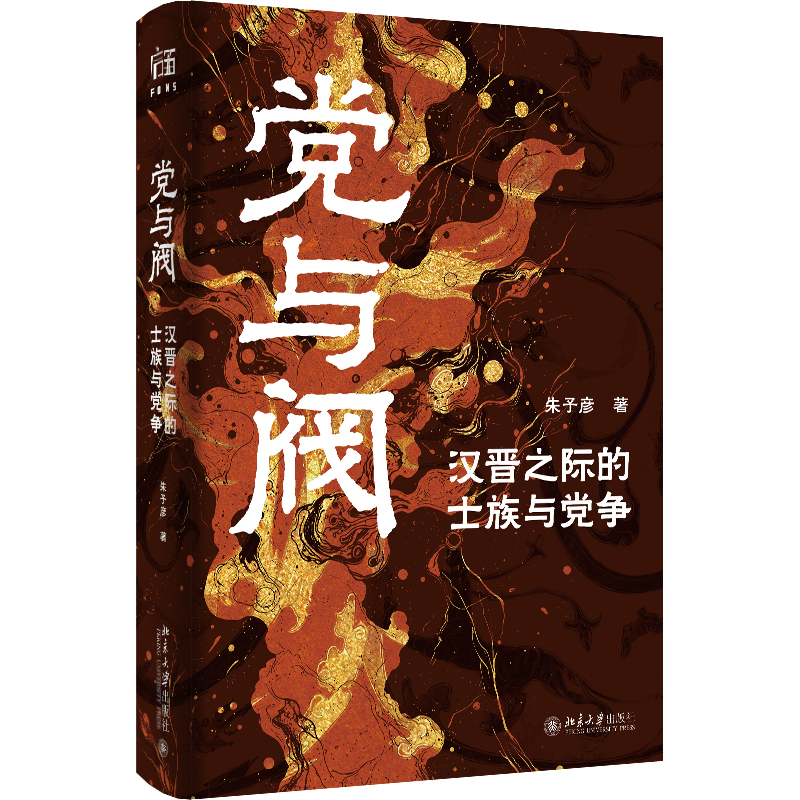
The term 'clique' carries a sinister connotation in ancient political contexts. Throughout history, emperors have been most averse to their subjects forming factions for personal gain. Once a subject is labeled as a "friend", they may be dismissed or exiled, or even implicated throughout their entire family. Professor Zhu Ziyan from the Department of History at Shanghai University, in his new work "The Party and the Faction: The Scholar Clan and Party Controversy during the Han and Jin Dynasties," does not stop at making simple moral judgments on this political phenomenon, but instead examines it in the context of specific institutional soil.
From the calamity of party confinement in the Eastern Han Dynasty, to the Gaoping Mausoleum Incident in the Wei and Jin Dynasties, and to the Eastern Jin Dynasty's "king and horse sharing the world", the entanglement of cliques and sects formed the most complex political landscape of the four hundred years of the Han and Jin Dynasties. To understand all of this, it is necessary to view it within a longer context of institutional and political history.
1、 Official selection system
How can cliques breed? Professor Zhu Ziyan first turned his attention to the official selection system of the Eastern Han Dynasty.
The selection of officials in the Eastern Han Dynasty mainly relied on inspection and conscription. Scholars who are elected by local officials or recruited by court officials are referred to as "candidates", while those who are elected are referred to as "alumni". Once this relationship is established, it remains steadfast for life. In the Eastern Han Dynasty, it was considered a natural duty for family members and old officials to mourn, erect steles, and even die for their ancestors. This formed a special "dual ruler subjectivity": the emperor is the ruler of the world, and the ruler is the ruler of oneself. When there is a conflict between the interests of the court and the interests of the lord's family, former officials often choose to side with the lord. The system of selecting officials within the imperial system has nurtured countless interest groups linked by blood ties and benevolence. This selection mechanism based on benevolence and influence has become increasingly rigid, and even led to the absurd situation of "selecting talented individuals without knowledge of literature; inspecting filial piety and integrity, and separating fathers". A local force independent of imperial power has gradually formed within the bureaucratic system.
Once a group has formed, different groups will compete for the right to speak. At the end of the Eastern Han Dynasty, scholars used "clear discussions" to evaluate characters and criticize current affairs. The most famous among them is the "Moon Dan Evaluation" hosted by the renowned scholar Xu Shao from Runan in his hometown. Xu Shao changes his titles every month and evaluates local party figures. Once praised or criticized, it is enough to determine the integrity and honor of a scholar's life. This kind of personal evaluation standard gradually surpassed the "official law" of the court, and scholars formed alliances and promoted each other to resist eunuchs and relatives. During the reigns of Emperor Huan and Emperor Ling, scholars particularly advocated for upright and intense moral conduct. But this kind of boasting not only contains a deliberate pursuit of fame, but also exposes the alienation of the literati class from imperial power. In the end, it led to two incidents of party confinement, with a large number of scholars being accused of being "party members", either imprisoned for life or died in prison.
Traditional narratives often view the persecution of scholars by imperial power, highlighting the noble spirit of scholars. Zhu Ziyan's observation is even more stern. He believed that the disaster of the Party's suppression certainly demonstrated the moral side of the literati, but its failure also exposed the lack of mature struggle strategies among the literati group. Sima Guang once sighed in his book "Zizhi Tongjian" that "party members were born into a chaotic world" but "they wanted to save them with their words and mouths". The result could only be "being subjected to sexual abuse, causing harm to friends. The annihilation of the literati led to the downfall of the country".
The disasters of two party blockades not only destroyed the bodies of scholars, but also buried deeper cracks in the hearts of the people, and the imperial power of the Eastern Han Dynasty lost the centripetal force of the literati class from then on.
2、 Cao Wei replaced Han
During the transition from Han to Wei, the factional struggles took on a new look. In the past, the party struggle was a confrontation between scholars and eunuchs, but with the "calamity of party confinement" and the "rebellion of the Ten Constant Attendants", the vitality of scholars and eunuchs was greatly damaged. The new factional struggle gradually evolved into a struggle among different factions within warlords.
Taking Cao Wei as an example, Zhu Ziyan carefully sorted out the factional structure within his regime. Cao Cao rose up with two basic forces: one was the "Qiao Pei Wu Jiang Group", with Xiahou Dun, Cao Ren and other clan and township parties as the core; The other group is the "Ruying Scholar Group", represented by officials from major Central Plains clans such as Xun Yu and Chen Qun. In the early days of Cao Cao, the two forces were still able to work together. In the later stage, cracks gradually appear. Cao Cao wanted to "add nine Xis" to the title of Duke Wei of Jin, intending to replace Han as emperor. Xun Yu was the strongest opponent, and Cao Cao was very unhappy. According to the Book of Later Han, shortly after Xun Yu fell ill, Cao Cao gifted him food. However, Xun Yu opened the food box and found it empty, so he took poison and committed suicide. The death of Xun Yu, on the surface, was due to opposition to Cao Cao's title of Duke of Wei, but in reality, it was a fundamental conflict between the recognition of the identity of "Han subjects" by the scholars of Ru and Ying and Cao Cao's ambition to replace Han. After Xun Yu's death, the Ruying Group adjusted its strategy and placed its chips on Cao Pi.
Zhu Ziyan pointed out that Cao Pi's usurpation of Han was essentially a political transaction between the Ruying scholars and the Cao clan. This is also related to the official selection system mentioned earlier. Chen Qun proposed the "Nine Rank Official Law", which places the power of selecting officials in the hands of middle ranking officials, who are almost entirely filled by aristocratic families. The Nine Rank Zhongzheng system established various levels of Zhongzheng officials in states and counties to evaluate family background, morality, and talent. However, with the control of the Zhongzheng position by aristocratic families, family background and rank became the main criteria, and a situation gradually formed where there were no poor families in the upper ranks and no aristocratic families in the lower ranks. The Ruying Group supported Cao Pi's claim to the throne in exchange for the "new emperor" allowing the aristocrats to monopolize the power of selecting officials, and thus the aristocratic aristocrats officially took shape at the institutional level. The selection criteria for officials completely shifted from emphasizing virtue and talent to emphasizing social status, laying the foundation for the hundreds of years of aristocratic politics in the Wei, Jin, Southern and Northern Dynasties.
This transaction also laid the groundwork for the downfall of Cao Wei. During the reign of Cao Fang, the royal family member Cao Shuang attempted to revoke the right to elect officials, which violated the interests of the elder faction represented by Sima Yi. The Ruying Group did not hesitate to lean towards Sima Yi. The Gaopingling Incident, in which Sima Yi feigned illness to gain Cao Shuang, was essentially another collective counterattack by the Ruying Group against the imperial family. Cao Shuang's party was defeated by the barbarian tribes, while the Ruying group achieved ultimate victory.
During the Two Jin Dynasties, the aristocratic families completely controlled the government, and the imperial power became a vassal of the aristocratic game.
3、 The Rebellion of the Eight Kings
During the reign of Emperor Wu of Jin, Sima Yan, he faced a thorny problem: the power of aristocratic families was too strong. In order to balance the aristocracy, Sima Yan granted the imperial family a great fiefdom and ordered the princes to guard important areas and hold military power. This measure, however, led to excessive power of the royal family and triggered a new party struggle. The most typical case is the intense game surrounding the succession controversy of Qi King Sima You.
Sima You was the second son of Sima Zhao and was adopted by Sima Shi. Sima Zhao was quite fond of this son before his death, and even had thoughts passed down to him. After Sima Yan ascended to the throne, he always harbored resentment towards his younger brother. In the second year of Xianning (276 AD), Sima Yan fell seriously ill, and the courtiers secretly communicated with Sima You, thinking that the throne was about to change hands. Unexpectedly, Sima Yan recovered again, and his suspicion of Sima You grew even stronger thereafter. Two years later, Sima Yan made up his mind to expel Sima You from Luoyang and sent him to a fiefdom to establish his own country. This move caused a stir in both the court and the public, with important officials such as Yang Hu and Zhang Hua coming forward to advise and obstruct. The ministers even knelt down at the palace gates to offer their advice. A dispute over the succession of the throne has evolved into a large-scale formation and division in the court. Sima You ultimately died of grief and anger on his way to the domain.
Afterwards, the Western Jin court was completely torn apart, and Emperor Wu of Jin relied on his relative Yang to suppress the opposing forces in the court, attempting to maintain balance through third-party forces. This political power tactic not only failed to quell the party struggle, but also laid the groundwork for the future palace blood feud between Jia Nanfeng and Yang. During the reign of Emperor Hui of Jin, Jia Nanfeng executed Yang Jun, and the various kings of the Sima family attacked each other. The Rebellion of the Eight Princes in 2016 was essentially an endless feud between the princes of the royal family and the aristocratic families. In the environment where the "aristocratic families" monopolized official careers in the Western Jin Dynasty, the lower class was excluded from the aristocratic system, and the only channel for upward mobility seemed to be a narrow path. In order to achieve their official career, the Cold Men began to form a private party with King Zong, providing advice and strategies for his conquests, which plunged the country into a civil war of "privatization".
The brief unification of the Western Jin Dynasty quickly collapsed amidst the internal friction of power privatization.
4、 Old Wang Xie
The downfall of the Western Jin Dynasty, the southward migration of the Jin dynasty, and the political landscape of the Eastern Jin Dynasty can be summarized in one sentence: the king and the horse share the world. Sima Rui, the great grandson of Sima Yi and the founding emperor of the Eastern Jin Dynasty, was able to establish himself in Jiangnan almost entirely thanks to the strong support of Wang Dao and Wang Dun brothers of the Langya Wang family. From the day of its birth, the imperial power of the Eastern Jin Dynasty had to share power with the aristocratic families, forming a subtle symbiotic relationship.
Tian Yuqing put forward a more general judgment in "The Politics of the Eastern Jin Dynasty's Clans": the politics of the aristocracy was a "metamorphosis of imperial power politics under special conditions", with temporary and transitional characteristics, and its form of existence was the co governance of the aristocracy and imperial power. During the Eastern Jin Dynasty, the Langya Wang family, Yingchuan Yu family, Qiao Jun Huan family, Chen Jun Xie family, and Taiyuan Wang family emerged one after another, competing with each other and forming a pattern of "clan control and mutual restraint". This balance is extremely fragile, and any attempt to break the balance of power will trigger a chain reaction.
The rise of the Huan family was a significant impact on balance. Huan Wen and Huan Xuan attempted to break the pattern of "sharing the world" by leveraging the strength of the important town of Jingxiang in the upper reaches of the Yangtze River. The Huan family has been managing Jingxiang for many years, and both the local army and refugees have benefited from their long-standing favor, almost becoming private soldiers of the Huan family. The court feared the threat of the Huan family and ordered Xie Xuan to recruit refugees from the north to form the Northern Army. This army later achieved a great victory in the Battle of Feishui, and the Xie family also rose to the center of power through this. The rise of the Beifu army marked the imperial power's attempt to balance the power of the aristocracy with a new military force. This armed force composed of refugees briefly broke the monopoly of the high class aristocrats on military force, and also opened up a channel for the rise of the poor and inferior aristocrats. Later, Huan Xuan led his troops down the river and attacked Jiankang, proclaiming himself emperor for a time. Liu Yu, who ultimately came from the Northern Army, used this armed force to defeat the southern warlords and replace the Eastern Jin Dynasty to establish the Liu Song Dynasty. The pattern of joint governance among the ruling class was ultimately broken down by military strength. The "abnormality" mentioned by Tian Yuqing will eventually "return" to imperial politics, and Liu Yu's replacement of Jin is the completion of this return.
Throughout the hundreds of years between the Han and Jin dynasties, the system of selecting officials gave birth to the gentry, who formed cliques for self-protection and expansion. The clique strife accelerated the downfall of the dynasty. The power of the imperial family, aristocrats, relatives, eunuchs, and warlords repeatedly competed.
From the evaluation power of Yuedan in the Eastern Han Dynasty, to the official selection power of the nine rank system in Cao Wei, and to the military power of Jingxiang and Beifu soldiers in the Eastern Jin Dynasty, all struggles ultimately fell on specific individuals and systems. Putting Zhu Ziyan's case analysis together with Tian Yuqing's overall judgment on the politics of the aristocracy, the maze built by aristocrats and factions during the Han Jin Rebellion reveals its complete outline.
(The author is a columnist and book reviewer)