2026-10-24 12:29

Finally, the film industry has also ushered in the AI era.
On October 21st, there are only two days left until the release of China's first AI movie in theaters. On this day, the production team of the movie was still on a business trip in Chengdu, working with the technical team to make the final visual adjustments.
At a time when cinema is in a slump, this may not just be an attempt.
The movie is called 'Sanxingdui: Memories of the Future'. The project has been launched for more than two years, and the large model has been updated to the third generation. The versions of the new model are also updated almost every day, and the generated images are clearer and the character movements are smoother than before. Therefore, the production team did not want to give up on improving until the last moment. This modification runs through the entire post production of the film: about half of the shots in the trailers released in March and May this year were replaced in the final release version. This situation is difficult to occur in traditional film production.
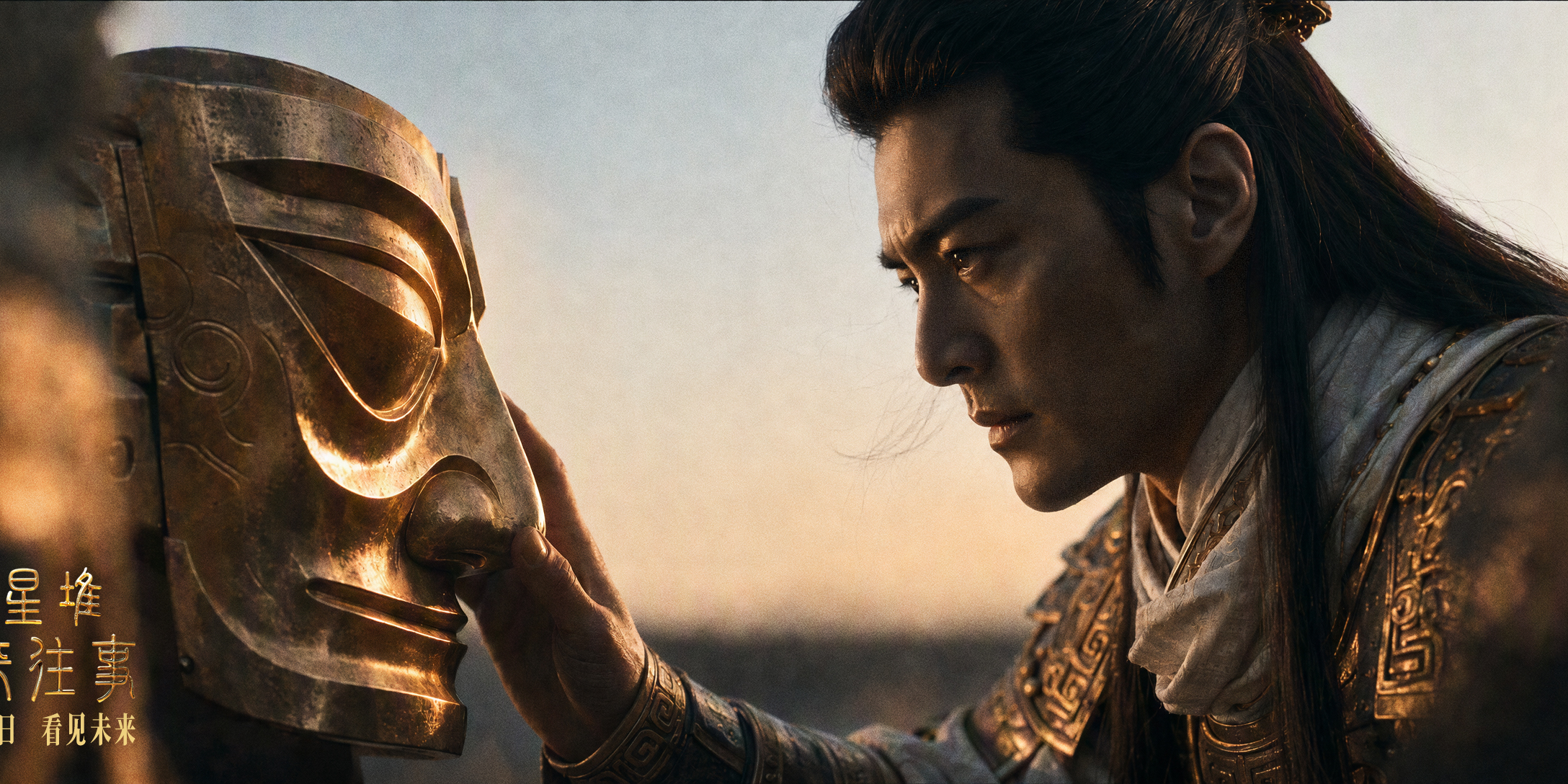
Sanxingdui: Future Memories "is produced by Bona Film Group, with Jiang Defu, the CEO of Bona Film Group, serving as the producer and general producer, and Qu Jixiaojiang serving as the producer and producer.This is the first domestic cinema film produced using AI technology and obtaining a public screening permit from the National Film Administration,The film is 100 minutes long and all characters are original digital images. There were no real actors, cameras, or traditional filming locations during the production process.
On October 23rd, the first day of the film's release, there were approximately 11000 screenings in cinemas nationwide, accounting for 2.9% of the total screenings. As of 12:00 on the same day, the film has grossed over 80000 yuan at the box office. The total pre-sale box office of Maoyan and Taopiaopiao platforms is about 144000 yuan, and the predicted first day box office of Lighthouse Professional Edition is 311000 yuan, with a total box office of 2.169 million yuan. According to the reporter's inquiry, the ticket price of the film is mostly between 19.9 yuan and 49.9 yuan in cities such as Beijing, Shanghai, Guangzhou, and Hangzhou, while it is concentrated between 20 yuan and 33 yuan in cities such as Tianjin, Chengdu, and Xi'an.
Less than a week before the movie was released, the reporter arrived at Bona Film's office in Beijing. On the entire wall of the conference room, there are many classic films by Bona Film, including "Changjin Lake", "Captain China", "Operation Red Sea", etc. These films record the company's nearly thirty years of wealth. They are all completed by real cameras, real actors, and thousands of crew members, with almost no AI shadow.
For the first domestic AI movie, the capital market was the first to provide feedback. On September 28th, the first trading day of the release of "Sanxingdui: Memories of the Future", Bona Film Industry hit the daily limit up; On October 9th and October 12th, it closed two consecutive limit up sessions. Within six trading days, Bona Film Company was closed three times, with its total market value skyrocketing from approximately 8.7 billion yuan to approximately 10.5 billion yuan.
This movie has also added a flame to the current hot AI film and television creation industryAccording to a report released by the China Network Audiovisual Association, in the first quarter of 2026, over 95% of the approximately 128000 micro short dramas launched across the industry were generated by AI; On August 31st, the 30 episode AI drama "Journey to the West" was released on Hunan TV's prime time slot, becoming the first AI drama series to be launched on a domestic TV platform.
In contrast, the traditional film and television industry is experiencing a chill. According to Lighthouse Professional Edition data, in the first half of 2026, the cumulative total box office of movies nationwide decreased by about 40.6% year-on-year compared to 2025; The number of moviegoers decreased by over 200 million, a decrease of about 34.2%. Why don't audiences go to the cinema? "Has become a common problem faced by the industry.The release of 'Sanxingdui: Memories of the Future' coincides with the intersection of the AI creation boom and the cooling of the traditional film and television industry.
A crew without cameras
Hanyu, who works in Bona Production Department, will be transferred to the newly established department of the company - AIGMS Production Center at the end of 2023, becoming one of the core members of the department. The main task of this new department is to explore AI film and television business.
In 2022, Sichuan Province issued an invitation to Bona Film Company, hoping that this company, known for its main theme commercial films, would shoot a film related to Sichuan. When he received the intention to cooperate, Jiang Defu, the CEO of Bona Film, thought of Sanxingdui. The unearthed bronze artifacts have long been well-known, but there are still many unsolved mysteries about the ancient Shu civilization behind them. Jiang Defu saw the attraction of the interweaving of familiarity and mystery, and decided to find a story from here that could be made into a movie.
At first, Jiang Defu wanted to turn it into a live action science fiction movie, but when he was figuring out how to tell the story, he was hesitant. Regarding the ancient Shu civilization, there are limited written records available for reference, and the creators have a huge imagination space. The team has never designed a reasonable story framework, and coupled with the long production cycle and high investment of live action science fiction films, the project has been put on hold.
In 2023, the rise of generative artificial intelligence led Jiang Defu to come up with a way to test the waters. He proposed to first use AI to create a preview video, turning the team's envisioned story direction into images, to see if any answers can be found in the visuals for the content that has not been figured out yet.
After some attempts, the early AI generated effects were far from meeting the requirements for a film, but it gave the team inspiration to continue creating. As the visual materials gradually accumulated, the team decided to first turn them into an AI short drama and present it to the audience to see before deciding whether the story could continue. In July 2024, 13 episodes of AI science fiction short play Sanxingdui: Apocalypse of the Future will be launched in Tiktok. As of October this year, the online views of this short drama have exceeded 200 million.
The success of the short drama gave the team great confidence, and they began to think about making a bigger AI movie, and the movie project was launched accordingly.This is a project approved by Chairman Yu Dong, "said an insider at Bona
At the beginning of the project, the top priority was to solve the problem of insufficient manpower. The requirement of the team is to recruit a group of people who love to research, enjoy technology, and seek novelty. In the newly recruited production team of nearly a hundred people, including those from the gaming industry, those who have worked in television stations, and those who work in engineering, the professional backgrounds are diverse.
This team has adopted 17 professional divisions, including screenwriting, directing, production, art, photography, lighting, sound, and editing. The art team participates in determining the appearance of characters, objects, and scenes. The production team then generates and adjusts materials based on the task, which are then organized into paragraphs by the editor. Finally, the director determines whether they can be used. When it comes to the historical and archaeological issues of Sanxingdui, they still need to go back to the materials or consult professional consultants to confirm which ones have existing evidence and which ones can rely on imagination.
A crew without cameras was set up like this.
The Battle between AI and Humans
To make an AI movie, the first thing the team feels is not the liberation of productivity by AI, but various awkwardness and discomfort.
Han Yu vividly remembers the days when the project was just starting and he couldn't figure it out every day. He comes from the traditional film and television production industry, and when he joined the group, his mind was still filled with the traditional film production process of script creation, storyboarding, scene shooting, post production editing, and so on, with each link waiting for the delivery of the previous one.But AI production has broken this assembly line, with creation, generation, and editing happening simultaneously, which often confuses Hanyu.
For example, there was originally only one simple action in the script: the woman walked up to the boy, leaned down and hugged him, which was not difficult to accomplish in live action filming. But at that time, AI technology was not mature, and it was normal for characters to stand on their own. When two people approached and their arms overlapped, the picture became "blurred", not to mention the facial expressions and emotions that were originally conveyed through this hug. Hanyu tried to adjust the prompt words to generate repetitive images, but could not get a suitable result. Therefore, he had to bring the clip to the meeting for discussion and let the screenwriter and director work together to find a solution.
When the screenwriter first wrote this action, they didn't know that a hug would get stuck in the production. A few people pondered the scene again, wondering if the plot of the woman trying to comfort the boy could be expressed in a different way. So they tried to make her approach and stop first, leaving the camera for a moment when the two of them looked at each other, before responding to the boy's reaction. After determining the direction of modification, update the script, storyboards, and generated images again.
Going back to revise the script during the editing stage is almost impossible in previous film and television productions.
Sometimes, when the settings of the previous scene have been changed and the screen of the next scene is not aligned yet, Han Yu's first reaction is to doubt himself. Is there a problem with communication with the team? Did you make a mistake in any aspect? Han Yu always believes that things should be done step by step.
The most intense competition occurs in camera scheduling. The habit of working on-site for many years has always kept a camera in Han Yu's mind. Wherever the camera position can be set and how the lens can be moved, it must consider the conditions in real physical space. Hanyu is accustomed to conceptualizing images using this method and then submitting the requirements to AI, hoping that it can complete the same shot scheduling. But if the modeling ability cannot reach the desired level and cannot generate ideal images, he will try various ways to solve it, such as changing prompts, models, and camera angles, repeatedly encountering obstacles.
Once, when HanYu wanted to generate a scene with the divine bird as the main perspective and the camera displaying the appearance of the city tower from far to near, the AI generated effect was always unsatisfactory. But when he repeatedly watched the generated results, he found that some of the images, although deviating from the original settings, also presented a camera display angle that he had never thought about before. Afterwards, Han Yu no longer fixated on the "camera in his mind" - AI generated cameras do not have a real physical space, and their camera scheduling and filming are not the same thing. Why did he have to compete with them.
By understanding this layer, many anxieties automatically disappear. Hanyu's computer has generated thousands of unused materials in existing films, but he no longer worries about whether these contents are useful. In the state of parallel operation of various lines, it is uncertain when it will come in handy again. There have been many unexpected experiences like this, and the team has come up with an experience. Don't set a standard answer that AI must achieve, relax your mindset and see what it can bring, and even expect AI to bring better answers. People can often find useful things from it.
Han Yu is no longer the one who thinks of ways to complete the scheduling. He is gradually putting more effort into judging and communicating the results of AI. To enable AI to generate coherent visuals, it needs to understand the scene and all its surroundings. It not only studies the camera, but also learns how to adjust lighting, color, sound, and mix, turning its understanding into accurate descriptions. After the visuals are generated, it re evaluates the accuracy of the performance, the coherence of the editing, and whether it matches the overall tone of the film.
Han Yu gave an example of a prop. In traditional film sets, even if prop masters have creative ideas, they often don't have time to express them. Placing the cups neatly is the completion of the task. Now, to clearly state in the prompt why this cup is placed here and why the curtains are half open, the prerequisite is to understand what the scene is trying to convey. The accuracy of prompt words comes from both accurate description and accurate understanding of the content.
The generation and production of AI movies require parallel creation in all aspects and departments, allowing each group to have time and space to imagine and create the overall picture.One of the requirements for the selection of the Bona AIGMS team is to require you to understand all aspects on your own.
This process seems to raise the threshold for each position. In the experience of HanYu and colleagues, film production in the AI era requires everyone to understand both film language and technical tools. The industry often discusses whether AI will make making movies easier, but their feelings are exactly the opposite: the demand for individual abilities is higher because everyone must understand the entire movie.
Can ten million yuan replace three hundred million yuan?
Individuals need to adapt to the production methods of AI, and the entire production team also needs to change the traditional workflow.
In the traditional film production process, many creative inspirations are encountered on set. Actors, screenwriters, directors, photographers, lighting, and art personnel were all present, and all characters participated in the creation. The results of the discussion quickly produced visual images, providing rich materials for post production editing. Due to limitations, the production team incurs expenses every day, and when filming schedules are tight, even hours and minutes have to be calculated, leaving very little time for on-site creation.
Han Yu uses the phrase 'open fire and cook' to describe the importance of pre film preparation.Pre preparation is the process of preparing dishes, which can take a long time, while gas firing and bulk cooking take a short time. To make the on-site progress as smooth as possible, many things need to be thought out in advance, and each link needs to be particularly accurate.
One of the most important jobs of a producer is to allocate time and solve problems on site, saving precious time for creation. This is also the origin of the term 'grabbing the sky's light' - when the sun sets and the sky becomes dim, we can only wait for a new day to chase after natural light. Almost all film crews who have filmed night or day scenes outdoors have experienced the urgency of being chased by light.
That's why there's a saying circulating in the industry that movies are the art of regret. Many directors only realize that the connection between stories and materials is insufficient when they sit in front of the editing stage, and the start-up cost of reshoot is extremely high. In the end, they often have to repeatedly ponder around the existing materials and try to connect the stories as much as possible.
As long as the filming is delayed for one day, the additional costs incurred during the live action, including venue, equipment, group performances, accommodation, vehicles, and insurance, ultimately have to be recovered from the income after the movie is released. It is becoming increasingly difficult to determine whether the audience will buy tickets before the start of filming. For a movie that requires a significant investment and lengthy production process to enter theaters, it is important to carefully consider how to arrange on-site filming and leave room for subsequent adjustments.
The first AI cinema movie was born precisely under the cost anxiety of the industry towards traditional production models.
Jiang Defu revealed to the Economic Observer that the investment for this film is over ten million yuan, and if the same scale of theme is filmed in person, it would require at least three hundred million yuan.Especially for large-scale special effects shots, a single shot used to cost several million yuan, and some had to be sent abroad for production, making the cost even higher.
In addition, compared to traditional live action, the cost structure of AI movies is also significantly different. Qu Ji Xiaojiang told the Economic Observer that in the past, production costs were spent on equipment such as cameras and CG software (computer graphics technology, visual effects tools used in film and television post production), while in the AI era, expenses were mainly on computing power, electricity, and storage devices. Nevertheless, the funding cost of AI movies is still significantly reduced compared to actual filming, but the time cost of repeated trial and error is stretched - repeatedly generating and overturning, all of which are exchanging time for quality.
The Change of Film Organization Mode
AI has changed the process of film production and reduced costs, but the difficulty has not decreased. The most difficult part is still the consistency of the visuals.
The presentation of a simulated digital human, with its facial skin texture, facial expression changes, as fine as pores and a mole, all need to be consistent in different shots, which has been a challenge for AI generated images for several years.
These details may be difficult to detect on mobile phones, televisions, and other screens, but on the big screen, they may not withstand magnification. Especially the bronze masks that often appear in the film, despite changing angles and lighting, the patterns, shapes, and details still need to correspond; The position, gaze, and movements of the characters should be able to be connected between the front and rear shots.
One of the solutions for the production team is to hold the characters in their own hands, with the main characters trained by the team themselves. They first have set photos and then use a large amount of materials to feed them, settling them into their own digital assets. The remaining part will be supplemented by traditional methods in the film industry such as modeling and migration, and finally manually proofread and corrected again.
The process of correction is so tedious that it is almost agonizing. The production team is divided into groups of several people to check the video frame by frame. One group watches it, and then another group continues to watch until no flaws can be found in the details of the frame. This process is known as "wheel racing". After the production personnel have made the modifications and resubmitted the image, everyone still needs to "hold the magnifying glass" and go through the process again.
Li Tianang, the director of Bona Film's second AI film "Unplanned: Operation Guanghan," gave an example: to create a hundred person formation, the existing model can generate it stably and distinguish running, jumping, and other behaviors clearly, but on the big screen, a thousand person formation can be seen clearly. At this time, two images need to be spliced, multi-layer rendering, or local generation to process it, otherwise the faces of peripheral soldiers will deform.
In addition, in the images generated by the old model, as soon as the camera moves, the faces of all characters will shake slightly, which cannot be seen on the phone screen but is very obvious on the big screen. Li Tianang said, "When making AI movies, directors need to know what the strengths and boundaries of each model are. ”
Bona Film revealed that this 100 minute film took two years of technological exploration, generating over 1.2 million base images and undergoing hundreds of full film iterations.
Jiang Defu used the concept of "film ratio" in the film industry to explain this number: in the era of film, only a few shots can be shot in one shot, while in the digital age, a scene is usually shot in eight shots. In the AI stage, the same shot will go through the process of repeated generation, screening, and modification, and the calculation of film ratio has lost its meaning.
Han Yu told the Economic Observer that the video generation model iterates on a monthly basis, and the production team saw that the new model produced clearer and smoother images than the old one, with reduced frame drops and blurriness, so they decided to regenerate it.
In the past two years, the team has twice replaced the model that provides technical support for the film. Before its release, the chief technical support announced by the film company became Shengshu Technology, and its Vidu video model had just released a new version. Jiang Defu revealed that until a few days before the release, the team was still updating some shots in pursuit of updated and more complete visual effects.
In order to connect these tasks, Bona has built its own "Boca Movie Cloud Field". Jiang Defu compared it to an "online Hengdian", where an ancient Shu kingdom park has already been built and the production team can continue to complete the film here. Qu Jixiaojiang further introduced its purpose: it is not a low-level technology, but an organizational model, a cloud based film and television city that puts director, performance, photography, recording, art, and post production work on the cloud, and is a reproduction of the working relationships of filmmakers in the past.
Changes in the Film Industry System
On October 22nd, the premiere of "Sanxingdui: Future Memories" was held in Beijing, and some industry insiders and professional audiences have entered the cinema to test the quality of this AI movie. In the post screening atmosphere, the audience's encouragement outweighs their nitpicking. Film critic Tan Fei said, "Real life movies are currently in a low point, and being willing to make the first attempt to eat crab at this time is worth encouraging
The evaluations on social media platforms tend to be generally consistent. Positive people believe that the film's technology exceeds expectations, grand scenes can stand still, and character performances are close to real people; Some viewers have noticed that the facial expressions and emotions conveyed by AI actors are not enough, and there are occasional transitions between large scenes; Some people also point the issue to ticket prices, believing that free AI short dramas are readily available, and the willingness of audiences to buy a ticket for an AI movie at the price of a live action blockbuster is relatively low.
Bona Film has no specific box office expectations and believes that the more realistic significance of this film is to "pave the way" because "someone has to push the door first".
At the end of August this year, the 30 episode AI drama "Journey to the West" was released on Hunan TV's prime time slot. Previously, AI content had never entered mainstream channels for satellite TV. The response to this drama was unexpectedly enthusiastic, with the first five episodes exceeding 200 million views on Mango TV. The capital market responds quickly. On the first and second day of the premiere of "Journey to the West", the producer Mango Super Media (300413. SZ) was banned for two consecutive days with a 20% increase. The director of the drama, Li Dong, previously stated in an interview with the Economic Observer that in the future, the competition in the industry will not be about technology, but about creativity, narrative ability, and values.
Jiang Defu, on the other hand, views the trend of film AI from the perspective of industry ledger. In his view, AI is not a value-added item after "movie+", but a variable added before the movie. New technologies significantly reduce filming costs, and the saved money can be invested in more works. Under the industry consensus of the failure of popular product logic and audience loss, AI provides more possibilities for film presentation.
Jiang Defu said that Bona Film is not doing AI to save money and make an AI movie, but to run the entire industry process of AI.No matter how the technology is iterated in the future, it can provide support for cost reduction and efficiency improvement of live action movies and TV series.
In its 2025 annual report, Bona Film stated that it aims to build a "future growth engine for AI business" through its film industrialization system, generative AI technology, and other capabilities. For the first time, AI film and television dramas will be listed as a separate business division alongside movies, TV series, cinemas, and cinema chains. The revenue of Bona Film's business in 2025 is 2.387 million yuan; In the first half of 2026, the business achieved a revenue of 1.932 million yuan. In addition to the Sanxingdui project, more AI movies such as "Unplanned: Guanghan Action", "Chinese Monsters: Luochahai City", and "Dongfeng Bida" under Bona are currently being promoted.
After the process runs smoothly, the leap in output efficiency has begun to emerge. Bona Film's first AI movie took two years and involved nearly a hundred people in its creation; The next AI movie 'Unplanned: Operation Guanghan' has already started filming, and the regular team has been significantly streamlined. It may only take a few months from the start of filming to the release of the movie.
(At the request of the interviewee, Hanyu is a pseudonym)



 Subscribe