Economic Observer Follow
2026-10-18 13:08


Economic Observer reporter Zheng Chenye
On the evening of October 15th at 8 o'clock, the mobile phone category of Tmall's "Double 11" went on sale. For domestic mobile phone manufacturers, this is the first e-commerce promotion after the general price increase of the new generation flagship.
Before the start of the big promotion, the domestic mobile phone market was already in decline, and there was differentiation among manufacturers. According to the data released by Omdia, a market research organization, on October 14, in the third quarter of 2026, the shipment of smart phones in Chinese Mainland was about 59.3 million, down 12% year on year, the lowest since 2013. Among the top five manufacturers, only Huawei and Apple achieved growth, vivo、 Xiaomi and OPPO's shipments decreased by 24%, 20%, and 18% year-on-year, respectively.
While the shipment volume is declining, the price of mobile phones is still rising. Since March this year, several domestic mobile phone manufacturers have successively raised prices or reduced configurations; The new generation flagship released in late September continued the trend of price increases. The starting prices of Xiaomi, vivo, and OPPO's new flagship are generally more than 1000 yuan higher than the previous generation, with an increase of 20% to 25% based on the starting price.
The main factor driving up costs is storage chips. The demand for storage chips in AI servers is rapidly increasing, and storage manufacturers such as Samsung, SK Hynix, Micron, etc. are shifting more production capacity to HBM (high bandwidth memory) and storage products for servers. The supply of memory (running memory) and flash memory (body storage) for mobile phones is tightening, and prices have been rising continuously for more than a year.
Double 11 is often a point of impulse for mobile phone manufacturers, but this year they are facing a dilemma: raising prices may affect sales, while controlling the increase will require them to absorb more costs on their own. So, with storage costs still rising, how long can mobile phone manufacturers hold on?
The cost of price increase
The cost of storage price increase is mainly reflected in the significant decline in mobile phone shipments and sales. The latest preliminary data released by International Data Corporation (IDC) shows that in the third quarter of 2026, global smartphone shipments were 255.3 million units, a year-on-year decrease of 22%, which is the largest year-on-year decline in the agency's statistics.
IDC attributes this decline to the price increase of storage chips caused by AI. Moreover, after the rise in terminal prices driven by storage, consumers' pace of device replacement has also slowed down. Francis coJeronimo, Vice President of Global Devices at IDC, publicly stated that market pressure is shifting from manufacturers to consumers. As products with price increases are put on shelves, many consumers choose to use their devices for longer periods of time.
The same applies to the domestic market. IDC stated in its analysis of the Chinese market that the rising cost of storage and other components has led to terminal price increases and configuration adjustments, which have significantly suppressed consumer demand, and the market has shown a characteristic of "volume decline and price increase". According to market research firm Counterpoint, since July this year, the weekly sales of smartphones in China have continued to decline by double digits year-on-year.
In addition, after the price increase of the new flagship, the prices of some models and versions have exceeded the threshold for overseas subsidies. According to this year's national subsidy rules, phones with a single selling price not exceeding 6000 yuan are eligible for subsidies. The 16GB+512GB version of vivo X500 is priced at 6499 yuan, and the starting price of Xiaomi 18ProMax is 6999 yuan, both of which are not included in the subsidy range based on official selling prices.
Although price increases may affect sales, manufacturers find it difficult to avoid them. IDC pointed out that the cost of storage chips has increased by about 350% compared to last year and is still rising. According to a report released by well-known market research firm Jibang Consulting in February this year, the proportion of storage chips in mobile phone material costs has increased from 10% to 15% in the past to 30% to 40%.
The product manager of a mobile phone ODM manufacturer (original design manufacturer) in Shenzhen told Economic Observer reporters that they mainly produce models priced at thousands of yuan. This year, in the material list of such models, memory and flash memory combined are already the most expensive items, even more expensive than processors.
Adding up the above factors, the boost effect of this year's "Double 11" on mobile phone sales may be relatively limited. In a survey released by Counterpoint on October 8th, price discounts were the most preferred form of discount among Chinese respondents, with 25% of them considering "Double 11" as their main purchasing point; From the perspective of all respondents, if the discount is not ideal enough, 37% of them will postpone the purchase of the phone. The profit margin of the thousand yuan machine is already thin, and at the current cost, there is basically no room for price reduction on Double 11, "the product manager of the aforementioned ODM enterprise told reporters. Affected by cost pressure, the prices of this year's' Double 11 'mobile phones cannot be too low, and sales may also decline significantly, especially for low-end phones that may experience a cliff like decline. Lin Meibing, Chief Analyst of ICTIME, also told Economic Observer reporters that low-end phones have high price sensitivity and will be most affected by storage price increases.
In addition, mobile phone manufacturers themselves are actively shrinking, with low-end phones being the first to suffer.
The product manager of the above-mentioned ODM enterprise introduced that the number of new projects for smartphones priced at 1000 yuan has significantly decreased this year, and some already planned projects have also been cancelled or postponed; Many of the retained projects have been downgraded, with memory and flash storage capacities reduced by one level each, such as changing "8GB+256GB" to "6GB+128GB".
Lin Meibing believes that high-end mobile phones have a certain profit margin and can relatively bear the pressure of storage price increases. Therefore, mobile phone manufacturers have lowered their plans and expectations for low-end phones and accelerated their move towards the mid to high end market. In addition, mobile phone components are numerous, and manufacturers can also reduce or decrease the specifications of some minor components to further control costs.
Xiaomi's performance also reflects similar changes. In the second quarter of 2026, the average selling price of Xiaomi smartphones increased by 25.9% year-on-year, but global shipments decreased from 42.4 million units in the same period last year to 31.2 million units, and smartphone business revenue decreased by 7.5% year-on-year. Xiaomi Group (01810. HK) explained in its performance announcement that the decline in shipments was mainly due to product matrix optimization, reduced shipments of mid to low end models, and continued increases in core component prices leading to weak global demand.
As a comparison, manufacturers who have restrained price increases have actually maintained an increase in shipment volume. According to Omdia's statistics, in the third quarter of 2026, the shipments of Apple and Huawei in Chinese Mainland increased by 15% and 18% year on year respectively. Omdia mentioned that Apple kept the old models unchanged in price before the release of new products, which stimulated channels to stock up in advance; Huawei relies on widescreen folding and a full price range product matrix to achieve growth.
The new generation iPhone has also had a relatively good start. According to Counterpoint data, the sales of the iPhone 18 Pro series increased by 12% year-on-year in the first three days after its launch on September 18th. In the opinion of analysts at the institution, many domestic flagships have significantly increased their prices, raising consumers' psychological prices and thus improving the relative cost-effectiveness of the iPhone.
But controlling price increases also comes at a cost. Huawei's Executive Director and Chairman of Terminal BG, Yu Chengdong, publicly stated at the end of September that Huawei has been raising prices at a very slow pace in an attempt to bear the costs on its own, but the overall profit margin has sharply declined, and it will have to raise prices in the future.
In addition, brands other than the top five manufacturers have experienced a more severe decline in shipments. According to Omdia's statistics, the total shipments of these brands in Chinese Mainland in the third quarter of 2026 fell by 32% year on year, significantly greater than the market as a whole. Jeronimo, Vice President of Global Devices at IDC, also believes that in smaller markets, manufacturers with economies of scale, stable supply, and a higher proportion of high-end products will continue to expand their market share.
Next year, there will be greater cost pressure in the mobile phone market, which will further encourage mobile phone manufacturers to push towards the high-end market, and the competition in the high-end mobile phone market will become more intense. Lin Meibing also told reporters that after this round of price increases, the survival space of some small and medium-sized mobile phone manufacturers and manufacturers that focus on the low-end market will be further narrowed, and the head concentration effect will be further enhanced. The overall mobile phone market may continue to decline next year.
Two-way influence
The current round of storage price increases has had a significant impact on both mobile phone manufacturers and storage companies primarily focused on consumer electronics.
Lin Meibing told reporters that in the past, the storage cycle was mainly affected by the mismatch between supply and demand and the time difference between expanding production capacity, with more fluctuations following the demand for consumer electronics such as mobile phones and computers; But the main driver of the storage price increase this round is AI servers, and the demand for consumer electronics has not shown a significant rebound.
The dual pressure of cost and demand puts mobile phone manufacturers in a passive position. In Lin Meibing's view, with high storage costs and no improvement in consumer demand, mobile phone manufacturers are caught in a dilemma in pricing; Moreover, as shipments shrink and standalone storage configurations are lowered, the demand for storage chips in mobile phones may also decrease accordingly.
This means that pressure is also being transmitted to storage enterprises. Lin Meibing believes that for storage module manufacturers mainly engaged in consumer products, profit improvement is more significant when storage prices rise rapidly. However, as storage price increases narrow and downstream demand shrinks, the driving force of price increases on profits may gradually weaken. Or, to put it another way, the storage manufacturers who hold AI orders have benefited more from this round of storage price increases.
According to a recent research report released by Jibang Consulting, as the cost of mobile phone memory rises and previously low-priced inventory runs out, the production volume of smartphones continues to decrease, which will also affect the overall storage demand; In terms of flash memory, mobile phone brands mostly rely on existing inventory to support production in the fourth quarter of 2026, and the amount of new purchases from original factories is quite limited.
In addition, the preparation of materials in the mobile phone supply chain is also becoming more cautious. The product manager of the aforementioned ODM enterprise introduced that next year's projects are basically planned based on maintaining high storage prices, and "no one dares to bet that storage prices will decrease next year"; The preparation of materials for the fourth quarter of 2026 is generally cautious, as the current purchased inventory is high priced materials. If there is too much preparation, once the "Double 11" cannot be sold, the high cost inventory will be in hand.
Of course, some mobile phone manufacturers are increasing production against the trend, but inventory risks are also rising. Kiranjeet Kaur, Deputy Research Director of Global Devices at IDC, stated that despite weak sales, some manufacturers have raised their production plans due to expectations of tighter component supply next year, which may lead to inventory backlog as they enter 2027.
The impact of price increases on the profitability of storage module enterprises is also weakening. On the evening of October 15th, well-known storage module leader Jiangbolong (301308. SZ, 09976. HK) in the A-share market released its performance forecast, expecting a net profit attributable to shareholders of RMB 14 billion to RMB 14.9 billion in the first three quarters of 2026, a year-on-year increase of 1864.55% to 1990.84%. However, based on this calculation, Jiangbolong's net profit attributable to shareholders in the third quarter of 2026 is approximately 3.4 billion to 4.3 billion yuan, lower than the previous quarter's approximately 6.7 billion yuan, a decrease of approximately 36% to 49% compared to the previous quarter.
Regarding this, Jiang Bolong explained that in the third quarter of 2026, the overall supply and demand pattern of the global memory market will still be tight. However, due to the influence of higher price bases in the previous period, the price increases of DRAM (memory) and NANDFlash (flash memory) have significantly narrowed compared to the previous period, and the marginal contribution of storage price increases to the company's profits has significantly slowed down. The company also determined that the storage industry is shifting from a consumer price cycle to an AI driven technology cycle.
The situation of storing the original factory is slightly different. Samsung Electronics announced preliminary results on October 8th, showing that its overall operating profit for the third quarter of 2026 was approximately KRW 107.4 trillion, a year-on-year increase of 782.5%, setting a new quarterly high, with the semiconductor storage business contributing the main incremental growth.
In fact, although the current rise in storage prices has slowed down, the costs of mobile phone manufacturers have been pushed to a high level. According to IDC data, the month on month increase in storage prices in the third quarter of 2026 has slowed down to low double digits, compared to approximately 50% to 100% in previous quarters. Xiaomi Group President Lu Weibing also publicly stated in late September that the industry generally predicts that memory prices will continue to rise in 2027, and "the increase may be smaller, but the base is too large now".
Lin Meibing also told reporters that with the continuous increase in investment in AI infrastructure, the demand for memory in AI servers is expected to continue to grow rapidly next year, and storage manufacturers will prioritize allocating production capacity to AI memory with higher profits next year. The tight supply of mobile phone memory next year will not be significantly alleviated.
That is to say, the decline in demand in the mobile phone market may not have bottomed out yet. Nabila Popal, Senior Research Director for Global Devices at IDC, also stated that the worst is yet to come, and based on current indicators, the market has not yet bottomed out. IDC predicts that the growth of the mobile phone market will still be suppressed in 2027, and the earliest recovery will be in 2028.
Pan Helin, a member of the Information and Communication Economy Expert Committee of the Ministry of Industry and Information Technology, told reporters that the current storage price increase is mainly due to the supply and demand changes brought by the AI investment boom. If the AI investment boom continues, there will be a shortage of memory for at least another year.
He also stated that the original storage factory has the motivation to expand production. "If you don't expand production capacity, your competitors will take more market share. This also means that if the AI investment boom ends, memory may return to a situation of oversupply in the future.

How capable are collaborative robots at the China International Import Expo for unpacking, transportation, and assembly?
5 minutes to get started, 10 minutes to switch production lines - how worry free are robots at the Industry Expo?
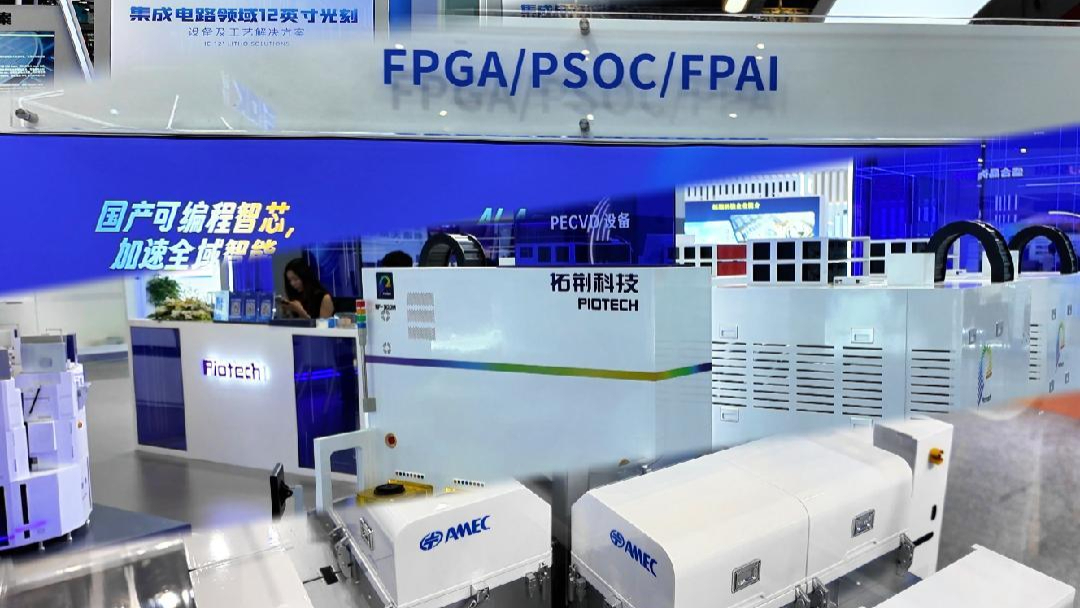
On site of the Industrial Fair: Domestic semiconductor equipment is moving from a single point breakthrough to a supporting chain


 Subscribe