Economic Observer Follow
2026-10-17 11:05

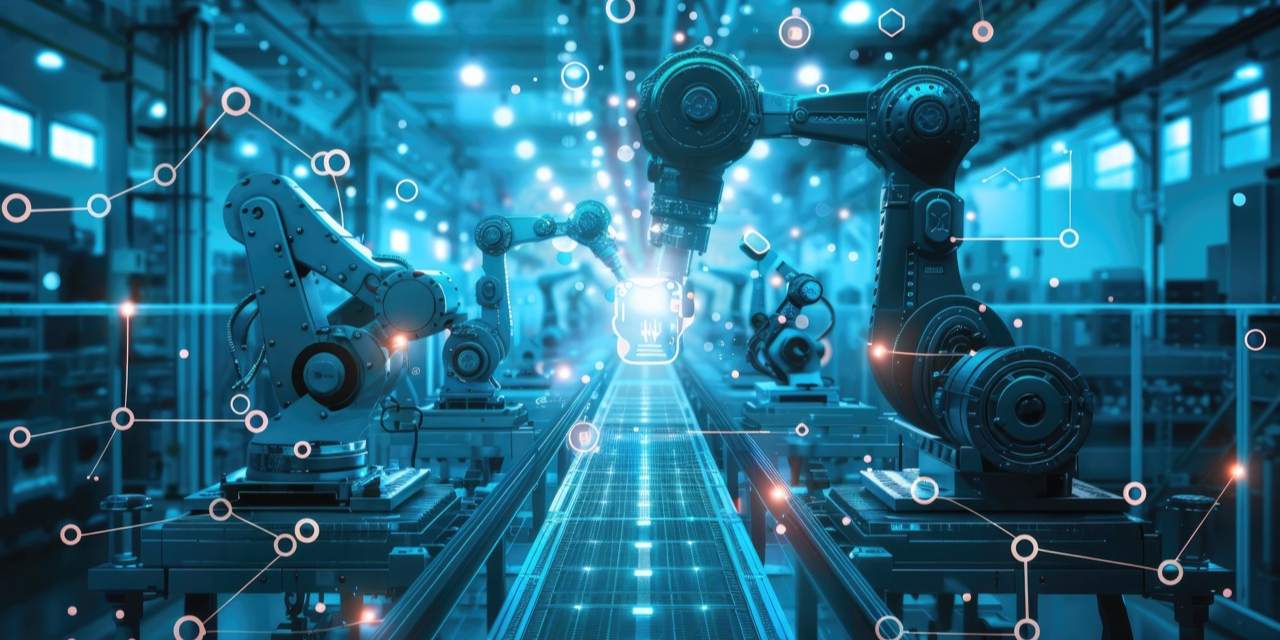
On October 14th, Shandong's "Qilu Seven Stars" made a collective appearance at the 2026 Artificial Intelligence Industry Conference. This is the benchmark achievement of seven vertical large-scale models in high-end equipment, chemical industry, metallurgy, mining, port logistics and other fields in Shandong. Shandong has responded to external questions in this way: What should a manufacturing province do when the era of AI (artificial intelligence) arrives?
Furthermore, the "Qilu Seven Stars" and Shandong Vertical Domain Large Scale Model Matrix are answering the question of to what extent AI can change economic operations, improve productivity, and create new products, services, and demand through practice. This is a new proposition in the process of the transition from old to new kinetic energy, and various industries are exploring and moving forward with anxiety or excitement.
This is certainly the answer that China, as a manufacturing powerhouse, is exploring. Shandong is the province with the most complete industrial categories in China, with large-scale industries such as chemical, steel, equipment manufacturing, and energy. These industries not only have a demand for intelligent transformation, but also have accumulated a large amount of process knowledge and production data in long-term production and operation, providing conditions for large models to enter industrial scenarios. Thus, it also became the most suitable respondent.
The answer from Shandong exceeded many people's expectations. The "Qilu Seven Stars" are not the result of chasing the trend, and Shandong did not urgently join the battle team during the General Model Competition. From the beginning, the "Qilu Seven Stars" were immersed in real industrial scenarios, aiming to solve real-world problems. Even if the energy consumption of just one link is reduced, equipment failures are reduced, and production efficiency is increased by one percentage point, when similar improvements occur in thousands of enterprises, the economic value formed may be considerable. This account is easy to calculate, but it is a truly difficult thing to do.
On the other hand, real production scenarios constantly raise new questions and provide a large amount of vertical data, which drives model optimization and creates new markets for technology. At the same time, only when the enterprise gains real profits from this can the big model talk about returns and have the conditions to discuss large-scale commercialization. It is not difficult to understand that many industrial models in Shandong first serve internal enterprises, gradually polish and mature, and then serve other industry enterprises in the form of products. The vertical domain large model in Shandong grew from a robust industrial body. So it can be replicated and convincing. Without such confidence, how can Shandong become an export destination for vertical domain model products.
What is commendable is the consistent policy orientation. While supporting the research and development of basic models, Shandong has explicitly proposed to develop industry models around the needs of its characteristic industries and iconic industrial chains, encouraging industry enterprises and model enterprises to jointly develop and tilt resources towards vertical large-scale models, such as launching incentive measures such as "model coupons" and "corpus coupons". These policies focus on the real pain points of the enterprise industry, solve practical problems for enterprises, and always leave the stage of technological innovation for enterprises.
The rise of the Shandong vertical domain model does not rely on luck, it relies on a clear understanding of its own endowments, forward-looking judgment and layout, and deep cultivation with great effort. Looking back at the growth path of the "Qilu Seven Stars", in fact, when the "Hundred Model Wars" brought industrial application problems to the forefront, Shandong had already embarked on this rarely traveled path of industrial AI.
From a national perspective, the competition for universal big models requires huge capital, computing power, and talent investment, with a high threshold. If we only focus on universal big models, it is destined that only a small number of regions and people can participate in this round of AI wave. But if we can deeply understand the technological laws and local industrial endowments, various regions can still achieve the landing of artificial intelligence applications by promoting the combination of artificial intelligence technology with local advantageous industries.
This is the inspiration brought to us by the "Seven Stars of Qilu". For this reason, the recently issued "Opinions on Developing New Quality Productivity" by the Central Committee of the Communist Party of China and the State Council clearly stated that "tailored measures should be taken according to local conditions, and policies should be implemented separately to layout national artificial intelligence industry application pilot bases and high-value application scenarios, vigorously promoting the application of artificial intelligence in various industries
AI is deeply entering various industries, and everything has just begun. No one wants to fall behind in this transformation. Perhaps, for each region, the important thing is not to compete on the same track, but to find a suitable position for themselves, improve basic conditions such as data, talent, and public technology services, and support enterprises to carry out truly needed explorations. Respect the creativity of enterprises and create conditions for the integration of technology and industry. Only in this way can the development opportunities of artificial intelligence expand from a few technology companies to more regions and industries, and we can look forward to entering the bright future of China from the shining "Qilu Seven Stars" today.
How capable are collaborative robots at the China International Import Expo for unpacking, transportation, and assembly?
5 minutes to get started, 10 minutes to switch production lines - how worry free are robots at the Industry Expo?
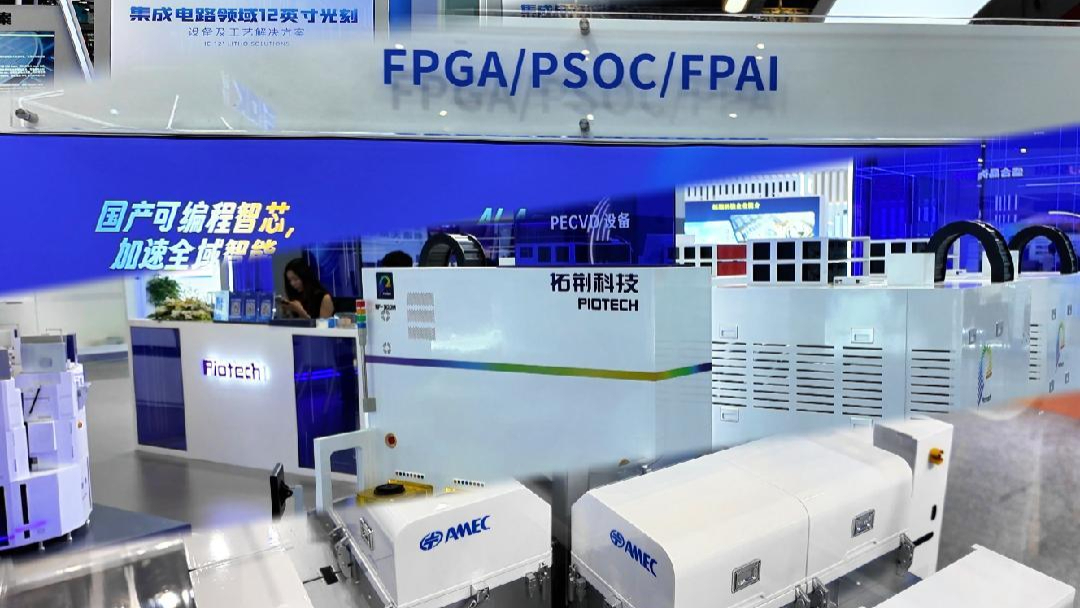
On site of the Industrial Fair: Domestic semiconductor equipment is moving from a single point breakthrough to a supporting chain