Economic Observer Follow
2026-10-12 13:07

Zhang Jiankang | Article
The period from the "September 18 Incident" in 1931 to the launch of currency reform in November 1935 was the most crucial years for China's economic development under the Nanjing government. Due to the enormous pressure of foreign invasion and national crisis, the key question that must be answered as soon as possible is what model China's economic construction should adopt. There has been a huge discussion in the academic and intellectual circles around this issue. During the discussion, an economic concept originating from Germany and introduced to China through Japan was quickly pushed to the center of the forum: should China implement a "controlled economy"?
In the early 1930s, there were two very important backgrounds why the controlled economy suddenly attracted high attention from the Chinese intellectual community and policy authorities: on the one hand, after the outbreak of the 1929 economic crisis, the Chinese intellectual community began to question the prospects of free capitalism; On the other hand, the heavily publicized first five-year plan by the Soviet Union was not enough to completely dispel the doubts of the Chinese intellectual community about the Soviet style planned economy. So, as a third option, the controlled economy, which was believed to have been proven by German, Italian, and Japanese practices, entered the vision of the Chinese intellectual community.
There is no consensus on who and when the concept of "controlled economy" was first introduced to China, but by mid-1933, it had already sparked large-scale discussions in the Chinese intellectual community, which is an undeniable fact. In July 1933, the "Shenbao Monthly" organized a special essay contest on "China's Modernization Issues", and more than one-third of the papers received discussed "controlled economy".
Subsequently, publications such as Independent Review and Qianye Weekly continuously published articles discussing the regulation of the economy, with almost all well-known scholars and economists in China participating in the discussions at that time. In August 1934, the 11th annual conference of the Chinese Economic Society, which had a huge influence on the academic, business, and political circles at that time, was held with the theme of "Discussions on China's Implementation of Controlled Economic Policies".
Academic discussions are a huge driving force for policy authorities' decision-making. In November 1935, the Nationalist Government in Nanjing officially launched currency reform, which pressed the key to the comprehensive implementation of a unified economy. The following month, the First Plenary Session of the Fifth Central Executive Committee of the Kuomintang passed the "Outline of the Implementation Plan for National Economic Construction" and decided to promote the national economic construction movement nationwide.
However, Luo Dunwei, who was then the chief statistician of the Industrial Department of the Nanjing National Government, found that although the interest of the domestic intellectual community in the controlled economy was growing, especially after Song Ziwen, who was then the Vice Premier of the Executive Yuan and Minister of Finance of the Nanjing National Government, returned home from a four and a half month inspection of the United States and Europe at the end of August 1933, the discussion of the controlled economy in the domestic intellectual community gradually became heated. However, "not only did we not see any achievements in fact", but also there were few brilliant theories. The comments on various forums were "just superficial learning from foreign countries and picking up some misconceptions about the controlled economy". So, he decided to pick up the writing plan he had started in 1932 and finally completed the writing of "On China's Controlled Economy" in the early winter of 1933.
This book can be regarded as the most systematic and down-to-earth monograph on the discourse of controlled economy in China in the 1930s.
The rise of state interventionism
Although Yan Fu's translation and publication of "Yuanfu" in 1902 introduced Adam Smith's Laissez faire economic ideas to the Chinese intellectual community, free capitalism never became the mainstream of Chinese economic thought. Whether it is Sun Yat sen's advocacy of controlling capital or Marxism introduced to China during the New Culture Movement, both are far from free capitalism. Even international students who were influenced by liberal economics in Europe and America in the 1920s mostly became supporters of state interventionism after returning to their home countries.
Why did this happen?
Economist Ma Yinchu's book "China's Economic Reform" completed from 1927 to 1934 listed seven reasons why China could not implement free capitalism. The three main reasons that received widespread response from the Chinese intellectual community at that time were: first, China's industry was immature and unable to compete. The second is that the aggressor country uses tariffs and monetary policies as weapons to invade the economy of weak countries. China's tariffs cannot be autonomous, its currency system is not unified, and it is fundamentally unable to compete with foreign goods. Thirdly, China is poor and weak, unable to resist foreign dumping.
After the September 18 Incident, the international political and economic environment faced by China further deteriorated. The voice in the intellectual community advocating the use of state power to organize economic construction and prioritize the development of heavy industry further rose, and the space for the existence of free capitalism was further compressed. In early 1932, Luo Dunwei was transferred to the Industrial Department of the Nationalist Government in Nanjing to oversee the compilation of the "China Economic Yearbook" and was exposed to a large amount of economic data. At that time, he came to the conclusion that "there is absolutely no possibility of construction in China unless a policy of unified economy is implemented." At the end of that year, he began writing "On China's Unified Economy.
At that time, the concept of "controlled economy" had just been introduced to China, and there were significant differences in understanding among different schools. So, the core question that Luo Dunwei needs to answer first is, what is a controlled economy? He believes that 'the form of a controlled economy and a planned economy are completely identical, but fundamentally they are not consistent'. For example, "the current imperialist countries are implementing a controlled economy, while the Soviet Union is implementing a planned economy.
By the standards of Roddenwey, after the outbreak of the Great Economic Crisis in 1929, economic regulation became a global trend. Not only did Britain, France, the United States, Germany, Italy, Japan, and the Soviet Union introduce national level regulation measures, but some international organizations and regional groups of countries also launched international level regulation movements.
Luo Dunwei has laid a lot of groundwork, naturally to bring out his main idea, 'If China wants to save itself and further seek ways to become prosperous and strong,' then 'the policy of regulating the economy is not only an inevitable development, but also the only self rescue route at present.'.
Luo Dunwei was not optimistic about the prospects of China's implementation of Soviet style planned economy and free capitalism at that time: implementing the former did not meet the domestic political and economic conditions in China at that time; The implementation of the latter is not allowed by the international political and economic environment.
He does not deny the rationality of domestic "orthodox" economists pursuing liberal capitalism, but believes that liberal capitalism is no longer suitable for China today. Because world capitalism has entered what Lenin called the "imperialist" stage, monopolistic organizations not only monopolize the domestic market, but also almost divide the international market. China has long been involved in the imperialist market system, and it is still an 'unorganized country'. 'What methods can we use liberalism to fight against humanity?'? So he believes that 'liberal idealists are just a fantasy, especially a useless fantasy for the development of Chinese national capital'.
Control it or plan it
So, what is Luo Dunwei's ideal controlled economy like?
Although the concept of "controlled economy" was introduced to China through the Japanese academic community, the knowledge of controlled economy in the Chinese intellectual community comes not only from Japan, but also from Europe and America. Due to the vastly different understandings of controlled economy among academic circles and policy authorities in Europe, America, and Japan, the proposals for controlled economy put forward by various domestic institutions naturally differ.
For example, people such as Ma Yinchu, Liu Dajun, He Lian, who returned from studying abroad in Europe and America, although supporting the country's strengthening of financial, monetary, and trade management, advocate that private ownership should be retained and market mechanisms should continue to exist; Economists such as Zhou Xianwen and Zhang Xiaomei who study the Japanese economy, as well as some writers for Oriental Magazine and Shenbao Monthly, tend to emulate Japan's national mobilization system; Song Ziwen, Kong Xiangxi, and the technical bureaucrats in the Nationalist government believed that the control of the economy was only a tool for national construction, and therefore paid more attention to practical issues such as unifying the currency, building industries, managing foreign exchange, developing transportation, and enhancing national defense; There is also a group of people who are deeply impressed by the achievements of the first five-year plan of the Soviet Union and advocate taking the path of Soviet planned economy.
Although Luo Dunwei belonged to different political factions from Song Ziwen and Kong Xiangxi, he, like the technical bureaucrats Weng Wenhao, Qian Changzhao, Sun Yueqi, and others in the Nationalist Government, was a pragmatic faction that focused more on practical issues.
Luo Dunwei believes that in order to clarify which practical problems must be solved immediately, it is necessary to first recognize China's socio-economic structure.
He coined a term to summarize the social and economic structure of China at that time: the deteriorated feudal society.
The so-called degenerated feudal society, according to Luo Dunwei, refers to China's productive forces, namely machinery and labor, which still remain largely in the field of feudal economy, while the production relations, the most important exploitative relations, have already broken through the scope of feudal economy and are in line with the world economy. Specifically manifested as:
(1) Imperialism has promoted the development of capitalism in China on one hand, but on the other hand, it has hindered the development of capitalism in China. (2) The division and opposition of classes are far less profound than the opposition between the entire nation and imperialism. (3) The land still remains under feudal form, but in essence it has already been capitalist. (4) On the one hand, under the heavy oppression of imperialism, one has already experienced the exploitation of capitalism. On the other hand, capitalism in the domestic country has not been completed, and class opposition is not very obvious. The consciousness and strength of class struggle cannot be ignored.
From this, Luo Dunwei believes that China's controlled economy should achieve four goals: first, to "achieve national self-sufficiency and self-sufficiency". The second is to 'destroy feudal forces and complete China's industrial revolution'. The third is to relieve imperialist economic aggression through the construction of material strength. In addition to striving for social and economic progress, it also requires balance. In essence, it is necessary to permanently eliminate opposing social relationships and prepare the material conditions for a harmonious world
He anticipated that 'some people would say that according to the above statement, our country's controlled economy would become a planned economy,' but his attitude was, 'We can bury our heads in the facts now' and 'there is no need to argue about him in terms of terminology.'.
So, what are the things that need to be buried in one's head as soon as possible?
The "Theory of China's Controlled Economy" devotes more than half of its space to detailing the controlled policies that major economic sectors should implement, covering almost all sectors of the national economy.In the third year after the completion of the "Theory of China's Controlled Economy", Luo Dunwei published an article titled "The Effective Route of the National Economy" in the "Chinese Social Journal", summarizing his policy proposals with "two centralizations": first, to "stop all construction that seems necessary but is not yet urgently necessary, and concentrate human and financial resources exclusively on the construction of the national economy"; The second is to designate a central area to implement a planned unified economy and concentrate on construction; while for other aspects, except for matters related to the economic context, only the status quo will be maintained.
The Experience of the Japanese System
Like most intellectuals in China at that time, Luo Dunwei's knowledge about the control economy mainly came from the Japanese economic community and the dissemination system of Japanese control economy theory. Therefore, not only did his control policies clearly bear the imprint of Japan's "mobilization oriented economic policy", but the control system he designed also drew on Japan's experience in the "integrated economic system".
In the 1930s, Japan successively introduced a series of policies such as the "Important Industries Control Law", "National Mobilization Law", material allocation system, foreign exchange control, labor force control, etc., with the aim of rapidly transforming social resources into war capabilities. However, in terms of organization, Japan did not abolish private ownership, eliminate the market, and fully nationalize like the Soviet Union did. Instead, it retained chaebols, private enterprises, commercial banks, and market exchanges. The only difference was that the state would integrate enterprises, banks, industry organizations, and the government into a whole through industry control associations, industry associations, administrative guidance, and licensing systems.
The regulatory system designed by Luo Dunwei can be roughly summarized as a set of national economic organizational systems with the Supreme Committee for Economic Regulation as the core, central provinces as the focus, and prioritizing the development of heavy industry and agriculture.
(1) The Supreme Committee for Economic Regulation undertakes the functions of what Luo Dunwei called the "General Staff Department for Economic Regulation", composed of economic and administrative experts, technical experts, the Premier, heads of various related departments, and deputy ministers of government affairs. It has both "ability" and "power". The committee is not only responsible for investigating, researching, and formulating plans for economic issues, but also has the authority to coordinate relevant departmental relationships, guide private enterprises, and even directly oversee the construction of state-owned enterprises.
(2) Private enterprises are allowed to exist, but only for small businesses. Large enterprises must be operated by the state. The management of state-owned enterprises has shifted from bureaucratization to commercialization, with the ultimate goal of turning the entire country into a super cartel, where production is primarily focused on meeting social needs rather than pursuing profits.
(3) Heavy industry and agriculture should be given priority for development. In principle, the geographical layout should adopt a "zoning approach tailored to local conditions". However, if it is necessary at that time, strengthening national defense construction is the top priority. "We should divide the central region into provinces for centralized construction and complete the national defense foundation of the central area".
The "integrated control system" of Japan in the 1930s was largely designed to mobilize social resources as much as possible to enhance its war capabilities. The control system designed by Luo Dunwei has obvious traces of the Japanese system, but the difference is that Luo Dunwei believes that the control system should exist as a long-term national economic organization system, rather than just a wartime resource mobilization system.
The implementation of a controlled economy
At the same time as Luo Dunwei's writing of "On China's Controlled Economy," Qian Changzhao began to use practical actions to promote the implementation of the controlled economic system.
Qian Changzhao was a confidant of Chiang Kai shek. Chiang Kai shek ruled the mainland for 22 years, and Qian Changzhao followed him for 17 years. During his time following Chiang Kai shek, Qian Changzhao, Chen Lifu, and Chen Guofu were his most trusted advisors. Chen Lifu was in charge of party and government affairs, while Qian Chang was in charge of the economy, diplomacy, and education.
In 1927, Chiang Kai shek led the Northern Expeditionary Army into Shanghai and attended a banquet at the home of Huang Yun, the brother-in-law and later mayor of Shanghai, where Qian Changzhao met Chiang Kai shek. In the spring of 1928, the Northern Expedition resumed, and Qian Changzhao and Huang Yun, who had been appointed as the Minister of Foreign Affairs of the Nationalist Government, followed Chiang Kai shek northward from Nanjing. In the winter of 1928, introduced by Zhang Qun, who was Huang Yun's former subordinate and then the Deputy Minister of Military and Political Affairs of the Nanjing Nationalist Government, Qian Changzhao entered the Nationalist Government and served as the secretary to Chiang Kai shek, the Chairman of the Nationalist Government, handling economic, educational, and diplomatic documents. Gradually, Qian Changzhao became Chiang Kai shek's confidant.
Qian Changzhao studied economics at the London School of Economics and the University of Oxford in his early years. During his studies at the London School of Economics, he studied under scholars from the Fabian Society who advocated progressive socialism, such as Laski. In 1923, he also studied British American industry with Zhang Xiaoruo, the son of Zhang Jian. After returning to China in 1924, he aspired to revitalize Chinese industry. Through the introduction of his father's close friend Zhang Jian, he visited powerful warlords Zhang Zuolin, Yan Xishan, Wu Peifu, Sun Chuanfang, and Hu Jingyi in China to seek support, but none of them were successful. After meeting Chiang Kai shek and joining the Nationalist Government in Nanjing, Qian Changzhao finally had the opportunity to realize his ambitions.
Although Qian Changzhao and Luo Dunwei belong to different political factions, both are active advocates of a unified economy and have similar views on the system of a unified economy.
In July 1933, the second volume, seventh issue of the "Shenbao Monthly" published an article by Qian Changzhao titled "My Opinion on China's Modernization Issues". The article strongly criticized laissez faire capitalism, claiming that "China's modernization today... cannot be achieved by private capital. Moreover, when the people are poor and the wealth is exhausted, private capital is scarce? The proposed way of modernization in China is to use the power of the government to carry out large-scale industrialization and to constantly regulate private enterprises. We call it regulated capitalism, state socialism, or even a controlled economy... and there is no exception.
In 1998, China Literature and History Press published "Memoirs of Qian Changzhao". This memoir was written and orally completed by Qian Changzhao in his later years. He had already written a book before his death in October 1988.
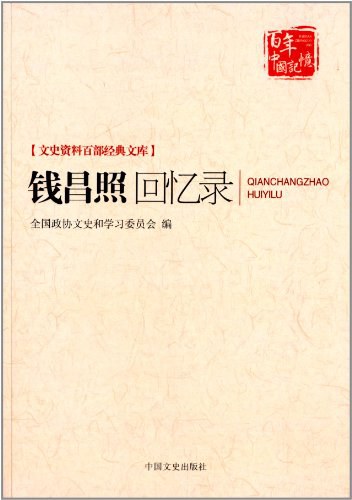
Memoirs of Qian Changzhao
Written by Qian Changzhao
China Literature and History Press
January 2014
According to Qian Changzhao's recollection, in 1930, he felt that Japan would use force against China and proposed to Chiang Kai shek to promote national industrialization, improve the living standards of farmers, and recruit talented individuals. After the September 18 Incident in 1931, Qian Changzhao formally proposed to Chiang Kai shek the establishment of a national defense design institution, which was accepted by Chiang Kai shek. On November 1, 1932, Qian Changzhao officially established the "Secret Organization of National Defense without Discussion" under the name of the National Defense Design Committee, following Chiang Kai shek's advice. It was subordinate to the General Staff Headquarters of the Nationalist Government to avoid the control of the Executive Yuan by Wang Jingwei. Qian Changzhao serves as the Deputy Secretary General of the National Defense Design Committee and bears practical responsibilities. The committee has recruited forty to fifty experts in seven areas including military, international relations, education, finance, raw materials and manufacturing, transportation, land, and food, mainly responsible for investigating and researching the aforementioned seven areas and specialized talents.
In April 1935, the National Defense Design Committee was renamed as the Resource Committee and placed under the Military Commission, with Qian Changzhao continuing to serve as the Deputy Secretary General responsible for practical duties. After the name change, the experts remained, but their functions underwent significant changes. The Resource Committee designated industrial and mining enterprises that must be operated by the state, which basically included all heavy industry, basic industry, and high-tech industries at that time, leaving the main light industry that had little impact on the national economy for private enterprises to operate.
The Resource Committee actually led by Qian Changzhao was basically the real-life version of the Economic Staff Headquarters designed by Luo Dunwei, responsible for organizing and managing the economy under the control of the Nationalist government in the mid to late 1930s and during the Anti Japanese War. However, the list of technical bureaucrats recruited by Qian Changzhao never included the name of Luo Dunwei.