2026-10-10 10:57

Alibaba's 33% stake in Ant Group is becoming an asset that overseas investors are re examining. Recently, the US investment research platform Seeking Alpha published an article by independent analyst Dilantha De Silva, analyzing Ant Group's business expansion in areas such as AI health, intelligent agent commerce, and AI payment infrastructure from the perspective of Alibaba's investment value. It is believed that these three growth engines are expected to drive Ant Group's profit growth in the coming years.
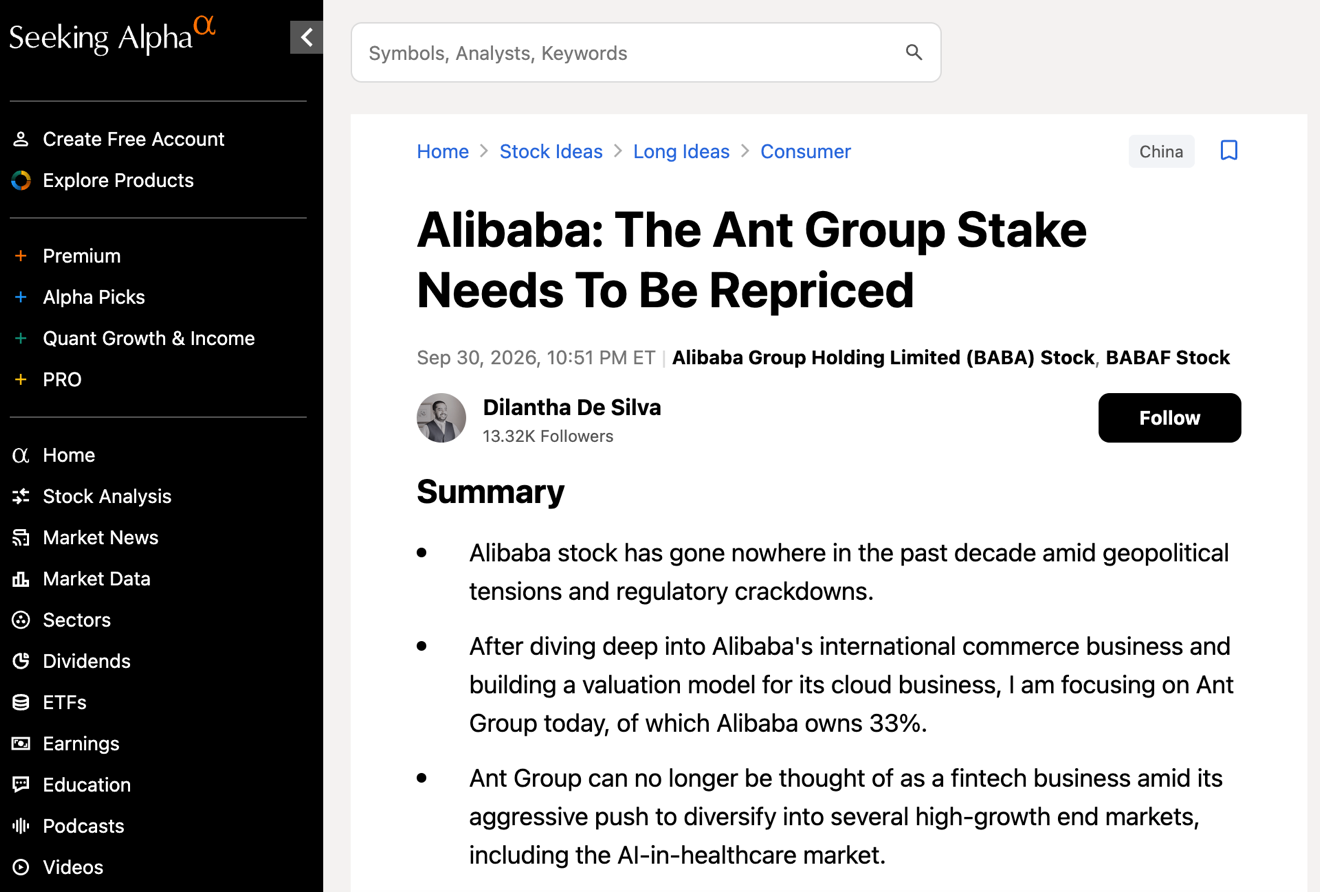
De Silva is a stock analyst with over ten years of investment experience and a long-term focus on Alibaba. He stated in the article that in the past few years, he had studied Alibaba's international e-commerce and cloud computing businesses separately, and this time he turned his attention to Ant Group. In my opinion, Alibaba's stake in Ant Group is one of the least discussed parts of its business system in the market
The author believes that Ant has entered new markets such as healthcare and database services, while deeply integrating AI capabilities into the entire business ecosystem. Analyzing Ant solely from the perspective of a fintech company is no longer appropriate. Ant has transformed into a diversified enterprise with multiple rapidly growing assets
Three major growth engines: from healthcare to intelligent agent commerce
In De Silva's view, Ant Group currently has three major growth drivers and is expected to improve its profitability in the coming years.
The first major growth engine is the AI healthcare business. The article focuses on analyzing the development path of Ant Afu (AQ): from health Q&A, health companionship, and medical services for ordinary users, to further expanding to an AI work platform for doctors.
The author notes that as of the end of August, Afu has served over 100 million users. With the launch of the Dr. Afu version, Ant began to cover both the demand side and supply side of medical and health services. He believes that "nowadays, Afu covers both the demand side and supply side of medical transactions. In my opinion, this creates multiple new commercialization opportunities for Ant
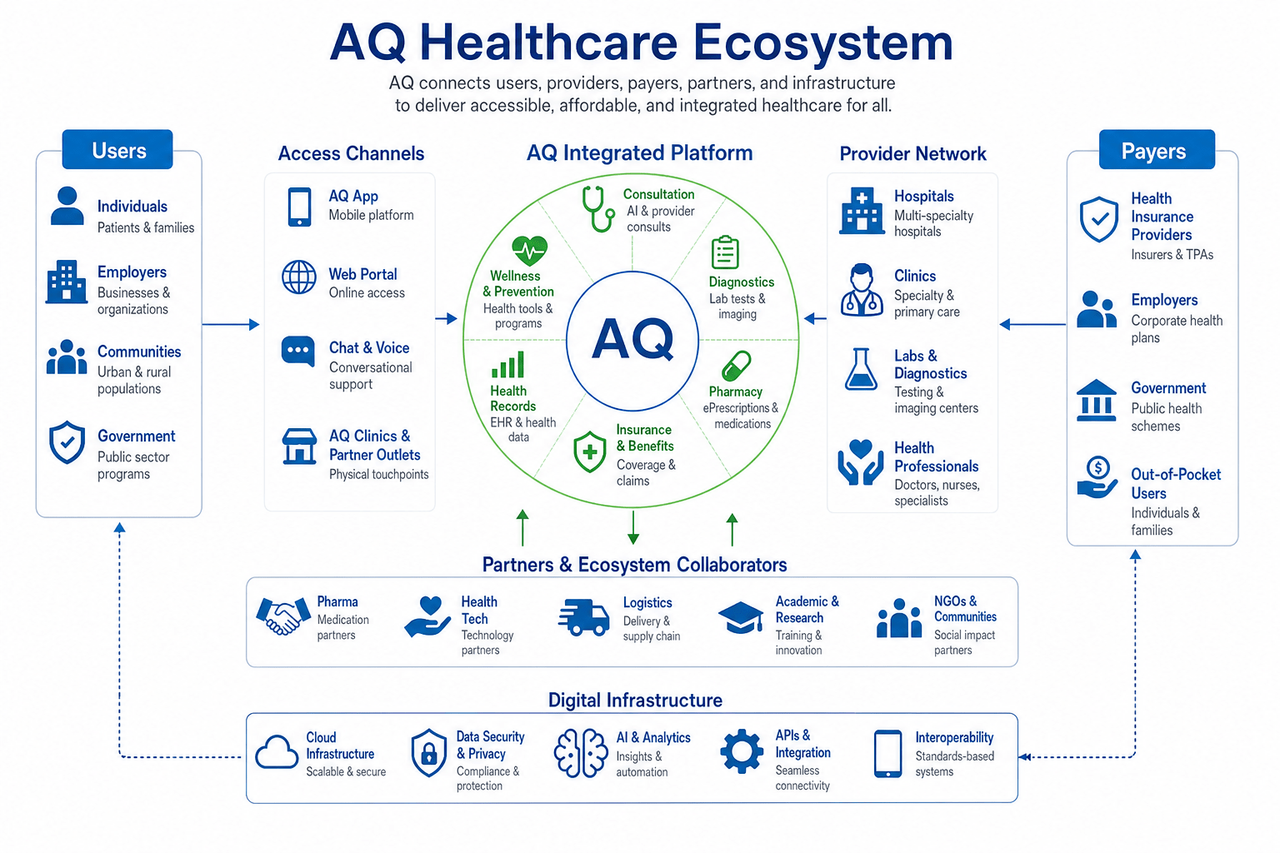
The article points out that by 2030, the Chinese AI healthcare market is expected to grow at a compound annual growth rate of 42.5%, with a market size of approximately $19 billion. By comparison, the size of this market in 2023 is only $1.59 billion.
The article also compared Afu with OpenEvidence, a US AI healthcare company. The author points out that the latter's latest round of financing valuation reached $12 billion, but with the integration of the Afu Doctor Edition into the platform, it is currently difficult for him to find a Western company that can fully match Afu.
The second largest growth engine is the AI version of Alipay "A Bao". De Silva believes that the importance of Abao is not only to add an AI portal, but also to change the business model of Alipay. He pointed out that Alipay already has a huge network of users and merchants, and the value of Alipay "does not necessarily lie in further expanding the scale of Alipay users, but more in creating new commercial ways for the platform".
"In the past 20 years, Alipay has realized commercial realization mainly through the payment link. But Alipay has the ability of intelligent agent covering the links of commodity discovery, commodity purchase and service acquisition, which means that Alipay's future realization space is expected to further expand."
The author further explains that Alipay has the opportunity to obtain commercial value from the transaction link before the payment behavior occurs. For example, paid product display, merchant lead acquisition service fees, and cross selling of financial service products.
At the same time, the growth of Abao may also drive the further expansion of Alipay transaction scale. He believes that with the development of global intelligent agent commerce, payment platforms are competing for the infrastructure position of intelligent agent transactions. "China is expected to become one of the world's largest intelligent business markets. With the continuous promotion of Alipay, Alipay seems to be in a favorable position and is expected to dominate this market."
The third major growth engine is payment infrastructure that adapts to the demands of the AI era. The article points out that as AI agents gradually participate in transactions, reliable infrastructure is needed for payment processing, refunds, audit tracking, and anti fraud.
Ant Group's multiple businesses cover the above-mentioned fields and have unique advantages, which are expected to seize this market opportunity. In addition to AI payment related products, the author also pays attention to Ant's intelligent agent business trust protocol, security monitoring system, and developer incentive program.
He compared the development paths of Ant and Stripe: both companies are expanding their infrastructure needs from traditional payment services to AI model companies. Stripe expands its AI billing business through the acquisition of Metronome, while Ant expands its payment service market for AI model companies through Token Pay.
Valuation cannot be based solely on historical profits, new businesses need to be considered separately
In addition to the three major growth engines, another focus of this analysis article is how to evaluate the value of Ant Group.
De Silva believes that Ant Group has good growth prospects in the next five years, driven by the development of its healthcare business, the commercialization potential of Alipay, and the increasing popularity of AI adapted payment infrastructure.
He stated that for a rapidly growing company like Ant Group, the traditional valuation model that overly relies on historical cash flows may not be applicable. Ant's research and development expenses have increased from $3.1 billion in 2023 to $5.2 billion in 2025, and these investments have been reflected in the current income statement, but expected returns may not be reflected in the short term.
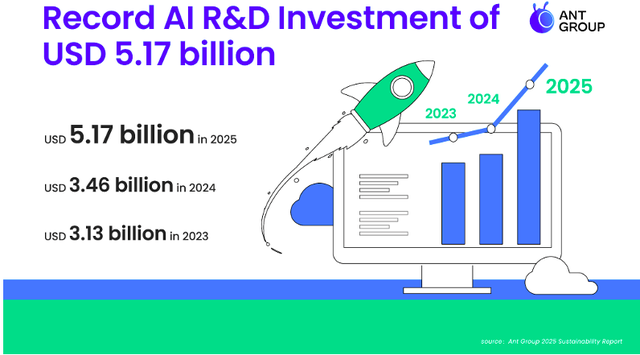
He proposed that the best way to understand Ant Group is to view it as a company composed of multiple relatively independent business segments. This approach is also receiving support from external financing events. The article specifically mentions that Ant International has completed a $1.2 billion financing this year, with a pre investment valuation of approximately $10 billion. This financing indicates that the value of some of Ant's businesses has been recognized by external investors
From Alibaba's perspective, the growth of Ant Group has direct financial significance. Due to Alibaba's use of the equity method to account for Ant Group's investments, the future profit growth of Ant Group will be directly reflected in the investment income recognized by Alibaba.
But the author believes that the value of ants cannot be solely based on existing profits. The potential growth benefits that new businesses such as Afu and Abao may bring in the future provide additional upward space for Ant Group's overall valuation
Ant Group is indeed transforming into a diversified technology ecosystem. De Silva stated that as these diversified businesses gradually gain investor attention, the market will eventually begin to reassess the value of Alibaba's stake in Ant Group.