2026-10-03 10:01

At the beginning of this month, Nike Group submitted a report card that is still being adjusted but has a clear direction. Nike's revenue for this quarter was $11.2 billion, a 4% decrease from the same period last year based on the report. Among them, the revenue from self operated business was 4.1 billion US dollars, and the revenue from distributor business was 6.8 billion US dollars. It is worth noting that the gross profit margin increased by 60 basis points to 42.8%, and inventory decreased by 3% year-on-year to $7.846 billion.
The numbers themselves may not be satisfactory, but the signal released outside of the financial report is more worth pondering: Nike is further adjusting its operating model globally.
Nike refers to this adjustment as Pace and will focus on four areas: accelerating the modernization of the supply chain, adjusting to a three regional market structure, establishing a new Nike campus in India, and adjusting work methods and personnel configuration.
The most directly related to the Chinese market is Nike's integration of the original four regional markets into three, the merger of Latin America and North America into the Americas market, and the formation of a closer collaborative framework (APGC) between the Asia Pacific and Greater China regions.
At the same time, the first Vice President of Local Product Innovation in Greater China, the local product innovation team doubled, and the online market ecology announced that it would be restructured with Tmall, JD, Tiktok official flagship stores and Nike official channels as the core.
These actions point to the same proposition: how a global giant can redesign the "global regional local" relationship when the speed of consumer change in the Chinese market is faster than the hierarchical transmission speed of traditional multinational corporations.
In the past, the main task of multinational corporations in China was to effectively implement global strategies locally; Today, the question has become whether global resources can respond to local changes quickly enough, while giving local teams greater judgment and execution space. The answer given by Nike is not simply decentralization or merger, but a new management framework of "global capability+regional collaboration+local decision-making".
The significance of this round of adjustment goes beyond a company's quarterly performance - it relates to the common challenge that all multinational companies in China are facing: how big companies can keep up with China's pace.
When 'global strategy landing in China' is no longer sufficient
Over the past thirty years, the mainstream narrative of multinational corporations in China has been to effectively implement global strategies locally. The headquarters sets the direction, decomposes the goals into regions, and the local team is responsible for executing them. This logic works well in an era where brand advantages are obvious and consumer information is asymmetric.
But today, the problem has changed.
Chinese consumers' interest in sports products is changing faster, their demand for sports is becoming more segmented, and retail channels and content platforms are constantly iterating. The popularity cycle of a pair of running shoes may only be a few months, and the heat of a sports community may spread from first tier cities to second tier cities within a few weeks. For a global company, true competitiveness is no longer just about "how many global resources it has", but "whether these resources can be quickly mobilized and transformed into products, experiences, and actions in the Chinese market".
In the first quarter of fiscal year 2027, the revenue of Greater China region was 1.18 billion US dollars, a year-on-year decrease of 22% based on the report. From a financial performance perspective, Nike China is still in a period of adjustment. The repair of inventory and channels requires time, and the stabilization of revenue also requires patience. But it is precisely during this adjustment period that the changes in organizational structure are more worthy of attention, as they determine how fast and stable the rebound in the next stage can be.
At the same time, the consumption trends between different markets in Asia are accelerating their linkage. The flow of youth culture, sports preferences, and retail innovation among various markets in the Asia Pacific region has exceeded the response pace of traditional regional structures. How to leverage the trend and capability advantages between China and the Asia Pacific market while retaining differentiated strategies for different consumers has become a new organizational proposition.
This is precisely the background that deserves attention to the architecture of the Asia Pacific and Greater China regions.
Reclassify global, regional, and local
The key to understanding Nike's adjustment this time is to see what it has done and what it has not done.
A common misconception is: does the formation of APGC between Greater China and the Asia Pacific region mean that 'China is merged into the Asia Pacific region', thereby weakening the independence and local decision-making ability of the Chinese market?
If we further examine the design logic of this architecture, the answer is not that simple.
The core issue that the Asia Pacific and Greater China region (APGC) needs to address is not to reintegrate the Chinese market into a more centralized decision-making system, but to strengthen regional collaboration while bringing more decisions, responsibilities, and resources closer to the markets it serves.
What this round of adjustment is really doing is redefining the roles at three levels: providing globally shareable brand, product, sports, and supply chain capabilities; Strengthen the coordination of resources and experience in the region; The local market is closer to consumers for decision-making and execution. Its goal is not to centralize power, but to find a new balance between scale efficiency and local response. From this perspective, this round of changes is not just a reconstruction of the region, but a search for a balance between scale efficiency and local response, forming a close linkage between continents with closer cultural ties.
The effectiveness of this design largely depends on the people who execute it.
Cathy Sparks, the current Vice President and General Manager of Nike Group in Greater China, has over 25 years of work experience at Nike. Prior to serving as the General Manager of Greater China, Shen Kaixi led the APLA market to achieve outstanding results. Her deep experience in diverse markets and complex operational challenges, as well as her qualifications in integrating highly dispersed markets into a new regional market landscape, make her highly likely to take on the new regional management responsibilities of the Asia Pacific and Greater China regions.

This arrangement not only maintains the continuity of the existing reforms in the Chinese market, but also provides opportunities for the business focus and consumer insights of the Chinese market to enter regional level discussions and decisions more directly.
Local decisions are becoming specific business actions
The adjustment of organizational structure should ultimately be implemented in a way that consumers can perceive changes.
The changes on the product side are particularly evident. Nike has established its first Vice President of Local Product Innovation in Greater China and doubled its local product innovation team. This means that Chinese consumers and athletes can enter the product creation chain earlier - shifting from "bringing global products to China" to "creating products around Chinese consumers".
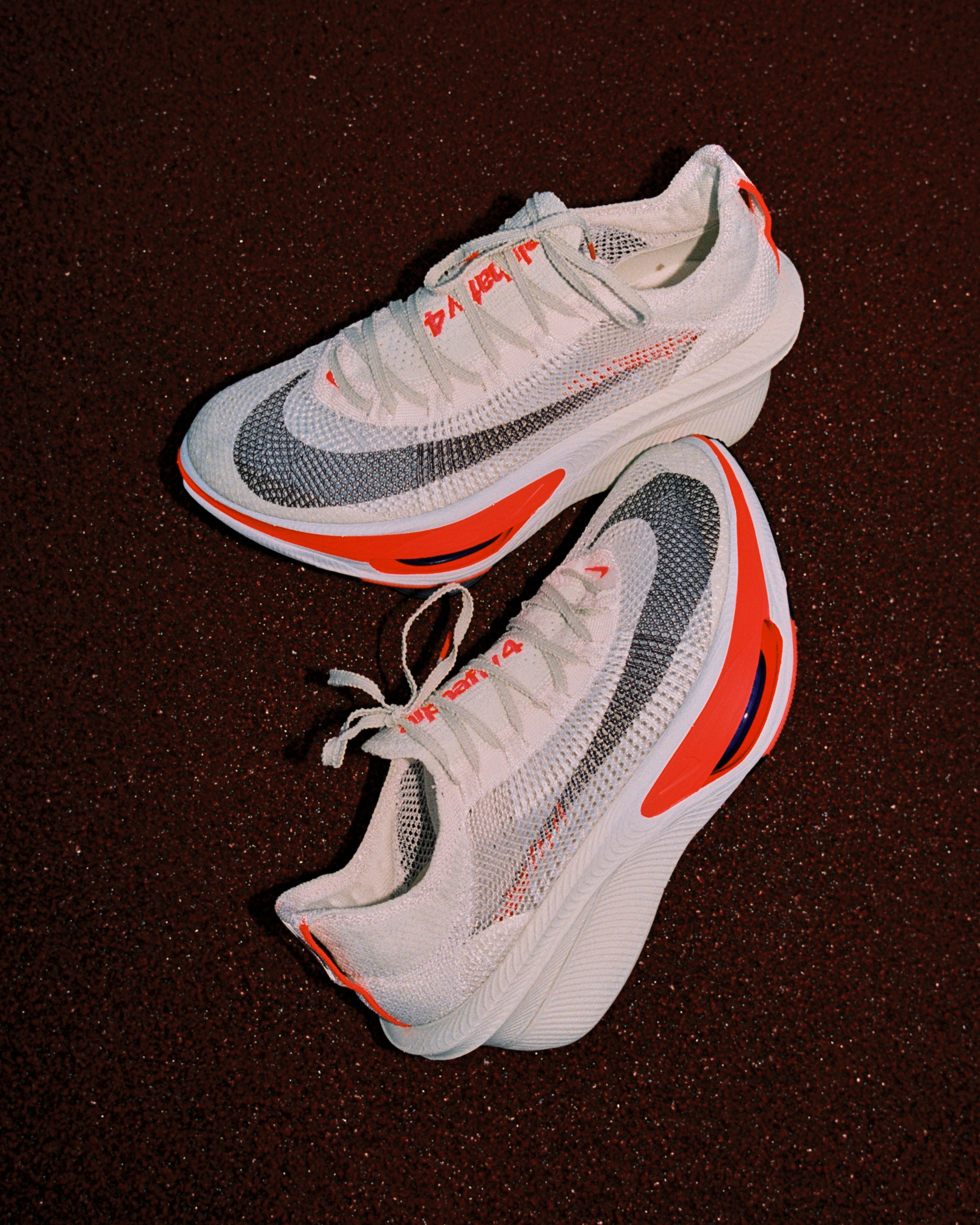
This transformation is already evident in specific products. In terms of product innovation, one of Nike's biggest recent moves is the release of a new racing shoe matrix, covering the diverse needs of marathon runners to elite athletes. The Swooshfly shoe model originated from the real demand of Chinese runners for race equipment; The flagship shoe Alphafly 4, which has undergone brand iteration, has been tested and feedback provided by Chinese marathon athletes during the development process. Wu Xiangdong believes that the new shoe last and upper design are significantly more in line with the foot shape of Chinese and Asian runners. Recently, he achieved his personal best in Berlin wearing Alphafly4.
The actions at the end of the canal also point towards being closer to consumers. In July 2026, Nike announced that from January 1, 2027, it will reconstruct the online market ecology with Tmall, JD, Tiktok official flagship stores, Nike official website and Nike App as the core. The essence of this adjustment is to concentrate resources on official digital channels and enhance the management ability of price system and brand experience. At the same time, the offline retail experience is also being upgraded: ACG's headquarters has settled in the IFS of Changsha Guojin Center, forming a three legged outdoor landscape in North China, East China, and South China after Beijing and Nanjing, and will further expand in the future; NikeSKIMS has opened the brand's first offline slow flash space in China in Shanghai, which will remain open until February 2027, integrating product innovation, tailoring services, and community experience.
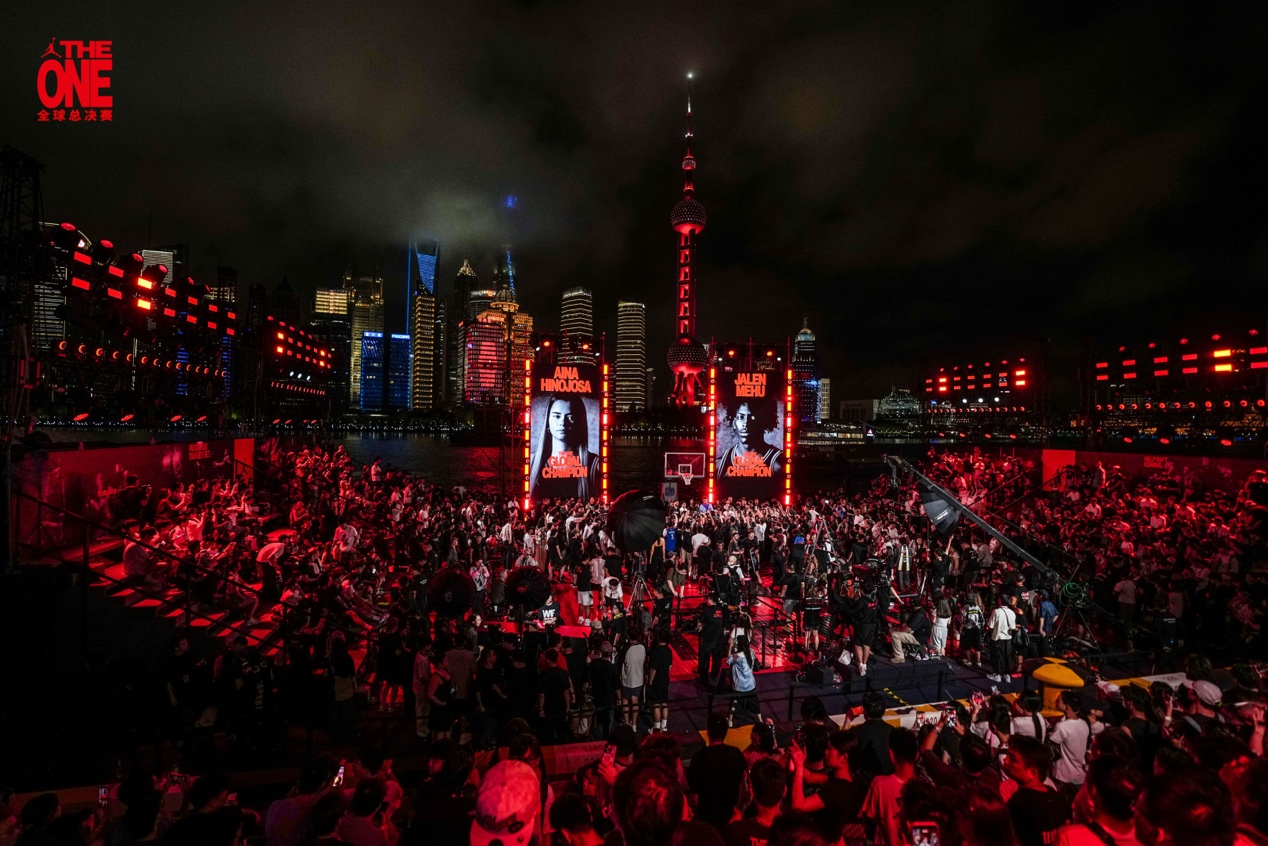
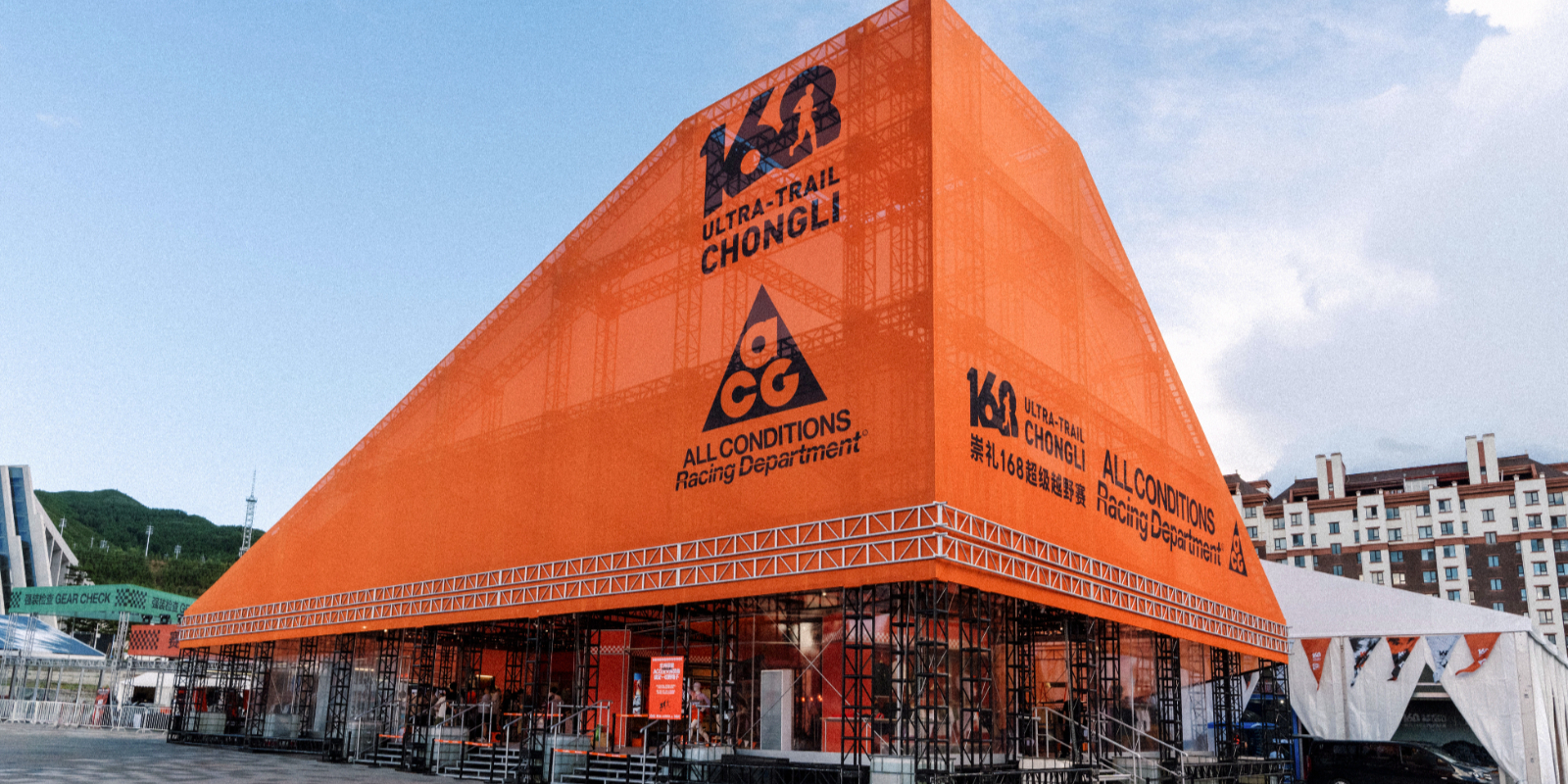
The changes on the brand side are reflected in the deeper integration of global sports resources into real sports scenes in China. The Air Jordan 41 made its global debut in Shanghai; The One Global Rising Star Singles Tournament landed in Shanghai for the first time, with 16 players aged 14 to 18 from around the world competing for the championship. Among them, 6 young Chinese players stood on the final stage, with Jason Tatum, Paul Bankero, Stephen Castle, and Jared McCain participating in the interaction; On the occasion of the 30th anniversary of its partnership with the Chinese Basketball Association, Nike has launched the first "Future Cup" International Basketball Challenge, where Chinese U18 men's basketball team, the national champion of Nike, Tsinghua High School men's basketball team, and two top American high school teams compete on the same field. During the Chongli 168 Super Off road Race, ACG served as the chief exclusive title sponsor, outdoor equipment supplier, and official designated equipment supplier, connecting the Chinese outdoor community with elite athletes through runner camps, community interactive spaces, Chongli FM168 mountain radio stations, and track service upgrades; ACRD elite athlete Yao Miao and 12 girls from the "Let's Spread Our Feet Together" charity project stepped onto the track together.
The commonality of these actions is that they are not just "bringing global resources to China", but allowing global resources to play a role in real sports scenes in China - on street courts, on mountain tracks, and in the confrontation of young players. Organizational efficiency ultimately lies in the products, experiences, and moments of movement that consumers can feel.
Multinational corporations' management in China is entering a new model of "global capability+regional collaboration+local decision-making"
As international consumer brands face faster consumer changes in China and Asia, the traditional hierarchical relationship of "global headquarters regional markets local execution" is being rethought.
Nike's choice is not simply to "merge" China and the Asia Pacific region, nor to maintain the original independent reporting relationship, but to improve capabilities and resource flow efficiency through unified regional leadership while maintaining the independence of the Chinese market. Stronger regional collaboration and stronger localization go hand in hand under this design.
The market is still observing whether this model can succeed. China International Capital Corporation (CICC) pointed out in its research report that Nike's "brand transformation is still ongoing, and operational efficiency has improved better than expected". Guoxin Securities' judgment is more cautious: "The recovery process is in the medium term, and short-term performance still faces challenges, but the profit turning point is approaching", and it is expected that "in the first half of the 2027 fiscal year, the focus will still be on controlling inventory, reducing inventory, and increasing full price ratio, and the improvement of profit margin is expected to come before revenue recovery". Citigroup has noted in its previous ratings the driving effect of the global football craze on sales momentum.
These judgments point to a consensus: Nike's strategic direction is clear, but the implementation and realization still require time. The improvement of gross profit margin is happening, inventory is decreasing, and professional sports categories such as running and football have shown signs of growth. However, the pressure from Nike's sports and leisure category and Jordan's streetwear has not been fully digested, and the revenue trend in Greater China will remain consistent with recent performance in the short term.
Nike CEO He Yanfeng stated in the financial report that the 'sports led' strategy is driving substantial progress in our sports performance category. At the same time, we have launched the Pace operational model transformation, aiming to further accelerate this momentum and expand the related effects to the entire Nike business. ”
From He Yanfeng's statement, it can be seen that Pace is not a strategic direction re selection, but more like a systematic adjustment of Nike's operating mode to accelerate execution after the strategic direction has been clarified.
This transformation is more like a long-distance race to rebuild the foundation of growth, rather than a sprint to pursue a single season rebound.
In a previous interview with Fox Business, He Yanfeng said, "We are not running our business for this quarter or the next quarter, but for long-term development, laying the foundation for the company's development in the next 20 years
For multinational companies' management models in China, Nike's experiment may just be the beginning. As the pace of consumer change in the Chinese market continues to exceed the traditional hierarchical transmission speed, the old formula of "global strategy+China execution" is giving way to a new framework of "global capability+regional collaboration+local decision-making". Global and regional markets offer shareable products, sports, brands, talent, and supply chain capabilities, while different markets form exclusive local strategies around their respective consumers.
How can big companies keep up with China's pace? Nike did not provide a simple answer, but it is currently redoing this problem by synchronously adjusting its organizational structure, product chain, channel ecology, and sports scenarios. This road is long, but the road signs are clearer than before.