2026-09-09 21:10


AI is changing the economy, and there is almost no controversy about this. What is truly controversial is the next step: can it become sustained productivity after massive investment? Will the improvement in efficiency create new demands and employment opportunities? Can the growth dividend become the income of ordinary people? How can education, social security, and global rules keep up?
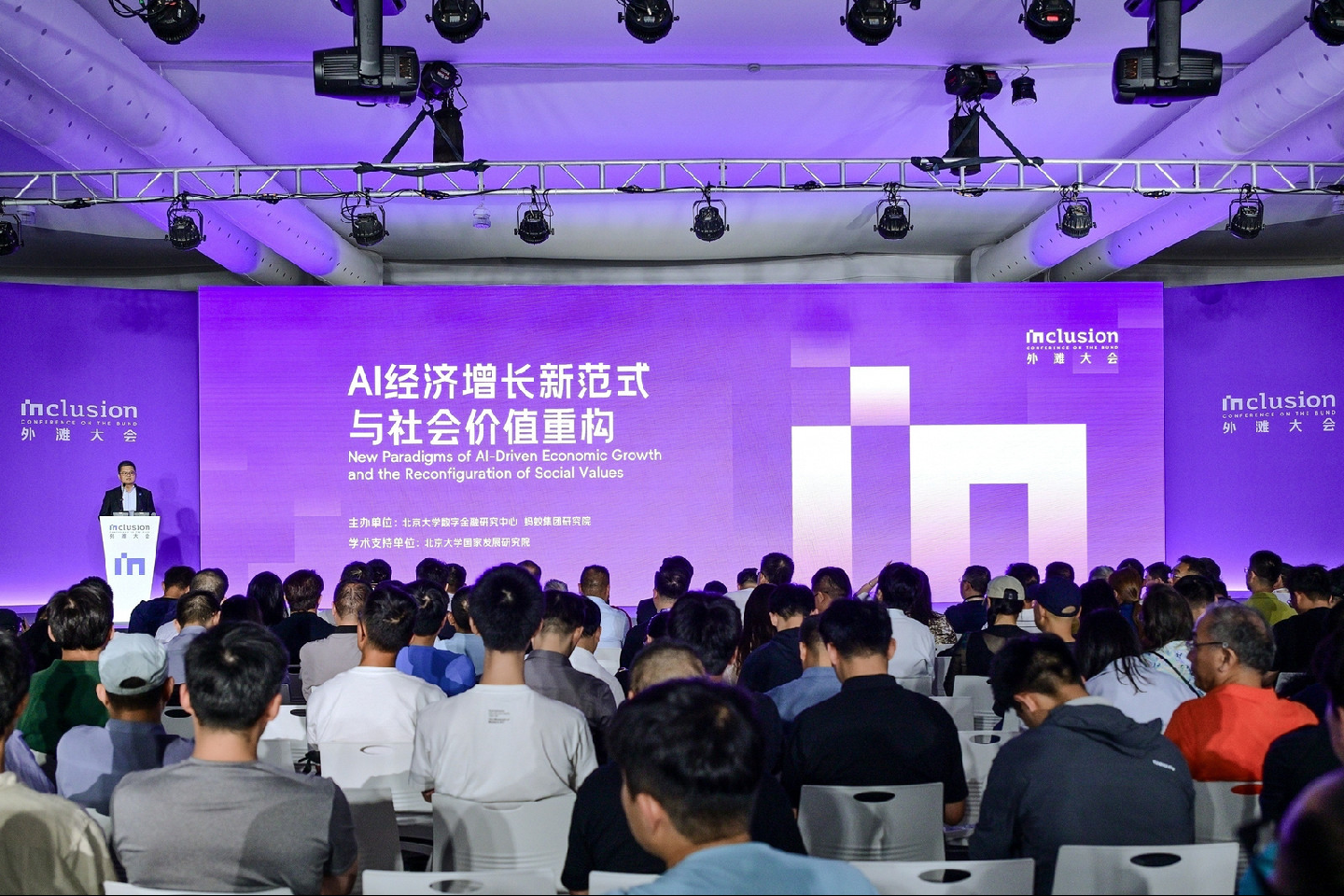
This is the core focus of the insights forum on the "New Paradigm of AI Economic Growth and Social Value Reconstruction" at the 2026 Inclusion · Bund Conference.
On September 9th, this event gathered Nobel laureate in economics Thomas Sargent, Dean of the National Development Institute at Peking University Huang Yiping, President of Shanghai University of Finance and Economics Liu Yuanchun, Professor Jiang Xiaojuan from the University of Chinese Academy of Social Sciences, Chief Economist Miao Yanliang from China International Capital Corporation, as well as guests from the industry and investment sectors to discuss the same question from the perspectives of production, investment, employment, education, and globalization: how AI can transform from a technological variable to a true economic variable?
The AI economy has begun, but the account of growth has not been settled yet
Liu Yuanchun made a representative judgment: "The new form of AI economy has been established, but AI economics has not really begun yet. ”
The problem first lies in productivity. Almost everyone believes that AI will improve efficiency, but there is huge disagreement on how much, when, and through what path it will be implemented. Liu Yuanchun believes that judging whether AI is a foam or not will ultimately return to a simple question: whether the computing power, models and infrastructure formed today can be precipitated into real production capacity.
Huang Yiping also reminded that the popularity of technology does not mean that macro growth has been realized. In the computer age, the "Solow paradox" emerged - technology applications have been deployed, but productivity data has not immediately improved significantly. AI may also face similar time lags today.
Sargent put this uncertainty more directly. He compared today's AI to the "Kepler stage": it has been able to find patterns from large amounts of data, but has not fully understood the structure behind the patterns. Huge investment does not automatically equate to high returns. Faced with AI, investors, businesses, and policy makers need to leave room for the unknown.
The first judgment on the forum is therefore clear: the direction of AI may be determined, but the magnitude, pace, and allocation of growth are far from certain.
From 'investing in AI' to 'making money with AI', the key is to create new demand
Ant Group CEO Han Xinyi proposed that the AI economy cannot rely solely on capital investment, and AI applications cannot stop at improving stock efficiency. If we only make the original process faster without creating incremental demand, it may ultimately lead to supply-demand imbalance and input-output mismatch. Enterprises need to move from "cost reduction and efficiency improvement" to "value creation", using AI to create new supply and activate new demand.
Li Zhenhua, the director of Ant Group Research Institute, also shifted the issue to the commercial closed loop. He believes that there is a clear differentiation in current AI investment, with relatively clear returns on investment in upstream computing power. Large scale models in the midstream and downstream applications still face significant commercialization pressure. "Whether the story of AI can continue depends on whether applications can truly create industrial value. ”
Zhao Bo from Peking University believes that AI is reducing the cost of acquiring professional skills, expanding market participants, and lowering the cost of innovation trial and error from a growth mechanism perspective. In other words, the true economic value of AI is not just about allowing the original people to do things faster, but whether it can make things that were too expensive, difficult, and difficult to scale in the past become available, purchasable, and tradable for the first time. The keywords of the AI new economy are shifting from "efficiency" to "increment".
Responding to Musk's questions from afar
With the productivity improvement brought by AI, a more acute question arises: if machines can produce more, do people have enough income to consume?
Huang Yiping summarized this issue as' strong supply and weak demand '. If AI enhances supply capacity while impacting some employment and widening the return gap between capital and labor, then demand may not necessarily grow in sync with production capacity. 'Strong supply and weak demand' may even become a long-term problem, thereby changing the paradigm of economic growth.
Miao Yanliang made similar observations from the perspective of inflation. He judged that AI may push up some prices in the short term due to bottlenecks such as computing power and storage, but in the long run, with the increase of productivity and the strengthening of labor substitution effects, the pressure to reduce inflation may be stronger. The underlying logic also points to income distribution: if more income flows into capital and the proportion of labor income decreases, total demand may be suppressed.
The discussion about employment is not just limited to whether AI will take away jobs.
Lu Ming responded to Musk's question from afar, stating that "artificial intelligence will not replace employment or professions, it will only replace abilities." Standardized, repetitive, and programmable "functions" are more easily taken over by machines, while "human abilities" such as understanding, communication, empathy, organization, and value judgment will become more important.
Xing Ziqiang reminds that having new positions in the long term does not mean that there will be no pain in the short term. This round of AI diffusion may be much faster than the past industrial revolution, and the creation of new jobs may not keep up with the erosion and impact on existing jobs. Some entry-level jobs may be reduced first.
Huang Yiping therefore mentioned the "Engels pause" after the First Industrial Revolution: output grew rapidly, but workers' wages remained stagnant for a long time. History shows that productivity growth does not automatically translate into income growth for workers. The so-called 'employment priority' is not to let AI do less, but to let more people do more because AI can do more.
The AI new economy ultimately requires the combination of human and institutional capabilities
One step forward in the issue of employment is the education of young people. Xiong Hui, Associate Vice President of the Hong Kong University of Science and Technology (Guangzhou), pointed out that today's education still focuses on knowledge retention, standard answers, and repetitive training, which are exactly what machines are becoming increasingly proficient in. AI can 'balance the power of knowledge', but it will not automatically 'balance the power of ability'. When everyone can use similar big models, the real potential to widen the gap lies in questioning, judgment, experience, taste, and innovation ability from 0 to 1.
Lu Ming refers to these abilities as' human abilities'. Shen Yan reminds us that in the era of AI, we cannot simply deny the concept of "broad knowledge and strong insight". Knowledge accumulation and creativity are not contradictory.
The discussion among several guests points to a common issue: in the era of AI, knowledge is not the only thing, but it cannot be the only thing.
As the focus shifts from individuals to enterprises, Jiang Xiaojuan believes that AI is changing another set of rules. She proposed that AI is an innovation born for the world. More and more models, products, and services have been facing the global market since their inception. Correspondingly, global competition is no longer just competition between enterprises, but further extends to industrial ecology, institutional openness, compliance capabilities, and international rules.
At the beginning of enterprise establishment, it is necessary to establish a global compliance system, "Jiang Xiaojuan said. In the AI era, enterprises need to incorporate global markets and rules into product and business model design from the very beginning.
The discussion ultimately returned to a more fundamental question: how the productivity created by AI can become true economic growth.
Han Xinyi believes that the AI economy cannot rely solely on capital investment, and enterprises cannot remain at the level of "reducing costs and increasing efficiency". In his view, after the formation of new demands, a further problem needs to be solved: how to transform the growth created by AI into more employment and income opportunities, forming a new cycle of "investment income consumption".
Huang Yiping also reminded from the perspective of distribution that the increase in productivity does not mean that the income of workers will automatically increase synchronously. The so-called 'employment priority' is not to let AI do less, but to let more people do more because AI can do more. This is also the measurement standard given by Han Xinyi: "The value of AI ultimately needs to be tested by real growth, and also by the sense of gain of more people. ”
How capable are collaborative robots at the China International Import Expo for unpacking, transportation, and assembly?
5 minutes to get started, 10 minutes to switch production lines - how worry free are robots at the Industry Expo?
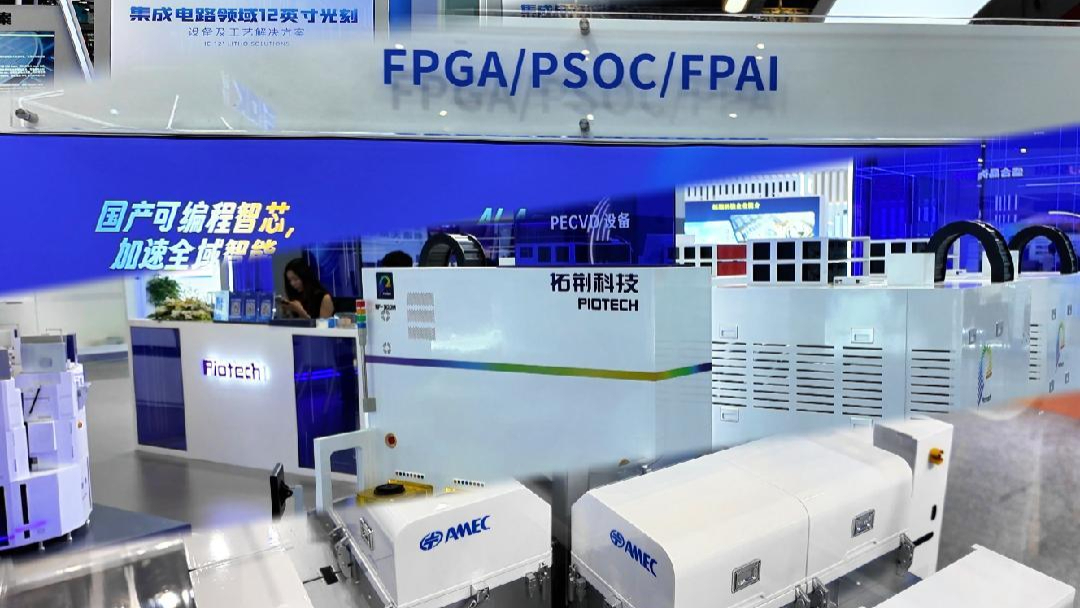
On site of the Industrial Fair: Domestic semiconductor equipment is moving from a single point breakthrough to a supporting chain