Economic Observer Follow
2026-08-24 23:08


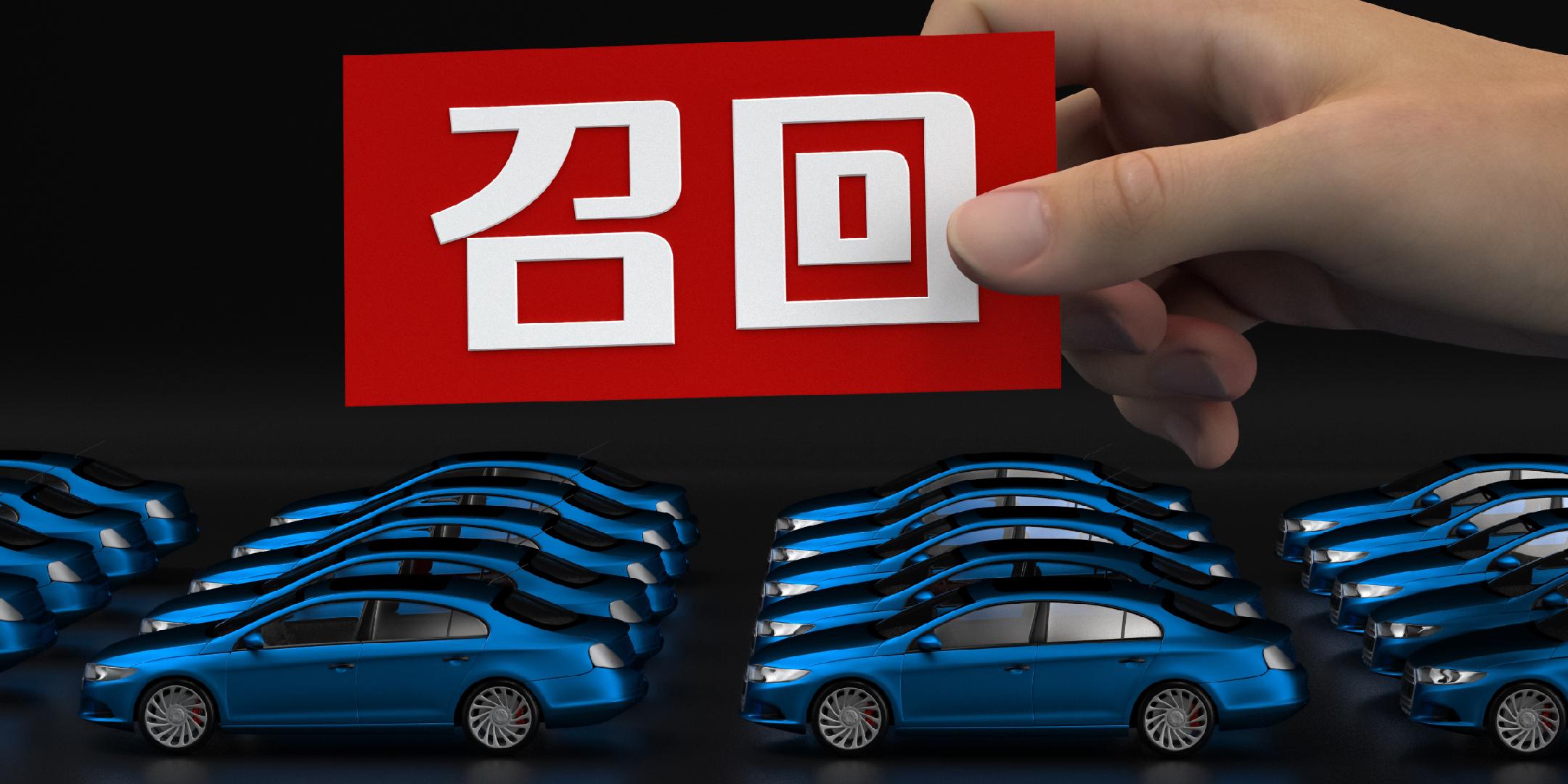
On August 21st, the State Administration for Market Regulation announced that Zhejiang Geely Automobile Co., Ltd. has filed a recall plan. Due to safety hazards in the laser radar components, a total of 74000 vehicles from four models of Lynk&Co will be recalled, and 19000 vehicles from Geely Galaxy M9 will be recalled simultaneously. The two batches of vehicles totaled nearly 93000, covering the two major brands of Geely, Lynk&Co and Galaxy, and five models. This is the first time that the core component of intelligent driving, LiDAR, has triggered a large-scale recall in China.
The announcement points the issue to the supplier's production process: due to fluctuations in the supplier's manufacturing process, there may be damage to the internal power IC of the laser radar, insufficient recognition, warning, or disposal of special targets after the combination driving assistance is turned on, and safety hazards exist under extreme conditions.
Public information shows that the power IC is the "heart blood supply" component of the laser radar, responsible for providing precise voltage regulation for core modules such as transmission, reception, and scanning. Once process fluctuations cause IC damage, intermittent power supply instability will occur, and the detection range, point cloud density, and anti-interference ability of the laser radar will decrease accordingly. In high-speed NOA scenarios, this type of damage may cause the system to delay or even miss the recognition of stationary obstacles ahead and vehicles entering from the side.
Public information shows that the laser radar installed on the involved model of Geely Automobile is from Sagitar Juchuang (02498. HK). This company has a close partnership with Geely Automobile, and its products have been widely used in dozens of models from brands such as Jike, Lynk&Co, and Galaxy. According to the information released on the Sagitar Juchuang official account, the LinkedIn 900 series is equipped with its high-performance laser radar as standard.
Sagitar Juchuang was founded in 2014 and will be listed in Hong Kong in 2024. As a leading domestic supplier of LiDAR, its performance has grown rapidly in recent years. In 2025, the annual revenue is approximately 1.941 billion yuan, with a total sales volume of approximately 912000 units of LiDAR and a gross profit of approximately 514 million yuan, a year-on-year increase of 81.3%. In the fourth quarter of 2025, we achieved a single quarter profit for the first time, with a net profit of 104 million yuan. In the first half of 2026, the total sales of LiDAR reached 719200 units, a year-on-year increase of 170%.
However, the impressive sales figures conceal quality control risks. Since July this year, complaints about the malfunction of Lynk&Co's laser radar have erupted on platforms such as Chezhiwang. The fault manifestations in the complaint cases are highly similar: the vehicle frequently pops up alarms such as "front LiDAR function failure" and "limited function in assisted driving speed limit" without collision or water wading, and high-level assisted driving functions such as highway NOA and city NOA are forcibly locked by the system. Some car owners even received phone calls from dealers before the vehicle displayed a fault alarm, claiming that abnormal LiDAR data was detected in the background.
On the first trading day after the recall announcement was released (August 24th), the stock price of Sagitar Juchuang suffered a heavy drop at the opening, hitting a low of HKD 17.85 during the trading session and finally closing at HKD 17.9, with a daily decline of 14.52%. The trading volume increased to 16.5 million shares, with a turnover of HKD 307 million. Geely Automobile's stock price also showed a slight decline on the same day, with a drop of 1.49%.
This is not the first time that Geely Automobile has fallen into a passive position due to supplier quality issues. In February of this year, Geely's Weirui Electric sued its battery supplier, Xinwangda Power, for quality issues with the batteries it delivered between June 2021 and December 2023, with a claim amount of up to 2.314 billion yuan. The case ended in a settlement after 43 days of filing, but this exorbitant lawsuit exposed the quality dispute between Geely Automobile and its core suppliers to the public eye.
Almost at the same time, Jike recalled 38000 Jike 001WE version cars due to manufacturing consistency issues with high-voltage power battery components, with the root cause of the defect directly pointing to the manufacturing consistency defect of Xinwangda battery cells. From Xinwangda's batteries to Sagitar Juchuang's LiDAR, Geely's supply chain quality issues have spread from traditional three electric components to intelligent sensing hardware.
Looking at the entire automotive industry, large-scale recalls caused by supplier quality issues are occurring intensively. Recently, GAC Aion has been embroiled in a storm due to serious malfunctions such as bulging and leaking battery cells, as well as "crawling" during operation, in AION S operating vehicles equipped with Zhongchuang Chuanghang 177Ah lithium iron phosphate batteries. Xiaopeng X9 has announced a recall due to fluctuations in the manufacturing process of air springs from supplier Baolong Technology, involving over 33000 vehicles. This shows that in the rapidly expanding cycle of new energy and intelligent driving, car companies are facing severe tests on their quality control capabilities in the upstream supply chain.
The two major brands, Lynk&Co and Galaxy, in this storm are currently under pressure from a decline in market sales. According to the sales data released by Geely Automobile for July 2026, Lynk&Co's monthly sales were 16000 units, a year-on-year decrease of 40%, marking the fourth consecutive month of double-digit year-on-year decline. Geely Galaxy's sales have been declining year-on-year for five consecutive months from January to May, with a cumulative sales volume of 411000 vehicles in the first five months, a year-on-year decrease of about 10%.



 Subscribe