Economic Observer Follow
2026-08-21 22:21


On August 21st, the Recall Center of the State Administration for Market Regulation issued multiple recall notices. Nine car companies including Tesla, Xiaomi, Xiaopeng, Leapmotor, Geely (Jike), Dongfeng, Chery, BAIC Blue Valley, and China FAW filed for recall plans on the same day, involving a total of over 4.27 million vehicles.
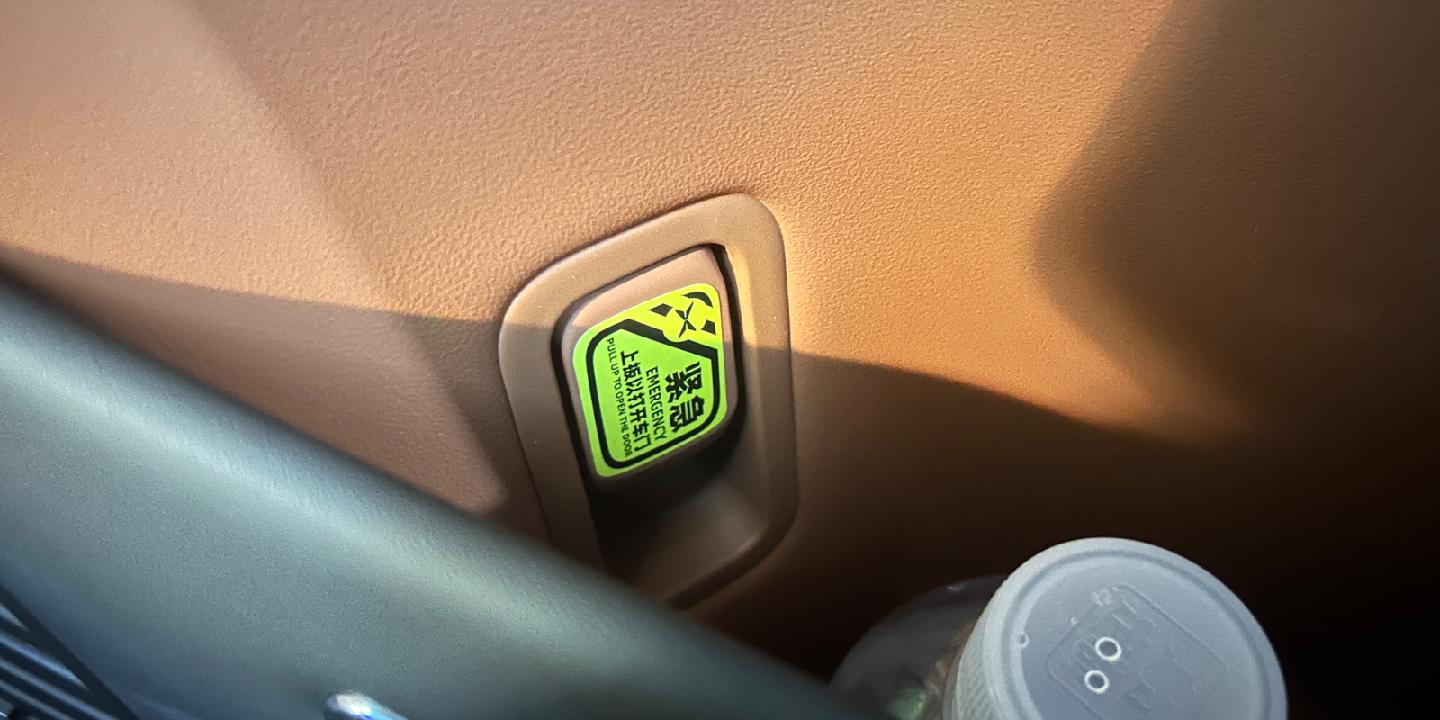
This is the largest batch recall in the domestic automotive market caused by a single issue. What triggered this large-scale operation was an extremely subtle flaw: the emergency mechanical handle in the car was too close in color to the interior, making it difficult to identify and operate. When a serious collision occurs and causes extreme situations such as the failure of the vehicle's low-voltage system, it may affect the quick opening of car doors for drivers and passengers to escape and rescue people outside the vehicle, posing a safety hazard.
From the perspective of individual car companies, Tesla is the largest entity in this recall, recalling approximately 2.976 million vehicles. Among them, a total of 2.9297 million domestic Model 3 and Model Y were recalled, and a total of 46100 imported Model 3, Model X, and Model S were recalled. In addition, Tesla has separately recalled 2.7407 million domestic models due to the hidden danger of insufficient attention monitoring under combined driving assistance.
Xiaomi recalls 390000 SU7s; Zero Run Motors recalls a total of 370000 C11 and C01 vehicles. Xiaopeng, Geely, Chery, FAW, BAIC Blue Valley, Dongfeng and others have recalled a total of about 550000 vehicles, including Xiaopeng G6, Xiaopeng P7+, Jike 007, Jike X, Chery iCAR03, Fengyun X3, Dongfeng Nano 06, Fengshen L8, Yipai e π 007, Yipai e π 008, Jihu Kaola, Hongqi EH7, Tiangong 08 and other models.
The overall rectification plan of each car company is consistent: free warning signs will be added to the emergency mechanical handle position inside the car, and the window control software will be upgraded through OTA, adding an automatic window lowering strategy after collision. But there are slight differences in the details. Xiaomi has synchronously optimized the central control unlocking logic, while BAIC Blue Valley and Chery have replaced the improved mechanical handle cover.
This round of large-scale rectification is regarded by the industry as an industry-specific compliance adjustment before the implementation of the new national standard. In January 2026, the Ministry of Industry and Information Technology will organize the formulation of the mandatory national standard "Safety Technical Requirements for Automotive Door Handle" (GB48001-2026), which will be implemented from January 1, 2027, and issued by the State Administration for Market Regulation and the National Standardization Administration. The new national standard requires that each car door must be equipped with a mechanically openable door handle, and the position of the inner handle must be permanently marked with Chinese usage instructions. Newly approved vehicle models must meet the requirements starting from 2027, and approved models for sale must complete the rectification before January 1, 2029.
The hidden door handle originated from the Mercedes Benz 300SL produced in 1954. In 2012, Tesla launched the Model S, which was the first to mass produce the "electronic pop-up+Bluetooth sensor". Around 2018, new forces such as NIO, Xiaopeng, and Ideal fully followed suit. But with the increase in penetration rate, complaints about power failure, inability to open after collision, winter freezing, and difficulty in identifying operations continue to increase.
According to the National Automotive Accident Investigation System (NAIS), the number of traffic accidents caused by door handle failures increased by 47% year-on-year in 2024, with hidden door handles accounting for as much as 82%. According to the 2024 collision test report by China Insurance Research Institute, vehicles equipped with pure electronic control hidden door handles have a 67% probability of successfully ejecting their doors after a side collision, compared to 98% for traditional mechanical door handles.
In addition, statistics from the China Consumers Association show that the number of complaints about hidden door handles will surge in 2024, with complaints of finger injuries to children increasing by 132% year-on-year, and most of them are children aged 3-8.
With the implementation of the new national standard, since January 2026, models such as the redesigned Wenjie M9, the new Xiaomi SU7, and the GAC Toyota Platinum 7 have abandoned fully concealed door handles and adopted compliant semi concealed designs. The semi hidden design has become the mainstream technology path in the industry, while maintaining a simple appearance and also considering the mechanical redundancy opening capability.
BYD, as one of the drafting units for the new national standard for car door handles, fully switched to semi hidden door handles after the release of the new standard, which was not involved in this recall. Great Wall Motors insists on mechanical door handles and does not adopt hidden designs in its main models. Wei Jianjun, Chairman of Great Wall Motors, has publicly stated that hidden door handles may cause the doors to fail to open after a collision, and the optimization effect on wind resistance coefficient is limited, but it increases the weight of the vehicle and the difficulty of sealing.
This recall is the first concentrated feedback on the safety hazards of door handles, which have risen from consumer complaints to mandatory industry standards. For car companies, all vehicles covered by 4.2759 million vehicles must complete corresponding measures within the rectification window period of January 1, 2029.




 Subscribe