2026-08-21 21:29


Gao Ruoying/Wen
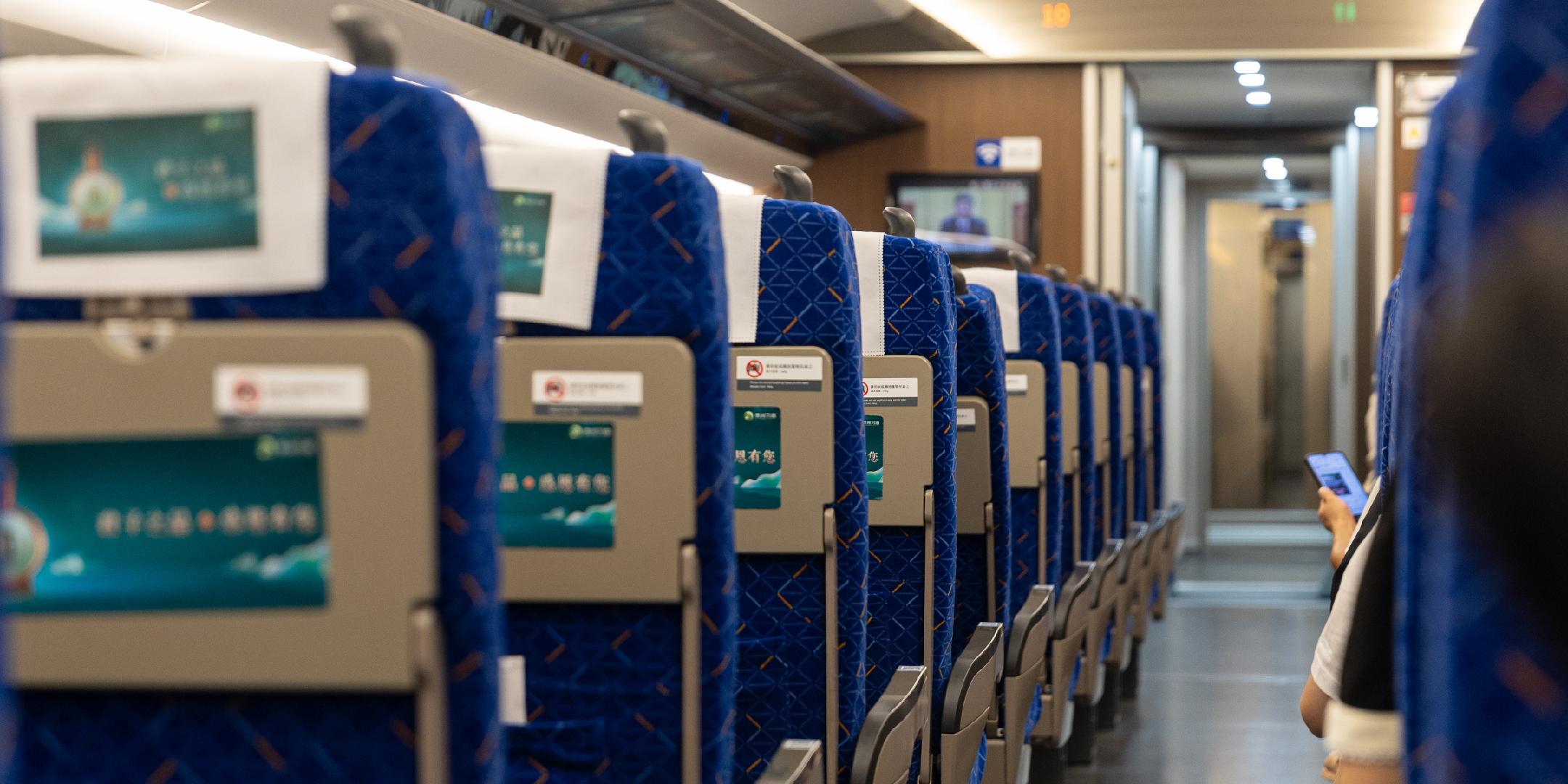
On August 18th, the news that two girls bought three railway tickets and refused to give one of the seats with snacks to an empty passenger sparked a lot of discussion. In the video, the train attendant was called in by an empty passenger to coordinate, but after verifying the ticket, he said, 'The seat belongs to them, tell me it's useless.'.
There is a great divide in public opinion: some people believe that once passengers pay the ticket price, they have the right to dispose of their seats, and those without seats cannot be morally kidnapped; Some people believe that standing while things sit is essentially a waste of public resources. The response from 12306 customer service supports the previous position: as long as the ticket is genuine and valid, and has not been refunded or changed, the right to dispose of the seat belongs to the ticket purchaser (or ticket holder), and the train attendant can only coordinate and cannot force it.
Similar incidents have occurred before. During the 2019 Spring Festival travel rush, there were incidents of middle-aged women taking their two children to "lie down" on six hard seats due to the inability to secure sleeping berths.
The author believes that the passenger transport department's statement that "ticket buyers who are not present on site" have the right to dispose of their seats is somewhat ambiguous.
We need to clarify a premise: China's railway passenger services are not purely market-oriented products, but rather have public utility attributes similar to water, electricity, and gas. Fundamentally speaking, railway passenger transportation is a natural monopoly industry with scale advantages. Although China Railway has implemented a pilot market-oriented fare mechanism since 2024, it still follows the basic principles of national fare and price control as a whole.
Therefore, we cannot assume to understand train tickets with the idea of "spending money to buy goods" - this small ticket not only contains market-oriented operations, but also reflects the state's allocation of public resources. This will lead to the issue of resource scarcity. If everyone has a seat on the train and passengers put things on empty seats, it will not cause any controversy; But when transportation capacity is tight, the scarcity of seats becomes prominent.
Most of the time, passengers are able to understand each other, and situations like this one where both sides are serious may be rare. However, it is still necessary to clarify the ownership relationship behind the seats.
Firstly, it needs to be clarified that in the same train, no seat tickets and seat tickets are priced equally. For railway carriers, their core contractual obligation is to provide displacement services from point A to point B. No seat tickets are essentially a supplementary mechanism when transportation capacity is tight. The passengers have no seats, not because they are unwilling to pay, but because they have no tickets. In addition, according to the official explanation of 12306, the full name of a no seat ticket is "no fixed seat ticket" or "no reserved seat ticket", which means that although passengers do not have exclusive seats, they can temporarily use the available seats in the carriage.
Secondly, in my opinion, the two of them used three ID cards to lock three seats, which is similar to the underlying logic of scalpers competing for tickets: using the "purchasing multiple tickets on behalf of others" allowed by the real name ticketing rules to turn the public seats that could have been circulated into private disposable space. The difference is that scalpers disrupt the distribution order on a large scale and for profit, while this incident is a small-scale, non-profit "rule based self-interest". Although its destructive power is far less than the former, it is essentially still exploiting loopholes in the rules and occupying public resources.
The original intention of the real name system for passenger transportation is to allocate public resources reasonably. On the one hand, it is strictly prohibited to resell train tickets without authorization; On the other hand, it is also not allowed to borrow someone else's ID card to purchase tickets on behalf of them. Whether it's a "two person three seater" or a "six seater middle-aged woman", it's highly likely that they have used the ID cards of their relatives and friends. However, the railway passenger transport rules do not recognize the logic of "relatives and friends" and only emphasize the real name system of "one person, one seat".
Legally speaking, passengers only purchase the right to use their seats under the real name system, rather than the right to control the way they use their seats. If the ticket purchaser does not check in and board the car, it is equivalent to giving up the right to use it. Under the requirement of real name registration, it is more ambiguous whether the authorized agent of the ticket purchaser has the right and to what extent they have the right to control vacant seats.
At the end of the day, 'two people buying three seats' is not a new thing, and it may happen again in the future. The theme may become' a family of three buying four seats to put in a baby stroller '. This also reminds us that when the social environment and consumption habits change, some rules may still have room for refinement: for example, it is explicitly stipulated that "if a passenger boards the train without checking in and does not change their ticket after driving, the right to use the seat will be reclaimed by the railway, and priority allocation will be given to elderly, young, sick, disabled or pregnant passengers without seats"; For example, for those who purchase multiple tickets but the ticket holder has not checked the tickets, the train conductor can temporarily revoke their authority. By patching up the rules, train attendants no longer have to "settle in the mud" in the carriage, and netizens no longer have to argue fiercely.
But before the rules are perfected, each side should take a step back, perhaps this is what public life should look like: those who buy more tickets are willing to give up their empty seats when facing standing passengers, this is a matter of affection; A person holding an empty seat sees an empty seat and softly asks, 'Is it convenient for me to sit for a while?' Refusing is also unethical kidnapping, which is also emotional. The law sets the bottom line, and human feelings fill the gap. In this way, such disputes no longer need to be trending.


 Subscribe