2026-08-12 16:01


White Paper on Oral Health of Chinese Adolescents
——The first oral health research report led by teenagers
Release date: August 2026
Publisher: Jingguan Youth Business School, Rui'er Group, New Oriental International Education
Full name: "2026 White Paper on Oral Health of Chinese Adolescents"
Data support: 2288 valid questionnaires (1875 students and 413 parents)
Qualitative material: Field interviews with hundreds of minor researchers
This IsThe first oral health research report led by teenagers。
It was born from the "Smiling Youth Researcher" project jointly organized by the Economic Observer's Youth Business School, Riel Group, and New Oriental International Education. Hundreds of researchers from primary and secondary school students aged 9 to 14 independently completed the entire process from problem design and live interviews to data analysis and public roadshows; 2288 valid answer sheets were collected one by one among classmates, friends, and family, and every quote in the text was also from their one-on-one on-site interviews.
Researchers in the field of dentistry have used children's eyes to see the oral truth that adults often overlook: brushing teeth, many children "do it" but not "do it well"; The problem with teeth is not just about cavities. The most powerful protection often comes from the companionship of parents who remind them once a day.
When children's discoveries are written into a public white paper, they transition from passive health recipients to producers and disseminators of public health data. Here are some things that this survey completed by children wants to tell adults.
·Written at the beginning: Seven key findings
Brushing teeth with quantity but lacking quality: 66.6% of students brush at least twice a day, but 12.4% brush for less than 1 minute each time; 28.3% still believe that "just brush the outside" and 17.4% believe that "the harder you apply, the cleaner it will be".
Gingivals and sensitivity are "hidden high-risk areas": 36.6% of students have experienced gum inflammation and redness in the past year, 35.2% have experienced toothache when exposed to cold or hot foods, but only 38.3% consider "gum health" as the standard for ideal teeth.
The initial effectiveness of the prevention barrier is uneven: 35.9% of students have undergone pit and fissure sealing, 29.2% have applied fluoride, but more than 60% have not done so, and 14.4% have minor problems but have not sought treatment.
Uneven teeth are also a health issue: 59% of students are concerned about appearance, but only 39.7% of parents seek medical attention immediately when they notice the unevenness; The misconception of 'just wait for a tooth change' still exists.
The 'supervision dividend' of parents is underestimated: 88.1% of students who are supervised to brush their teeth every day have regular oral examinations; Unsupervised, this proportion is only 50.0%, and 21.3% have never been inspected.
There is still a gap in attitudes: 45.1% of students and 35.6% of parents agree that 'if teeth don't hurt, there's no need for examination'; But 86.9% of children have actually experienced dental problems.
• Wide knowledge base and weak action ability: The top three sources of dental care knowledge are school (44.7%), short videos (43.7%), and family members (41.8%), but only 38.7% follow them seriously when reminded, and 47.9% only brush them after being reminded by parents.
·1、 Brushing teeth is a small matter that hides a big gap
Brushing teeth is the bottom line of oral health, and it is also the most "quantitative but lacking" aspect in this survey. 66.6% of students brush at least twice a day, which looks good; But upon closer inspection of the 'quality', the gap appears: 12.4% take less than 1 minute each time - dentists generally recommend 2-3 minutes each time, and our children are still far from the standard.
What is even more alarming is the 'method misconception'. In the question "What are the correct brushing methods you know", only 43.2% knew "at least 2 minutes each time", and 41.2% knew "the bristles should be aligned at a 45 degree angle to the gum line"; At the same time, 28.3% believe that "brushing only the outer teeth is enough", 17.4% believe that "the harder you apply, the cleaner", and 3.3% think that "brushing teeth mainly relies on toothpaste, not toothbrushes". Tools are being upgraded - the popularity rate of electric toothbrushes has reached 43.2% - but habits have not kept up: only 32.2% of children use dental floss that can clean between teeth, 26.2% use mouthwash, and only 15.5% use dental washers.
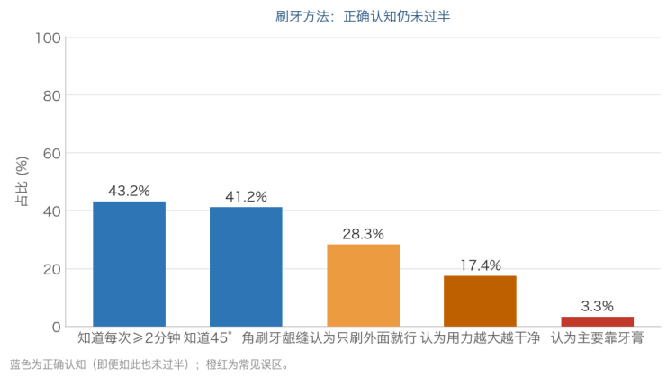
Figure 1: Cognition of Brushing Teeth Methods - More than half of the correct cognition is still lacking, and misconceptions are still prevalent
Hidden bad habits are also quietly wearing down teeth. 40.2% of children are able to bite open packaging bags and bottle caps with their teeth, 39.0% enjoy biting their lips, 31.2% are accustomed to chewing with only one tooth, and 25.8% unconsciously breathe through their mouths. These 'indifferent' moments accumulate into a lot.
Multiple Interviewed Students
After drinking milk tea, I feel like doing something else. It's troublesome for me to rinse my mouth right away. As soon as my mom says it, I'll take care of it. "(A 13-year-old girl)
(Using dental floss) No need; lazy, don't have time, don't want to use, think it's useless. "(A 15-year-old boy)
After eating sweets at home, she would drink water and rinse her mouth, but not when playing outside. She found it troublesome and didn't bring a toothbrush with her. "(An 11 year old girl)
After going out and drinking cola or eating candy with classmates, I basically can't clean up, and it's inconvenient to brush my teeth outside. "(A 12-year-old boy)
Researcher's note
The researchers of the minor tune repeatedly wrote the same observation in their notes: many children are not "unable to brush", but "too lazy to brush seriously". No matter how good the tools are, they cannot replace those two minutes and a little patience.
·2、 Gum and Sensitivity: The "Foundation" of the Oral cavity is Neglected
When it comes to dental problems, the first thing that comes to mind is tooth decay. But in this survey, gum problems and tooth sensitivity were more common than tooth decay. In the past year, 36.6% of students had gum inflammation and redness, 35.2% had experienced "eating cold or hot will cause toothache", and the proportion of "tooth decay/cavity" was 26.9% - that is to say, gum redness and sensitivity are more common than tooth decay.
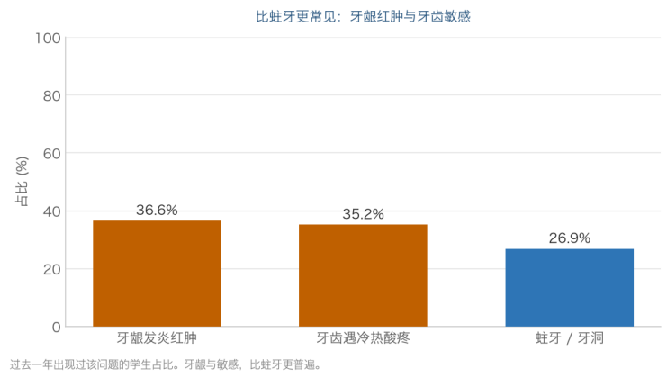
Figure 2: Three common oral problems - gingiva and sensitivity are more common than tooth decay
But children's attention to "gum health" is far from enough. When asked 'What do you want your teeth to look like?' 49.6% chose 'no insect teeth', 42.8% chose 'teeth firm', but only 38.3% mentioned 'healthy gums, no swelling and pain', 29.7% mentioned 'no inflammation around the teeth', and only 21.4% cared about 'no bad breath'. Gums are the foundation of teeth; There is a problem with the foundation, no matter how white it is, it cannot stand steadily.
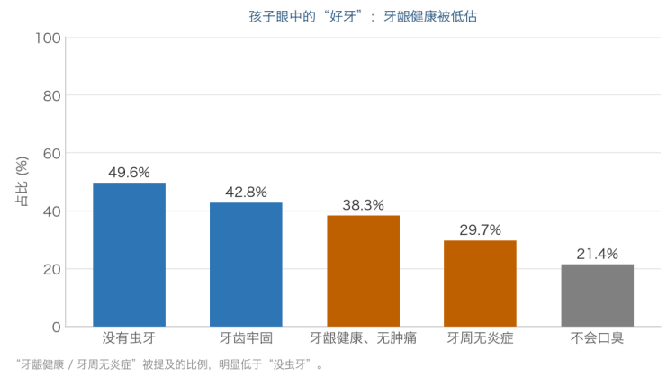
Figure 3: The 'good teeth' in children's eyes - gum health is significantly underestimated
Unfortunately, gum problems and tooth sensitivity issues are often treated as "excessive heat" and ignored. A parent said in an interview——
Interviewed parents (children attending junior high school)
The child mentioned having toothache, but I thought it was due to internal heat and didn't take it seriously. Later, I realized it was because of sensitive teeth that hurt in both cold and heat
Multiple Interviewed Students
Sometimes when I brush my teeth, my gums bleed. At first, I thought it was because the toothbrush was too hard. "(An 11 year old girl)
Sometimes when I brush my teeth, I bleed. I always thought it was because I brushed my teeth too heavily. "(An 8-year-old girl)
Professional Tips
Gingival redness and bleeding from brushing teeth are often signals of gingivitis; Eating cold or hot food may cause soreness, possibly due to enamel wear or gum recession. All of these should be seen at the dentist as soon as possible, rather than just being patient.
·3、 Not only tooth decay: there are also dental trauma, grinding, and mouth breathing
The enemies of teeth are far more than just sugar and bacteria. Several sets of data in the survey point to some "atypical" but highly prevalent issues:
Sports collision: 26.99% of students suffer from dental injuries during sports and other situations - playing ball, chasing, falling, and front teeth are the most likely to be hit.
Night grinding: 24.43% of students have the habit of grinding their teeth. Long term grinding can wear away enamel, cause soreness, and discomfort in the temporomandibular joint, but few people notice it.
Oral breathing: 25.8% of students unconsciously use their mouth to breathe or sleep, which not only affects facial development but is also related to the risk of dry gums and tooth decay.
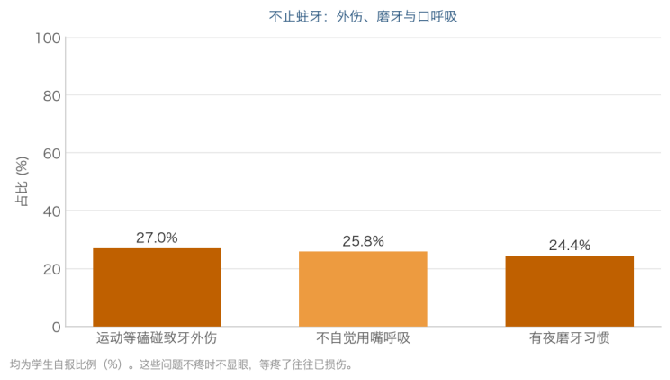
Figure 4: Not only tooth decay - trauma, grinding teeth, and mouth breathing are also at high risk
The commonality of these problems is that they are not noticeable when they are not in pain, and when they are in pain, they often already cause damage. A second year junior high school boy casually said in an interview——
14-year-old male (interviewee)
I once hit my front teeth while playing ball, but I didn't pay attention when I had nothing to do
Professional Tips
Children who love sports can learn about sports braces; Sleeping with the mouth open and grinding teeth for a long time are also very worthwhile for parents to take their children to dental institutions for evaluation.
·4、 Two lines of defense for prevention: fissure sealing and fluoride coating
After discussing 'issues', we should also talk about' protection '. There is a gratifying discovery in this survey: two recognized flagship preventive measures have entered the mouths of many children -35.9% of students have undergone pit and fissure sealants, and 29.2% have been treated with fluoride; In addition, 23.0% have had their teeth filled and 23.2% have had their teeth corrected. The awareness of prevention on campus and at home is indeed improving.
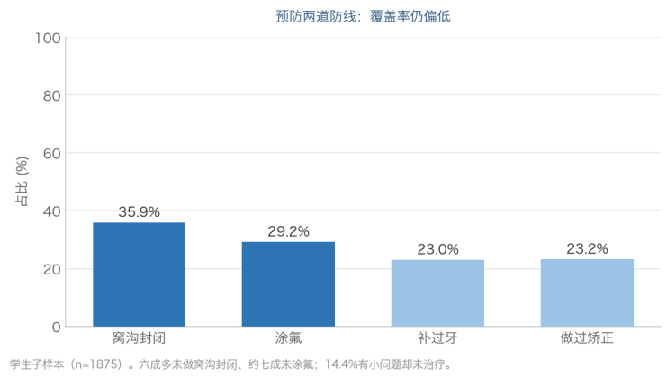
Figure 5: Two lines of defense for prevention - fissure sealing and fluoride coating coverage remain low
But the coverage is still uneven. In other words, more than 60% of children have not undergone pit and fissure sealant, and about 70% have not been treated with fluoride; In the question "What treatments have been done for teeth", 14.4% of students checked "There are small problems that have not been treated". The prevention network still has a considerable loophole.
Multiple Interviewed Students
About half of our classmates have done pit and fissure sealing, but there are still many who have never heard of this term. "(A 10-year-old boy)
When I was a child, my mom took me to apply fluoride, and the doctor would have something like blueberry sauce, sour. "(An 11 year old girl)
Professional Tips
Groove sealing and fluoride coating are widely recognized as cost-effective methods for preventing dental caries in children. It is recommended to perform pit and fissure sealing in a timely manner after the eruption of primary molars (3-4 years old), first permanent molars (6-7 years old), and second permanent molars (11-13 years old); Fluoride application can start from the first tooth eruption of the baby, every 3-6 months, and lasts throughout the entire childhood period.
It is recommended that parents include "whether they have undergone pit and fissure sealing/fluoride coating" in their children's regular oral examination checklist, and the specific plan will be determined by the dentist based on the child's caries risk assessment.
·5、 Irregular teeth are also a health issue: Don't let waiting for a tooth change delay orthodontic treatment
In the hearts of children, having teeth that are not neat is never a small matter. 59% of students expressed concern about the appearance of their teeth, and 40.9% listed "neat arrangement and beautiful smile" as the standard for ideal teeth; 54.2% of parents also hope that their children will be arranged neatly. Besides aesthetics, functionality is more important - crowded teeth are often harder to clean and more prone to tooth decay and inflammation.
11 year old female (interviewee)
My front teeth are a bit crooked, and I want to have them corrected. They don't look good when I smile, and I want to have neat teeth
But after discovering the problem, parents hesitated to take action. If a child's teeth are found to be misaligned, only 39.7% will "immediately take the child to see a doctor", 22.0% will first check online, 15.3% will first ask relatives and friends, 10.7% think it is "normal and does not need to be treated", and 7.5% will delay payment. In total, about 18% of households chose to "procrastinate" or "give up".
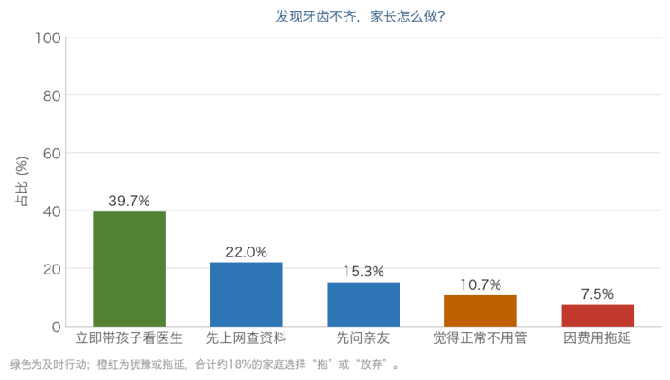
Figure 6: Parents' reactions after discovering misaligned teeth - nearly 20% choose to delay or give up
A common misconception is that 'waiting until the teeth are replaced is enough'. In fact, tooth alignment is influenced by various factors such as jawbone and genetics, and does not grow on its own. A 15-year-old boy who has undergone orthodontics has changed the stereotype that orthodontics is scary through his own experience.
15-year-old male (interviewee)
The correction is done, it's pretty good. I'm not afraid to go to the dentist, and the orange sunglasses at the clinic are quite fun
It is worth noting that parents who have already taken action have a very "healthy" motivation. In the question "Motivation for orthodontic treatment for children", 40.7% chose "for dental health", 24.5% chose "for a better future image", 24.7% chose "because other classmates in school are undergoing orthodontic treatment", and only 9.9% chose "temporary advice from doctors". About 90% are active investors.
We also want to emphasize that crooked teeth are not a small matter of "ugliness", but a dental problem that requires professional evaluation. Its best solution is "regular check ups, early detection, and early orthodontic treatment if there are problems" - oral examination not only checks for cavities, but also tracks alignment and jawbone development; Many irregularities have signals during the replacement period (around 7-12 years old), and timely intervention can achieve twice the result with half the effort.
Parents (children attending elementary school)
I used to think that if my baby teeth were broken, they didn't need to be cared for, and if they were uneven, they just needed to be replaced. Later, I realized that uneven teeth often don't grow on their own
·6、 Parents' '' Supervision Dividend 'and Conceptual Gap
Who is the most influential person in dental care? The data provides a clear answer: parents.
In the cross analysis of "whether parents supervise brushing teeth" and "whether they take their children for oral examinations", the gap is astonishing: 88.1% of students who are supervised brushing teeth every day have regular oral examinations (every March/June/year), while only 1.7% almost never go; The group that was not supervised had a regular inspection rate of 50.0%, while the group that had never been inspected had an even higher rate of 21.3%. Accompaniment and supervision are themselves a form of 'tooth protection and compound benefit'.
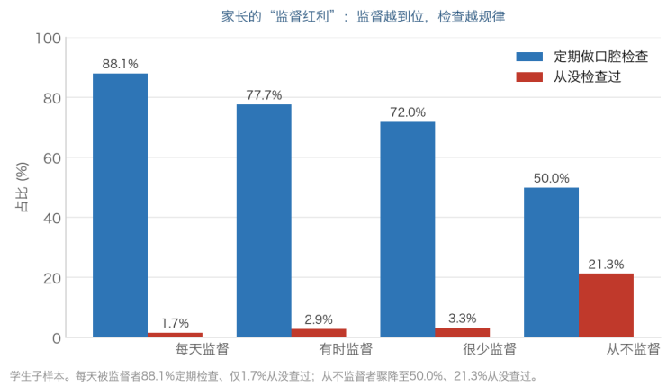
Figure 7: Parental supervision x oral examination - core cross comparison (supervision dividend)
What's even more interesting is the 'ripple effect': the value of supervision goes far beyond just 'staring at the brush for those two minutes'. In the question "Will they specifically clean their teeth after eating sweets/snacks", 49.8% of children who are supervised to brush their teeth every day will actively clean them; And occasionally and rarely supervised, this proportion drops sharply to 16.2% and 10.5%. Supervision has internalized external constraints into a set of self-management abilities - able to brush, clean, and regularly inspect. This is the true form of 'dental care compound benefit'.
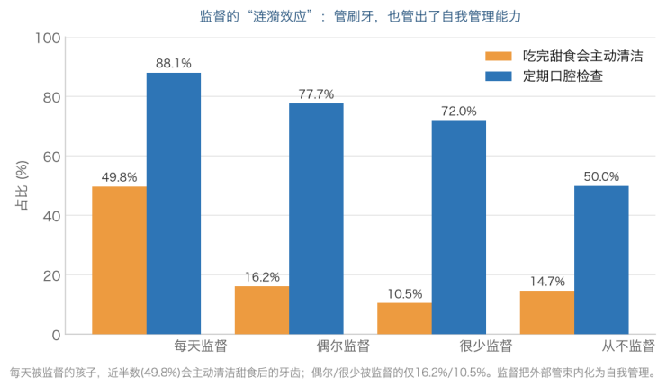
Figure 8: The "ripple effect" of supervision - brushing teeth also enhances self-management ability
However, the 'supervision dividend' is far from universal. Overall, the regular oral examination rate among students is only 76.5%, and 4.1% have never been there. More fundamentally, there is a gap in mindset: 35.6% of parents agree that "as long as their teeth don't hurt, there's no need to pay special attention or undergo examinations," while 13.3% feel that protecting their teeth is too troublesome; The proportion of students is even higher, with 45.1% agreeing that 'if it doesn't hurt, there's no need to check'. However, the reality is that 86.9% of children have already experienced dental problems - waiting for the "pain" before taking action is often too late.
An interesting detail: Why do children brush their teeth? 47.9% of them were "prompted and supervised by their parents before brushing", while only 35.5% were "voluntarily trying to brush". That is to say, the majority of children's dental care motivation still comes from external sources. And the data also poured cold water on "preaching": when reminded, only 38.7% listened carefully and corrected, 37.9% promised not to do it on the surface, and 19.3% felt annoyed. Reminders are effective not in terms of frequency, but in terms of method.
Multiple Interviewed Students
My mom says' drink less milk tea ',' rinse your mouth after eating sugar ',' brush your teeth seriously 'every day, I'm tired of hearing it... but I know she's doing it for my own good. "(A 13-year-old girl)
My mom doesn't say much about drinking less milk tea, and even when she reminds me to brush my teeth, I won't listen. "(A 15-year-old boy)
Researcher's note
Similarly, some children are "annoyed by being talked about but it's better to know", while others are "almost not cared about or taken seriously". The consensus among researchers in the field of minor music is that companionship and demonstration are much more useful than simply preaching.
·7、 School, peers, and short videos: an important source of overlooked dental care knowledge
Outside of home, schools, peers, and short videos are important sources of knowledge for teenagers about dental care. In this survey, schools were the primary source of dental care knowledge (44.7%), short videos were the second (43.7%), family members were the third (41.8%), and doctors only accounted for 33.6% - which means that children are more likely to "brush" on dental care knowledge rather than "watch" it.
But 'brushing' does not mean 'seeing in'. When it comes to dental health content, only 25.4% will actively look at it, 42.1% will just glance over it, and 24.4% will directly swipe away. The influence of peers is also very real:
Multiple Interviewed Students
My classmates are all drinking milk tea, and if you don't drink it alone, it seems a bit out of place. "(A 10-year-old girl)
After class, everyone talks about games and basketball. Only when someone has a toothache will they casually mention it. "(A 12-year-old boy)" We don't discuss teeth. "(A 7-and-a-half-year-old girl)
Researcher's note
The topic of teeth rarely appears in classmates' daily conversations; The influence of peers is more about "behavioral imitation" when drinking cola or eating candy together, rather than verbal persuasion.
There is also a "scissors gap" among different types of schools: public school students brush their teeth the most frequently (75.9% more than twice a day), but whether it is "seeing a dentist in the past year" (75.4%) or "regular oral examination frequency" (70.9%), they are the lowest among the three types of schools, and the proportion of students who have never had oral examinations is actually the highest (5.8%); International/bilingual and private schools, on the other hand, have lower rates of brushing teeth (58.4%/62.6%), higher rates of dental visits and regular check ups (80.5%/84.6%, 81.3%/79.9%), and even lower rates of never having a check-up (2.7%/3.0%). Addressing the shortcomings of "fewer visits to dentists and fewer check ups in public schools" may be more effective than simply saying "brush your teeth seriously".
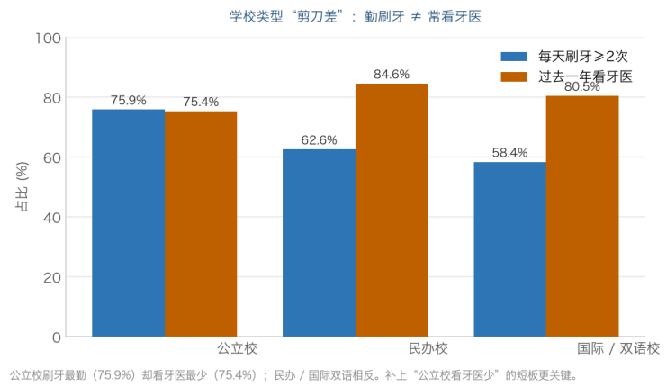
Figure 9: School type 'scissors gap' - frequent brushing ≠ frequent dental visits
·8、 Deep insight: Three overlooked oral health paradoxes
In the first seven chapters, we laid out the phenomena. But there are still three counterintuitive "contrasts" hidden in the data - they can tell us more than surface percentages where strength should be directed.
Contrast 1: People who say 'no pain, no need to check' are 80% actually checking
45.1% of students agree that as long as their teeth do not hurt, there is no need to pay special attention or undergo examinations. Does it sound like 'outdated ideas'? Cross analysis poured cold water: out of these 45.1%, 81.8% actually went to see a dentist in the past year; Even if measured according to the stricter "regular inspection" criteria, it still accounts for 80.8%. Most families are already doing it, but students have not formed awareness of "regular check ups".
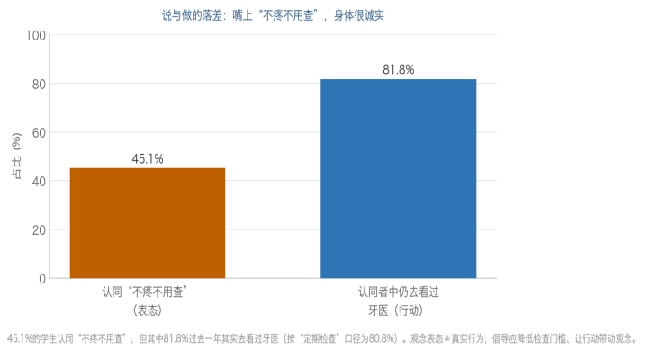
Figure 10: Belief behavior deviation - "No need to check if your mouth doesn't hurt, your body is honest"
Revelation
The focus of advocacy should not stop at "persuading people to go for examinations", but should make examinations the default option and lower the threshold (such as popularizing campus screening and incorporating oral examinations into routine physical examinations). When 'going to check' becomes like 'going to get vaccinated' without explanation, actions will in turn drive attitudes.
Contrast 2: The more effective the supervision, the better the child will be able to "manage themselves"
49.8% of children who are supervised to brush their teeth every day will actively clean their teeth after eating sweets; Occasionally and rarely supervised, this proportion drops sharply to 16.2% and 10.5%. At the same time, their regular inspection rate has been declining from 88.1% to 50.0%. The value of supervision goes far beyond just "staring at brushing for two minutes" - it internalizes the "external control" of children's dental care into a set of self-management abilities. This is the true form of 'dental care compound benefit'.
Revelation
Instead of worrying about the child being unconscious, it's better to focus on 'companionship and demonstration' first. Role models and habits are much more effective than preaching.
Contrast 3: 90% of children have had problems, while about 20% still passively wait for pain
86.9% of students have experienced dental problems in the past year, which should be the most sufficient reason for "regular check ups". However, about 21.7% of them are still "passive type" -18.2% only go if there are dental problems, and 3.4% have never had a check-up. The real risk often lies not in 'not knowing', but in 'not turning inspection into a habit'. This group of 'silent high-risk' is precisely the target that intervention should aim at.
Revelation
Moving oral examination from 'only remedying problems' to' discovering problems before they occur 'is the most cost-effective investment.
·9、 From 'Remediation' to 'Prevention': Insights and Actions for Families, Schools, and Society
Based on the above findings, we propose three levels of inspiration - from "thinking" to "doing", and then to "making good habits easier to occur".
Cognitive layer: Redefine "regular check ups" from "remedial" to "annual physical examinations"
No problem if the teeth don't hurt. Gingivitis, early tooth decay, and abnormal alignment are often asymptomatic. Treat oral examination as an "annual routine" similar to visual screening, rather than just going for emergencies.
Replace preaching with ways that children can listen to: short videos, animations, peer stories, etc. - When children come across dental care content, they decide in the first 3 seconds whether to swipe away or watch it.
Behavioral layer: making good habits "easy to happen"
To the family:
Supervise but not nag: accompany brushing, demonstrate the Babbitt brushing method; Include 'regular oral check ups' in the family schedule, and it is recommended to schedule them every 6 months (such as once after birth and six months).
• Use "substitution+moderation" to alleviate social pressure caused by sweet treats, rather than completely banning them - understand the situation of children who "don't drink milk tea and are afraid of not fitting in".
Pay attention to overall health: gum bleeding, sensitive teeth, grinding teeth, and mouth breathing should all be checked in a timely manner; Don't wait for tooth replacement if your teeth are not aligned, undergo orthodontic evaluation during the dental period.
To schools and society:
Campus oral screening+pit and fissure sealing, universal coverage with fluoride coating, focusing on filling the gap of "fewer visits to dentists in public schools".
Media and platforms should provide easy and scientific dental care content, turning "regular check ups" into common sense that does not require explanation.
Institutional layer: Make dental care the 'default option'
Promote the inclusion of children's oral examination as a routine item in basic public health services/campus physical examinations, and make "regular examinations" as popular as vision screening.
Explore more inclusive payment and coverage methods (such as inclusion in medical insurance or public health programs) for flagship prevention measures such as fissure sealing and fluoride coating, and narrow the "prevention gap" between schools and groups.
Establish a closed loop of "home school medical" linkage: school screening and warning → parent awareness → professional agency follow-up, so that every "silent high-risk" child is seen.
One Sentence Proposal
Careful brushing, flossing, regular check ups, early correction if there are problems, and don't miss the opportunity to apply fluoride to close cavities and grooves - dental care is not a big deal, but a daily routine.
·Conclusion: What the child wants to tell adults
As the research was nearing its end, a small researcher wrote in their concluding remarks——
Junior Researcher (Final Thoughts)
Through this research, I have come to understand that teeth are not a small matter. I hope more students will start practicing diligently, undergo regular check ups, and seek medical attention as soon as possible if there are any issues
This white paper was originally initiated and completed by children. They used thousands of questionnaires and repeated interviews to bring "oral health" from an easily overlooked corner to our doorstep.
Teeth are very small, so small that they can be brushed in just a few minutes every day; But it measures the health habits of a family, as well as the sincerity of a school and a society towards "prevention". We should teach children to read seriously and also teach them to take good care of their teeth; We are used to 'treating illnesses when they occur', but we also need to learn to 'check even when we are not sick'.
May this report submitted by the child become a mirror and an invitation: reflecting on the current situation, and inviting every family, every school, and every decision maker to accompany the child to protect their lifelong good teeth from today on. Because dental care has never been a big deal, but rather a society's willingness to prioritize even the smallest aspects of health.
Appendix 1: Data Source and Method Explanation
• Quantitative data: 2288 valid responses (1875 students and 413 parents) from the "Chinese Youth Oral Health Survey Questionnaire" were independently designed and distributed by hundreds of primary and secondary school researchers for collection.
• Qualitative material: in-depth interviews with peers and parents conducted by hundreds of minor researchers.
The quotes from teenagers and parents in the article are all selected from real expressions collected by the researchers in the field; Part of it is a typical presentation of similar viewpoints (with identifiable information hidden), used to represent the voice of a certain group, not a specific individual.
All characters are identified anonymously (by age and role), and there are no real names or school names mentioned in the text.
• Percentage caliber: Single choice question is the proportion of the number of people answering the question; Multiple options represent the proportion of valid responses to the question (which can exceed 100%).
The behavior rate of school type question (Q42) comes from a sub sample of students: 756 public, 462 private, and 632 international/bilingual; Cross analysis (parental supervision x oral examination, supervision x proactive cleaning after eating sweets, school type x regular oral examination/never examined, agreement with "no pain, no need to check" x actual examination) was calculated based on a sub sample of 1875 students.
• 'Having experienced dental problems' refers to students selecting any oral problem in question 14 (excluding' never encountered '); According to this calculation, the passive dental care population (who only go if there are problems or have never been checked) accounts for approximately 21.7% of those who have problems.
This white paper is for popularization and advocacy purposes. For specific oral problems, please refer to the diagnosis and recommendations of professional dental medical institutions.
Attachment 2: List of minor researchers participating in this project (in no particular order)