Economic Observer Follow
2026-08-03 11:51


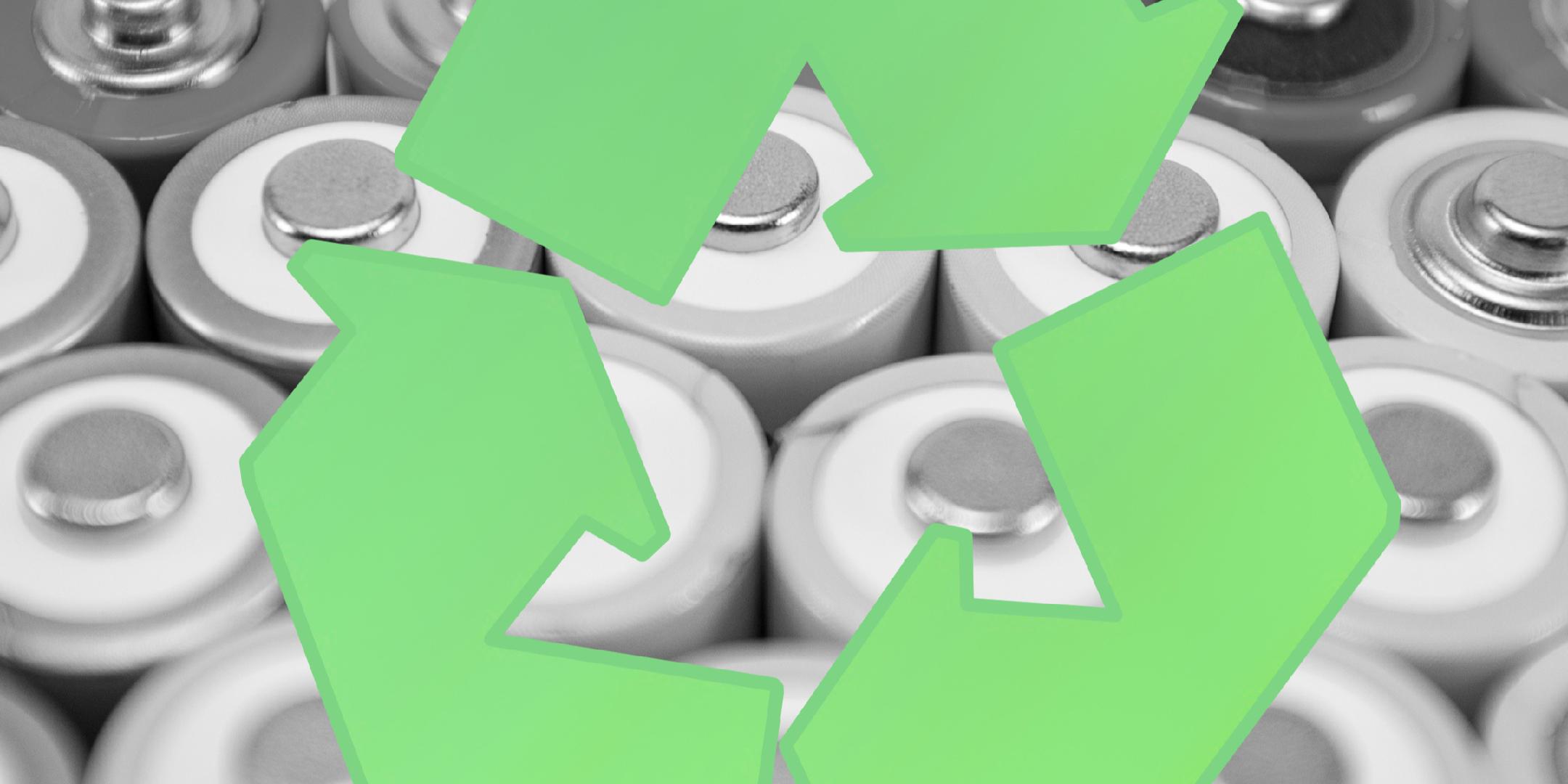
A massive investment transfer in the field of power batteries has begun. Since the beginning of this year, new investments and projects in the field of power battery recycling have been launched one after another: Ningde Times Bangpu Recycling Large scale Lithium Iron Phosphate Recycling Base has launched an environmental impact assessment, Guoxuan High tech has landed a European recycling factory, Changan Automobile, Stellantis and Tianqi Co., Ltd. have deepened their joint ventures, third-party whitelist companies such as Green Beauty and Tianqi Co., Ltd. continue to expand their national production channels, positive electrode material manufacturers such as Hunan Yuneng and Zhongwei Co., Ltd. have extended their recycling links, and many automotive parts and multinational environmental protection companies have also entered the battery recycling industry
On April 1st of this year, the Ministry of Industry and Information Technology and six other departments issued the "Interim Measures for the Management of Recycling and Comprehensive Utilization of Waste Power Batteries for New Energy Vehicles" (referred to as the "Measures"), which officially came into effect. This not only marks the first year of compliance supervision in the power battery recycling industry, but also declares that the industry is about to return from scattered and extensive development to a formal industrialization model. The subsequent special rectification has further accelerated the end of the old pattern. According to the Ministry of Ecology and Environment, over 1200 illegal recycling outlets have been investigated and shut down nationwide.
With the arrival of the retirement trend of power batteries and the strong regulation of gray chains, a redistribution of industrial wealth worth billions of yuan is about to begin. According to the China Commerce Industry Research Institute, the size of the domestic lithium battery recycling market is expected to climb from 22.2 billion yuan in 2025 to 52.7 billion yuan in 2026, a year-on-year increase of 137.4%. The overall size is expected to exceed the 100 billion yuan mark by 2030.
The industry expects that a massive number of retired batteries will mainly flock to 156 enterprises that have been officially announced by the Ministry of Industry and Information Technology (commonly known as "whitelist enterprises"). The industry will undergo a reshuffle, with top companies having greater advantages. Companies without quantity and core technology will be eliminated, "Du Ke, assistant general manager of Green Beauty Co., Ltd., told reporters. With the support of the new policy, small workshops and recycling companies with weak competitiveness will be eliminated.
Inflection Point
2026 is a key turning point for the compliance reshuffle of domestic power battery recycling. The increasingly serious gray recycling hidden danger under the nearly 50 million new energy vehicle ownership, the centralized retirement of power batteries for large-scale new energy vehicles installed from 2018 to 2020, and the global market's generally upgraded battery environmental protection threshold have all forced the standardization of power battery recycling.
Based on the natural service life of power batteries ranging from 6 to 10 years, it is estimated that the batteries of millions of vehicles sold between 2018 and 2020 will reach a peak retirement period starting from 2026.
In the five years since 2021, new energy vehicles have entered a period of rapid growth, with annual sales increasing from 1.37 million units to over 16 million units and penetration rates soaring from 5.4% to over 50%. This means that the wave of power battery recycling in the next two to three years is just a prelude, and the demand for larger scale comprehensive utilization of power batteries will erupt in the near future.
In fact, there has been a small wave of power battery recycling in 2025. Data shows that by 2025, 820000 tons of power batteries will be retired, with a comprehensive utilization of over 400000 tons. The theoretical retirement scale of domestic power batteries is expected to exceed 1 million tons by 2026. Afterwards, there will be a phase of sharp increase in the recycling scale curve. According to predictions made by multiple industry organizations based on different model assumptions, the retirement volume of power batteries in 2030 ranges from 1.5 million to 3.5 million tons. According to the State Administration for Market Regulation's disclosure in October 2025, the domestic power battery recycling market is expected to exceed 48 billion yuan by 2024 and is projected to surpass 100 billion yuan by 2030.
Along with the large-scale retirement trend of power batteries, the recycling industry has long been in a chaotic state where "over 70% of retired batteries flow into unlicensed workshops and other informal channels, and less than 30% of the supply reaches enterprises regulated by the Ministry of Industry and Information Technology". Such a situation has laid hidden dangers for the healthy development of the power battery industry.
Furthermore, by 2025, new energy vehicles will account for 40% of the total automobile exports, indicating that overseas markets have become a key factor determining the prospects of new energy vehicles and power batteries. But the threshold for overseas markets is increasing day by day. For example, the EU's "New Battery Regulation", which will be implemented in 2027, has strict requirements for digital battery passports, full lifecycle data traceability of batteries, and complete disclosure of recycling indicators.
The combination of a series of factors will make 2026 a turning point for power battery recycling from extensive to standardized, and for the battery value chain to move from scattered to closed-loop. The first battery recycling regulation with mandatory administrative penalties has also been officially implemented this year. The Measures provide compliance constraints from multiple aspects: establishing a mandatory system for the "scrapping of vehicle and electricity integration", launching a "digital ID card" for power batteries and establishing a full life cycle traceability system, transforming the concept of "hierarchical utilization" into a unified comprehensive utilization standard, granting multiple departments regular joint law enforcement powers and specific punishment standards for the first time, while consolidating the main responsibility of vehicle and battery manufacturers for recycling. These rigid requirements shift the market logic of battery recycling from price bidding to compliance admission.
Strong regulation on the recycling and utilization of power batteries has become the norm. Recently, five ministries jointly investigated and exposed a batch of large-scale typical cases of illegal circulation and dismantling of power batteries, effectively curbing the gray recycling chain that has been in operation for many years. Industry organizations predict that more than half of retired power batteries will flow to whitelist companies this year, which is expected to drive the overall capacity utilization rate to over 50%.
Cut the cake again
The current industry consensus is that the price difference between the "black market" and legitimate channels has basically disappeared, and orders and profits are rapidly flowing to top legitimate enterprises.
But the dividends of billions of yuan are not evenly distributed to all legitimate enterprises. The first to benefit will be the leading enterprises with integrated closed-loop processing capabilities for batteries, such as CATL Bangpu Cycle, EVE Energy, Huayou Cycle, and BYD Fudi Recycling. These enterprises can rely on the shipment volume of original batteries to lock in their own brand retired batteries.
As a leading third-party recycling company, Greenmei does not adopt an integrated closed-loop model, but it has established partnerships with over 1100 car and battery manufacturers to gain its market position through the "waste for raw materials" model. At present, most vehicle companies do not have their own large-scale recycling factories and do not have the ability to handle waste batteries. Instead, they generally choose to hold controlling stakes or bind third-party recycling companies, that is, collect retired batteries through 4S stores and then subcontract them to third-party whitelist companies for disposal.
An estimate recognized by recycling companies is that approximately 120000 to 150000 tons of black market stock power batteries will continue to flow back into the formal market within two years, bringing an average of 60000 to 80000 tons of new disposable goods to the compliance track annually. Among them, the high-value ternary source of goods is about 40000 to 50000 tons, and the vast majority will be prioritized by a few top closed-loop enterprises. The remaining 70000 to 100000 tons of goods, mainly consisting of lithium iron phosphate, mixed miscellaneous bags, and old scattered batteries, are the core increment undertaken by other whitelist enterprises.
It is worth noting that the new policy will reshape the profit structure of the recycling industry. Due to the new policy explicitly prohibiting the conversion of retired power batteries into electric bicycles and other scenarios, a large amount of profitable gray tiered utilization space will disappear. In the medium to long term, as the retirement volume increases and the variety of battery models increases, enterprises with material smelting and regeneration capabilities (capable of smelting and producing battery cathodes), adaptability to dual compliance requirements at home and abroad, and the ability to undertake government disposal orders will share more profits.
Du Ke believes that it is unlikely that the recycling price will decrease due to an increase in supply. "For the already built production capacity, the current utilization rate is still very low and can accommodate future battery increments. It is reported that due to a large number of retired batteries being intercepted by small workshops at high prices, the capacity utilization rate of third-party recycling enterprises was only 20% before.
Taking Greenmei as an example, its power lithium battery recycling and dismantling volume will reach 53000 tons in 2025, a year-on-year increase of 46%. The recycling volume exceeds 10% of China's total social scrap volume, but the battery recycling sector only accounts for 4.89% of revenue and a gross profit margin of 8.15%, which belongs to low gross profit business.
Regarding this, Du Ke stated that scale determines profitability, and as the peak period of power battery retirement arrives, the proportion and profitability of recycling business will increase accordingly. In preparation for listing in Hong Kong, Greenmei has sold its loss making electronic waste disposal assets continuously in 2025 and increased its battery recycling and processing scale to 80000 tons by 2026, a year-on-year increase of 52%.
Industry views believe that only when gray channels are cleared on a large scale and there is a significant surplus of retired battery supply, third-party enterprise acquisition prices will decline, and the turning point of profitability in the recycling sector will become clear. Industry data shows that after the end of special law enforcement, the proportion of unlicensed small workshop sources has dropped from 72% to below 35%. After the full implementation of traceability systems in 2027, grey channels will completely lose their sources of goods.
The 'enclosure movement' has arrived
Since the release of the "Measures" in January this year, there have been significant changes in new investments and projects in the field of battery recycling. After the official implementation of the new policy in April, various layouts such as equity acquisition, new circular industrial parks, overseas production capacity deployment, and cross-border strategic cooperation have been launched.
The most obvious manifestation is that the landing of new domestic production capacity is coming one after another: the 300000 ton waste iron phosphate lithium recycling and expansion project of Bangpu Cycle under Ningde Times in Yichang has entered the stage of environmental impact assessment and solicitation of opinions, with a total investment of 1.067 billion yuan; The Xinwangda Tengzhou Comprehensive Recycling Base has also obtained environmental impact assessment approval, with a total investment of 415 million yuan, marking the substantive stage of its layout in the field of lithium battery recycling; Hunan Yuneng just announced a new energy integration project with a total investment of 24 billion yuan in July, which will be accompanied by the construction of a power battery recycling production line. Jinsheng New Energy signed a contract to settle in Huanggang, Hubei in April, with a planned total investment of 10.3 billion yuan to build the largest lithium battery recycling and utilization base in Central China, with an annual processing capacity of 400000 tons of retired lithium batteries.
In addition, the recycling of power batteries overseas has become an important development trend. Guoxuan High Tech's power battery recycling project in Spain was approved in May this year with a total investment of 950 million euros.
Cross border cooperation in the industrial chain of vehicle companies is also continuously emerging, with Changan Automobile and Stellantis Group respectively building recycling joint venture platforms with Tianqi Shares. In terms of equity acquisition and cross-border cooperation, environmental protection leader Wandesi announced in March that it would spend 31.95 million yuan to acquire 68% equity of two recycling companies, Anhui Jiaqi and Wuhu Minghao, to quickly strengthen the regional battery recycling network; Foreign environmental giant Suez Group acquires 35% equity of domestic lithium battery recycling enterprise Xunying New Energy and lands a lithium battery recycling cooperation project in Changshu.
Top domestic recycling companies continue to increase their business targets, with Greenmei advancing the expansion of its multi base Phase II and expanding its annual recycling and disposal scale; Ganfeng Lithium and Huayou Cobalt are simultaneously increasing their renewable production capacity expansion and promoting the linkage between overseas resources and recycling networks; EVE Energy continues to disclose its global recycling capacity layout plan and establish a cross-border recycling system.
In addition, a number of regional projects such as Anhui, Guangdong, and Xinjiang have entered the environmental impact assessment stage, and local production capacity continues to undertake the supply of power battery sources.
Overall, the current market participants in power battery recycling have gradually divided into multiple camps, including power battery manufacturers, vehicle manufacturers, third-party recycling leaders, environmental engineering enterprises, and foreign-funded recycling service providers. All parties are leveraging their resource advantages to compete for retired battery sources and seize the window dividends of the new policy's standardized transformation.



 Subscribe