Economic Observer Follow
2026-07-30 15:36


Interview with Li Peishan and Ren Xiaoning
When AI employees account for three-quarters of the company's workforce, they do not hold meetings, so our meetings will naturally decrease. ”Li Kaifu said to me.
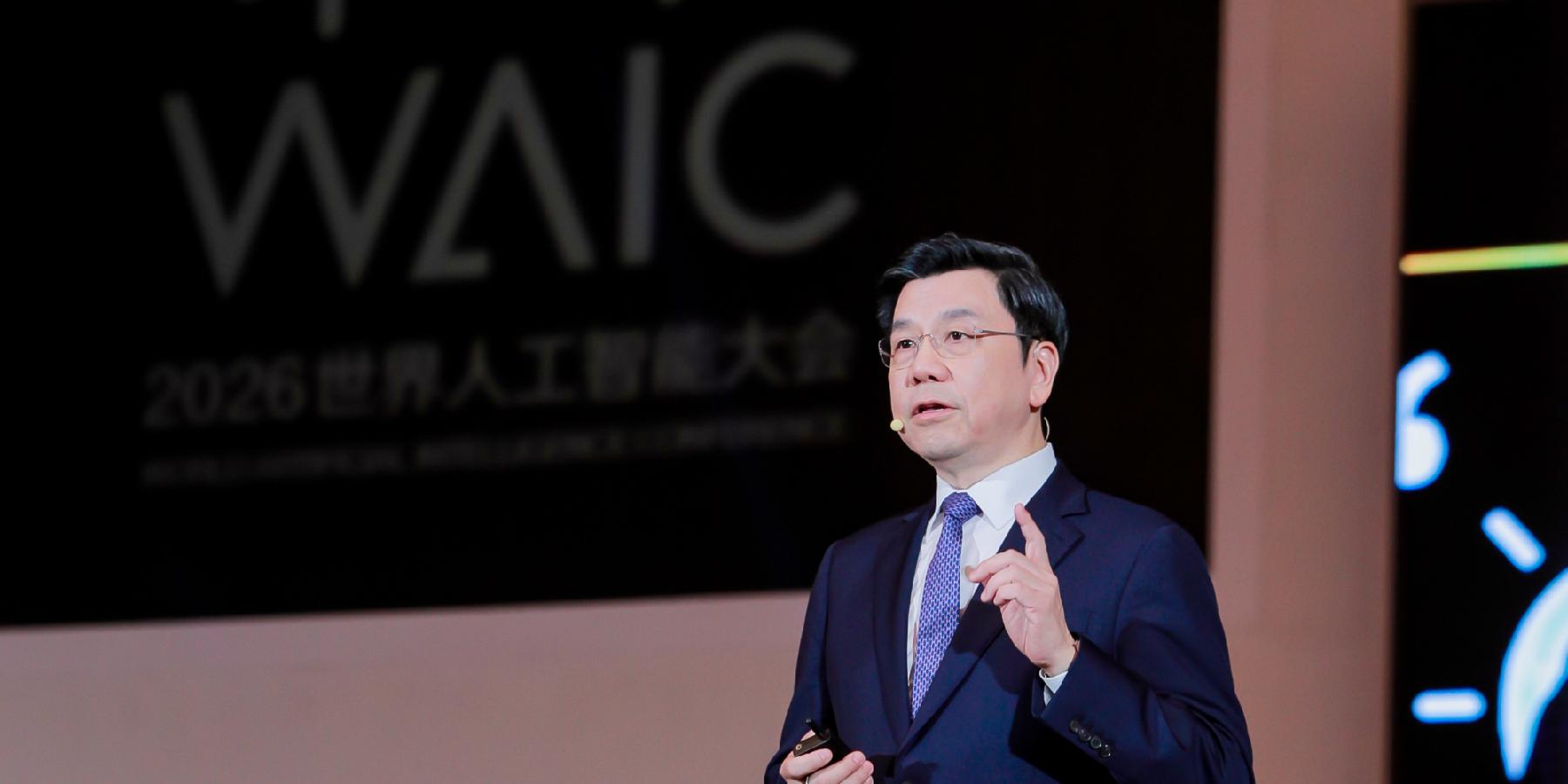
At the booth of WAIC 2026 (World Artificial Intelligence Conference 2026), the staff built a small partition with a long table, and Li Kaifu and I sat inside to have a conversation. There were three or four layers of people around the long table, and the lenses of their phones and Pocket cameras crossed the edge of the table, all aimed at him. During the four-day WAIC 2026, Li Kaifu stayed at the booth for three consecutive days, signing the new book "The Future of AI Has Arrived" for visitors or giving media interviews like this.
From establishing and leading the Microsoft Research Asia (later renamed as Microsoft Asia Research Institute) to establishing the Innovation Workshop, Li Kaifu has recruited the well-known Chinese AI experts of the early generation overseas, such as Zhang Yaqin and Shen Xiangyang, and has also invested in star start-ups such as Innovation Wisdom, Wen Yuanzhixing and Horizon. At the age of 62, he founded Zero One Thing by himself. At the beginning of 2025, Zero One Thing will no longer pursue ultra large base models, but instead shift its focus to enterprise level AI applications, exploring the implementation path of AI deep into core business scenarios and assisting in decision-making at the first level.
Boss AI "is a decision-making AI developed by Zero One Thing for the" number one position "of enterprises. Li Kaifu first applied this system to himself. Every current meeting within Zero One Thing will generate a complete written record. Whether Li Kaifu himself opens the door or not, the boss's AI can help him track and evaluate the effectiveness of the meeting, and combine the meeting content with various operational data of the company to analyze and discover business conditions beyond the text.
This means that the boss AI does not have to sit in the conference room, but has "attended" more meetings than CEO Kai Fu Lee. It once helped Li Kaifu coordinate and resolve the differences between two teams. Li Kaifu said. These differences were identified by the boss AI from the meeting minutes.
In the past, his position as the "number one" had to rely on layers of reporting to know what had happened in Zero One Thing; Now, meeting minutes and business data can be handed over to the boss's AI for "reading" first. When the boss's AI judgment differs from his prediction, Li Kaifu will request it to provide an evidence chain. If evidence can convince him, he will accept it; If the evidence cannot convince him, or if there are illusions present, he will not accept it. Boss AI still remembers what each team has promised. I may forget, but Boss AI won't forget. ”
At least in the matter of meetings, the boss AI knows even more than the real boss.
But this does not mean that AI "likes" meetings. If one day AI could read a company's business data, proactively identify problems, track tasks, and even directly drive execution, would it become the "conference terminator" as we expect?
The opening sentence of the article is Li Kaifu's answer: biased towards affirmation, but not so thorough.
Li Kaifu believes that the most important things that should disappear are the "purely informational meetings" and the "purely collective meetings". Once, a client from Zero One Thing called in a group of middle-level managers for a meeting. Everyone felt that they had to speak for five minutes to let the 'teacher' hear their opinions, and in the end, the meeting turned into a 'performance oriented' meeting.
But some meetings won't disappear. Meetings about people, strategy, and decision-making still need to be held, "said Li Kaifu. Before the strategic meeting, AI can conduct background research first.
Is your goal to have three-quarters of the company's AI employees? ”I continued to inquire.
He did not allocate the same proportion to all companies. Some companies may reach 99%, and one person company (OPC) may be just one person. ”The proportion of AI employees in heavy service companies may only be one-third. I think every company will be different
Having fewer meetings is certainly a happy thing. But the entry of AI employees into enterprises will not only change meetings. Organizing materials, writing meeting minutes, and conducting basic analysis, which were originally undertaken by many young people as entry-level jobs, are often the first to be handed over to AI. They may seem basic, but they are a path for many people to become familiar with the industry and gradually form their judgment.
I asked Li Kaifu, how should young people grow if all these jobs are handed over to AI?
In a few industries, there is this risk, but in most industries, I don't think it will happen. "Li Kaifu divided work into execution and decision-making. To make decisions, people also need to understand the execution process. But in his view, understanding execution does not mean that everything needs to be done by hand, it can also be accomplished by asking the AI responsible for execution. Why do we have to work hard on our own
This year, Zero One Thing recruited 4 fresh graduates from an international college of a top university. Li Kaifu is preparing to make them the first batch of DRIs (directly responsible individuals), each carrying a group of intelligent agents to complete tasks, responsible for the results, and become "micro CEOs".
As an AI company, we must become an AI native company. ”Li Kaifu said. In this new organizational structure, DRI will be the most likely group of people in the company to become partners, and in the future, income and option distribution will also be tilted towards them.
While advancing this matter, we will also gradually dismantle the existing management structure
The following is a conversation between the Economic Observer and Li Kaifu, edited.
Economic Observer: You have already run "Boss AI" within Zero One Thing, allowing it to read meeting minutes and business data. Has it ever told you something that was difficult to know in the past, such as disagreements that management didn't say out loud, or risks that just emerged in a certain business line?
Li Kaifu:Very many. I have identified some risks in team collaboration using this boss AI. AI helped me interpret some conflicting situations. After discovering it, I felt the need to participate. For these two teams, either change personnel, force them to work together, or I will personally monitor them.
I also noticed that there were some risks in the company before, and the team didn't want to bring bad news to me. I also understand that in some important directions that I require everyone to implement, such as some income that we attach great importance to, some income that is relatively average, some teams that have achieved it, and some teams that have not achieved it. Some teams have promised me things that some employees may want me to forget. I may forget, but the boss AI will not forget.
Then, I also used this system to find the person in the company who is best at managing AI.
Economic Observer: How was it found?
Li Kaifu:I will set some requirements. For example, if he is a person willing to take responsibility, not someone who wants to follow others, but someone who is willing to lead others; He is not afraid of risks and is good at managing AI with strong technical abilities.
After meeting these requirements, I will comprehensively analyze all meeting minutes, each person's semi annual summary, the boss's evaluation, as well as how much code each person has written, how much code they have written with AI, and the quality of these codes. I will also analyze them based on performance to provide decision-making references for me. I won't just look at one or two data conclusions, I value the global perspective that AI brings me more.
Economic Observer: Will tokens be used as a selection criterion due to their high consumption?
Li Kaifu:We will consider the usage of tokens, but we cannot just focus on quantity, as quality is equally important as quantity. If he wastes a lot of tokens, it won't work either; If we only look at the quantity, anyone can use more and more.
Economic Observer: "Number One" usually trusts their own judgment. If AI analysis is different from your intuition, how would you choose?
Li Kaifu:I will see its reasoning. We have been saying for many years that we hope for an explainable AI. That is to say, if it thinks a certain character should do A, but I think they should do B, then I will ask it: "Give me your evidence chain, do you have any evidence to prove that choosing A or B is better? ”Then I will read its evidence.
If the evidence can convince me, then I can listen to it; If the evidence cannot convince me, and there are even illusions involved, then I won't listen. Because ultimately, it is up to people to make judgments and take responsibility. No matter how intelligent or capable AI is, it cannot take responsibility.
So, the best combination is someone who is willing to authorize AI but takes responsibility for it themselves. After authorization, it is also necessary to manage AI well. AI is not the type of highly autonomous employee. You need to manage it well and make changes if you make mistakes. This requires someone who is very thoughtful, willing to take responsibility, and able to manage the AI team well.
When the CEO uses "boss AI", they play this role themselves. We will also look for a DRI (directly responsible individual) in the team, who is a 'micro CEO'. He also plays this role in a small task within the company. I will trust this micro CEO, hold him accountable for this matter, and then let him manage the AI. He is responsible, he manages, I can rest assured.
Economic Observer: Have you ever really changed your decision because of AI reminders? Can you provide a specific example?
Li Kaifu:It happens every day.
When I see a risk, I immediately look for the person responsible for handling it on Feishu: 'I heard there is a risk here, what's going on?' Sometimes there is indeed a problem, but after understanding the situation, I understand; Sometimes I also need to participate in resolving it.
I would also ask it questions such as' What are the three major legal risks we face when going public? '. Among the three risks listed in the given results, there are two that I have overlooked in the past. They are not a huge problem, just that you need to know about this matter in order to handle it; Only after processing can it be listed. Decision makers on relevant matters may not be aware that the company is preparing to go public, but some things may not be done rigorously enough. I understand, please make the necessary changes as soon as possible.
Economic Observer: You wrote in the book that the basic unit of future enterprises may become "a DRI plus a set of intelligent agents". Has the organizational structure of Zero One Thing already begun to adjust in this direction?
Li Kaifu:As for the restructuring of the company's organizational structure, we actually announced it on our third anniversary and we are currently looking for DRI. DRI will be the most likely person in the company to become a partner. In the future, we will tilt towards partners and DRIs in terms of income and option distribution, as these individuals will be the most important members of the company. So, we are leading by example in doing this. While advancing this matter, we will also gradually dismantle the existing management structure.
My manager knows about this matter. And I am very pleased that when I asked who is the best at programming with AI in the company, there were actually two of our Business Partners (BP). In this way, I know that our people are not just information transmitters, nor are they just managers responsible for managing human employees. These two types of people are useless in the future architecture.
So, as an AI company, we must become an AI native company and take the lead in promoting these reforms. Before I suggest this series of reforms to traditional enterprises, I must try, taste, and optimize it myself in order to introduce this concept and product to them.
Economic Observer: From the era of "Big Model Six Little Tigers" to now shifting towards enterprise AI and benchmarking Palantir, Zero One Everything has undergone significant changes. What was the most difficult organizational adjustment during this process? Are there any positions or management styles that were once important, but later found to be no longer suitable?
Li Kaifu:The most difficult process is actually to make all employees believe in me.
I see because I believe. The people who have followed me for many years, because of their trust in me, see. Some people's thoughts are, "I will do my duty well, and there will be no way to deal with problems in the future
There is also a group of people who think, 'How did the company change direction? It seems that this is not the company I joined originally, and what I used to do doesn't seem as important anymore.' So they will leave.
Their departure is actually okay. I will try my best to retain outstanding talents, and I also hope that everyone has better and more suitable development opportunities. But when they were still in the company, this kind of disagreement would affect the morale of the entire company. There is still uncertainty about how many people in the company belong to the third category. If two-thirds of the people belong to the third category, this company may not be salvaged. Fortunately, these three groups of people each account for about one-third, so when the third group left, we hired another group of people, and the company is now moving forward very healthily and quickly.
Economic Observer: However, there is also a situation where a person is willing to stay in the company, but their traits or the management position they previously held no longer align with the current needs of the company. How should we handle it like this?
Li Kaifu:We always have a demand for smart and model savvy people. After Zero One Thing All in toB, we have always had our own model training team, and they are now helping clients train industry models very well, so there is no problem.
However, a person engaged in AI technology, algorithm, and model research, whether they are willing to train models for clients or not, still feels that 'I am born with talent, and I want to train a world number one model'. If that's the case, he may have to leave regretfully. We will also give him good recommendations to enter the company that can best fulfill his dreams.
Economic Observer: If AI can already read a company's business data, proactively identify problems, track tasks, and even drive execution in the future, wouldn't companies need to hold so many meetings?
Li Kaifu:This question is asked very well. I think there are indeed too many of them now. But the goal you mentioned doesn't need to be deliberately pushed, it will naturally be achieved. Because when AI employees account for three-quarters of the company's workforce, they do not attend meetings, so our meetings will naturally decrease.
Economic Observer: So, your goal is for AI employees to make up three-quarters of the company's workforce?
Li Kaifu:Some companies may account for 99%, and one person company (OPC) may have only one person; Some companies may be service-oriented, with AI employees accounting for only one-third. I think every company will be different.
Economic Observer: Which meetings may disappear first? On the other hand, what things, no matter how much AI knows, still require everyone to sit together and discuss face-to-face to make decisions?
Li Kaifu:The pure transmission of information and the pure presentation for everyone need to disappear the most. Because when the company becomes flatter, there is not as much information to be transmitted, and it can be conveyed through better tools such as email and Feishu.
The biggest problem now is that many conferences are performance oriented. We have a partner, and when I went to meet him, he found a group of middle-level managers. Everyone thinks, 'I have to speak for five minutes to let the teacher know that I have insights.' However, if they really have insights, I am willing to listen, but they don't. So it became a performance oriented meeting, which is the most meaningless. Because those who feel the need to perform the most often lack real talent and knowledge. So I think this kind of meeting can also disappear.
Some purely executive meetings can also be reduced, as AI will become the main executive force in the future. What may be needed are meetings to discuss people, strategies, and make decisions. Strategic meetings also require AI assistance in doing homework and conducting background research. So, this part of the meeting is still necessary to exist.
Economic Observer: You mentioned in your new book that future employees can all become 'individual contributors'. But what AI is now taking over first is often the work that young people did when they entered the industry, such as organizing materials, writing meeting minutes, doing basic analysis, and writing simple code. If these entry-level jobs are all handed over to AI, will it make young people lose the process of familiarizing themselves with the industry and gradually forming judgment?
Li Kaifu:In a few industries, there is this risk, but in most industries, I don't think it will. Because I tend to divide work into two types: execution and decision-making. People are meant to make decisions. If you want to make a decision, you first need to understand the execution process. You can ask those AI responsible for execution, learn from them, why do you have to work hard on your own?
For example, if you want to become a CFO, do you really have to help employees fill out all their reimbursements? Is this really helpful for the Chief Financial Officer? It won't. The abilities that newcomers need to master are constantly changing. With AI, companies no longer need new people to take meeting minutes, but that doesn't mean they don't need new people anymore. We can instead encourage new people who are proficient in using AI to do more valuable things and achieve greater growth. If there are some jobs that AI can do, but humans must do them once to grow, then we can also let people do them together with AI.
Economic Observer: Does Zero One Thing still recruit fresh graduates? Do you want them to start from basic work, or do you want them to learn how to lead intelligent agents to work and be responsible for a complete result as soon as they enter the company?
Li Kaifu:Will do. We recruited four students from an international college of a certain university this year.
Economic Observer: What are the criteria for hiring them?
Li Kaifu:They can all become DRIs because this academy is essentially DRI's' Huangpu Military Academy '.
Economic Observer: Can you specifically explain why they have this trait?
Li Kaifu:Because the admission standards of this school are based on a person's independence, judgment, and whether they have accomplished something, not just academic performance.
Economic Observer: How do you judge if they have this ability when recruiting? Or just trust this school?
Li Kaifu:We have multiple rounds of recruitment, but of course, we still require applicants to have abilities and talents. But I will investigate: how did you accomplish this in the past? Is it because your father's company gave you an opportunity, or because you took a chance, or because you saw an opportunity and actively pursued it?
Is this possible because of your location and company, or is it because of you? These are what I want to understand.
Economic Observer: So, after they enter the company, they can bring their intelligent agents to produce a complete result and take responsibility for it, which is what you call DRI?
Li Kaifu:They are still waiting to start working. Yes, they are the first batch.
Economic Observer: Imagine that there will be many "micro CEOs" in companies in the future. But if every DRI can quickly initiate projects and mobilize resources with intelligent agents, the competition within the company may also become more intense. Will this turn businesses into a "super race horse" model: with more projects and faster speeds, but also more frequent resource competition and coordination conflicts?
Li Kaifu:No, not at all. Because the company's resources were limited in the past: if you need ten more engineers, other projects may have ten fewer engineers. Now, this resource is almost infinite. As long as something is meaningful, tokens can be used freely, but they should be used responsibly.
The company's management will also be assisted by AI to ensure that the tasks done by these DRIs are not duplicated. So there won't be horse racing unless we deliberately arrange it. For example, if there are two solutions to a problem, AI doesn't know which one is better, and we don't know either, then we can race horses. But it's not the kind of cruel race between people, but a very rational arrangement: no one knows which method is better, and this thing requires a lot of time, so each method should be done once. It's more like an A/B test than a horse race.
Economic Observer: Will AI ultimately lead to less or more management of the 'number one' position? More tired?
Li Kaifu:I won't manage more, but I will definitely manage deeper and more accurately, make more correct decisions, and uncover more risks. But I won't spend more time on such things. I will use 70-80% of the time to achieve a 300% to 400% effect.
Economic Observer: How was this achieved?
Li Kaifu:Because many things in the past were in vain. I arranged a meeting, but found out that it wasn't what I thought it was; I criticized an employee and found out that I had wrongly accused him. This type of thing used to be quite common, but now it is rare.
Economic Observer: You advocate for "one person companies" and believe that AI can enable small teams to complete tasks that could only be done by dozens of people in the past; On the other hand, the Palantir that Zero One Thing is currently benchmarking is a "heavy company" that requires a large number of engineers to go deep into customer sites and deliver for a long time. AI can make R&D and internal execution lighter, but understanding customers, building trust, and ultimately driving the system to truly land still seem very "heavy". Do you think typical companies in the future will become smaller and smaller, or will they become a new form of "small core team plus large delivery network"?
Kai-Fu LeeWe are indeed recruiting a large number of FDEs (Forward Deploy Engineers), which are engineers dispatched to customer sites, and this is necessary. Although our product has been commercialized and adopts a subscription system, it is not a plug and play product.
Establishing a company's ontology takes one to three months. The company's database, roles, and processes must be well established in order for customers to obtain sufficient results. Zero One Everything has already been done internally, I am just enjoying the process now; However, the construction process still requires several engineers to spend several months to complete.
So, if you call this' heavy ', then it may be' heavy '. However, compared to a company building its own system by hand, it takes three hundred engineers ten months to create a system that is only half as good as Palantir, which is called heavy.
Economic Observer: Currently, will AI weaken the scale advantage of large companies or make top companies stronger?
Li Kaifu:If the leading enterprise has more data, it can take advantage of this opportunity to form a closed loop with its decision-making center, making its AI smarter and smarter. This is the biggest moat. The size of the company is not the key, both large and small companies can achieve it.
The advantage of a large company is that it may indeed have a better understanding of the industry and a higher probability of achieving a closed loop. It may have some captive customers in its hands, which is its advantage. But its disadvantage is that the organizational transformation is slow, and it requires the ability of middle-level managers and experienced masters to be accumulated, which will make it run slower. So I think both small and large companies have opportunities.
Economic Observer: From now on, has the competitive landscape of domestic base models been settled?
Li Kaifu:No. I think there are three companies that seem to be leading the way now, all of which are relatively strong and heavy models, but their reasoning is also very good. We have all tried it and thought it was great. But there are also several others that cannot be ignored.
I think Alibaba's long-term investment, ByteDance's talent density, and Tencent's recent rapid growth all indicate that the competitive landscape has not settled. I calculated today that there are 11 companies still burning a lot of money and working hard to make base models, and I think eight or nine of them are very strong. In the end, it's impossible for everyone to run to the end, so it still depends on their performance in the next few stages. This competition is quite fierce, because once you fall behind, you are completely left behind.



 Subscribe