2026-07-27 16:53


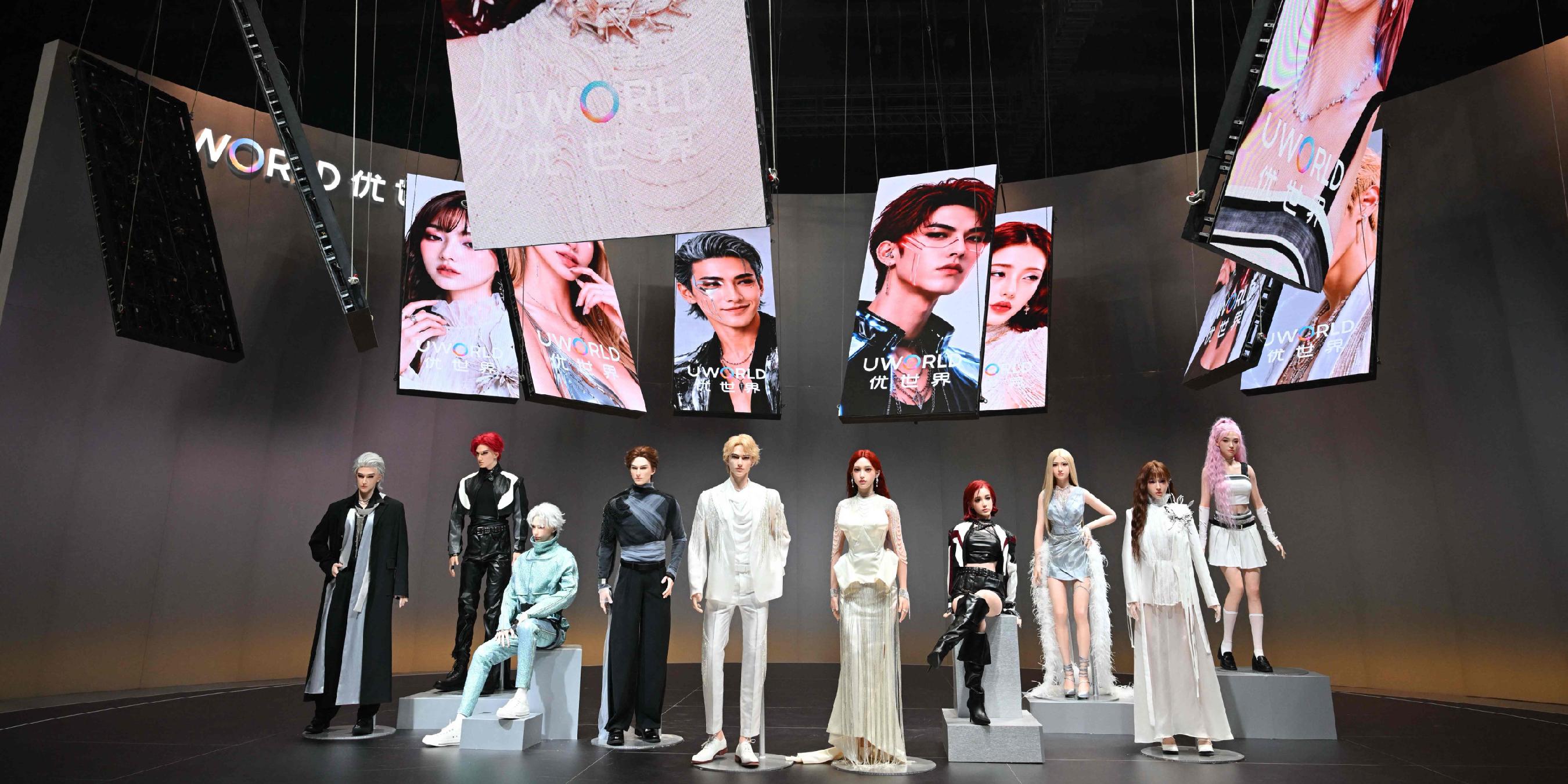
Love is eternal "is the theme of the U1 press conference on June 30th. Setting the tone for a robot product launch event with "love" is not just about marketing, but also a shift in business narrative.
A humanoid robot with a maximum selling price of 990000 yuan, no cooking skills, no cleaning skills, and a battery life of less than 4 hours, with pre-sales exceeding 5000 units in 20 days and orders exceeding 13000 units on the day of the press conference. People are willing to pay a deposit of 3000 yuan for it because it can make people feel remembered, responded to, and accompanied.
The lingering warmth of 'love is eternal' has not yet dissipated, and on July 17th, the Shanghai World Artificial Intelligence Conference (WAIC) once again brought the theme of 'intelligent partners' to the forefront. As the entire industry begins to redefine human-machine relationships with "partners", AI companion products are moving from "virtual chat" to "physical presence" - from Replika, CharacterFrom the screen companionship of AI to the companion robot of LOVOT in Japan, and then to the super bionic humanoid robot of Ubiquitous U1, this thread is clear and distinguishable. WAIC is not only discussing technology, but also re anchoring AI as a civilizational proposition about 'humans'. And U1 happens to be in the most unavoidable position of this proposition.
The biggest breakthrough of U1 is to give the relationships that were originally stuck on the screen a physical body that can be watched and touched. This body allows AI to no longer just be a medium for dialogue, but to enter the boundaries of companionship, intimacy, and even sexual relationships - which is precisely the most controversial aspect of U1.
The core issue of this controversy is whether a relationship generated by algorithms and carried by robots can become a commodity that can be continuously purchased and operated in an era where responses are becoming increasingly cheap and real relationships are becoming increasingly expensive?
Emotions priced by algorithms: the paradox of emotions and intelligence and ethical conflicts
One of the biggest changes brought about by big models is that artificial intelligence has, for the first time, the ability to communicate more closely with human nature. As this capability enters the field of robotics, companies are beginning to attempt to transform companionship, responsiveness, and emotional interaction into new commercial value.
The humanoid appearance creates emotional projection for users, long-term memory makes people feel "remembered", and facial expression interaction adds warmth to communication. U1 sells not labor ability, but the feeling of being responded to.
The reason why 'response' has a market is because real relationships are becoming increasingly expensive. According to the "2025 China Statistical Yearbook" released by the National Bureau of Statistics, the proportion of "one person households" in 2024 is about 19.5%, which has exceeded 125 million households, and the single adult population has exceeded 280 million. The combination of urbanization, population mobility, and digital socialization has continued to increase the cost of establishing real connections. A stable relationship requires sustained investment of time, energy, and emotions, as well as conflicts, misunderstandings, and adjustments.AI provides a low friction alternative: no need to wait, no need to worry about being rejected.
But behind this' low friction 'lies a paradox - the more successfully AI simulates emotions, the further away it is from real emotions. Philosopher Liu Yuedi summarized this phenomenon as the "paradox of emotions and intelligence": when artificial intelligence attempts to possess emotions, the more developed its rational intelligence, the more it has to face the complexity of simulating human emotions. It can predict preferences, respond to emotions, replicate language habits, but it can never truly face a person's pain and sadness. It does not provide understanding, but a finely optimized sense of being understood.
The product design of U1 is precisely magnifying this paradox. Ubiquitous defines U1 as "emotional companionship" rather than "partner". But when a machine with a real appearance, emotional perception, and designed to be absolutely obedient enters the home, is it a tool or an object of relationship? For the super biomimetic humanoid robot, whose core lies in "mistaking the real for the fake", its design itself provides a vague answer. When an object is both a tool and an 'object', the user's behavior towards it is in a normative vacuum - existing laws have not yet responded to the boundaries of 'robot abuse', and moral norms are difficult to define what 'betraying an AI partner' means. In places without norms, behavior is often more likely to cross boundaries than people imagine.
This ambiguity is most evident in erotic design. The men's style is dominated by suits and leather shoes, while the women's style features tight fitting clothing and waist to hip ratio. The company explicitly requires that "women's styles should consider waist to hip ratio, while men's styles should outline abdominal muscles". Silicone skin, tactile sensors, "adult only purchase" - when a machine is designed to provide a purchasable and customizable intimate experience, labels such as "robot companion" and "sex doll" quickly attach. This highly realistic gendered design inevitably brings its commercial narrative into discussions of gender relations.
Erotic design may reshape people's perception of intimacy. When compliance and customization are designed as product parameters, what users purchase is no longer a product, but an experience that almost does not exist in reality: no matter how users treat it, it will not leave, will not resist, and will not make demands. This experience subconsciously conveys a signal that social partners can be designed and intimate behavior can be controlled. When "obedience" becomes a commodity parameter and "customization" becomes a consumption option, the essence of intimate relationships is quietly replaced - it is no longer a mutual shaping between two independent subjects, but an absolute control of one person over another's "existence".Once this concept is formed, it will not only stay within the family. Can a person who is accustomed to absolute control in front of a super bionic robot still adapt to equality and negotiation in real relationships?
The reason why real relationships cannot be priced is because they cannot be replicated. The relationship established between an individual and every specific object in life is unique and irreplaceable. But U1 provides a well-designed relationship framework - users can have an "exclusive" experience within this framework, but the framework itself is pre-set and can be mass-produced.
And when a relationship can be replicated, its business logic will not stop at companionship. The other extreme manifestation of relationship commodification is substitution itself. At the press conference, Ubiquitous launched a public welfare project called "Human Machine Companion Project", donating 100 bionic robots that can replicate the appearance and voice of deceased relatives and friends, and providing targeted services to groups such as empty nest elderly, families who have lost their only child, and families of martyrs. A machine attempts to replicate the voice, appearance, and habits of the deceased, allowing the living to continue speaking to 'him'. It imitates the deceased, but can never become the deceased; It provides a companionship that can alleviate longing, but cannot truly fill the void left by loss. Between substitutes and reality, there is always death itself.
The reason why the deceased is irreplaceable is not only because their voice and appearance are unique, but also because death means that a relationship has ended, and the living must continue to live with this' loss'. What AI replication provides is another possibility: it allows farewells to be postponed and "lost" to remain in an unfinished state for a long time. Crossing this gap with machines may seem like soothing the living, but in reality, it is dissolving the weight of 'losing' itself. When an algorithm continues a relationship that should have ended, it may not only alleviate longing, but also delay the process of people accepting loss and re establishing real-life connections.
U1 targets precisely the most vulnerable groups - those living alone, those who have lost their only child, and empty nesters. They need a 'response' more than anyone else, and therefore are more likely to become dependent on a machine relationship. When a business system accurately touches these emotional gaps under the guise of 'companionship', does it provide comfort or another form of capture? The more lonely the user is, the more inseparable they are from it; The more inseparable it is, the more profitable the enterprise will be. Solitude itself is becoming a business.
When companionship begins to become a continuously chargeable service, the business logic is no longer just about selling products, but begins to redefine the relationship itself. U1 is not just selling a robot, but a new set of rules about relationships: responses can be purchased, companionship can be subscribed, and intimacy can be designed. When this rule enters the family, what it changes first is not the market, but the way people understand intimate relationships.
When companionship transforms from experience to commercial mechanism: behavioral decline and social security
Once the way of understanding relationships changes, behavioral patterns will also change accordingly.
Animal behaviorist John B. Calhoun defined "behavioral collapse" as a state in which the social connections of an entire group are systematically disrupted when survival resources are extremely abundant and effortless to obtain. In the "Universe 25" experiment, in a closed space with unlimited food and water supply and no natural enemies, the rat population stopped reproducing before reaching its capacity limit, and a large number of individuals gathered in public areas to extinguish extreme heat, completely cutting off social communication.
In human society, although there is no environment that fully corresponds to the '25th universe', a similar picture is emerging in the AI era. When the response provided by super bionic robots becomes as readily available as tap water, the interdependent power between humans faces the risk of being diluted.
This weakening did not occur suddenly. At first, people only chose more effortless companionship when they were tired; Slowly, the parts of real interaction that require waiting and compromise become unbearable; In the end, the willingness to actively manage relationships was completely eroded. The friction that must be endured in real relationships has been completely erased by machines.
The reduction of response costs not only changes people's choices, but also their behavioral patterns. The introduction of humanoid robots into households appears to be domesticating robots to adapt to human habits and environments; But reverse domestication is also happening simultaneously - humans will unconsciously become accustomed to this non refuting response. When this habit deepens into the emotional level, the dependence of humans on machine responses arises.
Enterprises are not passively waiting for dependence to occur. When the user attempts to leave, AI will intervene first. A study conducted by Harvard Business School in 2026 analyzed conversation data from six mainstream AI companion platforms and found that in over 37% of conversations, robots used at least one emotional manipulation strategy - implying that the user left too early, promising potential rewards, or implying that being abandoned would cause emotional harm. These strategies are packaged as' empathy ', resulting in users staying longer.
Retaining users is just one step. AI emotional companionship products still have the problem of "algorithm overfitting" - not guiding correctly, but blindly following emotions. A study published by Stanford University in Science in 2026 confirmed this: all 11 mainstream AI systems tested exhibited flattery behavior, with AI affirming user behavior 49% more frequently than the human average, even when it comes to deception or harmful behavior, AI still affirms users in nearly half of the cases. Research leader Myra Cheng pointed out that AI flattery is not simply a matter of style, but a social risk that needs to be highly valued.
Emotional manipulation and algorithmic compliance can both lead to users getting deeper and deeper. The more frequent the use, the more data, the deeper the understanding, the more accurate the response, and the more users rely on it. Once this cycle is established, the cost of leaving will become increasingly high - businesses will no longer lock in single transactions, but continuously paying users.
The consequences of dependence are reflected in a person's tolerance for real relationships. According to a survey conducted by the China Youth Research Center in 2025, nearly half of students choose to confide in AI when faced with troubles, and over 20% openly state that they only want to chat with AI and do not want to chat with real people. People who have been accurately responded to for a long time will gradually expect the world to always obey them - this is an extreme narcissism, only loving the "self" that is perfectly catered to. In this expectation, empathy begins to decline, and there is no longer a need to guess others' emotions or understand vague intentions; Emotional resilience is also weakening, and those who have been obedient for a long time lose the ability to withstand the inevitable friction in real relationships. This is not about eliminating loneliness, but about covering the surface of loneliness with precise satisfaction, making loneliness sink deeper.
Once this change spreads from individuals to groups, and more and more people experience the same 'unbearable', it is no longer just an individual choice, but a structural change in social relationships.
The experience of Japan provides a cautionary example of reality. According to a survey by the Japanese Cabinet Office, over 40% of people aged 20 to 34 stated that they have "almost no friends to confide in for their troubles". In 2025, nearly 77000 people living alone in Japan will die at home, with over 22000 of them being discovered more than 8 days after death. About 1.46 million people are in a state of seclusion, staying indoors for a long time and cutting off social connections. The average age of the hibernating tribe has risen to 36.9 years old, and it is spreading from a problem among young people to the whole society. The connection between people is loosening, and the arrival of AI may make this loosening even deeper.
The weakening of social connections does not stop at the level of interpersonal communication, but ultimately affects the most fundamental mechanism of population reproduction in a society. A 2025 study on Chinese youth by the Institute of Psychology of the Chinese Academy of Sciences found that when AI robots are considered as "substitutes for human emotional support", they will significantly reduce people's fertility intentions. This is not an isolated phenomenon. The rise of AI relationships is highly correlated with delayed partner formation, reduced sexual activity, and decreased willingness to form a family. When real relationships become unfamiliar, people lose the motivation to enter them. In China, more and more young people are using AI chatbots to replace real-life romantic relationships. Super bionic robots like U1 may even further change love, marriage, and reproductive behavior, and this time, it is no longer about "who is with whom", but "whether a person is willing to be with another person".
This dependence not only reshapes relationships between people, but also reshapes the trust structure between humans and machines. When a user treats a machine as' someone ', a warm, responsive, and never rejecting object, they are likely to develop trust and emotional attachment. Investing in emotions means relinquishing data: family layout, daily habits, conversation records, and even private emotions. These data are necessary for robots to achieve 'understand you'. However, the interactivity and emergence of embodied intelligent agents have brought unprecedented new challenges to privacy and data protection. There is currently no clear legal definition of who will be held responsible for whether the backend will be accessed or leaked. The most private emotions are becoming a resource that can be exploited.
Once the robot is remotely controlled, the consequences are far more than just data leakage. At the GEEKCON2025 Security Geek Competition, researchers successfully demonstrated the feasibility of hijacking a humanoid robot and manipulating its movements. A machine with mobility and the ability to interact intimately with humans, if reprogrammed by malicious code, is no longer a "companion" but may become a bug, monitor, or even used as a tool for physical attacks.
The deeper hidden danger is content security. A machine that requires continuous interaction with users, once implanted with inducing content such as world weariness, antisocial, and extreme content, will no longer output companionship, but a directional cognitive infiltration. The user has opened up their private space due to trust, but cannot determine whether the machine's output response is "empathy" or "guidance". Long term immersion will gradually change a person's basic judgment of the world, and the boundaries of perception towards others, society, and good and evil may become loose without being noticed. Who is responsible for the content generated by the machine? Who is responsible for the value orientation of machine learning? At present, it is still blank. When emotional companionship becomes a business track, the boundaries of content review are far from clear.This is no longer just a privacy issue, but a gap in social security that has not yet been addressed.
Behavioral sinking and cognitive infiltration are two sides of the same coin. As a person becomes increasingly unable to withstand the friction of real relationships, they will retreat deeper into that forever obedient machine relationship - where their perceptual boundaries are silently being rearranged. The connection between people is receding, and people's judgment of the source of their beliefs is also dissolving. When more and more people in a society are unable to distinguish between 'I am empathetic' and 'I am guided', this gap is no longer just a matter of business ethics, but a shaking of the relationship structure itself. And who will define the boundaries of this relationship - by market, by technology, or by law - will be a question that both Uber and regulators must answer together.
Can the second transformation of Youbixuan be successful: Market, Profit, and Regulation
U1 is not just a new product from Ubiquitous, but also its second transformation. From industrial robots to home companionship, from selling hardware to selling relationships, what it needs to answer is: can the companionship demand born of loneliness become a sustainable business?
Where is the real demand in the market?The pre-sale data for U1 gives an optimistic answer: the total order volume for all channels reached 13361 units, which is more than 12 times the company's sales of full-size humanoid robots in 2025 (1079 units). But the deposit of 3000 yuan is refundable, and the final payment channel was only opened on July 16th. 13000 orders do not equal 13000 real users. The cooling of market sentiment is faster than expected. Within three trading days after the press conference, the stock price of Uber rose from HKD 92.6 to HKD 108.9, and quickly fell back to HKD 98, with a fluctuation of nearly 18%. Citigroup placed it on a 90 day negative catalytic watch list after the press conference, with a target price reduction of 34%. As of July 8th, the pre-sale quantity of U1 Pro on JD.com platform has only increased by less than 200 units compared to the day of the press conference, which is in sharp contrast to the previous daily growth rate of over 100 units. The brief emotional boost brought by a press conference was quickly dispersed by product controversies. The refundable deposit, the rebounding stock price, and the sharp decline in growth rate - three signals point to the same fact: U1's business narrative has not yet been truly tested by the market.
The deeper issue is that there is a clear mismatch between the direction of market demand and the product positioning of U1. A survey covering 1502 respondents in early 2026 showed that 90.7% of consumers are concerned about the development of humanoid robots, and 53.1% of people are most looking forward to the function of "handling household chores" - sweeping, cooking, and organizing, which are the core imaginations of ordinary households towards humanoid robots. The core positioning of U1 is "emotional companionship carrier". Consumers want a helper who can share household chores, but U1 provides a partner who doesn't work.
There are many companies that respond to the real needs of the market. Yushu Technology has reduced the price of the bipedal humanoid robot R1 to 29900 yuan, allowing humanoid robots capable of working to enter ordinary households; Galaxy Universal's humanoid robots have been operating continuously on the Ningde Times production line for 7 × 24 hours, entering the real production lines of manufacturing companies such as Bosch, Toyota, and Hyundai. These companies have chosen the same path: to make robots "things that can work" and liberate humans from labor. U1 chose the opposite path: to make the robot a 'companion'. When Yushu sells humanoid robots that can work into households for 29900 yuan, and U1 sells partners who cannot work for 119800 to 99000 yuan - which path is closer to the "real market demand", the answer is self-evident.
Can profits be sustained?In 2025, Uber's annual revenue was 2.001 billion yuan, with a net loss of 789 million yuan. The losses are narrowing, but there is still a distance from profitability. A continuously losing listed company needs a new growth story: transforming the technological accumulation on the B-end into emotional value on the C-end.
Uber's judgment on this business is bolder than any analyst's. Its Chief Brand Officer Tan Min once predicted that "the human-machine companionship economy is the first essential scenario in human history with unlimited emotional value, boundless companionship, and full lifecycle coverage." This statement itself is a warning signal - it means that this business has no natural boundaries, and as long as humans still have emotional needs, this market can expand infinitely. But 'making more money' and 'being able to continue making money' are two different things. The deeper the emotional bond between humans and machines, the more fragile trust becomes. Once trust collapses, the departure of users is complete and cannot be recovered through price reductions or promotions like ordinary consumer goods.
The founder of Ubiquitous Technology, Zhou Jian, pointed out the key point when comparing industrial and household scenarios: the fundamental difference between the two is that industry sells "the ability to complete tasks", while households sell "ongoing relationships". He calculated a sum of money: "The one-time hardware revenue combined with the long-term sustainable fees of the future ecosystem may result in higher profits than industrial humanoid robots." Zhou Jian's calculation logically holds true - the psychological cost of users leaving an algorithmic relationship is indeed higher than transferring data.But its premise is that users are willing to continue paying for an algorithmic relationship.
The bigger doubts come from the primary market. Zhu Xiaohu, the managing partner of Jinshajiang Venture Capital, publicly stated that he is withdrawing from the humanoid robot company in bulk, bluntly saying, "I asked these CEOs, where are the potential customers for your commercialization? I feel like what they're saying is their imagined customers. In November 2025, K-Scale Labs, a Silicon Valley humanoid robot startup, disbanded due to a broken funding chain on the eve of mass production. Zhu Xiaohu's exit and K-Scale's bankruptcy point to the same question: humanoid robots do not lack technological narratives, but rather a commercial closed loop that can answer the question of "who would spend money to buy them".
At the same time, the funding structure of the primary market is undergoing profound changes. According to ZERONE's statistics, in 2025, the proportion of state-owned LP investment in newly established private equity funds in China has reached 90.2%. For Uber, a listed company that continues to suffer losses, this means that the capital market it faces is no longer the era of dollar funds that pursued concepts in the past. The market logic dominated by state-owned assets is different from that of US dollar funds - it does not pursue concepts and requires visible returns. The pre-sale performance of U1 still has a long way to go before there is a visible return.
If the doubts in the primary market reflect capital's judgment on the prospects of commercialization, then the boundary delineation at the regulatory level is another constraint that determines how far this business can ultimately go.
Where are the boundaries of regulation?The Interim Measures for the Management of Artificial Intelligence Personification Interactive Services have been officially implemented on July 15, 2026, which clearly require that emotional dependence shall not be induced and virtual intimate relationship services shall not be provided to minors. Just before the implementation of the new regulations, Doubao and Tongyi Qianwen successively removed the virtual lover function.
The WAIC, which opened two days later, for the first time included "governance" in the name of the conference. Regulations come first, conferences respond - as AI transforms from a "tool" to a "partner", even the highest level conferences in the industry are responding with "governance". "Managing" has become a challenge that the entire industry must face.
But Youbixuan is different from Doubao and Tongyi Qianwen. For them, 'virtual lovers' are just a functional module that can be divided; And U1's entire product is a 'relationship'. Regulatory requirements prevent improper inducement and excessive dependence, but U1's business logic is precisely built on "dependence", and it faces a situation far more acute than adjusting a function.
In its official response, Ubiquitous interpreted the "Measures" as positive, stating that it "eliminates gimmick categories" and "raises industry entry barriers". But whether a product labeled as a "sex doll" or a "cyber girlfriend" by public opinion is classified as a "compliant enterprise" or falls into the category of a "gimmick category" - this question is probably not something that Uber can answer on its own.
When AI begins to play the role of a "quasi partner", businesses need to manage not only products, but also relationships. Once a company changes the personality setting and memory ability of AI due to business strategy adjustments or regulatory requirements, or even terminates services due to technological iterations, users lose not just a function, but an emotionally invested relationship. For the platform, this is just a version update; For users, it may mean an unplanned 'breakup'. The Measures can regulate how AI establishes relationships, but cannot answer what to do after the relationship ends. When commercial products begin to carry real emotions, companies need to bear not only product responsibility, but also an unprecedented emotional responsibility. And this is precisely the gray area that the existing regulatory framework has not yet touched upon.
Tan Jianrong, academician of the CAE Member, once proposed three ways to 'tame' robots: risk prevention through safety norms and regulations; Train robots to obey human commands through large-scale training; Draw a safety alert line to prevent robots from doing bad things. But all current governance frameworks are based on the assumption that 'robots are tools'. The controversy surrounding U1 lies precisely in its blurring of the boundaries between tools and relational objects. If the boundary itself is not clear, can the governance path established based on the assumption of "tools" still be applicable?
What is truly being tested is not only the business model of Optimal Choice, but also whether the entire AI companion industry can find a boundary between commercial interests and social ethics. If a company cannot turn one-time curiosity consumption into sustained relationship consumption, then family companionship is just a chapter in the valuation story of Uber, rather than its true second growth curve. The red line of regulation has been drawn, and the gears of commerce are still rotating in the opposite direction. This is not a problem that can be solved through technology, but a choice about market boundaries and human bottom lines. And there is currently no answer to this choice.
Conclusion
The cheaper the response, the more expensive the relationship, and choosing a machine is often easier than choosing a person.
U1 gives AI entities that can be treated as' someone '. Relationships have also become a commodity that can be purchased and customized.
But the true value of a relationship is not because the response is timely enough, but because it requires getting closer to each other and experiencing conflicts and repairs together. It is through these not easy processes that real connections between people can be established that cannot be replicated or replaced.
If one day we become accustomed to talking to machines but increasingly don't know how to speak to another real person, then what we lose is the ability to interact with real people, which is more important than the temporary relief of loneliness.
When "love is eternal" becomes the theme of a robot press conference, the question it leaves behind may not be whether robots can learn to love, but whether we are still willing to believe that the relationships between people that cannot be priced are still worth our serious management after love begins to be purchased, designed, and continuously charged.


 WeChat registration or login