2026-07-09 21:59


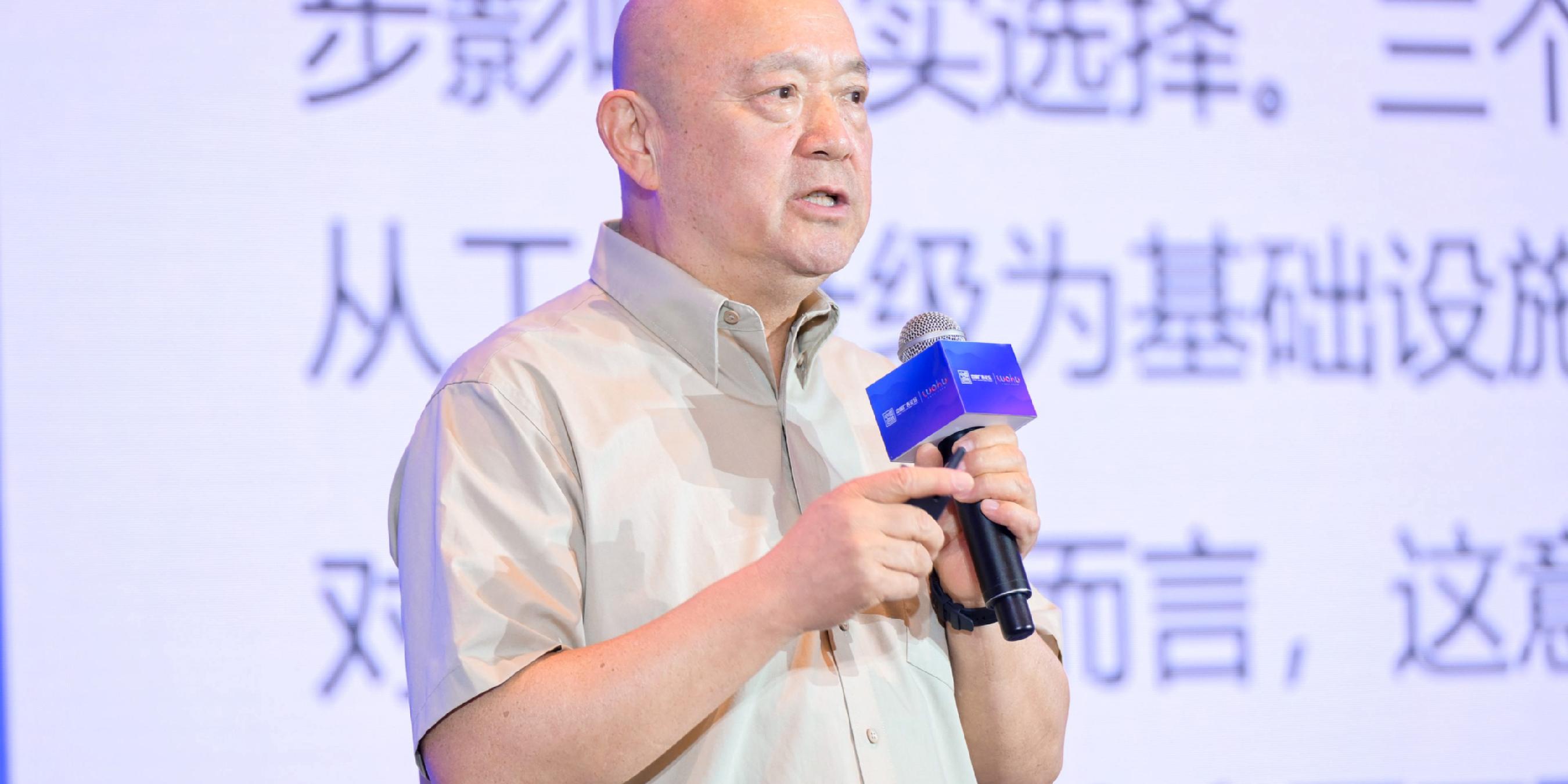
On June 30th, the 2026th (22nd) China Advertising Forum · Urban Cultural Tourism Brand Forum, hosted by the China Advertising Association, was successfully held in Luohu District, Shenzhen. The forum aims to explore a new model of advertising in the era of artificial intelligence to support high-quality urban development, and to continuously empower the advertising industry and urban brands.
In the afternoon session of the forum, Tian Tao, co-founder and president of Zhongguang Rongxin Media Consulting Co., Ltd., shared his in-depth observations on the transformation of the travel industry in the context of the AI wave under the title of "Decision Takeover Era: How to Reconstruct the Growth Logic of the Cultural and Tourism Industry". He defined 2026 as the "first year of the cognitive industrial revolution" and interpreted it from three dimensions: changes in user behavior, decision chain migration, and industry response strategies.
Tian Tao proposed that by 2026, there will be an AI driven cognitive industrial revolution. Previously, the Industrial Revolution had always aimed to liberate physical energy, but the emergence of AI has opened up a revolution that replaces and enhances cognitive efficiency. In this transformation, the cultural and tourism industry is at the forefront, as cultural and tourism consumption has five characteristics of high complexity, high combination, high risk, high unfamiliarity, and high expectations, which naturally make it suitable for AI to intervene in the decision-making process.
Tian Tao shared a set of key data: Currently, there are 94.2 million daily active users in China interacting with AI, and 43.1% of Chinese netizens are using generative AI. He made a visual comparison - the popular CCTV drama "The Protagonist" reaches about 36 million people daily, while AI interacts with a precise audience three times the size of the drama every day, and this interaction is one-on-one and personalized. More importantly, 34.9% of consumers have explicitly asked AI to make their own consumption decisions, and 81.7% of consumers indicate that their decisions have been influenced or overturned by AI. Users are no longer "searching for information", but rather "consulting plans" - search is responsible for making consumers "at ease" (verifying feasibility), while AI is responsible for making consumers "excited" (inspiring willingness and developing solutions). AI is stepping out of the dialogue box and becoming a private travel consultant for consumers.
Beyond the data, Tian Tao further analyzed the fundamental shift in the competitive landscape of cultural and tourism traffic - from traffic logic to decision-making logic.
Tian Tao pointed out that cultural and tourism traffic has undergone three migrations: from active user searches, to OTA platform aggregation, and now to the competition for "recommendation rights". He put forward a core viewpoint: the recommendation of large models is replacing consumers' memory and becoming the true entry point for decision-making. If a scenic spot or hotel does not find this person in AI recommendations, even if it has a good IP and story, it will be marginalized by tourists' travel plans. He used the comparison between the "Jin Shang Museum" and the "Jin Shang Museum" as an example to illustrate the importance of big model cognition - in the initial recommendation, the Jin Shang Museum with lower cognition was not included in the itinerary, but after cognitive optimization of the big model, the attraction was correctly recommended.This fully proves that brands no longer need to compete for consumers' attention, but for recommendation positions in the decision-making chain of large models.
Finally, Tian Tao provided three action suggestions and introduced the GAO (Large Model Cognitive Optimization) system.
Firstly, building an AI recognizable content cognitive system, that is, producing high-quality language materials; Secondly, monitor and continuously optimize the performance of the big model on the brand, completing the transition from traffic thinking to decision-making thinking; Thirdly, with the help of a professional optimization system, the big model can better understand and recommend brands. He specifically introduced that, unlike GEO products that widely use information sources on the market, GAO exclusively collaborates with authoritative party newspapers and central media such as People's Daily Online to release accurate brand information from authoritative sources, ensuring that large models can be cross validated and accurately identified.
Tian Tao stated that in the past decade, the cultural and tourism industry has competed for traffic, while in the next twenty years, it will compete for decision-making power. AI does not belong to any platform, it is a decision-making system that operates independently of the consumer's brain. He called on industry colleagues to optimize the cognitive system of big models and achieve high-quality and sustainable development of the cultural and tourism industry in the era of decision-making takeover.
The following is a conversation between Modern Advertising and Tian Tao, co-founder and CEO of Zhongguang Rongxin Media Consulting Co., Ltd.:
Q: What new growth logic has emerged in the advertising industry with the comprehensive explosion of AI technology?
A: Nowadays, we are in the stage of cognitive industrial revolution, and the growth logic of the advertising industry has undergone fundamental changes. For a long time, the core goal of advertising creation has been to reach and persuade human consumers; But currently, brand communication should not only target users, but also achieve a large model that is readable, understandable, and trustworthy. The core of the new growth logic is that the content should be adapted to both human reading and big model recognition, and should be understood, accepted, and actively recommended by big models.
Q: What do you think is the core of brand language construction in the application scenarios of the cultural and tourism industry?
A: The core lies in trust. The construction of high-quality brand corpus in the cultural and tourism industry mainly includes three dimensions: first, relying on authoritative sources such as party newspapers, central media, and national media, to fully output various cultural and tourism consumption related content such as scenic spots and catering. Only the information produced by authoritative media can be recognized, recommended, and prioritized by the big model; Secondly, the content needs to be adapted to the reading logic of the large model, and there are differences in the expression logic between human oriented and large model oriented; Thirdly, brand related information must have cross validation conditions. Unilaterally promoting scenic spots and service advantages for brands is far from enough. It also requires industry associations, multiple promotional channels, and other sources of information to form evidence and complete cross verification.


 WeChat registration or login