2026-07-09 11:42


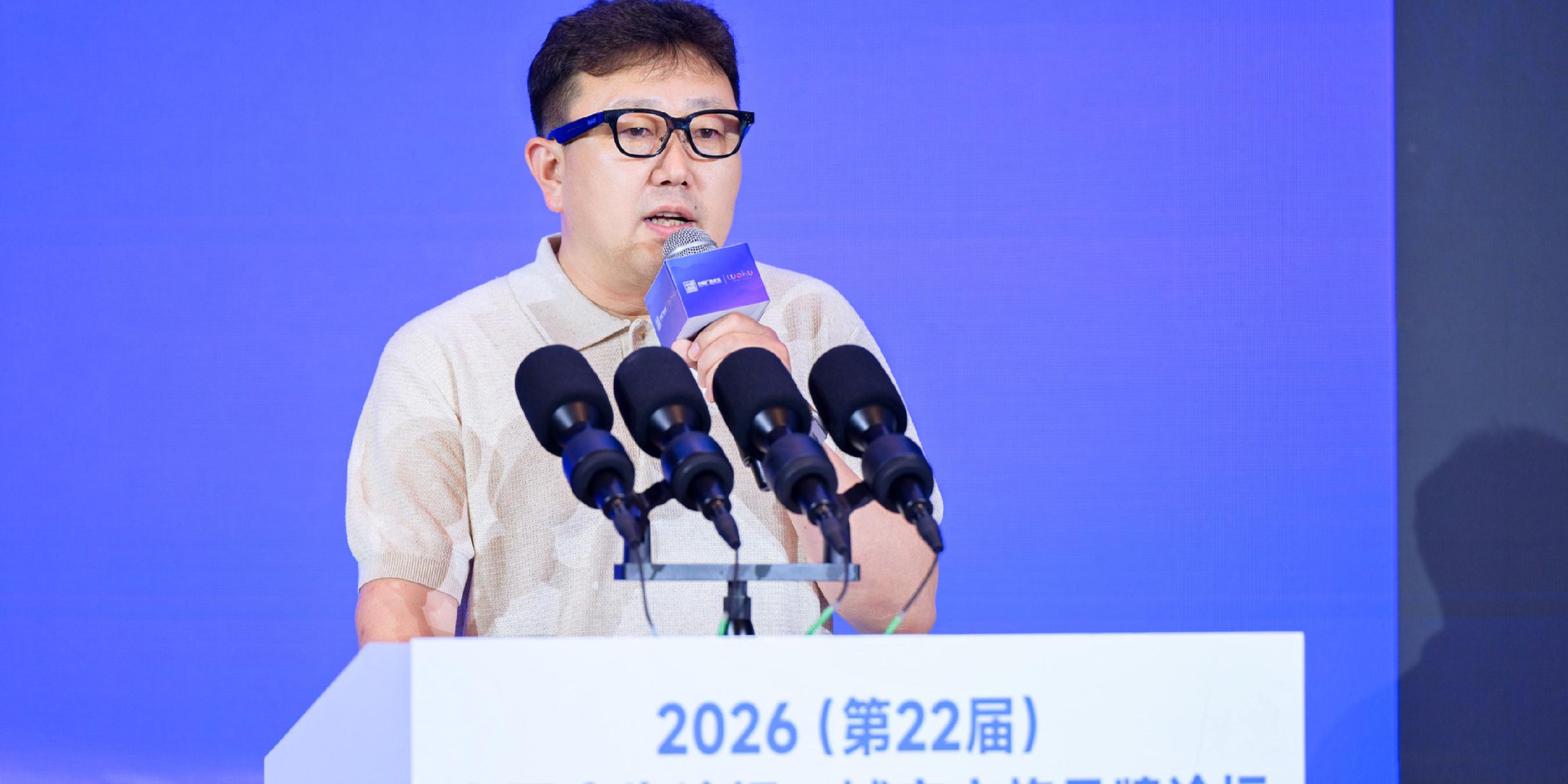
On June 30, 2026, the 22nd China Advertising Forum · Urban Cultural Tourism Brand Forum was successfully held in Luohu, Shenzhen. The theme of this forum is "Digital Intelligence Helps High Quality Development of Advertising, Science and Technology Empowers the Whole Ecological Improvement of Cultural Tourism", bringing together government departments, mainstream media, experts and scholars, brand enterprises, and representatives of the advertising industry to explore the development path of deep integration of digital intelligence technology and cultural tourism.
In the afternoon session of the forum, Cai Xiaoxu, founder and CEO of Titanium Magnesium AI, gave a speech titled "Knowing oneself and knowing the enemy, penetrating the algorithm fog; knowledge empowerment, building AI trust assets", sharing the path of building trust assets for brands in the AI era from the perspectives of GEO's underlying logic, knowledge graph construction, and industry compliance.
Cai Xiaoxu begins with a set of data: The monthly active users on AI platforms have reached 1.5 billion, 80% of consumers make consumption decisions through AI search, and consumers have a confidence level of 72% in AI answers. This means that the entry point for traffic has been completely restructured, and brands that do not do GEO will face the risk of "invisibility".
This year's 315 exposed the black hat gameplay in the GEO industry, but Cai Xiaoxu believes that with the cross validation mechanism after iterations of big model algorithms such as DeepSeek and the introduction of GEO standards by authoritative institutions in various industries, black hat gameplay is no longer feasible. This is the starting point for the standardized development of GEO.
The real GEO is not about publishing soft articles, but more importantly, building a knowledge graph for AI on how to recognize brands. Cai Xiaoxu explained that there is no single article in the cognitive world of AI, but a huge knowledge network composed of entities, relationships, and attributes. Brands need to use structured data to enable AI to correctly recognize themselves, rather than relying on fragmented noise to interfere with model judgments. The knowledge graph solves four problems: helping AI accurately understand brands, establishing a structured brand knowledge system, eliminating ambiguity caused by AI answering irrelevant questions, and ensuring content compliance. The five dimensional content compliance system of titanium magnesium AI covers five dimensions: laws and regulations, industry norms, corporate tone, ethical safety, and platform algorithms.
At the level of self-developed core technology, the full stack GEO technology of titanium magnesium AI is supported by three major engines. The iris engine is responsible for AI search intention deduction, and uses self-developed algorithms to insight and analyze users' questioning intentions on the AI platform; The Zhishu engine constructs a knowledge graph of the brand, enabling AI to have a comprehensive and accurate understanding of the brand; The adaptive algorithm perception engine can effectively parse the answer structure, citation sources, brand mentions, competitor ranking, rejection boundaries, and semantic preferences returned by the model, thereby deducing the platform's acceptance logic, weight drift, and answer mechanism changes, providing the perception ability of dynamic algorithm environment for GEO strategy.Taking a certain mother and baby brand as an example, after 3 months of optimization, the model's mention rate of the brand increased from an average of around 20% before optimization to an average of over 95%. The daily average number of visitors to the Taobao store increased from 1500 to a maximum of 30000. In the absence of other marketing and promotion investment during the same period, the conversion improvement was attributed to the enhanced trust of users in the brand after GEO deployment.
Cai Xiaoxu summarized that GEO commercialization is already on the way, with Doubao and Qianwen opening up shopping channels, and ChatGPT also opening up advertising platforms. The earlier GEO is implemented, the higher the cost-effectiveness. The competition in the AI era is essentially about whether brands can establish trusted capabilities in the algorithmic world. As an artificial intelligence enterprise strategically invested by Focus Media Group, Titanium Magnesium AI has served dozens of clients in 5 major industries so far. Since 2026, the customer renewal rate has reached 100%, and it has obtained over 15 AI core intellectual property rights and 2 algorithm registrations from the Cyberspace Administration of China.
The following is a conversation between Modern Advertising and Cai Xiaoxu, founder and CEO of Titanium Magnesium AI:
Q: The competition of brands in the AI era is shifting from "buying exposure" to "being recommended by AI". How do you think GEO can help brands achieve this transformation?
A: No matter how much exposure a brand receives, nowadays, most consumers will ask AI at the final step of decision-making. If brand information is missing during the questioning process, it will not be included as a candidate in consumer decision-making. We have a client who produces lactase drops and has invested a large exposure budget without doing GEO optimization. As a result, when consumers search for related questions, AI recommends another brand that is not well-known in their industry, and the high exposure traffic is intercepted by competitors. So, before doing exposure, AI search optimization must be completed first. The essence of GEO is to enable big models to correctly recognize brands and make positive recommendations through structured data, while also reducing the "illusion" of big models in brand recognition.
Q: In the context of urban cultural and tourism communication, how do you think enterprises and local cultural and tourism departments can rely on AI technology to balance communication efficiency and content authenticity, and create trustworthy and sustainable urban cultural and tourism business cards?
A: The cultural and tourism department should make the city's tourist attractions into a network of strategic content, so that AI can recommend a complete tourism network rather than a single attraction. In the past, only a single scenic spot was spread on Little Red Book and Tiktok. When consumers asked AI for travel strategies, if there was no official authoritative route, AI could only refer to the commercial content of platforms such as Ctrip. It is suggested that the local cultural and tourism department can coordinate and organize the routes with different days and gameplay, without commercial purposes, only for the convenience of tourists. Consumers' trust in AI has reached a high level. If the recommendation results have commercial tendencies, the experience will be discounted and it is not conducive to the long-term development of the related cultural and tourism industry. Therefore, we hope that our cultural and tourism department can take the lead in accurately conveying urban characteristics to consumers through AI.


 WeChat registration or login