2026-07-09 11:40


When AI becomes an unavoidable topic in the marketing industry, the logic of advertising is changing. From content production to media delivery, from consumer insights to purchasing decisions, generative AI is reshaping the way brands connect with consumers. But for the Chinese tea industry with hundreds of years of history, what does technology really mean? Will AI change tea consumption? How should traditional brands complete their digital transformation?
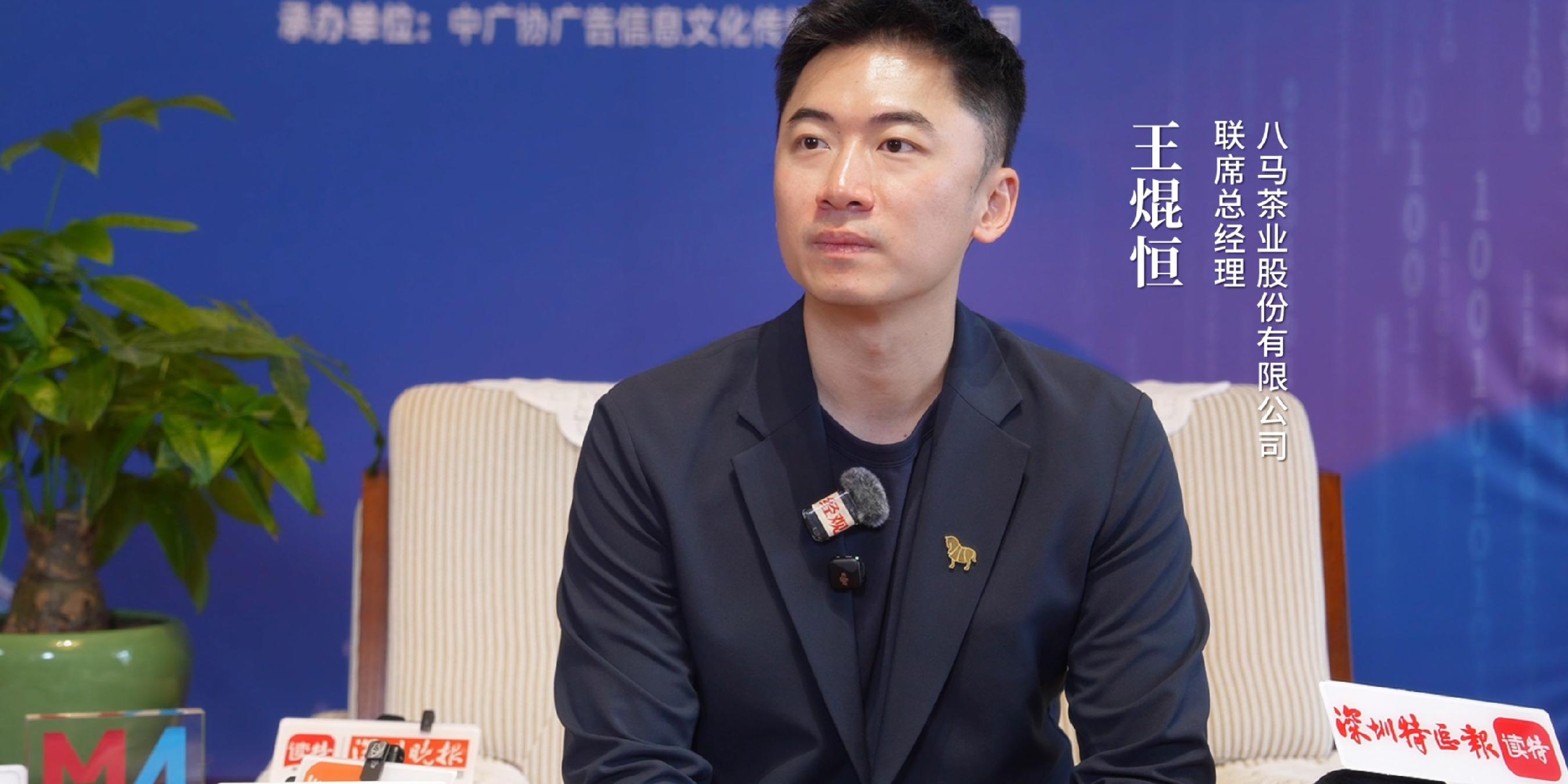
During the 2026 China Advertising Forum, Wang Kunheng, Executive Director and Co General Manager of Bama Tea Industry, gave a very clear answer in an interview with Modern Advertising: "AI is a deterministic trend, but what truly determines the outcome of a brand is still the product, consumers, and the brand itself. ”
This Chinese tea company, founded in Luohu, Shenzhen for nearly 30 years, is reshaping traditional industries with digital capabilities and attempting to answer a bigger question: as technology continues to solve the problem of "how to reach", how can brands continue to win consumers?
AI will not replace brands, but it is restructuring the way brands operate
In the past year, almost all consumer industries have been discussing AI. Compared to many companies still in the exploratory stage, BaMa has already embedded AI into multiple aspects of marketing, operations, supply chain, and even store management.
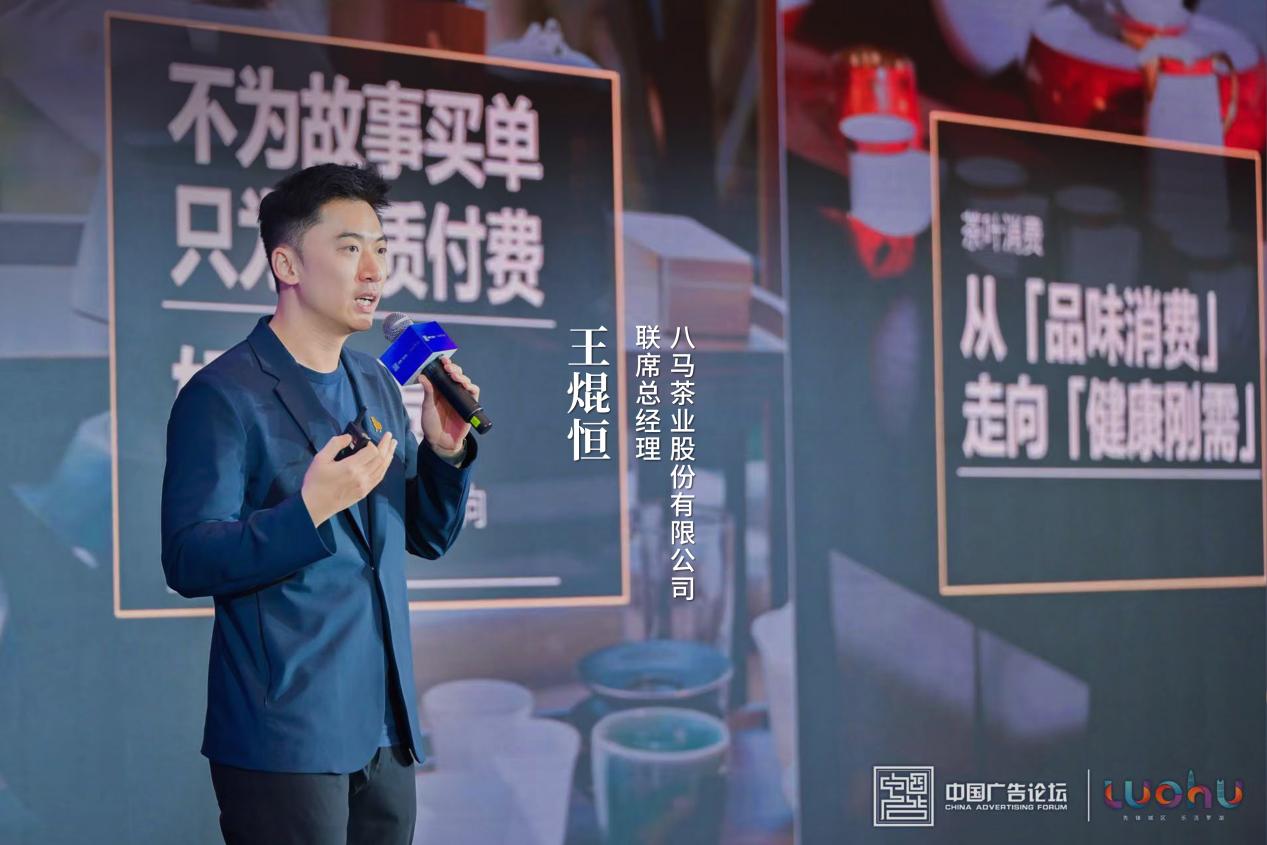
Wang Kunheng believes that the first thing that needs to be changed is the mindset of the enterprise. AI is a deterministic thing that cannot be changed, so the first thing traditional enterprises need to do is embrace it and accept it, rather than sticking to past ways of thinking. ”
In his view, the changes brought by AI first occurred on the marketing side. At present, a large amount of video content, advertising materials, and some copywriting from Bama have begun to be generated using AI. Some AI videos published on platforms such as video accounts have achieved good dissemination effects, allowing brands to complete content production more efficiently.
But more importantly than content generation, AI has re established the information connection between brands and consumers.
In the past, brands often relied on store feedback, phone communication, and manual statistics to understand the market, resulting in a long information chain and slow feedback speed. Today, with the data analysis capabilities of AI, companies can quickly perceive changes in the consumer market, understand consumer needs in a timely manner, and adjust marketing strategies accordingly.
Previously, we may have had to rely on a lot of human intervention to know what was happening in the end market, but now AI can more quickly establish connections between us and consumers. ”This ability is also extending to internal management of enterprises. From store operation monitoring, to employee training, to service quality evaluation, AI is helping businesses improve organizational efficiency. Wang Kunheng candidly stated that among traditional tea companies, Bama hopes to become a group of enterprises that are advancing faster in digital applications.
However, he also emphasized that AI is always just a tool. Ultimately, it is humans who make decisions. Nowadays, it is more about the collaboration between AI and humans, rather than AI replacing humans. ”
Compared to marketing efficiency, what brands should pay more attention to is the changing way of consumer decision-making. In the past, consumers would search, compare prices, and read reviews; In the future, they are increasingly likely to directly ask AI questions.
Nowadays, many consumers are asking about doubao, qianwen, or other AI tools to 'recommend a black tea' or 'which tea brand is more worth buying'. These answers will actually affect consumers' final purchasing decisions. ”This means that brand competition is no longer just happening on shelves, search engines, and social platforms, but is beginning to enter AI recommendation systems.
For the advertising industry, this means that a new brand competition entrance is emerging beyond traditional SEO; For brands, this means that future brand assets will not only exist in the minds of consumers, but also in the data systems that AI can access.
However, Wang Kunheng believes that no matter how technology changes, the underlying logic of brand management has not changed. The underlying capabilities of what consumers need, how to build channels, and how to do products well have not changed. AI is just helping us better connect with consumers. ”
In other words, AI enhances efficiency, while brand value still comes from products and trust.
Digitization is not just a marketing upgrade, but also an industrial upgrade
If AI changes the front-end of a brand, then digitalization changes the entire industry chain.
In the forum speech, Wang Kunheng presented a set of data: Over the past 20 years, Bama has continuously invested in supply chain digitalization construction, and currently has smart tea gardens, seventh generation intelligent production lines, smart warehousing, and digital supply chain systems. The eighth generation intelligent production line is also being planned.
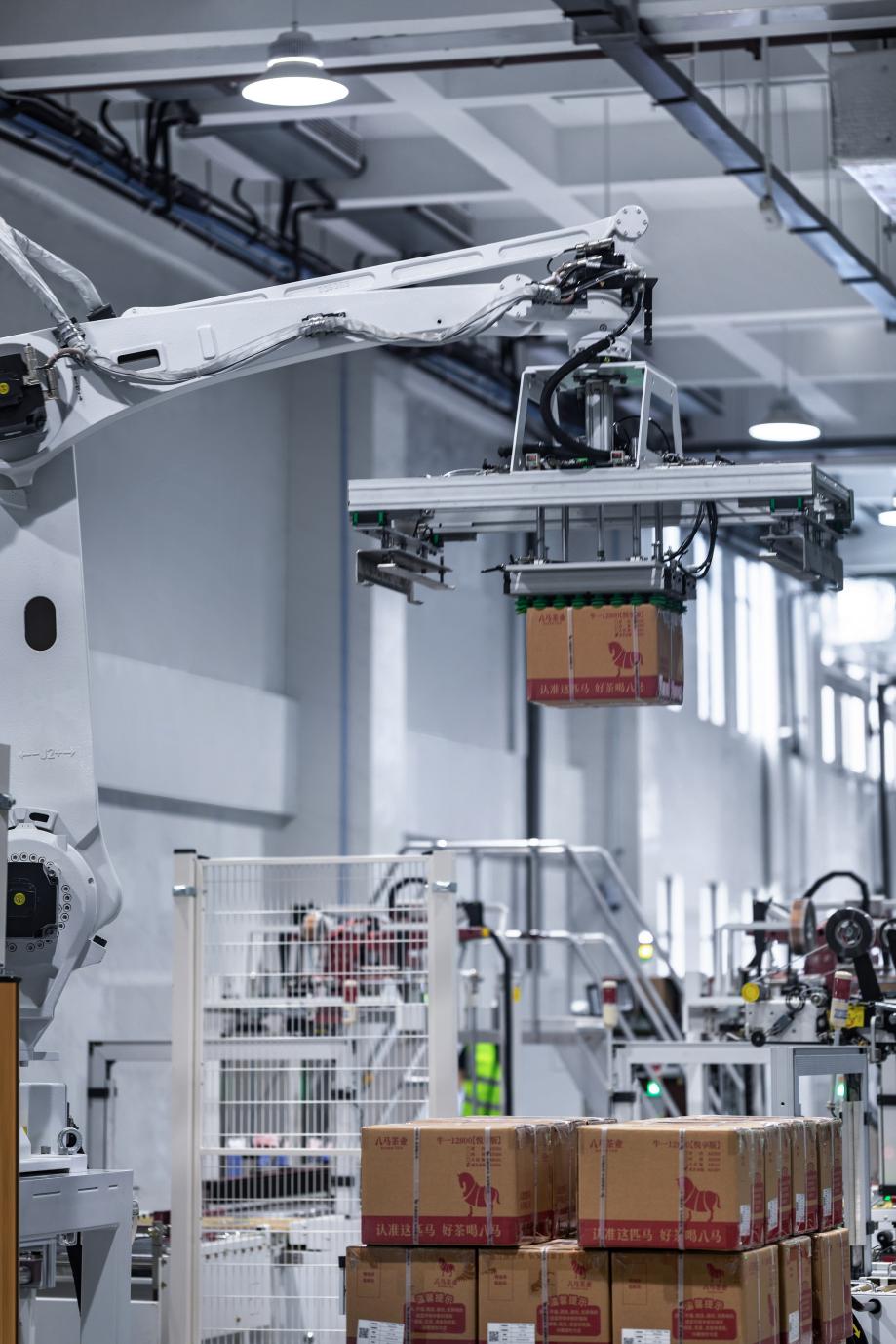
In his view, the greatest value of digitization is not in reducing costs, but in improving quality. Smart tea gardens record the growth data of each tea leaf through the Internet of Things, achieving full process traceability; Smart factories continuously upgrade their production lines to improve product stability; Digital supply chain makes the entire production system more transparent and efficient.
Digitization not only solves efficiency problems, but more importantly, it releases production capacity, improves tea quality, and better serves consumers
This approach also responds to a keyword he repeatedly mentioned in his forum speech - quality to price ratio.
Faced with the current consumer market, Wang Kunheng believes that consumers are becoming more rational and placing greater emphasis on real value. Consumers nowadays are not so concerned about stories. If they tell too many stories, it can lead to aesthetic fatigue and ultimately lead to a return to product quality
Therefore, instead of constantly creating marketing concepts, it is better to continuously build digital capabilities to make quality truly verifiable and traceable.
Cities and brands can grow together
As a local enterprise that has been rooted in Luohu, Shenzhen since 1997, Wang Kunheng has repeatedly emphasized the importance of cities for brand growth.
Especially for the Guangdong Hong Kong Macao Greater Bay Area, high technology, internationalization, and modernity have become urban labels, and the traditional culture represented by tea can provide another cultural expression for the city. One represents the future, the other represents history. Combining the two will show everyone a richer and more memorable Greater Bay Area
In his opinion, the open, inclusive, and innovative urban temperament of Shenzhen provides a growing ground for brands and gives enterprises more opportunities to go national and global. The city has a decisive impact on the long-term development of a brand
And the brand should also become a business card of the city in turn.
In recent years, Bama has continued to cooperate with cultural and tourism cities such as Shenzhen and Quanzhou, launching joint products around local culture, hoping to spread a city through a cup of tea.
He believes that there is a natural connection between tea culture and cultural tourism. Tea comes from tea mountains, which themselves are cultural and tourism resources; Behind a cup of tea, there are also local customs, cultural stories, and lifestyles.
Therefore, in addition to digitization, another important exploration of BaMa in recent years is to redefine the way tea brands meet consumers. In the past, tea shops were more responsible for sales functions; Nowadays, it has begun to undertake experiential, social, and cultural dissemination functions.
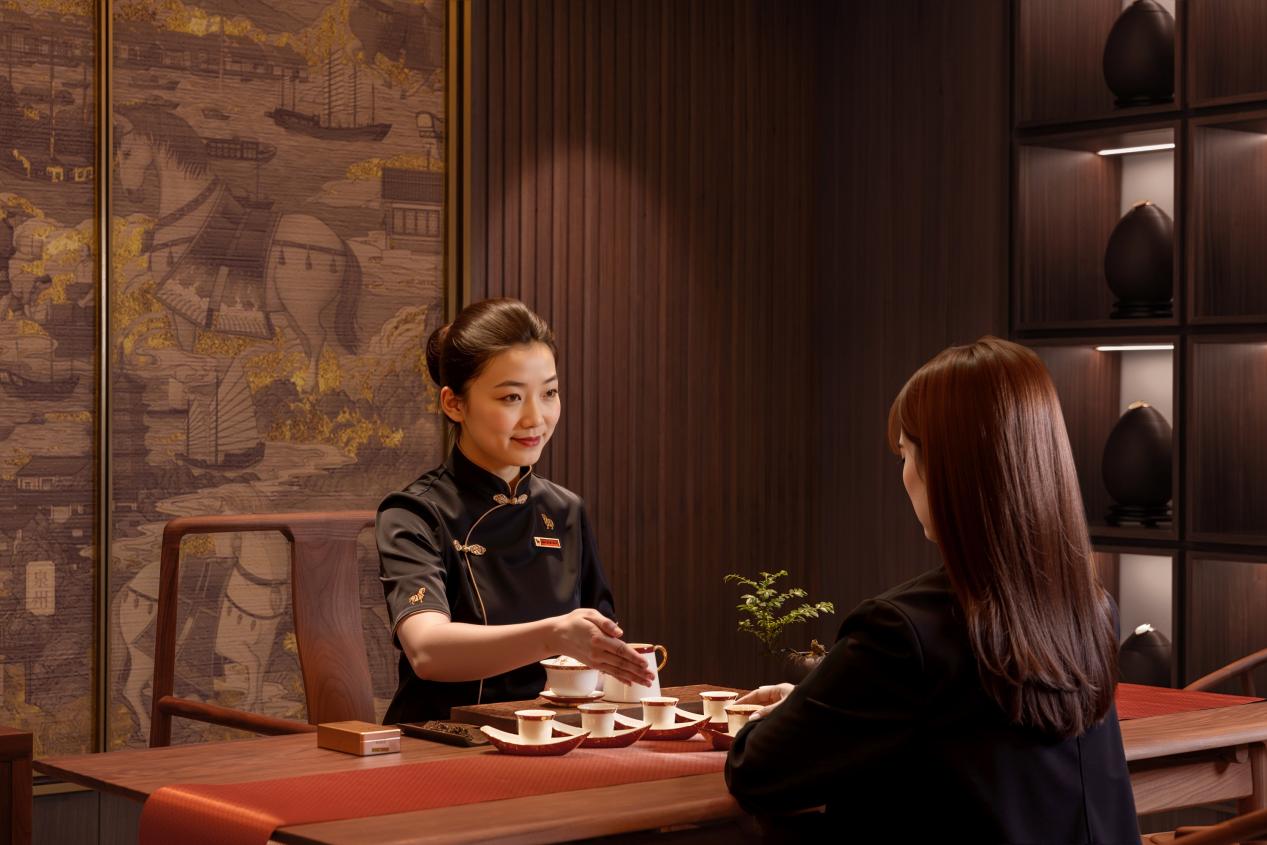
In 2023, Bama conducted a comprehensive upgrade of its first Luohu store, transforming traditional tea shops into "tea spaces"; In 2024, the concept of "urban living rooms" will be further proposed, hoping to make stores a new scene for business negotiations, urban exchanges, and cultural experiences.
In the future, it will become increasingly difficult for tea shops to sell tea. Consumers need experience, space, and connections between people
At the same time, instant retail has also become a key direction for enterprise layout. Wang Kunheng revealed that since increasing investment in instant retail last year, this business has achieved rapid growth. Previously, opening a store in a good location would attract traffic, but now without instant retail, it is likely that the business will not be as good as competitors. This is a certain trend
From creating brand content such as' Tea Law 'and' Shangchengshi ', to implementing a dual spokesperson strategy, to instant retail, AI marketing, and digital supply chain, this traditional tea company is constantly seeking new growth opportunities.
From "in store consumption" to "home service", and then to "experience space", tea brands are rebuilding their consumption scenarios. The ultimate goal of a brand is to serve customers well, create products that truly meet their needs, and make consumers feel the value of the products. This has never changed
AI can improve efficiency, digitalization can optimize industries, and advertising can expand dissemination, but ultimately the competition for brands is still whether consumers are willing to believe in you, choose you, and stay by your side for the long term. For Chinese consumer brands experiencing the wave of digitization, this may also be the most memorable sentence: technology changes business models, and winning people's hearts is always the fundamental ability for brand growth.


 WeChat registration or login