2026-07-08 19:53


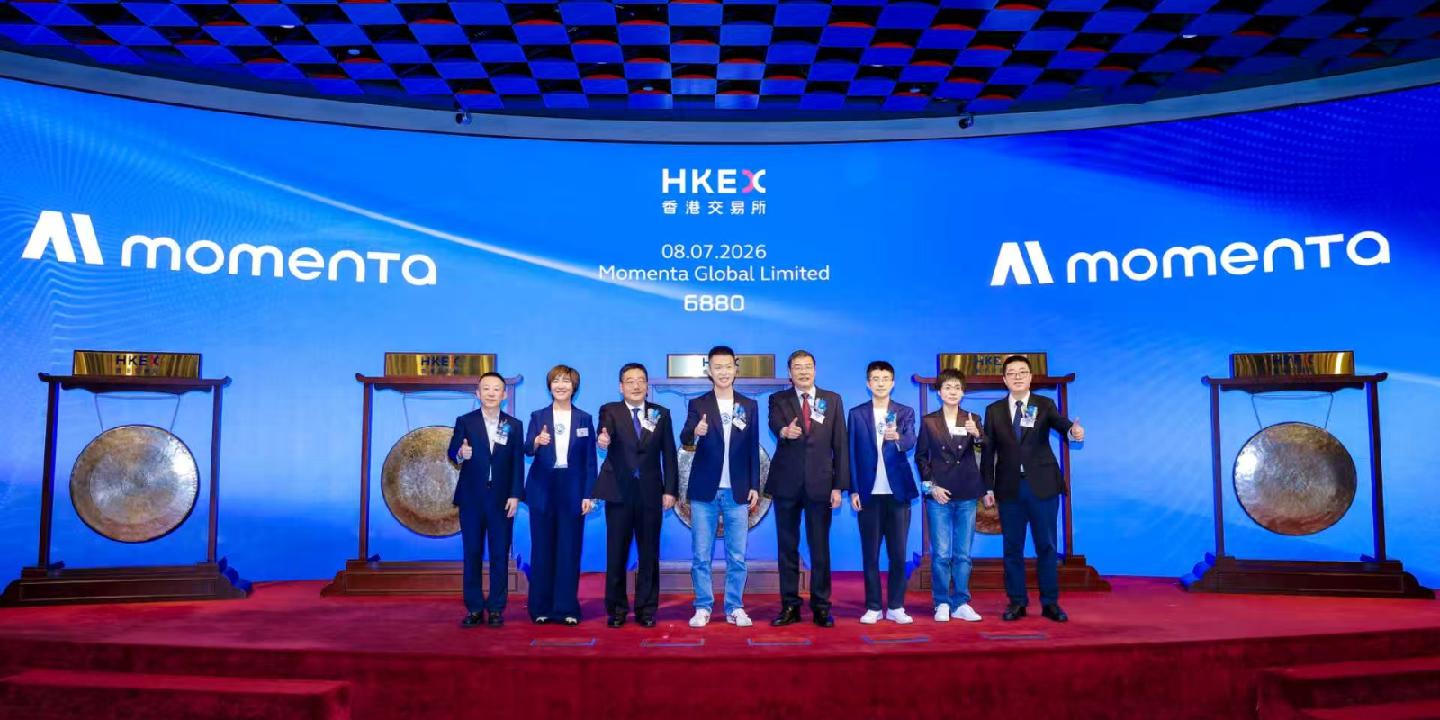
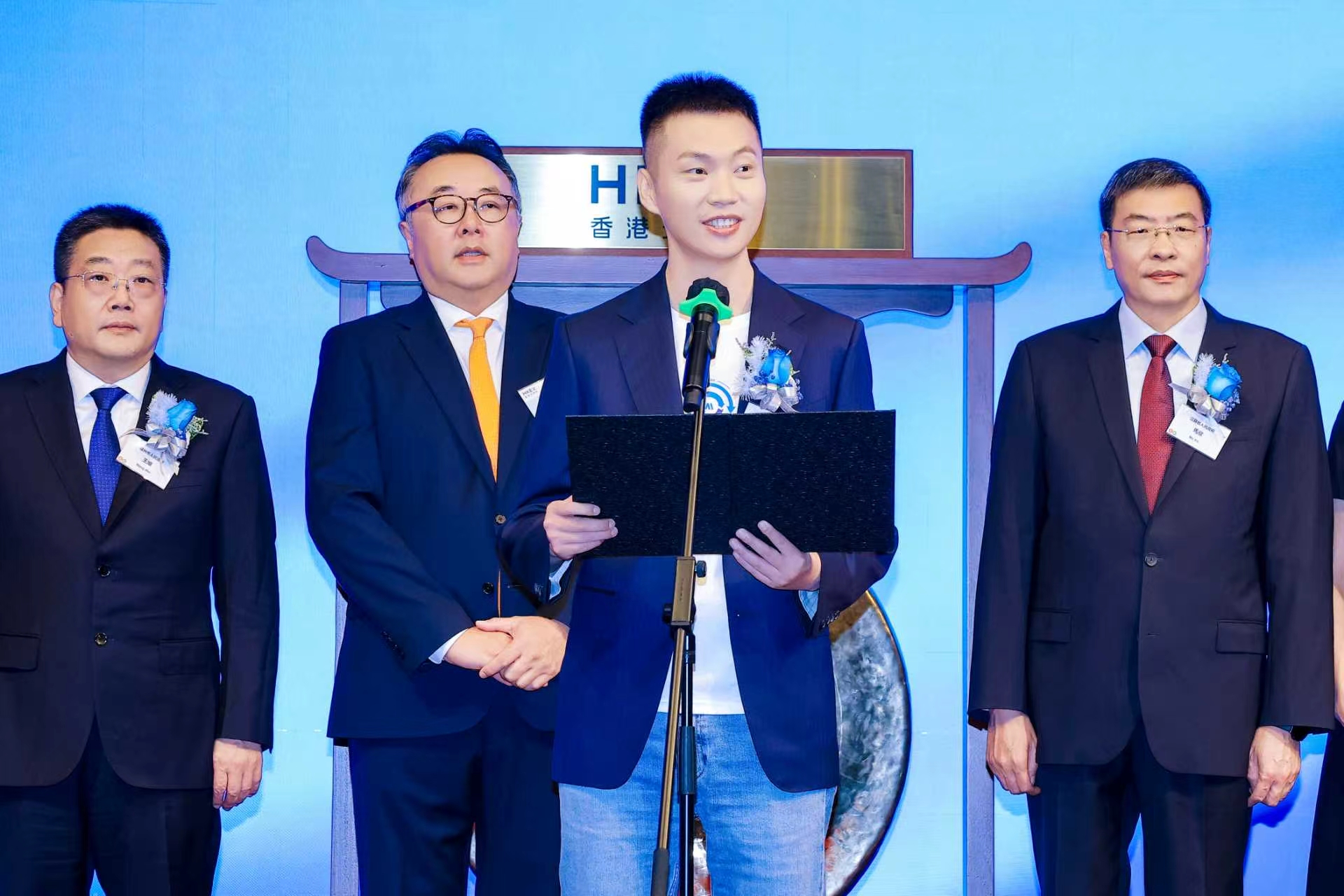
On July 8th, the bell of the Hong Kong Stock Exchange rang for Momenta. This company with the code "06880. HK" has officially become the first listed entity in the capital market to be labeled as "physical AI".
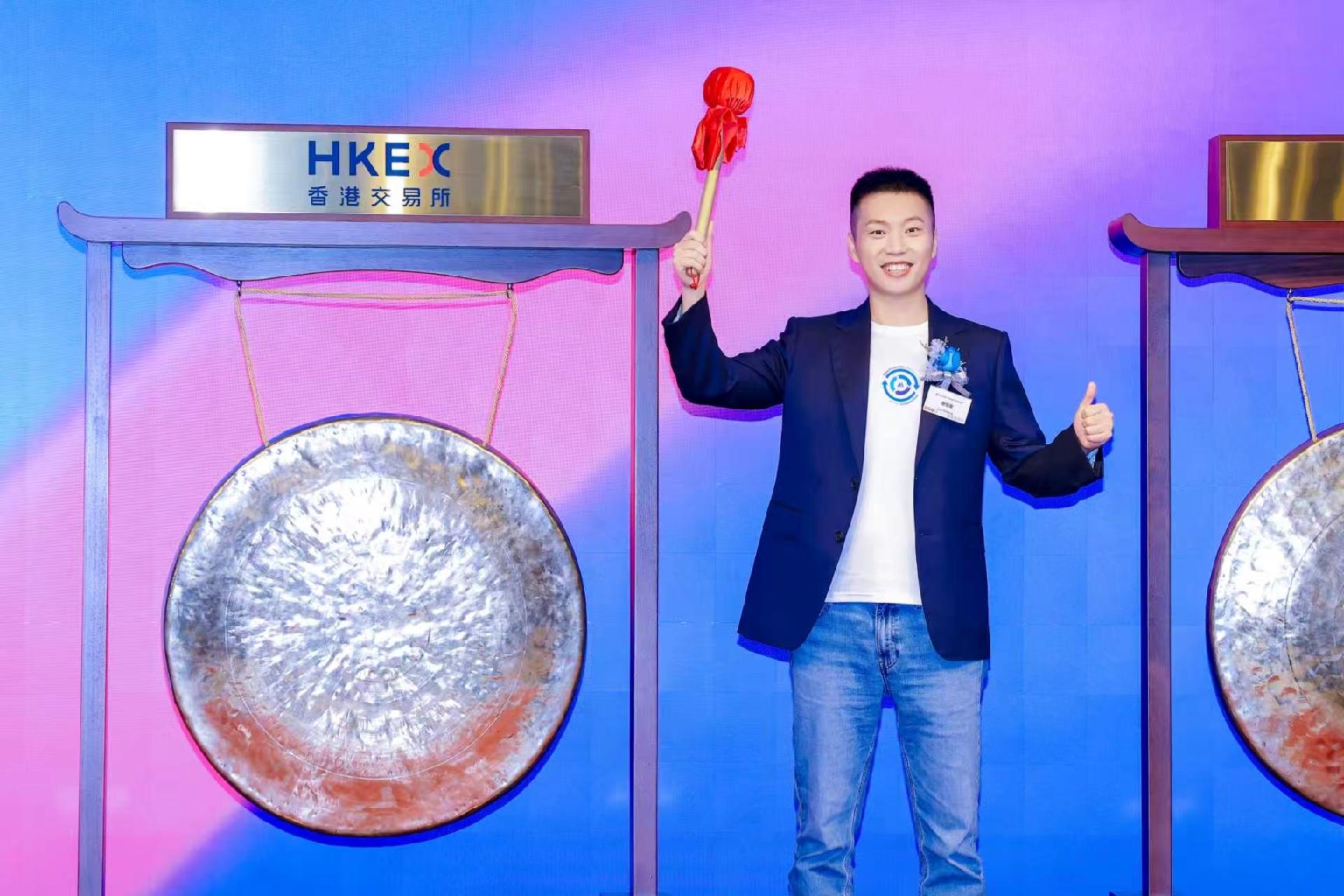
On its first day of listing, Momenta opened up about 6%, with a total market value exceeding HKD 70 billion. The trading activity was active throughout the day, and the turnover rate remained at a high level, demonstrating the market's enthusiasm for this "first physical AI stock".
When talking about the future development direction of the company, Momenta CEO Cao Xudong said, "In the past decade, we have taught AI how to drive and brought dedicated drivers to every household; In the next decade, we will bring dedicated robots such as aunts, doctors, and teachers to every household, creating a 'GPT moment' for physical AI. I hope to work with all Chinese AI companies to write the legend of Silicon Valley in the East, embrace the world, and let the world embrace Chinese technology. ”
Choice
Cao Xudong said, "Ten years ago, we founded Momenta to pursue a simple yet steadfast mission: Better AI, Better Life. Better AI, Originating from our curiosity. Better Life, Carrying our sense of mission. We have set three ten-year visions: saving millions of lives within ten years, liberating 100% of time within ten years, and doubling logistics travel efficiency within ten years. Nowadays, we have provided over one million users with a safer and more secure driving experience. ”
On June 29th, Momenta disclosed its global offering documents and officially launched its IPO. This IPO will globally issue 19.9383 million shares at a price of HKD 295.6. Assuming full exercise of the "Green Shoes" (over allotment rights), this global offering will raise approximately 22.93 million shares and raise a total of approximately HKD 6.8 billion.
This issuance did not set a price range, but directly set the final issuance price. In Hong Kong IPOs, not setting a price range usually reflects that the feedback during the institutional roadshow stage is enthusiastic enough, and the issuer does not need to rely on discount promotions to test the market bottom line.
The enthusiasm of the market has indeed exceeded the normal range. The public offering received 414 times oversubscription. The international offering received over HKD 100 billion in institutional orders, covering sovereign funds and long-term funds from 15 countries and regions, with a total oversubscription (excluding cornerstone and before green shoes) of about 44 times. The subscription amount for long-term funds alone exceeds 15 times.
During the anchoring subscription phase, Momenta attracted top global institutions such as Abu Dhabi Investment Authority (ADIA), Canada Pension Plan Investment Board (CPPIB), Temasek, Wellington, Schroders, etc. to participate in the subscription. This long list of institutions almost includes the world's top long-term capital.
This time, Momenta has also introduced 14 cornerstone investors, with a total subscription of approximately 376 million US dollars (approximately 3 billion Hong Kong dollars). Based on the offering price, they will subscribe for approximately 9.9601 million shares, accounting for approximately 49.95% of the total global offering shares.
The structure of cornerstone investors is often the most intuitive entry point for interpreting a company's long-term value. In the coordinate system of long-term capital, Momenta has been placed in a special position.
In terms of top international long-term funds, Singapore Government Investment Corporation (GIC) and Fidelity International led the investment, each receiving $100 million; BlackRock contributed $25 million, Oaktree contributed $20 million, and Franklin Templeton contributed $10 million.
GIC is a world-famous sovereign fund with a management scale of trillions of dollars. It entered Chinese Mainland in 1995 and invested in well-known industry leaders such as Alibaba, Meituan and Kwai. In recent years, GIC has also invested in global technology companies such as Anthropic and TSMC. Fidelity International is a top global asset management institution with assets under management exceeding $1 trillion. In the early years, it made long-term investments in companies such as Tencent, Alibaba, BYD, and CATL. In recent years, it has also invested in AI industry leaders such as Zhongji Xuchuang, Xinyisheng, and Cambrian through its funds. Both leading investment funds prefer AI technology companies with high growth attributes, and leading investment in Momenta means that they have regarded Momenta as one of the core targets in the AI field. Franklin Templeton Fund is a rare presence on the list of cornerstone investors in the Hong Kong stock market in history.
In terms of industrial strategic investors, Mercedes Benz contributed $25 million, BYD contributed $15 million, and industry chain partner Zhaoyi Innovation contributed $6 million. Mercedes Benz and BYD are both old shareholders and partners of Momenta, and this continued increase as a cornerstone reflects recognition of Momenta's leading advantage in physical AI technology and commercial prospects.
In terms of long-term Chinese institutions, Gao Yi Asset Management, Boyu Capital, Guangfa Fund, Huaxia Fund, and Pacific Insurance each contributed 10 million US dollars, and with the addition of Suzhou MoSu, Chinese backed investors collectively occupy half of the cornerstone lineup, forming a solid local capital base.
Chip
Cao Xudong once said, "To achieve a universal robot, there must first be a business that can generate cash flow, form a data loop, and a commercial loop
The translation of this sentence is that long-term narrative requires short-term support.
The latest data shows that the scale of mass-produced vehicles equipped with Momenta system has exceeded 1 million units, and more than 100 mass-produced models have been successfully delivered, with a cumulative number of designated models exceeding 210. Momenta has established partnerships with 24 global car companies, with 9 out of the top 10 global car companies already partnering with it.
Within a year, Momenta's intelligent driving solution has achieved a leapfrog growth in its installed capacity. The first production of 100000 units in 2022 took 24 months, and now it can be delivered in less than 40 days at the earliest. The speed is changing, and the flywheel effect has already formed.
According to the Blue Book released by CIC Insight Consulting, from March 2025 to February 2026, Momenta's sales market share in China's third-party city NOA supplier market reached 64.5%, ranking first in the industry. Top suppliers have formed composite barriers in terms of technical strength, delivery capability, customer coverage, and data scale.
These numbers are the underlying basis for long-term funds to dare to bet.
In April 2026, Momenta officially announced the mass production debut of the Momenta R7 world model. Cao Xudong stated on site that this marks the leap of intelligent driving from "seeing the world" to "understanding the world", and the formal transition of physical AI from concept to large-scale production.
Based on the over 12 billion kilometers of actual vehicle mileage brought by mass production business, as well as over 100 million pieces of golden data extracted from it, the R7 world model can evolve through reinforcement learning training and self game, greatly improving its ability in key scenarios.
Traditional end-to-end algorithms struggle to anticipate and cover long tail extreme situations. The Momenta R7 world model responds by understanding the motion laws and interaction logic of the physical world, rather than relying on scene memory and rule matching. The industry sees it as the 'GPT moment' of physical AI.
What is Physical AI? The big language model processes text and images, enabling AI to understand the digital world; Physical AI also needs to handle physical laws such as space, motion, causality, and interaction to enable AI to understand the real world. The former can read text, while the latter can predict trajectories. Momenta positions itself as a builder of physical AI base models, rather than simply an autonomous driving company. Just as GPT provides a linguistic foundation for digital AI, Momenta's world model will provide a spatiotemporal foundation for physical AI.
2026 is widely regarded by the industry as the "Year of Physical AI". Nvidia launches Cosmos3, a physics based AI model, Tesla is building a neural network world simulator, and companies founded by Li Feifei and Yang Likun are both betting on world models. Domestically, Alibaba and Tencent have already laid out their presence, with intelligent enterprises synchronously developing their own world models.
The uniqueness of Momenta lies in its ability to run both data and business loops. Mass production cars are not just tools for making money, but also the infrastructure for data collection. Under the "Two Legs" strategy, Momenta's Mass Production and Scalable Robo business lines share the same technological architecture and core algorithms. The data generated by mass-produced cars is directly used to train the L4 algorithm, and the technological progress of L4 feeds back into the mass production plan.
From 2023 to 2025, Momenta's operating revenue will increase from 743 million yuan to 2.413 billion yuan, tripling in three years, with an average annual compound growth rate of over 80%. The gross profit will increase from 130 million yuan in 2023 to 1.727 billion yuan in 2025, and the gross profit margin will soar from approximately 17.5% to 71.6%. By the end of 2025, the company's cash reserves will exceed 10 billion yuan.
Overflow
The story will not stop at autonomous driving. Cao Xudong positions Momenta as the "builder of physical AI base models".
The most explosive potential physical AI landing scenario currently is autonomous driving, followed by embodied intelligence - this is Momenta's narrative direction for the capital market.
Goldman Sachs predicts that 51000 humanoid robots will be shipped globally by 2026. Morgan Stanley predicts that the global market for humanoid robots will reach $7.5 trillion by 2050, with China accounting for 30% of the demand share.
A fundamental challenge facing the embodied intelligence industry today is the scarcity of real interactive data. Most robot companies have limited deployment scales, with hundreds or thousands of robots running, insufficient data scale, and models unable to form true scaling. Momenta's technology has covered one million mass-produced vehicles, making it one of the largest data collection networks in the physical world.
From autonomous driving to embodied intelligence, it's not a crossover, but an overflow.
Autonomous driving is embodied intelligence in narrow scenarios. Enabling cars to operate autonomously in the physical world and enabling robots to operate autonomously in the physical world are fundamentally the same set of abilities, namely understanding physical laws, perceiving the environment, and planning actions. Autonomous driving has established a data loop and accumulated world models, and the next step is to extend to a wider range of physical scenarios, which is a natural extension of the same technology platform.
In October 2025, embodied intelligence company Jianzhi Xinchuang (Beijing) Robot Technology Co., Ltd. completed an angel round of financing, with investors including Momenta, BV Baidu Ventures, Xinghai Tu, and Jiushi Intelligence. Afterwards, Jianzhi Robotics completed three rounds of financing in just four months, with a total amount exceeding 200 million yuan, and Momenta continued to follow suit in the seed round.
Momenta's mass production solution has proven that lanes, vehicles, pedestrians, and complex traffic signs can be accurately recognized solely through visual cameras. Moreover, Momenta's perception algorithm has been trained on billions of miles of data and validated by mass production vehicle specifications, demonstrating robustness in stable operation in complex real-world scenarios.
For Momenta, now is just the prologue to physical AI. After the prologue, the main drama has just begun.


 WeChat registration or login