2026-07-08 14:25


In the past two decades, the Internet has changed the way advertising is spread; Nowadays, artificial intelligence is driving the advertising industry into a new stage of development.
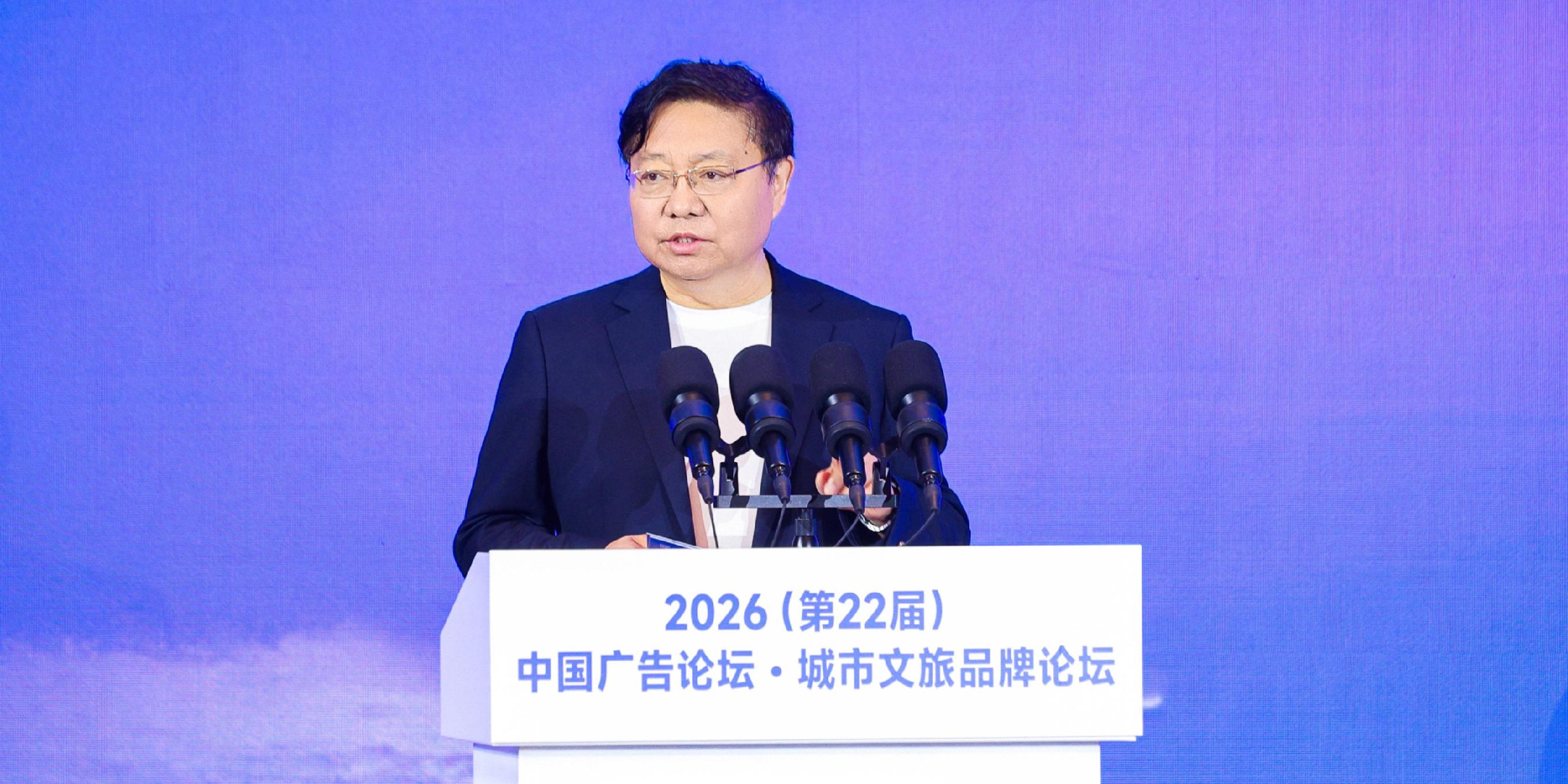
During the 22nd China Advertising Forum in 2026, Zhang Guohua, President of the China Advertising Association and Global Vice President of the International Advertising Association, stated in an interview with Modern Advertising that the advertising industry has always followed a basic law: where traffic and users are, advertising will develop towards them. As more and more users begin to obtain information and use AI tools through AI, the advertising industry is also extending towards the AI ecosystem. AI is gradually evolving from an auxiliary tool to an important foundational capability in the advertising industry, and has a profound impact on creative production, content creation, media placement, brand marketing, and other aspects.
This is also an important background for this year's China Advertising Forum to adopt the theme of "Empowering the Advertising Industry with Digital Intelligence for High Quality Development, Empowering Cultural Tourism with Science and Technology for Comprehensive Ecological Enhancement".
Changes in traffic patterns bring new development opportunities to the advertising industry
The landing of this year's China Advertising Forum in Luohu, Shenzhen is not only an industry exchange, but also a practical exploration of the integration of advertising industry and urban development.
Zhang Guohua said that Shenzhen has become one of the important cities for scientific and technological innovation and brand development in China with its continuous innovation vitality. The China Advertising Association Brand Service Station (Shenzhen) and the National Advertising Research Institute AI Brand Data Analysis Center have settled in Luohu, hoping to further promote the deep integration of digital technology and brand building, and provide support for the development of urban brands and industries.
When it comes to the industry changes brought by AI, Zhang Guohua believes that the development of the advertising industry has always been accompanied by the evolution of media and traffic. In the past, the Internet has become an important carrier for advertising growth. With the rapid popularization of generative AI, more and more users have begun to obtain information, complete search and consume content on the AI platform. The advertising industry is also paying attention to and laying out this new traffic portal.
He said that this is not AI advertising replacing Internet advertising, but AI is continuously empowering Internet advertising. From creative production and content production to intelligent delivery and effect optimization, more and more Internet advertisements have begun to integrate AI technology. At the same time, with the increasing frequency of users using AI products and services, the advertising industry is also actively exploring new traffic portals and application scenarios. The advertising industry is continuing to evolve in the direction of deep integration of Internet advertising and AI, and the industry's production mode, service mode and business logic are also constantly optimized.
AI is reshaping the way advertising is produced
Compared to AI generated copywriting, images, videos, and other applications, Zhang Guohua believes that what deserves more attention is the changes AI has made to the entire advertising process.
Taking the AI advertising platform displayed on the forum as an example, AI has been able to assist in completing multiple processes such as creative ideation, material generation, intelligent delivery, data analysis, and optimization, greatly improving advertising production efficiency. The work that used to require collaboration among multiple positions can now be completed by a more streamlined team with the help of AI tools.
This change has also given rise to new forms of industry organization, such as the OPC (One Person Company) model that has gradually gained attention in recent years. AI has lowered the threshold for content production and enabled individuals and small teams to undertake more projects. However, Zhang Guohua believes that this does not mean that team value will be replaced, but rather that the core competitiveness of future advertisers will be more reflected in high-value abilities such as brand strategy, creative judgment, and resource integration, while AI will undertake more standardized and repetitive work.
The forum's decision to land in Luohu, Shenzhen also reflects the practical needs of industrial development. Shenzhen is one of the cities in China where artificial intelligence and technological innovation are relatively active, with a solid foundation in the digital industry; Luohu has gathered rich commercial, brand, and cultural tourism resources, providing diverse scenarios for advertising technology application and brand innovation.
Zhang Guohua said that every city needs to establish its own brand expression, and one of the important values of advertising is to help cities to explore characteristics and tell good brand stories.
AI provides more possibilities for precision marketing and brand expansion overseas
With the continuous segmentation of consumer demand, brand marketing is gradually shifting from "large-scale dissemination" to more precise user connections.
Zhang Guohua believes that the communication method that relied on unified content to cover the mass market in the past has become increasingly difficult to meet the needs of different consumer groups. AI combined with data analysis capabilities can help brands better understand user interests, consumption preferences, and communication pathways, thereby optimizing content strategies and media mix, and improving marketing efficiency.
In terms of brand going global, AI also shows great potential for application. Relying on the Shenzhen Brand Service Station, the China Advertising Association hopes to provide brand overseas services for enterprises in the Guangdong Hong Kong Macao Greater Bay Area. AI can assist in analyzing consumer preferences, media environments, and relevant regulations in different countries and regions, providing more efficient decision support for overseas marketing and helping companies reduce market research and trial and error costs.
Zhang Guohua said that brand going abroad in the future not only needs creativity and communication ability, but also increasingly relies on data analysis and intelligent decision-making ability.
At the end of the interview, Zhang Guohua said that the development of AI is continuing to expand the capacity boundary of the advertising industry, and also brings new opportunities for brand building, urban communication and industrial upgrading. In the future, the advertising industry needs to actively embrace new technologies, continuously improve professional and innovative capabilities, and explore more efficient brand communication methods in the new media environment.


 WeChat registration or login