2026-07-08 14:25


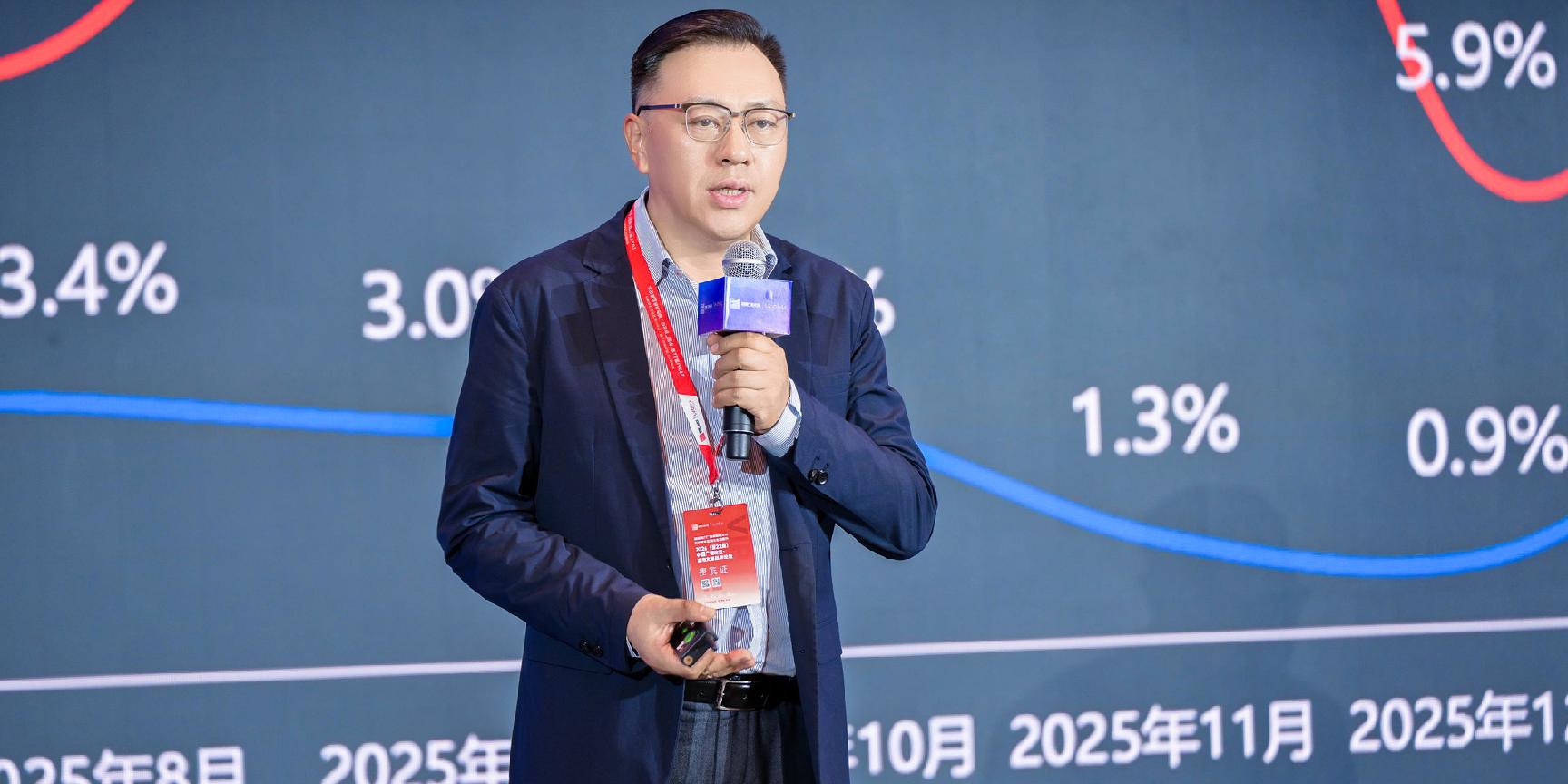
On June 30, 2026, the 22nd China Advertising Forum · Urban Cultural Tourism Brand Forum was successfully held in Luohu, Shenzhen. The theme of this forum is "Digital Intelligence Helps High Quality Development of Advertising, Science and Technology Empowers the Whole Ecological Improvement of Culture and Tourism", gathering industry representatives to engage in dialogue around the deep reshaping of AI on advertising marketing and the cultural and tourism industry.
Yu Jian, General Manager of CCTV Market Research (CTR), gave a speech titled "Qualitative Opportunities in the Era of Stable Growth - Trends in China's Consumer and Marketing Markets" in the afternoon session, sharing insights from various dimensions such as the pattern of advertising and consumer markets, the logic of brand building in the era of stable growth, and the reshaping of marketing ecology by AI.
Yu Jian first pointed out that from January to May 2026, the total media advertising expenditure monitored by CTR increased by 8.7% year-on-year, indicating a significant increase in advertisers' willingness to expand their operations. About one-third of them plan to expand their operations, an increase of 7 percentage points from the previous year. However, there is a clear differentiation in the consumer end, with the total retail sales of consumer goods only increasing by 1.4% during the same period. Consumers not only pursue cost-effectiveness with extreme rationality, but also generously invest in experiential consumption such as cultural tourism and sports.
Regarding the current market trend, Yu Jian shared three observations.Firstly, products and brands are the foundation of marketing.The fast-moving consumer goods market is highly fragmented, with an increase in consumer purchase frequency but a decrease in average price, a decline in brand loyalty, and a decrease in new product survival rate from 31% in 2022 to 22% in 2024. Nearly 90% of advertisers agree that brand intelligence is the core competitiveness and advocate building a long-term moatSecondly, scenario marketing needs to capture consumers' emotional moments.During the Dragon Boat Festival holiday, 124 million people traveled domestically and spent over 40 billion yuan. In the first quarter, the box office revenue of large-scale concerts in China increased by 74.2%, confirming the vitality of experiential consumption. Content marketing with a sense of liveliness and major events such as the World Cup have also become important venues for brands to resonate with consumers.Thirdly, AI is changing marketing methods and consumer decision-making.By 2025, the user base of generative AI in China will reach 600 million, and AI assisted shopping will grow by 26% year-on-year in China. 94% of advertisers have invested in AI marketing, but over 60% believe that the results are average. The key lies in whether they value the construction of AI systematic capabilities and reconstruct the relationship between brands and consumers.
Regarding the construction of brand trust in the AI era, Yu Jian pointed out that AI dialogue boxes are becoming a new entry point for brand traffic, and GEO has moved from concept to implementation. Nearly 50% of brands plan to pilot GEO on a small scale in 2026, and 14% have been included in core marketing plans. Brands face pain points such as diverse consumer demands, opaque algorithms, and difficulty in evaluating effectiveness. Based on over 30 years of market research experience, CTR has launched GEO services to help brands incorporate GEO into their long-term development of mental and strategic assets through real consumer research and third-party monitoring.
At the end of his speech, Yu Jian quoted NVIDIA CEO Huang Renxun's words to encourage the industry: "Intelligence is functional, and human nature is not defined by function. Character, humanity, compassion, and generosity are the true superhuman powers." He called on brands to always maintain "warmth on the scene and sharpness of personality" in the AI era.
The following is a conversation between Modern Advertising and Yu Jian, General Manager of CCTV Market Research (CTR):
Q: From the data, what core changes have occurred in the logic of domestic advertising placement and consumer behavior in the past two years?
A:In the past year, the overall advertising market has rebounded, and the confidence of advertisers has also increased. From January to May this year, the year-on-year growth rate of advertising was 8.7%, with particularly prominent growth in industries such as AI applications, postal and telecommunications, and personal products. There is a clear differentiation on the consumer side: consumers are both extremely rational in pursuing cost-effectiveness, and generously investing in experiential consumption such as cultural tourism and sports. Brand owners place greater emphasis on creating long-term value in exchange for growth. The triple resonance of technology, policy, and consumer trends is reshaping the new landscape of advertising placement this year.
Q: In the context of accelerating the advancement of new quality productivity, what deterministic opportunities will AI technology transformation bring to brand growth and marketing efficiency?
A:AI is rapidly penetrating the entire marketing chain, from insights generation, content generation to effectiveness evaluation, helping brands build new growth wheels. More importantly, AI is changing the relationship between brands and consumers. In the past, consumers found brands through search, but now they are starting to receive recommendations through AI conversations. This paradigm shift means that brands not only need to build their minds through traditional channels, but also use AI models to make more consumers see and choose their brands. Building trust in the AI era will be a new challenge for brand workers.
Q: What are your observations on the commercial ecology and consumption potential of Luohu, Shenzhen, where this forum has landed?
A:Shenzhen is a vibrant young city, with Luohu boasting three major ports and an annual cross-border flow of over 100 million people. The combination of population density and consumption power presents a huge opportunity for brands. In the past few years, Luohu has continuously developed experience economy projects to attract young consumers, while leveraging AI+to make Luohu a testing ground for brand marketing. Backed by the Greater Bay Area, a hotbed of technological innovation, Luohu has the ability to attract consumers from all over the country and even the world.
Q: Many brands only value short-term conversion data. How can CTR help companies establish a long-term brand value system?
A:In today's era, massive amounts of data are generated every day, but many of them cannot truly help businesses make good marketing decisions. If a company focuses too much on data every hour and every second, it is easy to fall into a false prosperity of data. CTR's cross screen data insights and scientific attribution research capabilities can help companies understand the contributions of each link in the marketing loop. In the GEO era, we recommend extending brand management from a single consumer mindset to a sustainable, quantifiable, and iterative brand asset growth plan that integrates consumer mindset and trusted AI recommendations.


 WeChat registration or login