Economic Observer Follow
2026-07-07 22:26


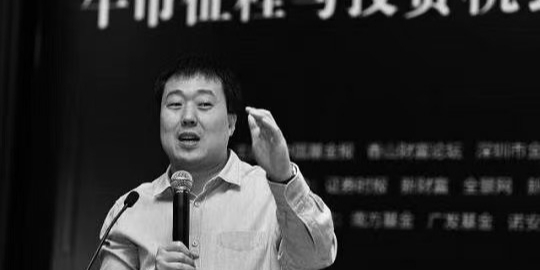
On July 7th, it was confirmed by multiple sources that Gao Shanwen, former chief economist of Guotou Securities, passed away due to illness at the age of 55. The news came out and shook the industry. For countless investors, Gao Shanwen is not only an economist, but also a witness and shaper of China's securities research industry from its inception to maturity.
The Nankai Financial Chief Economist Forum issued a memorial: "The bad news has come, and colleagues in the finance and capital markets are all sighing with regret. All colleagues and alumni of Nankai Financial Forum who had the opportunity to listen to Mr. Gao's sharing express deep condolences. With this article, we deeply mourn Dr. Gao Shanwen
According to public information, Gao Shanwen, a Bachelor of Science and Master of Economics from Peking University, and a PhD from the Graduate School of the People's Bank of China (now the predecessor of Tsinghua University's PBC School of Finance), has authored books such as "At the Turning Point of the Cycle," "Insight into Prosperity: Concerns Deep in Asset Redemption," and "2008 China A-share Investment Strategy.
From Peking University to the Macro Frontier
Gao Shanwen was born in Linfen, Shanxi in 1971. His doctoral supervisor is Zhou Xiaochuan, former governor of the People's Bank of China. Zhou Xiaochuan once said, "Gao Shanwen will be able to create something in the future
In 1995, Gao Shanwen graduated from Peking University and started working at the People's Bank of China. Afterwards, he also worked at institutions such as the Financial Research Institute of the Development Research Center of the State Council and the Research Institute of the Asian Development Bank. This work experience within the system laid a solid foundation for him to assess the direction of macroeconomic policies in the future.
In 2003, Gao Shanwen joined Everbright Securities Research Institute as Chief Economist, officially beginning his career in seller research. Within less than a year of entering the securities industry, he won first place in the macroeconomic analysis direction in the New Fortune selection and gained a great reputation in the industry. From 2004 to 2007, he was ranked first in macroeconomics by New Fortune for four consecutive years.
In May 2007, Gao Shanwen transferred to Anxin Securities (later renamed as Guotou Securities) as the Chief Economist. With the joining of Gao Shanwen and others, the market influence of Anxin Securities Research Institute has gradually increased.
The relationship between Gao Shanwen and Anxin Securities can be regarded as an industry story of mutual achievement. His joining significantly enhanced the reputation and brand influence of Anxin Securities in the research field, enabling the company to quickly occupy an important position in the research of strong securities firms.
In December 2023, Anxin Securities was renamed as Guotou Securities, and Gao Shanwen continued to serve as Chief Economist. In December 2024, at the Investment Strategy Conference of CITIC Securities 2025, he added the title of "Director of CITIC Industry Research Institute".
On November 24, 2025, the website of the China Securities Association showed that Gao Shanwen's employment related information had been cancelled. This marks the end of his 18 year career at Guotou Securities (and its predecessor Anxin Securities).
Gao Shanwen's last public appearance was in September 2025. At that time, as the president of the Peking University Alumni Association of Finance, he delivered a speech via video to welcome guests at the 2025 Peking University Global Finance Forum.
Independent Analysis System
In his 25 year career in macro research, Gao Shanwen established an independent logical analysis system, which has had a profound impact on macroeconomic trend analysis, policy interpretation, and analysis of the impact on the capital market.
Gao Shanwen's research uses causal inference as the core method, and has accurately predicted important market changes such as China's economic recovery node after the 2008 financial crisis, the risk of "money shortage" in 2013, and the "overshoot" of the real estate market in 2023.
In March 2006, he formally proposed the theory of "asset revaluation" at an economic symposium. At that time, the Shanghai Composite Index was still around 1250 points, and he believed that against the backdrop of accelerated monetary credit and overcapacity, China's broad-spectrum asset prices, including stocks and real estate, would undergo a round of revaluation. Afterwards, A-shares rose sharply, real estate prices accelerated, and even alternative assets such as commemorative coins and stamps generally rose. This theory sparked huge controversy beforehand, but the market trend afterwards validated his judgment. The relevant content was included in his 2007 publication "Insight into Prosperity: Concerns Deep in Asset Redemption".
In September 2010, he wrote an article titled "Rising Horizon - Lewis Turning Point and Inflation", stating that China had already passed the Lewis turning point (i.e. the turning point from surplus to shortage of low-end labor), and calculated the average level of general consumer prices from 2011 to 2015. This report was widely criticized at the time, with many believing that there was still a large surplus of labor in China's agricultural sector. But looking back at the data five years later, the year-on-year average of CPI (Consumer Price Index) from 2011 to 2015 was exactly 3.2%, which fell within his estimated range. The gap between CPI and PPI (Producer Price Index) also widened significantly.
In addition, he has made insightful and widely influential judgments on issues such as estimating the potential growth rate of the Chinese economy from 2011 to 2020, the causes and risks of the "money shortage", the turning point and direction of changes in the RMB exchange rate, and the review of deleveraging policies.
Gao Shanwen is widely recognized as one of the most influential macroeconomists in the Chinese capital market. What is particularly praised by the market is Gao Shanwen's keynote speech at the annual investment strategy conference held by Guotou Securities over the years. Due to his independent, forward-looking, and profound views, he has become the focus of the annual strategy conference and is even regarded as an important indicator of the trend of the capital market. Over the years, the company's annual investment strategy meetings have attracted a large number of institutional investors from all over the country.
The views expressed by Gao Shanwen often spread throughout the entire financial circle in a short period of time and have an impact on market sentiment and investment decisions.
In industry evaluations, Gao Shanwen is undoubtedly the "undefeated general". According to Wind data, he participated in the ranking of Best Analyst by New Fortune 7 times between 2004 and 2010, and won first place 5 times (2004, 2005, 2006, 2007, 2010).
But around 2012, Gao Shanwen chose to voluntarily withdraw from the New Fortune selection. In an interview, he explained, "Firstly, such rankings no longer hold much personal significance, and secondly, the results can sometimes spark unnecessary discussions, causing a lot of trouble for both others and oneself
What he rejects is the trend where sellers are forced to focus on news, catalysts, and short-term stock price stimuli under short-term performance pressure. His interest in theory far outweighs his interest in ranking.
Due to his precise judgment and profound insight in macroeconomic analysis, Gao Shanwen is often referred to as a "Zhuge Liang style" analyst by industry insiders. This stems from his comparison of analysts to Zhuge Liang, emphasizing the objective analytical ability of analysts, while buying side investors must possess Liu Bei's decision-making courage.
Awakening And Reverence
As a prominent chief economist, Gao Shanwen once wrote a widely circulated self deprecating couplet. The couplet reads, "Explaining the past is straightforward and seems reasonable; The next line reads "Predict the future, dodge and dodge, with astonishing errors"; The horizontal line reads' Economic Analysis'.
He has been deeply engaged in macro research for over 25 years, focusing on many major macro issues such as whether China has passed the Lewis turning point, estimating the potential growth rate of the Chinese economy from 2011 to 2020, the causes and risks of the "money shortage", the turning point and direction of RMB exchange rate changes, the causes and trends of Sino US trade frictions, and the review of deleveraging policies. He has put forward insightful and widely influential judgments, and has also formed his own analytical system in the fields of China's inflation formation mechanism, production capacity cycle, asset price revaluation, etc. This has earned him a large following in the market, and his views are often controversial due to being too forward thinking.
Gao Shanwen always maintains a clear understanding of the difference between market analysis and economic research. He once said, "From a business perspective, market analysis should focus on predictions, and the correctness of predictions is one of the most important criteria for testing the value and success of market research. For academic economic analysis, its foundation does not lie in predicting trends, let alone whether predictions are accurate, but in whether its explanations are robust enough, differentiated enough, and whether it can develop some universal new ideas, methods, or analytical tools
In him, both academic and market-oriented research approaches can be seen, and the commonality between the two is that the analysis of economic data must be based on reasonable economic logic.
In 2020, Gao Shanwen, along with well-known alumni in the fund industry such as Wang Guobin, donated 30 million yuan to establish the Peking University Qin Wanshun Jin Yunhui Scholarship Fund in the name of his mentor Qin Wanshun and his wife Jin Yunhui. The fund will give priority to undergraduate students in basic disciplines such as mathematics, physics, chemistry, and biology, encourage and guide outstanding students to engage in basic scientific research, and serve the major strategic needs of the country in the future. This project became the largest scholarship program at Peking University at that time.
At that time, Qiu Shuiping, Secretary of the Party Committee of Peking University and Chairman of the Peking University Education Foundation, expressed his gratitude in a letter to Gao Shanwen, saying: "Recently, I am delighted to hear that you and your alumni have generously donated over 30 million yuan to establish the Peking University Qin Wanshun Jin Yunhui Scholarship Fund. On behalf of the university, I would like to express my heartfelt thanks to you!
This feedback not only reflects Gao Shanwen's deep affection for his alma mater, but also embodies his expectations for academic inheritance.
Nowadays, what he has left for this industry is not only a set of analytical frameworks and several best-selling works, but also a persistence in logic, reverence for the market, and clarity in research. These qualities will have a lasting impact on future generations.


 WeChat registration or login


 Subscribe