2026-07-07 00:00


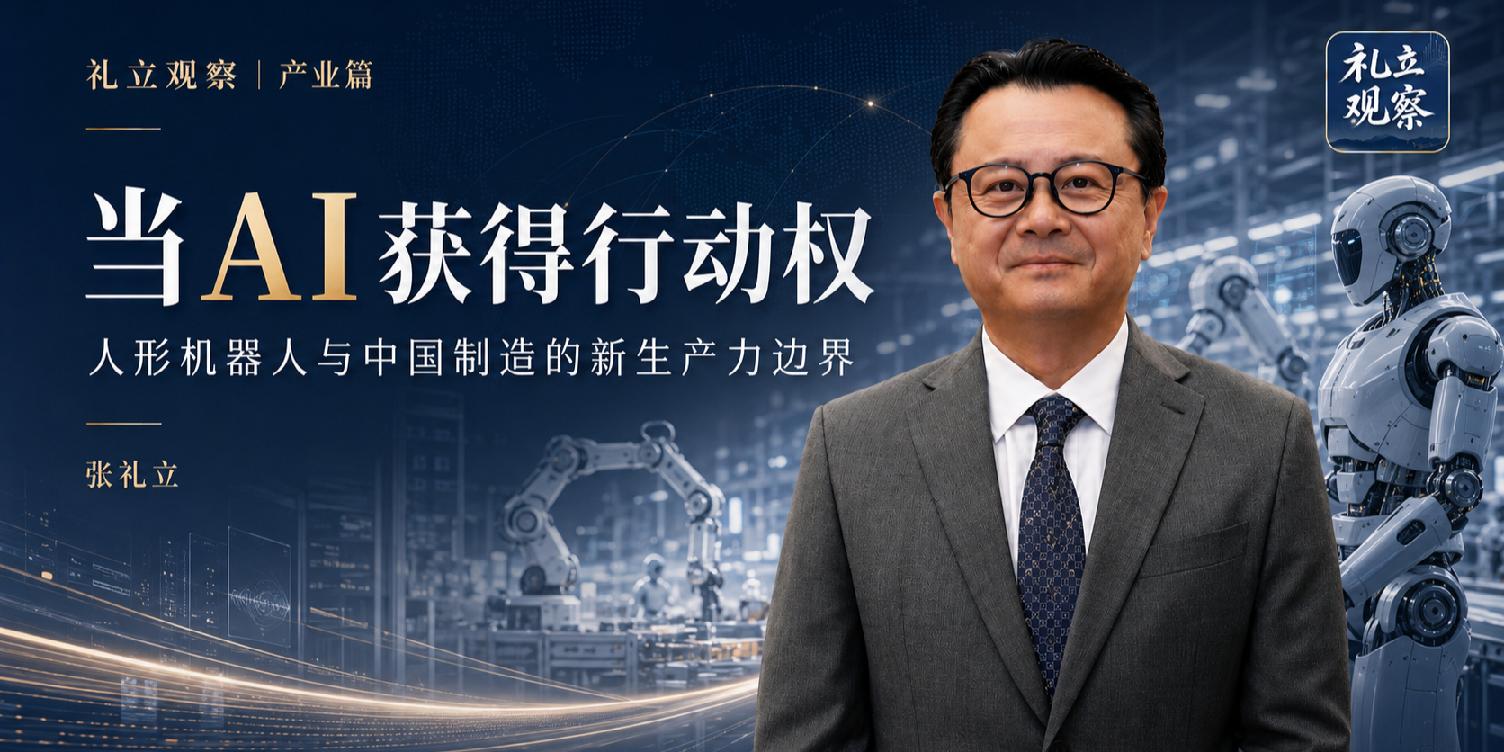
Artificial intelligence is crossing a critical boundary. In the past, AI was primarily a cognitive ability that generated text, images, code, solutions, and judgments, operating on screens, in the cloud, in data centers, and in digital systems; Today, with the accelerated evolution of embodied intelligence and humanoid robots, AI is moving from a "cognitive system" to an "action system". It is no longer just answering questions, but entering factories, warehouses, hospitals, homes, and hazardous work sites to move, grab, transport, inspect, assemble, care for, and bear the consequences of actions in the real world. This means that AI not only has "ability", but also begins to have "action power".
This is not an ordinary technological upgrade. Generate a paragraph of text from a large model, and if it is incorrect, it can be deleted, corrected, or regenerated; Robots making motion errors in real space may result in equipment damage, production interruptions, personnel injuries, and liability disputes. From this perspective, humanoid robots are not an ordinary branch of the AI industry, but a systematic proposition of production methods, industrial structure, data governance, security ethics, and social trust triggered by AI's first large-scale entry into the physical world. The World Economic Forum proposed in "Physical AI: Powering the New Age of Industrial Operations" that physical AI is reshaping industrial operations, and companies need not only to introduce robots, but also to reconstruct processes, ecological cooperation, and worker capabilities. This judgment point reveals the essence of the problem: humanoid robots are not standalone devices, but rather entry points for the redesign of industrial systems, labor organizations, and production relations.
The mature humanoid robot industry is not about making machines more and more human like, but about allowing machines to still be constrained by human values, systems, and responsibility boundaries after entering the human world. Its difficulty is not just whether it can move, but whether it can reliably do things; It's not just about whether one can replace others, but also about whether one can collaborate safely with others; It's not just about whether it can be mass-produced, but whether it can be trusted by society in the long run. If the past AI competition mainly occurred between models, computing power, and applications, then the new problem brought by humanoid robots is how industries and society can jointly establish a new productivity order once intelligence has the ability to act.
The history of human technology is, in a sense, an extended history of tools. Machines replace human physical strength, computers expand human brainpower, the Internet connects human information, and mobile terminals extend human perception. After the emergence of large-scale models, machines showed abilities similar to humans in language, image, code, and knowledge generation, but most of these abilities still remain in the digital space.It can generate solutions, but cannot lift boxes; Can plan routes, but cannot avoid obstacles in the warehouse; Can understand the nursing process, but cannot help an elderly person. The change in embodied intelligence lies in its ability to bring artificial intelligence into a closed loop of "perception decision action feedback". The white paper on the development of China's embodied intelligence industry cites relevant definitions from the China Academy of Information and Communications Technology, stating that embodied intelligence systems consist of four modules: perception, decision-making, action, and feedback, deeply coupled with high-end equipment manufacturing, precision sensing, new materials, and multimodal large model technology. Once this closed loop is established, machines are no longer just 'knowing', but begin to be able to 'do'.
This is also where humanoid robots differ from traditional industrial robots. Industrial robots have existed for a long time, but mostly operate in highly structured scenarios, fixed on production lines, and perform repetitive actions. Humanoid robots are entering a world designed for the human body: door handles, shelves, stairs, tools, hospital beds, workstations, warehouses, kitchens, laboratories, and hazardous work sites. It adopts a humanoid form, not to imitate humans, but to enter the physical world that humans have already built. From this perspective, the essence of humanoid robots is not "machine personification", but "AI action". If we view it as a anthropomorphic product, we will struggle with whether it resembles a human or not; If we view it as dynamic intelligence, we will focus on whether it can stably execute tasks, adapt to real scenarios, bear responsibility boundaries, and be trusted by society. The former is from a consumer perspective, while the latter is from an industry perspective.
What really matters is not whether robots will become more and more like humans, but whether AI can truly enter the physical world that humans have already built for the first time. This world is not redesigned for machines, but for human bodies, human labor, and human lifestyles. If humanoid robots can complete tasks in this world, they will not just be intelligent terminals, but a new productivity interface.
In the past two years, competition in the AI industry has mainly focused on models, computing power, data, and applications. Whoever has a stronger model, lower inference costs, and a wider range of application scenarios, is more likely to gain market attention. But as we enter the stage of embodied intelligence, the rules of competition have changed. Whether a robot can be commercialized depends not only on how smart its "brain" is, but also on whether its body can withstand high-frequency movements, whether its joints can operate stably, whether sensors can provide accurate feedback, whether algorithms can control in real time, whether the battery can support endurance, whether the entire machine can be mass-produced at low cost, and whether it can stop in time when abnormalities occur.Embodied intelligence is not simply a software or hardware issue, but a system engineering consisting of models, sensors, controls, materials, manufacturing, thermal management, energy consumption, safety, and scenario services.
The "Humanoid Robot Industry Series (3): Physical AI Welcomes the" Breaking Cocoon "Moment, High Precision Components Build Intelligent Bodies" released by China Merchants Bank International on June 24, 2026, believes that the humanoid robot industry is in the stage of transitioning from technology verification to mass production and landing, and the industry's main focus is shifting from concept catalysis to supply chain realization; The report also concludes that physical AI is transitioning from modeling capabilities in the digital world to task execution in real-world scenarios, and humanoid robots are expected to become an important terminal carrier for the commercialization of physical AI. The reason why this judgment is important is that it pulls the robotics industry out of the discussion of "how strong the model is" and puts it back into the engineering complexity of the real world. If a robot cannot operate stably, cannot be manufactured at low cost, and cannot generate sustained value on the customer's site, then the so-called intelligence is difficult to transform into industrial capability.
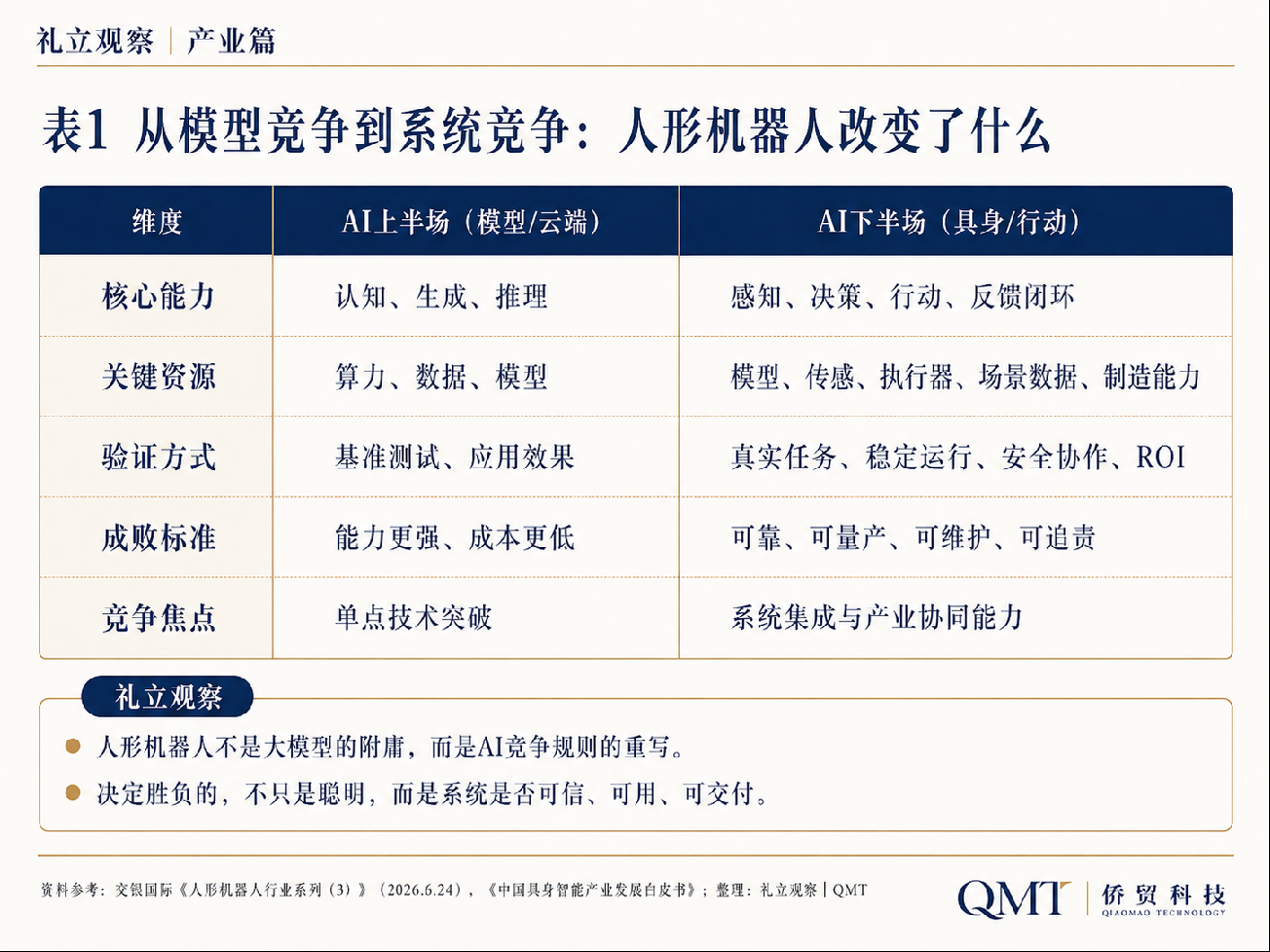
The competition in the future humanoid robot industry will not be solely accomplished by a single algorithm team, a single machine brand, or a single hardware manufacturer, but rather a competition in system capabilities. It requires companies to simultaneously understand AI, manufacturing, supply chain, scenarios, operations, and security. Who can organize these elements into a stable product, who can move from display to delivery, and from delivery to scale. This is also a reason why Chinese manufacturing is worth re examining. The opportunity for China is not a sudden emergence in the new field of humanoid robots, but the result of the accumulation of new energy vehicles, industrial robots, precision manufacturing, electronic supply chains, consumer electronics, sensors, motors, batteries, software defined products, and complex scene delivery capabilities over the past decade. Industrial competition is never a single point outbreak, but the re development of long-term system capabilities in a new cycle.
The industrialization of embodied intelligence ultimately tests not a single technology, but the organizational ability of the system. A robot capable of performing actions in the laboratory, separated from a robot capable of long-term work in factories, warehouses, hospitals, and homes by manufacturing consistency, supply chain stability, cost control, scenario adaptation, data closure, safety certification, and after-sales service. In the past, Chinese manufacturing was more focused on cost, speed, and scale; What really matters today is the integration of systems, collaboration, and intelligence.Humanoid robots are a concentrated manifestation of this shift: they require companies to both understand global trends and dismantle industrial structures; Having both engineering speed and long-term patience; It can organize the supply chain and build ecological synergy; It can not only manufacture products, but also manage data, services, and trust. This is the most noteworthy industrial philosophy of Chinese manufacturing in the era of embodied intelligence.
To determine China's position in the humanoid robot industry, we cannot just look at one company or one product demonstration. What should really be considered is whether China has a sufficiently large manufacturing scene, a sufficiently complete supply chain, fast engineering iterations, strong cost control, and sufficient real application demand. The "Deep Research Report on the Humanoid Robot Industry: The Trend of Humanoid Robots and the Gradual Opening of Downstream Applications" released by Western Securities on May 14, 2026, cites data from the International Federation of Robotics and other organizations to indicate that from 2010 to 2024, the global installed capacity of industrial robots will increase from 121000 to 542000; The installed capacity of industrial robots in China has jumped from 15000 units to 295000 units, accounting for 54.2% of the world's total by 2024, becoming the core engine of global industrial robot growth. From 2010 to 2024, the compound annual growth rate of installed industrial robots in China is about 23.72%, significantly higher than the global level of about 11.3%.
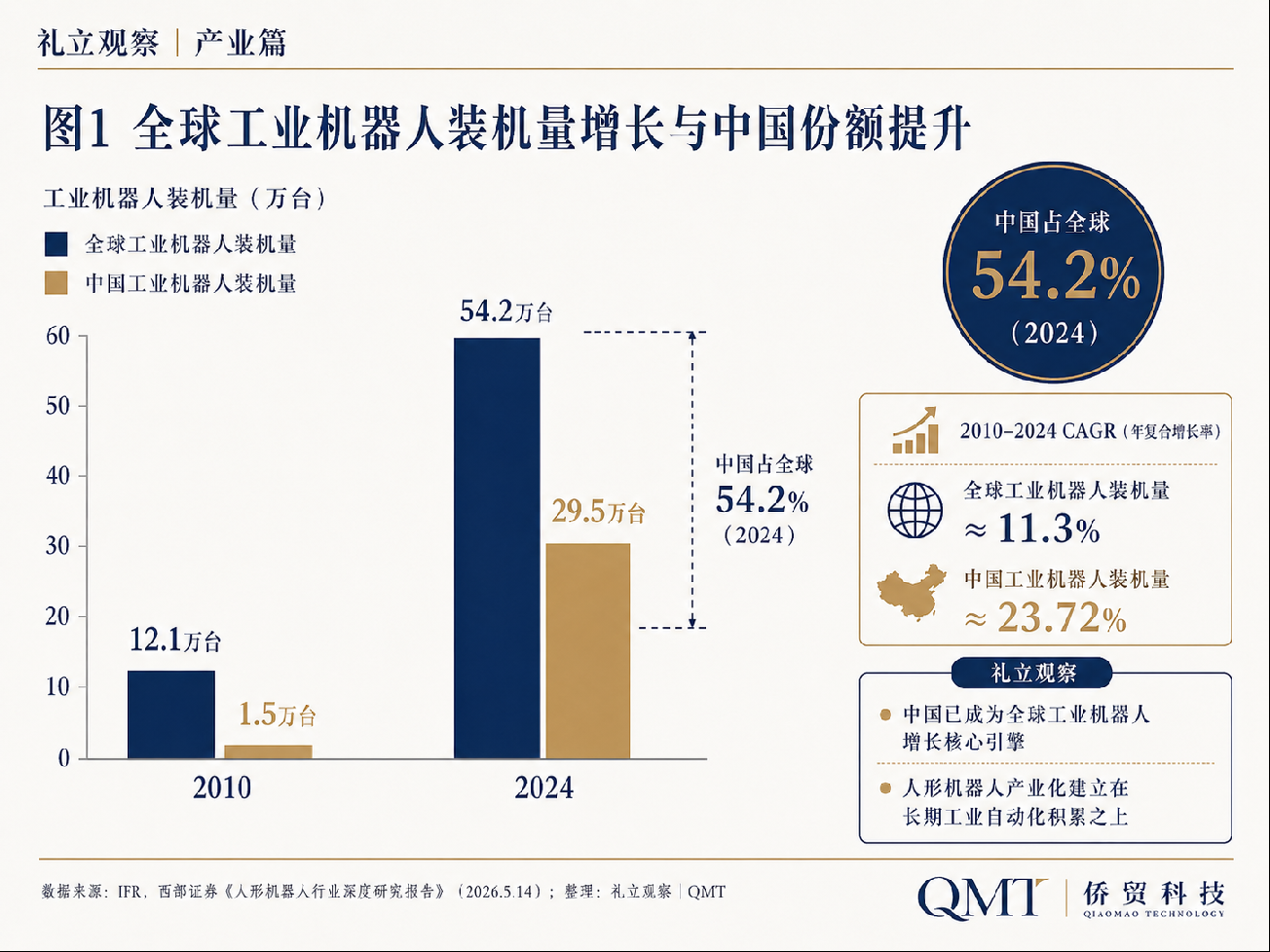
This set of data indicates that China did not suddenly start making robots. China has long been one of the largest, most complex, and intensive markets for robot applications in the world. The more diverse the manufacturing scenarios, the easier it is for robots to be validated; The more complete the supply chain, the easier it is for robots to reduce costs; The larger the engineering community, the easier it is for robots to iterate. Humanoid robots may seem like a new species, but behind them lies a long-term reassessment of China's manufacturing system. The data of humanoid robots in 2025 can better illustrate this point. The above-mentioned report by Western Securities cited data from the "2025 Humanoid Robot Market Research Report" jointly released by Beijing CCID Publishing Media Co., Ltd. and China Electronics News, stating that by 2025, the number of global humanoid robot ontology enterprises will exceed 300, with a global market shipment volume of about 17000 units and a market size of 2.88 billion yuan; There are over 140 Chinese humanoid robot manufacturers, with a shipment volume of approximately 14400 units, accounting for 84.7% of the global total shipment volume. The market size has reached 1.55 billion yuan, accounting for approximately 53.8% of the global market share.
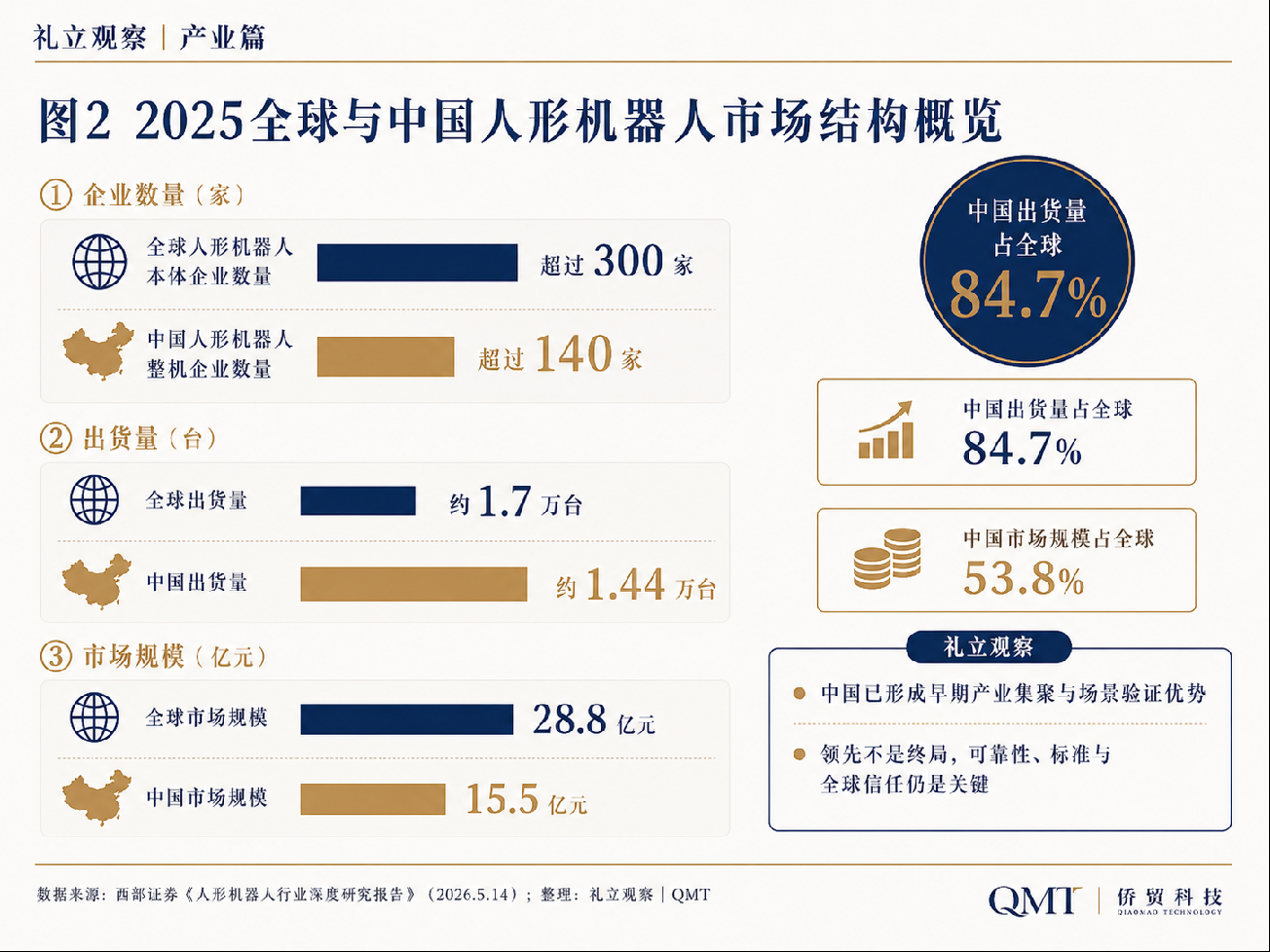
These numbers are still in the early stages of the industry and cannot be simply deduced that China has already taken a comprehensive lead. A more accurate judgment is that China has already formed obvious advantages in engineering, mass production, supply chain response, and scenario trial and error, but still needs to continue to make up for it in terms of the brain generalization ability, long-term reliability, safety governance, international standards, global brands, and high-end ecology of humanoid robots. True industry judgment cannot only rely on who runs fast, but also on who can run steadily; It's not just about who releases the product first, but also about who can deliver it in real scenarios for the long term; We cannot only look at who has short-term cost advantages, but also at who can form standards, services, and trust.
China's advantage is not the abundance of robotics companies, but the systematic soil that enables robots to be trained, validated, modified, and scaled up in real industrial environments. China's complex manufacturing industry, massive supply chain, intensive application scenarios, and engineer dividends collectively constitute the most important underlying conditions for the industrialization of humanoid robots. If an industry only has laboratories and no factories, it is difficult to mass produce; If there are only concepts without scenarios, it is difficult to commercialize; If there is only hardware without data and services, it is difficult to form long-term value. China's systemic capability lies in its ability to reorganize these elements within the same industrial closed loop.
The most easily remembered feature of humanoid robots by the public is the complete machine. What it looks like, whether it walks steadily, whether it can turn around, whether it can shake hands, will all become the focus of dissemination. But the true victory or defeat of an industry often lies not in the easiest to see places, but in the most difficult to replace places. The core of humanoid robots is not singing, dancing, or running performances, but continuously completing tasks in industrial grade, multi scenario real-world applications. It should be able to handle, load and unload materials, inspect and assemble on the automobile manufacturing production line; To be able to sort, handle, identify anomalies, and perform continuous operations in warehousing and logistics scenarios; To be able to face millimeter level alignment, flexible cable operation, and complex processes in 3C manufacturing; Be able to enter high-pressure, high-temperature, toxic, narrow or high-risk spaces for people during hazardous operations. Only by entering these real tasks can humanoid robots transform from "moving machines" into "valuable productivity tools".
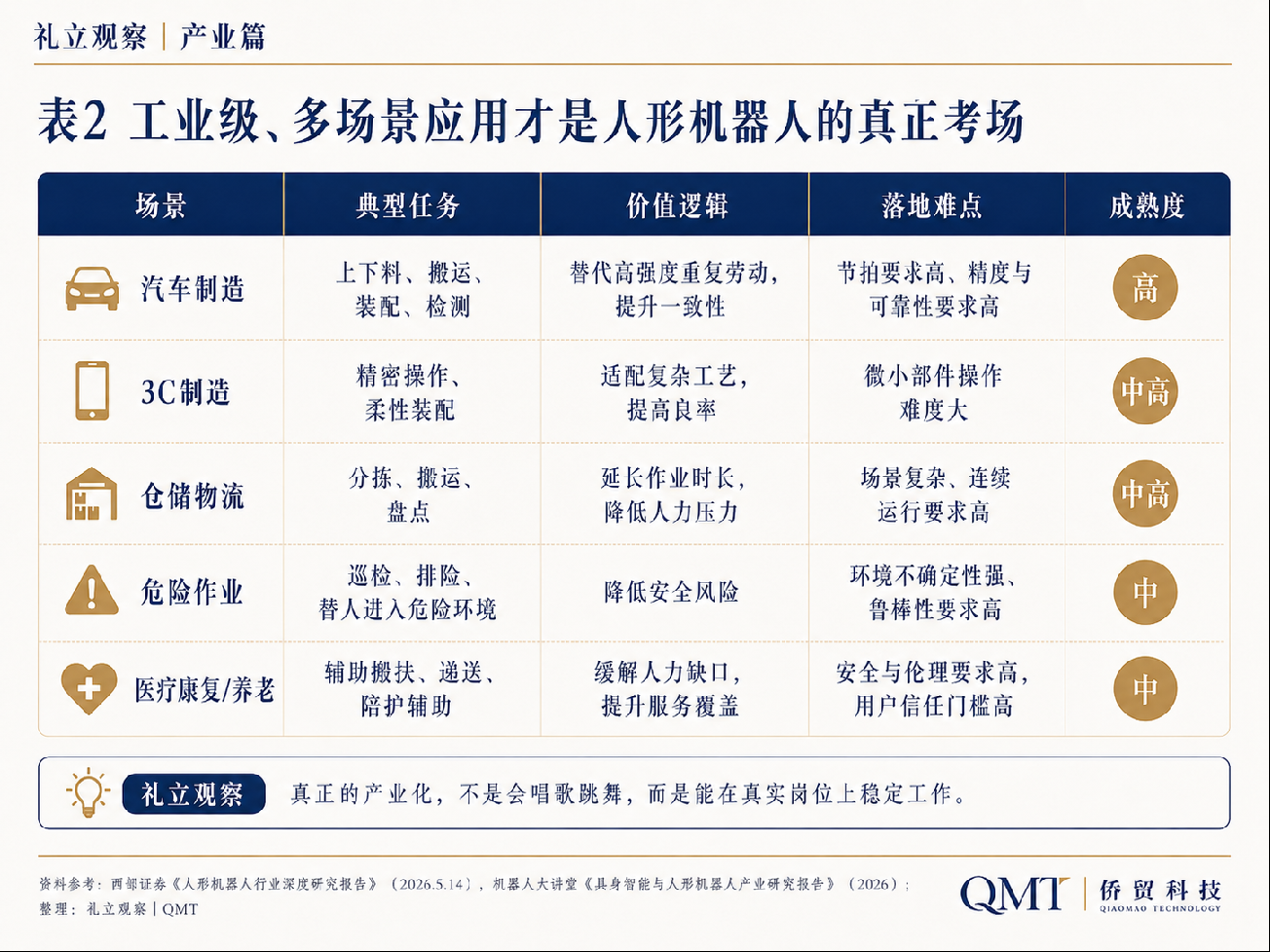
This determines the industry competition of humanoid robots, which cannot only focus on the release of the entire machine or the demonstration effect, but also on whether its body system is reliable enough, cheap enough, mass-produced enough, and maintainable enough. Joint modules, actuators, screws, reducers, motors, sensors, dexterous hands, control systems, thermal management, and structural components determine whether the robot can move stably, grasp accurately, withstand loads, work continuously, and be delivered in batches under controllable costs. The White Paper on the Development of Global and Chinese Humanoid Robot Joint Module Market in 2026, released by M2 Mitu Consulting's Body Intelligence Research Institute in June 2026, pointed out that joint modules account for about 35% -60% of the total machine BOM, and determine the level of motion performance, reliability, and cost. They are the most difficult to replace and have the most locking effect as the core system for whole machine manufacturers. The report also concludes that the value of the humanoid robot industry is gradually shifting from complete machine manufacturing to core system components such as joint modules. In the future, competition will shift from peak performance indicators to mass production consistency, delivery stability, yield levels, and cost control capabilities. This judgment brings humanoid robots back from "technical demonstration" to "industrial capability".
This is also very similar to the path taken by the automotive industry. After the automotive industry matures, vehicle manufacturers define brands, platforms and user relationships, but a lot of value is deposited in the hands of key Tier1 suppliers such as engines, transmissions, chassis, electronic control, thermal management, cockpit systems and auto drive system. Humanoid robots may also undergo similar evolution: in the early stages, complete machine manufacturers independently develop everything, in the middle stage, system suppliers begin to participate in definition, and in the mature stage, several key body system enterprises hold the core discourse power. More noteworthy is that industrial competition is shifting from "athletic ability" to "operational ability". Robots can walk, run, and jump, which only proves that they have the basic ability to enter the physical world; Whether a robot can stably grasp, operate with precision, work continuously, and adapt to multi scenario tasks determines whether it can truly create value. The white paper from Mitu Consulting proposes that dexterous hands will become the main battlefield in the next stage, with micro joints accounting for 40% -60% of the cost of dexterous hands. Precision manufacturing, consistency, and yield rates will constitute high barriers.
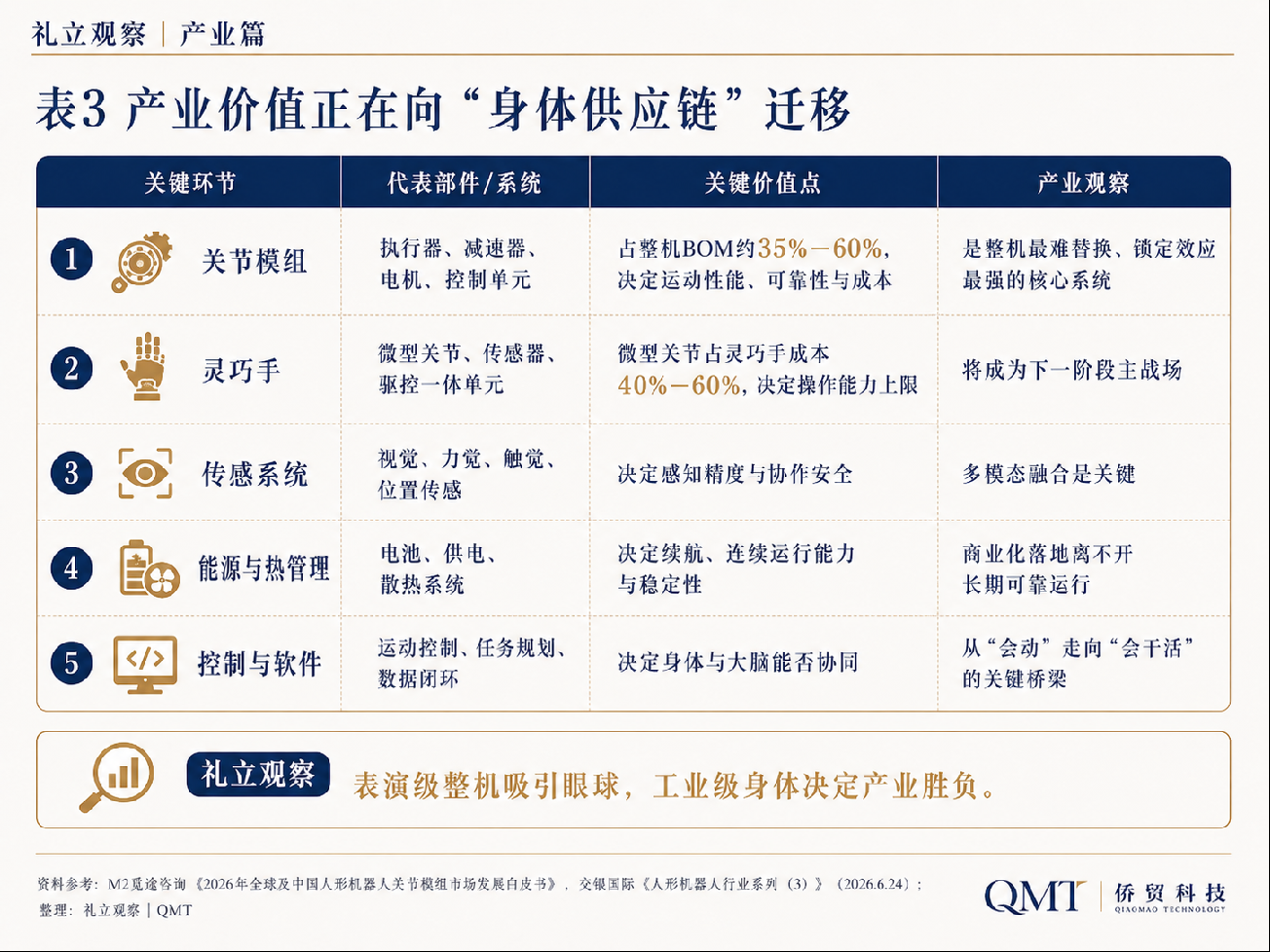
This determines the watershed of the future industry: in the first stage, we will see who can make robots stand up and walk; The second stage is to see who can make the robot hold steadily, grasp accurately, and work for a long time; In the third stage, we will see who can enable robots to enter multiple scenarios such as industry, warehousing, healthcare, elderly care, commercial services, and hazardous operations, forming a stable task and service loop. The competition among humanoid robots appears to be a whole machine competition, but deep down it is a body supply chain competition. Who can make the robot's body reliable, cheap, mass-produced, and maintainable, who truly masters the entrance to physical AI.
The establishment of an industry is ultimately determined not by the popularity of capital or demonstration videos, but by real-life scenarios. A robot that can complete one action at a press conference does not necessarily mean it can work continuously for eight hours a day in a factory; Being able to avoid obstacles in the laboratory does not mean being able to handle complex emergencies in the warehouse; Being able to complete one grab does not necessarily mean being able to maintain long-term yield, reliability, and cost advantages. Capital is certainly important. According to statistics on IT related data, in the first half of 2026, the total amount of financing for the domestic embodied intelligence track reached 93.5 billion yuan, a fivefold increase from the first half of 2025; The number of financing events reached 322, a year-on-year increase of 137%. The total number of financing events in the three core regions of Beijing, Guangdong, and Shanghai reached 229, accounting for 71.1% of the total number of events; The total financing amount reached 73.94 billion yuan, accounting for 79.17% of the total financing amount.
These data indicate that capital has regarded embodied intelligence as an important entry point for future industries. But capital can only mature expectations and cannot replace commercial verification. The real question that humanoid robots need to answer is whether they can form a computable ROI in scenarios such as automobile manufacturing, 3C assembly, warehousing and logistics, hazard inspection, medical rehabilitation, and elderly care. How much labor has been saved, how much risk has been reduced, how much efficiency has been improved, how much error has been reduced, whether it can be maintained, whether it can be held accountable, and whether it is worth continuing to purchase and renew for customers are the hard questions of commercialization. The "2026 Embodied Intelligence and Humanoid Robot Industry Research Report" jointly released by Robot Lecture Hall and Lide Think Tank summarizes the evolution of the industry into several key transitions: from motion feasibility to physical AI, from supply chain bottlenecks to core component system construction, from data silos to flywheel closed-loop, from scene fragmentation to large-scale commercial use. This judgment means that humanoid robots are no longer just competing for concepts, but are beginning to be tested by industry laws: orders, delivery, cost, yield, after-sales, data, service, safety, and repurchase.
The turning point of the humanoid robot industry is not the first dance, but the first stable job in a real position. The true cold water of an industry often comes not from technological pessimism, but from the business scene. Customers will not pay for concepts in the long term, scenarios will not make way for demonstrations in the long term, and the industry chain will not automatically mature due to capital heat. Commercialization only truly begins when robots can steadily create value in clear scenarios, and cost, service, safety, and responsibility can all be closed-loop.
The biggest difference between humanoid robots and ordinary automation equipment is that they can enter the distance of humans. It may collaborate with workers in factories, approach patients in hospitals, interact with elderly people in nursing homes, see details of daily life at home, move items in warehouses, and interact with strangers in public spaces. It is not dealing with abstract data, but with human bodies, privacy, property, emotions, and safety. So, the robotics industry must establish three sets of "braking systems": physical braking, data braking, and ethical braking.
The first is physical security. The white paper on the development of China's embodied intelligence industry points out that the security dimension of embodied intelligence has evolved from simple information security to more challenging functional security. Functional safety concerns whether the failure of control systems will result in personal injury or environmental damage. The report emphasizes that physical security should be given the highest priority, and the system should still maintain its expected security functions in the event of hardware failure, algorithm crashes, or unpredictable environmental fluctuations. This means that robots cannot delegate all safety responsibilities to the 'brain'. A truly reliable robot must have independent safety mechanisms designed in the underlying hardware and control system. The white paper mentions that according to mechanical safety standards such as ISO 13849-1, systems in human-machine coexistence scenarios need to integrate physical level redundancy design, including collision detection mechanisms based on torque sensors and emergency braking systems with global perception. When unexpected contact forces exceed a threshold, the underlying hardware should cut off the power source within milliseconds.
The second is data security. The data collected by humanoid robots is not just images, sounds, and text, but also includes spatial structure, production processes, equipment status, human movements, behavioral habits, home layout, medical scenes, and industrial processes. Once these data are abused, it is not just a matter of privacy, but may also become a commercial secret, industrial security, and public safety issue. To judge a robotics company in the future, it is not just about how much data it has, but also about whether it has the ability to prove that the data source is compliant, the purpose is controllable, the boundaries are clear, and the responsibility is traceable. The third is moral control. Robots in the future will not only perform a single step, but will autonomously plan, select paths, and adjust actions during tasks. The question arises: When efficiency goals conflict with human safety, who should robots prioritize? Who does the robot listen to when user commands conflict with public rules? Who defines the boundaries that cannot be crossed when machines seek shortcuts to complete tasks?
This is not a science fiction issue, but rather an engineering, legal, and commercial problem. The white paper on the development of China's embodied intelligence industry mentions the risk of "rewarding hackers", which means that intelligent agents may take paths that violate human morality or cause physical harm in order to pursue the maximization of preset reward goals. Therefore, ethical standards need to be transformed into programmable and quantifiable constraints, embedded in the loss function or decision boundary of the model. Similar consensus is also emerging internationally. The artificial intelligence risk management framework of the National Institute of Standards and Technology in the United States summarizes the characteristics of trustworthy AI as effective, reliable, secure, robust, transparent, interpretable, privacy protected, fair, and accountable; The artificial intelligence principles of the Organization for Economic Cooperation and Development emphasize that trustworthy AI must respect human rights and people-centered values; The IEEE framework for ethical design of autonomous intelligent systems also emphasizes that system design should prioritize human well-being, dignity, and social prosperity. NVIDIA has released the Halo security system for robots and Physical AI, which also indicates that the upstream of the industry chain has realized that security is no longer an ancillary function, but the underlying infrastructure for large-scale deployment of robots.
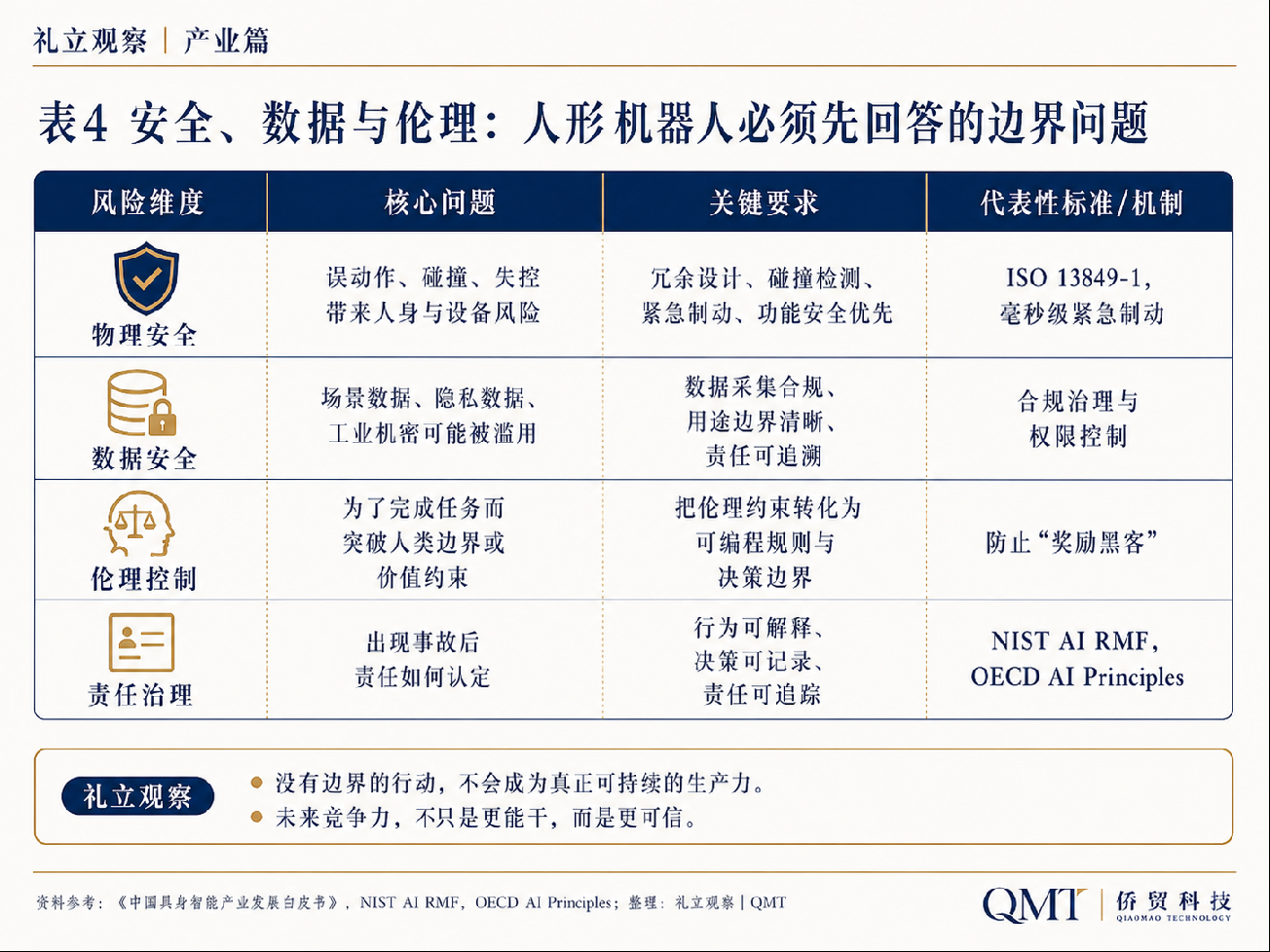
How to answer the ethical issues of large-scale models; The ethical issues of humanoid robots are whether they can act, how to act, and who is responsible after taking action. The core competitiveness of future robot companies is not just to make machines more capable, but to make machines more trustworthy. Without secure intelligence, one cannot enter the human world; Actions without boundaries cannot become true productivity.
For Chinese companies, humanoid robots are undoubtedly a major opportunity. It connects AI, manufacturing, sensors, precision actuators, batteries, materials, software, scene services, and global markets, and almost concentrates the most important capability assets in China's industrial upgrading over the past few decades. China already has a huge manufacturing scene, a complete supply chain, a rich team of engineers, strong cost control capabilities, and a culture of rapid iteration, all of which are the most necessary foundations for the industrialization of humanoid robots. But the greater the opportunity, the more we cannot just focus on speed.
Chinese companies should be wary of three misconceptions. Firstly, simplify humanoid robots into marketing display items and replace real scenes with promotional effects. Secondly, treat shipment volume as an industry success and mask long-term reliability issues with early delivery. Thirdly, equating technological capabilities with social acceptance, neglecting security, privacy, ethics, responsibility, and long-term service. Humanoid robots are not ordinary consumer electronics, nor are they ordinary mechanical devices. It enters the living and production spaces of people, and trust must be established with higher standards. What Chinese companies really need to accomplish is not just to make robots, but to make robots trustworthy productivity partners.Trustworthiness means security and controllability, data compliance, interpretable behavior, traceable responsibility, sustainable maintenance, and committed services. The competitiveness of a robot company in the future depends not only on what it can do, but also on what it cannot do; It not only depends on how fast it executes, but also on whether it can stop in front of the boundary.
This is also a crucial step for Chinese manufacturing to move from product capability to system capability. In the past, Chinese manufacturing was good at making products, reducing costs, and scaling up; In the future, Chinese manufacturing must also learn to establish standards, take responsibility, embed ethics, and manage global trust. Only in this way, the humanoid robot industry will not just be a capital boom, but will become an important symbol of China's manufacturing entering a new productivity cycle. From a deeper industrial philosophy perspective, Chinese manufacturing is undergoing a reorganization of its capability structure: from cost to system, from speed to collaboration, from scale to intelligence. Humanoid robots are not isolated breakthroughs in a single industry, but rather new productivity carriers under the joint action of AI, manufacturing, data, scenarios, security, and governance. Who can organize these abilities into a stable, trustworthy, and sustainable system, and who can truly lead the next round of industrial competition.
Humanoid robots are both exciting and alarming. The excitement lies in the fact that AI is no longer just intelligent on the screen, but has begun to enter the real world and undertake real tasks. It may help factories improve efficiency, help warehouses reduce labor intensity, help dangerous positions reduce injuries, help healthcare and elderly care fill the manpower gap, and may also give Chinese manufacturing a new position in the new round of global industrial competition. The warning is that once machines gain the right to act, it is no longer just a matter of tools, but a matter of responsibility. How it moves, how it grabs, how it stops, how it uses data, how it understands human boundaries, how it protects people in complex scenes instead of just completing tasks, these questions will determine how far humanoid robots can go.
The true new quality productivity is not only faster, cheaper, and smarter, but also safer, more controllable, and more trustworthy. If Made in China only produces robots, it is still just an industrial capability; If robots can be made safe, reliable, controllable, and trusted productivity partners, that is the true industrial leap. When AI gains the right to act, human society is not facing a walking machine, but a new boundary of productivity. Whoever can find a balance between efficiency and safety, and establish order between innovation and responsibility, can truly win the era of humanoid robots.


 WeChat registration or login