

2026-04-16 15:45


Mobile phones, laptops, tablets, televisions, car consoles, smartwatches, and various screens occupy the daily lives of modern people, requiring them to watch hundreds of times a day.
Most people watch screens every day, but few care about how screens are made. The display panel behind this is an industry with an annual output value of hundreds of billions of yuan, which has undergone two major technological iterations in the past two decades, and the market dominance has also been redistributed.
The mainstream technology of the previous generation in the display panel industry was LCD, which is the LCD screen that many people are familiar with. Since 2000, LCD TVs and LCD displays have gradually replaced old-fashioned CRT tube TVs and entered millions of households. The LCD screen itself does not emit light and requires a set of backlight sources to illuminate from behind. The liquid crystal layer controls the passage and obstruction of light to display the image.
This technology has made screens thin and light for the first time, starting with LCD screens for wall mounted TVs and pocket phones. Until today, LCD remains one of the best-selling technology solutions in the TV and computer monitor market.
But LCD has a structural weakness that cannot be bypassed. It does not emit light on its own and must rely on a backlight source, making it difficult to further thin the screen and reduce power consumption. When displaying pure black images, the backlight will be exposed. The screen needs to be bent and shaped, which cannot be achieved by the rigid structure of LCD. These shortcomings are driving the display industry to look for the next generation of technology.
OLED? The full name is Organic Light Emitting Diode, which entered the laboratory research stage as early as the late 1990s. In 2007, mobile phones with OLED screens began to appear and gradually spread in the high-end smartphone market thereafter.
By around 2010, OLED was considered by the industry as the most likely next-generation display technology to become mainstream after LCD. Each pixel of OLED can emit light on its own without the need for a backlight source. This allows the screen to be made thinner, with lower power consumption, purer black color (because pixels can be completely turned off), faster image response, and can also be bent into flexible shapes. In the past decade, OLED technology has developed rapidly, and its penetration rate in the field of smartphones has exceeded 50%.
The next growth point for the OLED industry is in larger screens such as laptops, tablets, and car displays. In order to increase the size of OLED screens, panel manufacturers have begun to concentrate on building the 8.6th generation AMOLED production line. The so-called "8.6 generation" refers to the use of glass substrates with larger dimensions (2290mm x 2620mm) in the production line, which can more efficiently cut panels of notebook and tablet sizes, reducing the cost of a single piece.
At present, there are a total of four 8.6th generation OLED production lines under construction worldwide, from the four major manufacturers of Visionox, Samsung Display, BOE, and TCL Huaxing. The total investment scale of the four production lines is nearly 170 billion yuan. Spending 170 billion yuan, each company has its own technological roadmap. Whoever can lead the way in mass production will be at the forefront.
On April 9th, commissioned by Visionox, the Liquid Crystal Branch of the China Optics and Optoelectronics Industry Association organized a seminar and appraisal meeting on Visionox intelligent pixelation technology (ViP) achievements in Hefei.
The appraisal committee composed of Ouyang Zhongcan, Cao Yong, Tian He and other experts, academicians of the CAS Member, gave the appraisal opinion of "reaching the international leading level". At the meeting, ViSino announced that products equipped with ViP technology have achieved mass production and shipment to brand customers on the sixth generation AMOLED production line in Hefei, marking the first commercial entry of ViP technology into the consumer market.
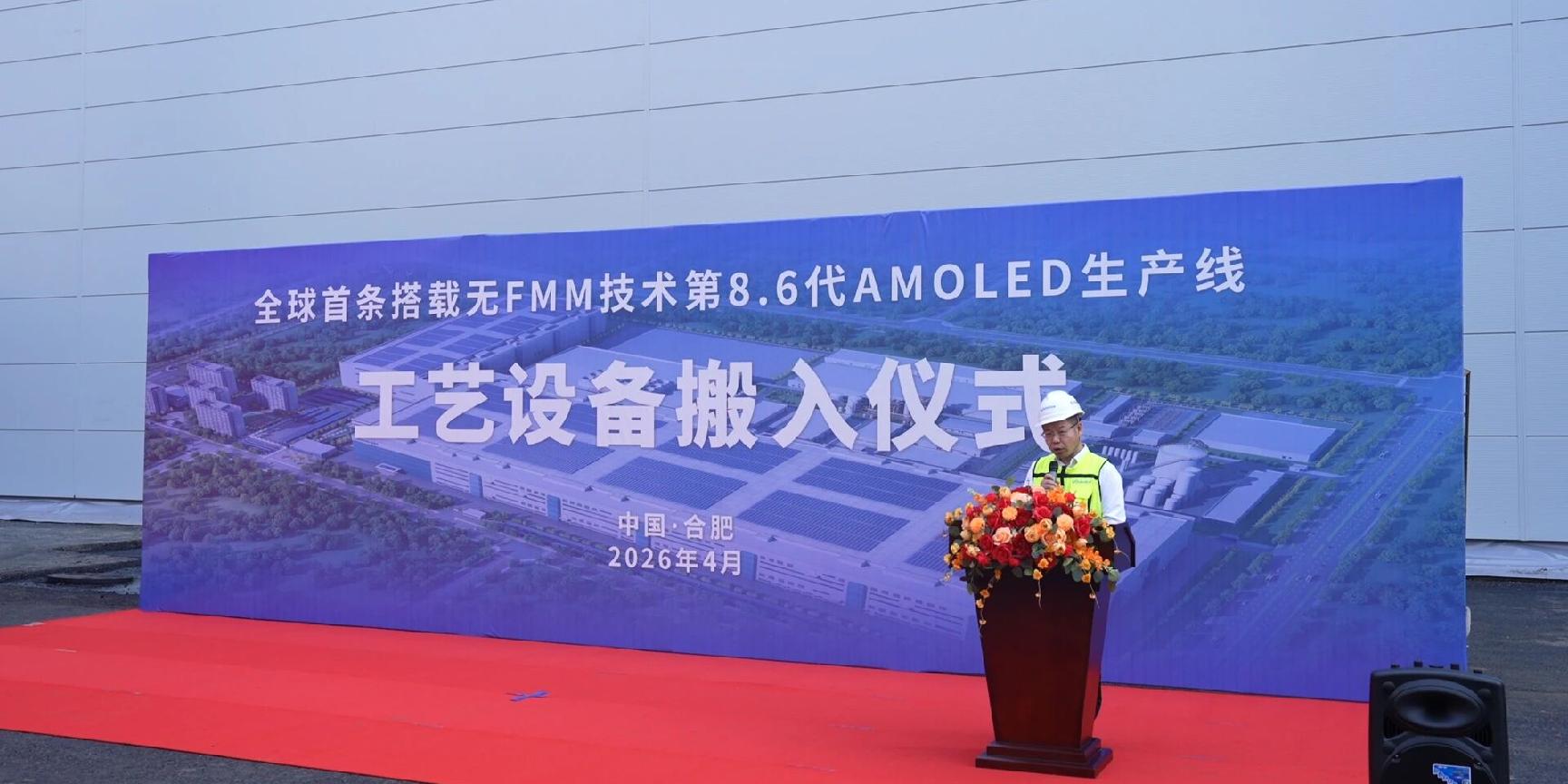
ViP is an OLED pixel fabrication process independently developed by Vixinnuo, which uses semiconductor lithography technology to replace the traditional fine metal mask (FMM) evaporation route. It is one of the two non FMM routes among the four 8.6th generation lines.
From following Japanese and Korean manufacturers in the LCD era, to standing on equal footing with Korean manufacturers in the OLED era, and then to being the world's first to mass produce ViP technology, China's display panel industry has taken more than 20 years to reach the forefront for the first time.
Twenty years to grind a screen
China's panel industry started very late. In 2003, BOE acquired the LCD production line of Hyundai Korea, and Chinese Mainland had its first LCD production line.
Before that, China needed to import a large number of LCD panels every year for the production of televisions and computer monitors. In the following decade, manufacturers such as BOE, TCL Huaxing, and Tianma Microelectronics gradually caught up with Japanese and Korean manufacturers in the LCD field through large-scale investment and production lines. By 2024, the display panel market in Chinese Mainland will reach 396.2 billion yuan, accounting for more than 60% of the global market. The catch-up of LCD relies on production capacity scale. Whoever has more production lines, larger production capacity, and lower costs will be able to gain more market share.
But in the era of OLED, there have been some changes. The production process of LCD is relatively standardized, and the processes used by various manufacturers are similar. The manufacturing process of OLED panels is much more complex than LCD, involving multiple links such as evaporation, packaging, and driving. Each link has different technical solutions to choose from, and what to choose directly affects the performance and cost of the final product.
In the field of OLED, choosing the technology route is as important as expanding production capacity. The catch-up in the OLED era began around 2010, when Samsung Display, with its first mover advantage, once held over 90% of the global OLED panel market share.
Chinese manufacturers started from scratch, first building 6th generation lines for mobile phone screens, gradually climbing in yield and production capacity, and then gradually entering the mid to high end market. This process is slower and requires greater investment than the LCD era, but over the past decade, the landscape has changed.
According to CINNO Research statistics, by 2025, Korean manufacturers will occupy 49.4% of the global AMOLED smartphone panel market; And the domestic manufacturers' shipment share is 50.6%, surpassing 50% for the first time in the year, achieving a historic leap. This marks the continuous enhancement of Chinese manufacturers' voice and competitiveness in the global AMOLED industry chain.
It can be said that the OLED panel industry in China and the panel industry in South Korea have reached the same level, and Vishino is a representative company in this catch-up.
The starting point of Vishino (002387. SZ) is a laboratory. In 1996, Tsinghua University established the OLED project team and began researching this display technology, which had almost no industrial foundation in China at the time. In 2001, the team's achievements went out of campus, and Visionox was officially established. In 2002, Vishino began developing key structures and processes for OLEDs. In an era when most of its domestic peers were still working on LCDs, the company had already invested its resources in OLEDs. In 2003, the first full-color AMOLED display in Chinese Mainland was lit by Vicino.
As of today, Vishino has accumulated over 20000 OLED related patents. CINNO data shows that in recent years, the shipment volume of Vixinno AMOLED mobile phone panels has steadily ranked among the top three in the world, becoming the first tier of the OLED panel market.
According to data from DSCC, an international consulting firm, in 2024 and 2025, the shipment volume of AMOLED panels for ViSino smart wearables will steadily rank first in the world. ViSino's customers cover Honor, Xiaomi vivo?OPPO? Mainstream terminal brands such as Huami, Nubia, Fitbit, etc. maintain long-term stable supply relationships in multiple categories of mobile phones and wearables.
The Three Paths of Generation 8.6 Line
According to data from Qunzhi Consulting, the global shipment of OLED smartphone panels is expected to reach approximately 890 million pieces by 2025, a year-on-year increase of 5.2%. The growth rate of mobile devices has slowed down. The increment of the entire industry is shifting towards larger screens such as laptops, tablets, and cars.
DSCC predicts that the average annual compound growth rate of IT OLED demand will reach 46% from 2023 to 2028, and IT OLED shipments will reach 60 million units by 2028. Omdia predicts that the shipment volume of mid sized IT OLED panels will reach 84.2 million pieces by 2030, with an average annual compound growth rate of 26.5%; The shipment volume of car mounted OLED panels reached 12.2 million pieces, with an average annual compound growth rate of 30.6%.
The growth potential of the mid size market is certain. Zhao Jun, Senior Vice President of TCL Technology and CEO of TCL Huaxing, said in a media interview during SID International Display Week in May 2025: "The increase in OLED penetration rate in mid size is a huge opportunity that we have observed so far. For the display industry, it may be the only industry level trend in the next five years. "
But for OLED to have a large-sized screen, there is a technological challenge that needs to be solved first.
In the past decade, there has been a core process in the mainstream production of OLED screens called FMM, which is the fine metal mask template. It is a metal mesh filled with tiny holes. During screen production, red, green, and blue luminescent materials are precisely deposited onto the pixel positions of the glass substrate through this mesh. The accuracy of FMM directly determines whether the color and position of each pixel on the screen are accurate and aligned.
This process works smoothly on small-sized screens such as mobile phones, but there are problems when the screen becomes larger. Once the area of the metal mesh increases, it will sag and deform under its own weight, and the position of pixel deposition will be out of control, resulting in a decrease in yield. FMM also has another problem, with an aperture rate of only about 30%. A large amount of luminescent materials are blocked and wasted by non porous areas of the metal mesh, resulting in low material utilization and high production costs.
According to publicly available industry information, the size limit that FMM type OLEDs can adapt to under standard specifications is approximately between 15 and 17 inches. Continuing to use FMM technology makes it difficult for OLEDs to be made into larger sized laptops and tablets.
There are currently four panel manufacturers around the world building their 8.6th generation AMOLED production lines, each with different technical routes. Samsung Display and BOE are following the traditional FMM vapor deposition route; TCL Huaxing takes the printing OLED route; Vixinno takes the ViP lithography route. There are also reports that LG Display is evaluating the introduction of FMM free processes on some large OLED production lines.
Samsung Display was the first to initiate investment in the 8.6th generation line, adopting the FMM vapor deposition and Tandem stacked device technology route. Its A6 factory in Yashan, South Korea plans to achieve full mass production in the second to third quarters of 2026.
BOE invested 63 billion yuan to build China's first 8.6th generation AMOLED production line in Chengdu, adopting the FMM evaporation route and combining LTPO and Tandem stacked device technology. TCL Huaxing is constructing the T8 project in Guangzhou, with an investment of approximately 29.5 billion yuan. It will take the route of printing OLED and directly spray liquid luminescent materials onto the pixel positions of the substrate through high-precision nozzles, without using FMM.
Weixinnuo is building the 8.6th generation AMOLED production line in Hefei, operated by Hefei Guoxian Technology Co., Ltd., with a total investment of 55 billion yuan. This production line adopts semiconductor lithography technology to replace FMM's ViP route, with a designed production capacity of 32000 glass substrates per month, and plans to start mass production in the first quarter of 2027.
What are the advantages of ViP over traditional FMM? Public data shows that ViP technology has increased the effective light-emitting area (aperture ratio) of OLED screens from 29% of traditional FMM to 69%, with a pixel density of 1700ppi. It can maintain Real RGB pixel arrangement under high pixel density conditions, with significant improvements in color reproduction and clarity.
Combined with Tandem stacked device technology, ViP can achieve 6 times the device lifespan compared to traditional FMM AMOLEDs, or 4 times the brightness under the same lifespan conditions. More than doubling the aperture ratio directly affects the user experience of the terminal product. The screen can be brighter at the same power consumption or more energy-efficient at the same brightness. For products such as tablets and laptops that rely on battery life, every bit of power saved by the screen can last for several more hours. ViP technology from ViSino can adapt to full-size application scenarios ranging from small to large, from flat to 3D, covering smartwatches, smartphones, tablets, laptops, car displays, and VR/AR near eye displays.
In addition, the ViP production line has flexible production capabilities and can switch between producing products of various sizes and shapes on the same production line. The traditional FMM process requires a complete set of metal mask templates to be remade every time the screen size is switched, which is not necessary for the ViP route. Medium to large-sized OLEDs are still in their early stages. Today, customers may need a 14 inch laptop screen, and tomorrow they may need a 10 inch tablet screen. Product specifications change rapidly, and a production line can switch sizes at any time, saving time and costs that are tangible.
ViP's ViP technology is currently in mass production on the 6th generation AMOLED production line in Hefei. The products delivered to brand customers in the first quarter of 2026 are from this 6th generation line. The under construction Hefei 8.6th generation AMOLED production line is the next destination for ViP technology, expanding from small and medium-sized smartwatches and smartphones to medium to large-sized laptops, tablets, and car products.
Of course, behind the mass production of ViP technology is ViSino's long-term research and development investment in OLED core processes. The use of semiconductor lithography for OLED pixels involves a complete redevelopment of materials, equipment, and process flow. It can be said that the threshold for ViP technology is very high.
In an interview with Xinhua News Agency in January 2026, Zhang Deqiang, Chairman of Visionox, said, "We need to avoid the vicious competition of low prices in the traditional route of competing for scale. This requires finding a new route that can solve new difficulties, find new markets, and bring new value to customers. This is the healthy competition
At the appraisal meeting on April 9th, the expert group suggested further accelerating the large-scale production and application promotion of ViP technology in the fields of medium and large-sized and IT products.
From not having a single production line in the LCD era to being on par with Korean manufacturers in the current OLED era, China's display panel industry has been catching up for more than 20 years. The mass production of ViP finally gives China's display panel industry the opportunity to stand at the forefront.


China Feihe Chairman Leng Youbin: 25 years of adhering to the original intention, witnessing the times

Wang Zhengrong, Chairman and Party Secretary of Kunlun Trust Co., Ltd.: 25 years of ups and downs, unchanged original intention

Qiaojie, PR Manager, Qiaojie: Starting a New Journey through Reading and Observing the Classics


 WeChat registration or login


 Subscribe
