2026-04-13 20:30


The collective anxiety about technology replacing labor has been repeatedly portrayed in history, and the script is surprisingly similar.
In the 1970s, when the first ATM machine was introduced to bank branches, public opinion widely lamented that tellers would become collectively unemployed. However, reality provides a counterintuitive answer: the popularity of ATMs has indeed reduced the operating costs of banks opening branches and handling cash, leading to an exponential increase in the number of branches, but the total demand for tellers has not decreased but instead increased.
In fact, the more profound transformation of this machine revolution occurred in the division of labor within banks, where the work of tellers shifted from mechanical "counting money" to more valuable financial consulting.
The wheel of history has been spinning until now. The craze for big models has entered the era of "agents", and the same panic has once again enveloped the workplace. But in this game about 'rice bowl', a new strategic perspective is emerging.
Recently, Alibaba released a clear signal at its first group strategy meeting for the new fiscal year: to fully promote the intelligent agent economy represented by Qianwen. This is not only an internal tone, but also a redefinition of Alibaba's future digital economy paradigm.
The so-called 'intelligent agent economy' is essentially a unique paradigm driven by the dual wheels of 'AI models+consumer ecology'. It is triggering a human centered service revolution - the purpose of AI technology evolution is not to replace people, but to activate market potential through technology, create new forms of employment, and give birth to new quality service industries.
In this transformation, Alibaba is not only a participant, but also the most important infrastructure provider. Its over 20 years of accumulated consumer ecology and full stack AI capabilities constitute the rarest combination of elements for the landing of intelligent agent economy.
See the opposite of employment anxiety
The classic case of ATM and teller, where intelligent agents are repeating the same script. The current concern in society about AI "grabbing rice bowls" is essentially anxiety about the existing market. Regardless of historical experience or expert judgment, the intelligent agent economy is not a "replacement", but rather an "enhancement" and "creation".
Intelligent agents compress multi-step, cross platform complex services into natural language interactions, greatly improving service efficiency and activating consumption potential that was previously suppressed due to high operational barriers and information asymmetry.
Just as ATMs have densely populated bank branches, intelligent agents are expanding the overall "cake" of the service industry by reducing service costs.
Data shows that the intelligent agent economy is giving rise to a large number of high value-added new positions focused on human-machine collaboration, experience design, and intelligent agent operation. This is not a simple title change, but a profound restructuring of professional connotations.
In other words, AI defines a new paradigm of human-machine collaboration. When intelligent agents take over mechanical tasks such as information queries, process runners, and standard responses, the division of labor among human service providers undergoes a fundamental shift, allowing them to focus on high-value aspects that truly require professional judgment, emotional connections, and complex decision-making.
The emergence of humans from the role of "screws in digital factories" also means that labor will undergo collective displacement towards higher ends of the value chain, which may be referred to as the "migration of division of labor". Of course, the result is not the disappearance of jobs, but the emergence of higher quality employment opportunities and new forms of division of labor.
As the most important infrastructure provider for the smart economy, Alibaba's ecosystem is providing the "soil" for this new type of division of labor.
Taking e-commerce customer service as an example, after the intervention of intelligent agents, simple logic such as returns and exchanges can be directly processed by AI in a closed-loop manner. The scenarios that truly require human intervention are often those involving complex emotional communication, higher professional thresholds, or cross platform collaboration.
Intelligent agents eliminate the need for human service providers to handle inefficient repetitive labor, and the output per unit time can shift from "solving the quantity of problems" to creating deeper value.
The new career map is being generated
The implementation of new quality productivity often accompanies the reconstruction of occupational coordinates.
Looking back at the new professions born of technological revolutions in the past: from train drivers in the steam age, to programmers in the PC age, and to "data annotators" after the explosion of AI deep learning. Nowadays, the entire lifecycle of intelligent agents, including development, training, optimization, operation, monitoring, and other stages, has given rise to new professions such as "intelligent agent trainers," "intelligent agent operators," and "scene architects.
The practitioners in these positions may not necessarily be programmers, but they must be 'business experts'. They are responsible for breaking down complex real-world requirements into atomic tasks that can be executed by intelligent agents. Even in enterprises with countless scenario intelligent agents, they also need to know how to manage AI, coordinate intelligent agent collaboration, and accelerate the application and landing of technology.
The "new rice bowl" in the micro intelligent agent economy, the list of jobs generated by AI, is not simply a replacement of existing stock, but rather shows the market incremental space. Data shows that China's AI talent gap will exceed 5 million by 2025, and enterprises urgently need composite talents who can deeply integrate AI technology with business scenarios.
To fill the gap, multiple business segments in the Alibaba ecosystem have already taken action. The Alibaba International Artificial Intelligence Trainer National Operations Center, established in early 2025, has built an ecosystem of "nurturing talents, utilizing talents, and promoting development". Through training bases, it cultivates AI training elites and drives thousands of enterprises to upgrade their intelligence.
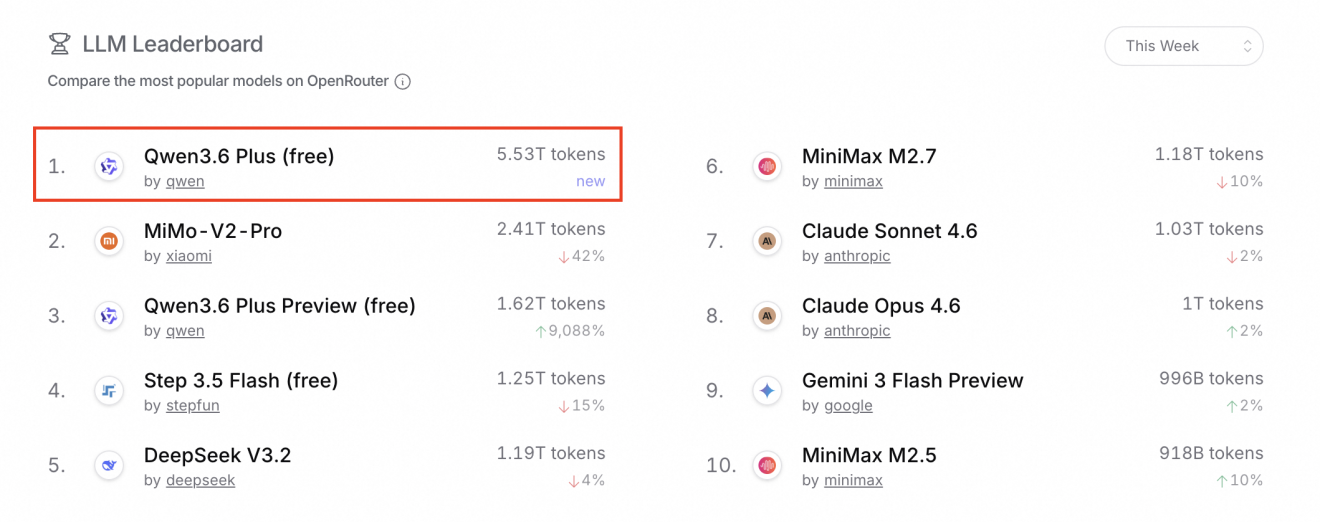
While empowering the outside world, Alibaba is also increasing its AI talent reserves. Its AI related businesses focus on cutting-edge directions such as big language models, multimodal training engineering, and intelligent agent applications, and are recruiting on a large scale. In the Alibaba 2027 global internship recruitment launched in March 2026, AI related positions account for over 80%, with seven types of AI campus recruitment positions including the first AI Agent Optimization Engineer and Agent Infra Engineer.
It is worth noting that the threshold for this type of position is not the traditional "writing code", but a deep understanding of the business scenario. DingTalk once collaborated with institutions such as Alibaba Cloud and Tongyi Laboratory to launch the "AI Application Engineer" certification system in Zhejiang, and launched the "Million AI Application Engineer Training Program" to provide AI systematic training for employees in various positions such as "production, supply, marketing, research, finance, and law". The goal is to cultivate 1 million composite talents who understand business, are proficient in AI, and can implement it.
When technology companies such as Alibaba turn the service capabilities that represent the "moat" into public infrastructure and extend AI capabilities to more people, service industry practitioners are not excluded by the new technology wave. Instead, they can upgrade their skills to enter AI related positions, participate in service industry innovation and entrepreneurship more efficiently, and make the "cake" of the service industry bigger. With exponential growth in employment opportunities, a new career map will continue to unfold.
The threshold for entrepreneurship has been broken
The intelligent agent economy not only creates job opportunities, but also reshapes the entrepreneurial ecosystem.
In the past, large enterprises relied on their strong service capabilities to build moats; In the intelligent agent economy, technology giants represented by Alibaba are transforming these capabilities into inclusive infrastructure, allowing small and medium-sized enterprises and individual practitioners to use intelligent agents to provide professional services.
Alibaba Cloud announced the AI digital employee "Wanxiaozhi" at the 2025 Yunqi Conference, positioning it as the "first AI employee" for small and medium-sized enterprises and individual entrepreneurs. Users can complete website construction and solution output in minutes without the need for coding foundation, significantly reducing costs. Alibaba Cloud also provides cross system high-performance support with Shadowless AgentBay, allowing enterprises to access cloud computing power, storage, and toolchain resources with just three lines of code.
The cross-border e-commerce AI intelligent agent "Aoxia" launched by Alibaba's 1688 platform can intelligently match high-quality factories for cross-border entrepreneurs and connect the digital link from product selection to supply chain docking.
Not only "Wanxiaozhi" and "Aoxia", but also Qianwen aims to become an AI all-in-one assistant and super entrance for life services for people. Alibaba is building the infrastructure for the intelligent agent economy through its full stack AI capabilities, enabling agents to move from "tool supply" to "scenario closed loop".
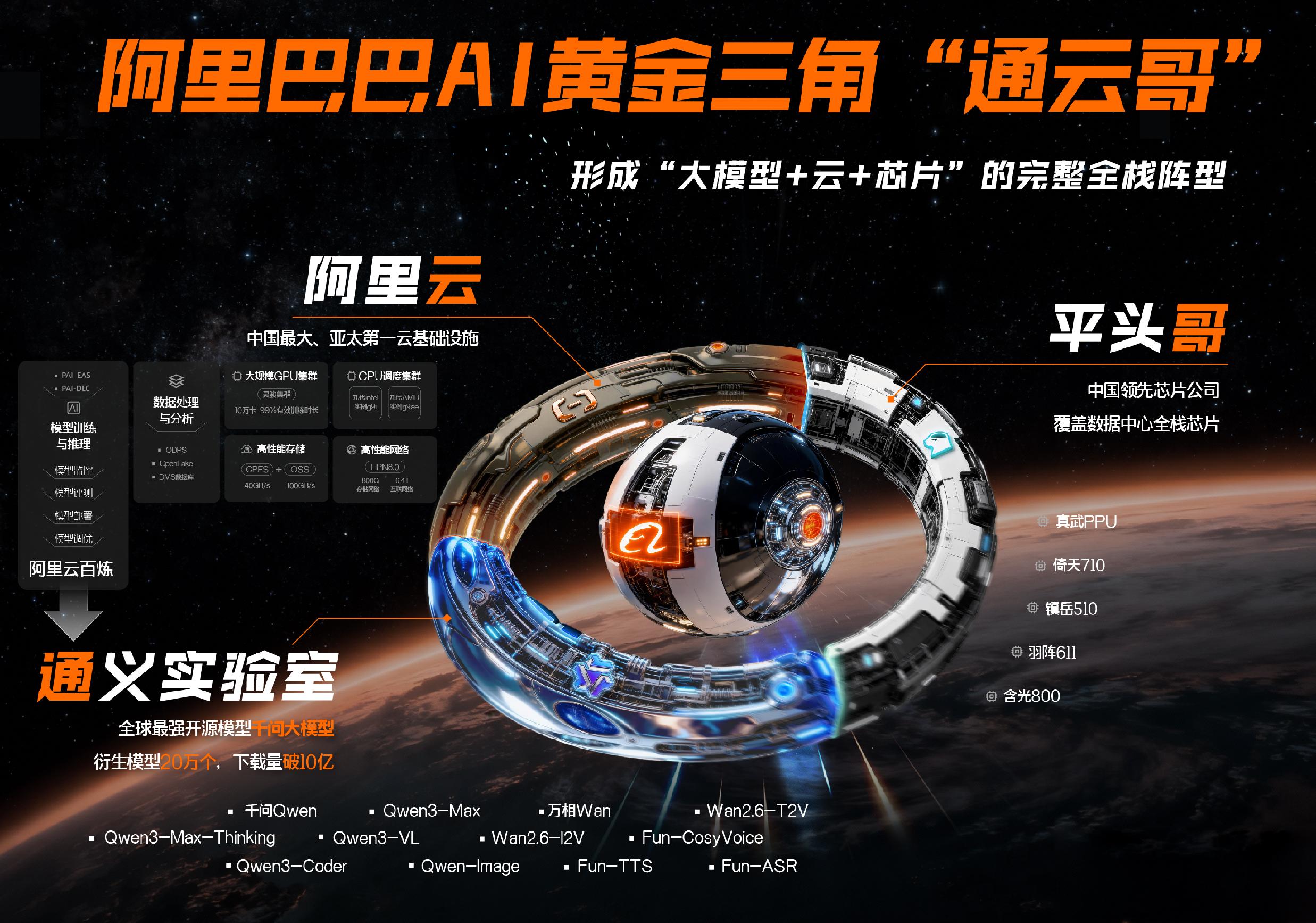
When intelligent agents become the "base" infrastructure, countless new professions and entrepreneurial ecosystems will emerge on top of them. The ecological depth of Alibaba directly determines the diversity and stability of new quality employment opportunities. It transforms AI technology from code in the laboratory to tangible job demands that resonate with the pulse of socio-economic development.
In the strategic perspective of Alibaba Group, the essence of the intelligent agent economy is a service revolution centered on people. Its ultimate goal is not the victory of machines, but the stimulation of human creativity and service value, thus achieving the upgrading of the service industry in the new quality productivity.
When AI takes on the responsibility of logical computing power and process running errands, human service providers can finally focus on what truly matters: creativity, aesthetics, empathy, and professional judgments that cannot be simulated by algorithms. This is not the disappearance of positions, but a redefinition of division of labor and a restructuring of the labor force landscape.
History has shown that technological revolutions ultimately create far more jobs than they replace. The intelligent agent economy is moving forward along this clear, benign, and sustainable value path - it will not take away anyone's job, but instead open up a broader service consumption market for humanity.
In this era of intelligent agent driven transformation, Alibaba is paving the way for a new employment ecosystem for society through its accumulated consumer ecology and full stack AI capabilities of over 20 years. People walking on this path need not fear the iteration and impact of technology, because AI is not a replacement for humans, but an achievement that activates and amplifies everyone's creativity and service value.
3M China President Ding Hongyu: 25 years on the same frequency as the times
AMD Senior Vice President and President of Greater China, Pan Xiaoming: Keenly Capturing the Pulse of China's Economic Development
Kong Na, Chairman and President of Angel Group: Supporting the Upgrading of the Real Economy to a Brand Economy


 WeChat registration or login