

2026-04-14 13:34


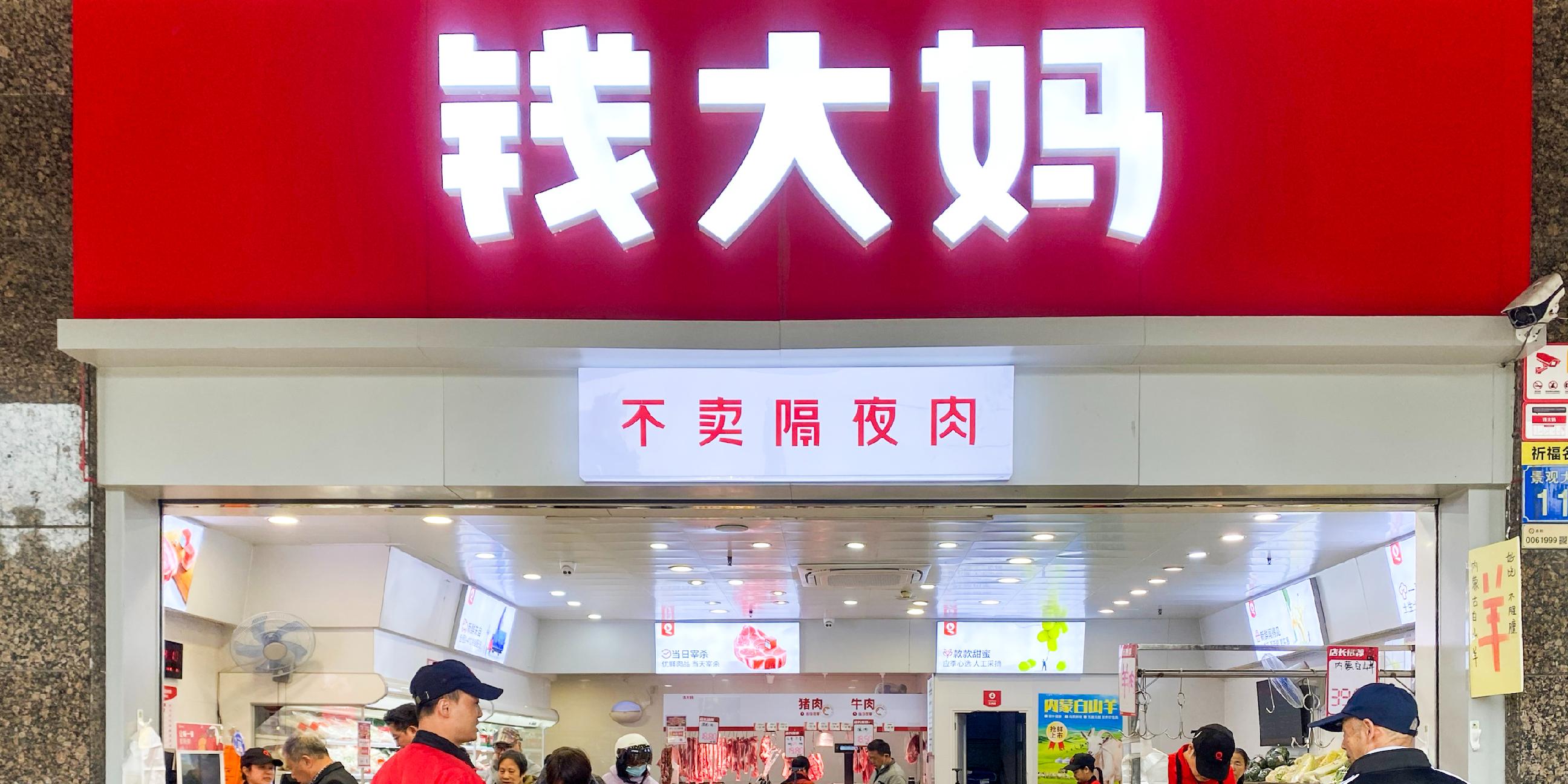
Community fresh food, which revolves around the trillion dollar track of "three meals a day" for residents, has long faced a structural problem: high-frequency demand but difficulty in achieving large-scale profitability.
In the past few years, the industry has rapidly expanded under the logic of "scale first", but practice has repeatedly proven that relying solely on opening stores and subsidies is difficult to establish sustainable profitability. High losses, low gross margins, and supply chain complexity have led most enterprises to a dilemma of "scale growth and profit loss coexisting".
In this context, Aunt Qian's business performance provides another answer for the industry. In 2024, the company's overall GMV reached 14.8 billion yuan and has been ranked first among Chinese community fresh food chain enterprises for five consecutive years; At the same time, its gross profit margin continues to increase, operating cash flow remains stable and positive, and its profit structure shows an improving trend.
From a methodological perspective, Qian Dama's business stability is based on the optimization of the entire chain efficiency through the synergy of store models, supply chain capabilities, and the "discount daily clearance" mechanism. But from a deeper industry logic perspective, this also means that the competitive logic of community fresh food is gradually shifting from "scale driven" to "efficiency driven".
1? Profit logic reconstruction: from scale driven to efficiency driven
The development of the fresh retail industry has roughly gone through two stages.
The first stage is the expansion phase centered around traffic and scale. Both Internet platforms and offline chains have tried to gain market share by rapidly laying network points. However, due to the natural low gross profit attribute of fresh products, the growth in this stage often relies on a large amount of capital investment, and the profit model is difficult to establish synchronously.
The second stage is the efficiency restructuring phase currently underway. After subsidies receded and competition cleared, the industry began to operate according to the essential logic of the retail industry, with turnover efficiency and operational capabilities as the main indicators, affecting the company's profitability level.
In the industry, turnover efficiency (inventory and capital turnover speed), loss control ability, store floor efficiency level, and product structure and sales ability are the core variables that affect the profitability of fresh retail. Under the premise of low gross profit, in order for enterprises to achieve profitability, they need to form an overall advantage in the aforementioned dimensions, rather than relying on individual breakthroughs.
From industry data, the difficulty in making profits for community fresh produce is not an isolated case. According to industry research data, the scale of China's community fresh food retail market is expected to reach nearly 1.9 trillion yuan by 2025 and further approach 2.1 trillion yuan by 2026. At the same time, nearly 60% of fresh food consumption has been completed in community settings, and offline formats still account for about 80% of the market share in community fresh retail.
This means that, on the one hand, the industry has a strong demand foundation and growth certainty; On the other hand, due to the highly fragmented market and insufficient standardization of the supply chain, the vast majority of players are still stuck in the stage of "scale expansion but insufficient efficiency".
As a result, the growth model that relied on "running horses to conquer land" in the past has begun to fail, and the industry has entered a stage of restructuring with efficiency as the core variable. For enterprises, the real watershed is no longer just the number of stores or GMV scale, but whether a stable operating loop can be formed between turnover efficiency, floor area efficiency, and loss control.
From this perspective, Qian Dama's current financial performance is closer to the "leading sample" in this round of industry switching. Against the backdrop of the industry's general difficulty in profitability, she not only achieved a leading scale, but also took the lead in repairing the profit structure.
According to financial data, from 2023 to 2024, Qian Dama's income will be 11.744 billion yuan and 11.788 billion yuan respectively, indicating stable operations; Realize a revenue of 8.359 billion yuan in the first nine months of 2025. In an environment where consumption tends towards rationality, this steady growth demonstrates the resilience of its underlying demand.
In terms of profitability, the company's gross profit margin has increased from 9.8% in 2023 to 10.2% in 2024, and further increased to 11.3% in the first nine months of 2025; During the same period, the operating profit continued to grow. From the perspective of adjusted net profit, which is closer to the true profitability of the enterprise, after excluding the fair value changes of preferred shares, employee equity incentives, and one-time non operating expenses, the adjusted net profit for the first nine months of 2025 reached 215 million yuan, an increase of nearly 50% compared to the same period last year. At the cash flow level, Qian Dama maintained a net inflow of operating cash flow in each period, and the scale gradually increased. This is particularly crucial - in the retail industry, stable operating cash flow often reflects the health of a business model more than short-term profits.
In the past few years, Qian Mama's expansion has mainly relied on an increase in the number of stores, but for the company, the quality of expansion is more important than the speed of expansion. Only when a virtuous cycle is formed between store density, warehouse radius, brand awareness, franchise empowerment, and digital management, can regional expansion truly translate into improved business quality. The Qian Mama community's small store model, high ping efficiency performance, and strong supply chain organization capabilities provide a good foundation for this "steady expansion".
2? Profit core: Efficiency optimization of the entire chain
The core change of Qian Mama lies in the switch of growth sources.
In the traditional model, fresh retail often relies on scale expansion to dilute costs. In this process, due to the synchronous increase in losses and operational complexity, the scale expansion model does not necessarily bring profits. And Qian Mama's path is closer to the model construction of "efficiency first".
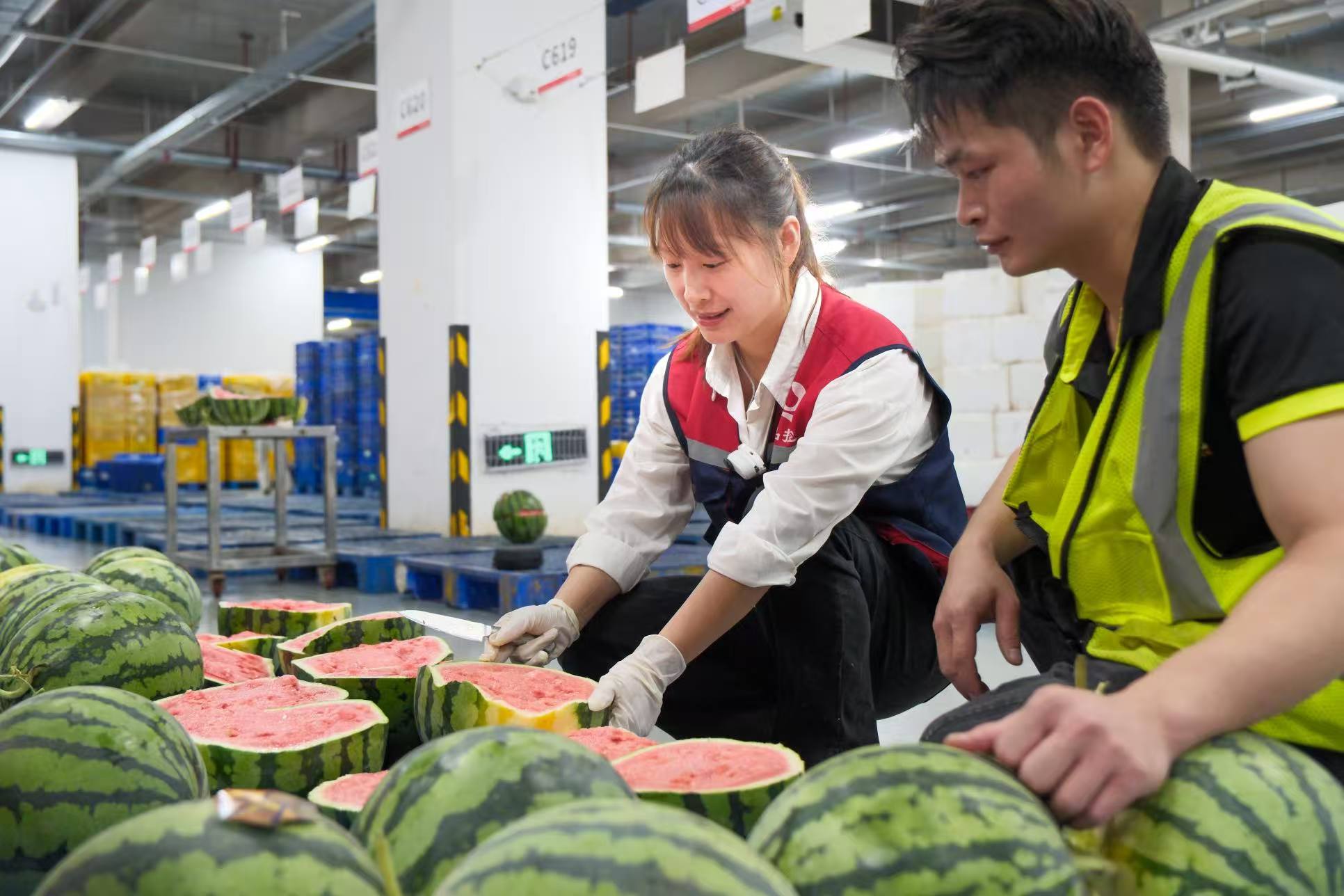
One is the most recognizable "Nissin mode", which is the core support of efficient operation strategy. Qian Mama has compressed the inventory cycle to an extremely short range by not selling overnight products and implementing a dynamic discount mechanism. From an operational perspective, this is to pre release inventory risks through price mechanisms and achieve a dynamic balance between inventory and dynamic sales.
The second is supply chain efficiency. The essence of the fresh food industry is the management of "time". Every step of a product, from procurement, sorting to sales, directly affects loss and gross profit. In this regard, Qian Dama has established an integrated system covering vertical procurement, sorting and processing, cold chain logistics, and digital management. At present, the company has 16 comprehensive warehouses, with most fresh products circulating within 12 hours and achieving same day in store and same day sales; The warehouse distribution system achieves 100% cold chain coverage, with an average daily transportation of over 800 vehicles.
The third is the change in product structure, from providing "raw materials" to providing "solutions", Qian Mama is driving a shift in the consumption logic of community fresh food. Based on the scenario of "three meals a day", Aunt Qian has built three major product systems: animal protein, fruits and vegetables, and refrigerated processed foods, and continues to increase the proportion of processed products. As of the first nine months of 2025, the company provides 775 SPUs, with refrigerated processed foods becoming a key development direction. These types of products often have higher added value and stronger repurchase attributes, which helps to increase the unit price and overall gross profit level.
Overall, the improvement of Qian Mama's profit model does not rely on scale expansion itself, but on the joint synergy of supply chain efficiency improvement, product structure upgrading, and store operation efficiency optimization. The essential conclusion that these characteristics collectively point to is that Qian Dama's profit improvement is not a temporary fluctuation, but the result of optimizing the business structure, and has achieved differentiation from the existing model of industry still relying on scale expansion.
3? Regional expansion: the key to model replication
In the retail industry, high-quality single store models are not scarce, what really matters is whether cross regional replication can be achieved.
Qian Mama's development path reflects a typical characteristic of deep regional cultivation and gradual outward expansion. At present, the South China region is its core advantageous market. Based on the GMV of fresh products in 2024, the company achieved a scale of approximately 9.8 billion yuan in the region, which is 2.8 times that of the second largest market participant. On this basis, we are promoting replication in the East China, Central China, and Southwest regions.
As of September 30, 2025, Qian Dama has over 2900 stores, covering 14 provincial-level regions, and has more than 1700 franchisees, with an average of 1.7 stores operated by each franchisee. Its expansion strategy emphasizes "density first, efficiency first". In the community fresh food industry, store density directly affects warehouse distribution efficiency and brand reach. Only by forming a scale within the region can supply chain advantages be unleashed.
Therefore, its expansion is not simply opening a store, but based on the replication and amplification of validated models.
The cross regional expansion of community fresh food is essentially a highly complex and operationally robust system engineering. Unlike standardized retail formats, fresh food supply chains have distinct regional attributes, with differences in upstream agricultural product supply, cold chain logistics capabilities, consumer habits, and price systems. Therefore, cross regional store replication not only means an increase in the number of stores, but also a synchronous reconstruction of the backend supply chain system, warehouse distribution network, and organizational capabilities.
In this process, the industry has gradually formed two typical paths: one is to use "base market encryption" as the core, and release warehouse allocation efficiency by increasing regional density; The second is to quickly enter new regions through mergers and acquisitions or cooperation, shortening the supply chain construction cycle.
Qian Mama's current path of prioritizing store density and steadily replicating is closer to the former, which is to achieve synchronous scaling up of scale and efficiency by improving store density and supply chain collaboration efficiency based on the validated regional model.
From an industry perspective, community fresh food still has a trillion dollar market space, but the industry concentration is low and the competitive landscape is not yet stable. In this process, enterprises that can achieve scale profitability have obvious scarcity. The core value of Qian Mama lies in having validated a sustainable business model in a low gross profit and high turnover track. This model is based on the supply chain capability, with store efficiency as the core, and realizes front and rear collaboration through the "daily clearing mechanism".
As the industry moves from extensive expansion to refined operation, this efficiency centered model is expected to become the key factor determining enterprise differentiation. In this sense, what Aunt Qian presents is not only the financial improvement of a retail enterprise, but also a gradually clear profit path in the fresh food industry.

China Feihe Chairman Leng Youbin: 25 years of adhering to the original intention, witnessing the times

Wang Zhengrong, Chairman and Party Secretary of Kunlun Trust Co., Ltd.: 25 years of ups and downs, unchanged original intention

Qiaojie, PR Manager, Qiaojie: Starting a New Journey through Reading and Observing the Classics


 WeChat registration or login


