

Economic Observer Follow
2026-04-12 19:58



90% of the surveyed enterprises have initiated digital and AI transformation, but only 25% have achieved tangible results, and only 10% have achieved large-scale application of AI. ?McKinsey conducted ongoing research on the AI transformation of enterprises and released research conclusions on the latest trends and implementation practices of AI on April 10th.
Bo Lan, a global senior managing partner of McKinsey, said that this data is almost consistent with the survey results of ERP informatization 20 years ago and mobile Internet digital transformation 10 years ago. "The biggest difference between the leaders and most enterprises is not how strong the technology itself is, but whether they can focus on business and break through end-to-end.".
McKinsey refers to this phenomenon as the "pilot trap": a large number of companies remain in the point pilot stage for a long time, trying in different business areas in a scattered manner, with limited results, and leading to insufficient organizational confidence. According to its survey data, 75% of enterprises are currently in this state.
Zhong Huixin, Senior Managing Partner at McKinsey Global, stated that the complexity of AI transformation far exceeds that of digital transformation in the past. She used a financial institution as an example to break down its AI transformation capabilities into four layers: customer business model, AI driven decision-making, core technology and data, and operational model. Digital transformation may only require some parts of these four layers to be done well, while AI transformation must be promoted synchronously and from top to bottom.
The transformation of AI is not an IT project, but a comprehensive transformation of the decision-making process, talent system, and organizational capabilities of enterprises from top to bottom. ?Zhong Huixin said.
But this does not mean that companies need to fully deploy AI in all functions. Bu Lan said that many companies are saying 'All in AI', but this is just an attitude and cannot be used as a way or method. If we think that 'All in AI' means that every function and every process needs to be done with AI, there will definitely be problems. He proposed that the key to the success of enterprise AI transformation lies in "selective self disruption", clarifying 1-2 core business areas, concentrating resources end-to-end, and restructuring processes and human-machine collaboration models.
McKinsey Global Managing Partner Zhang Qinya believes that AI transformation is a "muscle" that needs to be constantly cultivated. Every time a new technology emerges, iterative innovation must be carried out, and it is not a scattered innovation, but an update of the entire process. He said that in the era of AI, the most important skill for humans will be to express clearly what they want, and the remaining execution can be done by AI. As the ultimate 'judge', humans need to clarify their goals, boundaries, and objectives.
In response to the widely concerned issue of AI replacing job positions in the market, Bolan stated that the impact of AI on the talent pool is mainly reflected in the synchronous occurrence of substitution and transformation, with the transformation impact being more fundamental. AI will reconstruct key business processes, promote human-machine collaboration, and shift humans towards high-value work that machines cannot handle. Knowledge management and product and service development are significantly affected IT? Marketing and sales, service operations, etc.
Bu Lan further stated that there are currently a large number of anticipated layoffs. He cited data from Harvard Business Review, stating that nearly 90% of companies expect AI to have an impact and start laying off employees, but only 2% of companies have actually implemented AI applications internally. Many companies' layoffs are influenced by other factors, and the actual percentage of positions replaced by AI is still in the single digits. Therefore, he believes that people do not need to be overly anxious.


Xu Ran, Vice Chairman of SEC and CEO of JD Group: 25 years old and in full bloom, with a promising future ahead
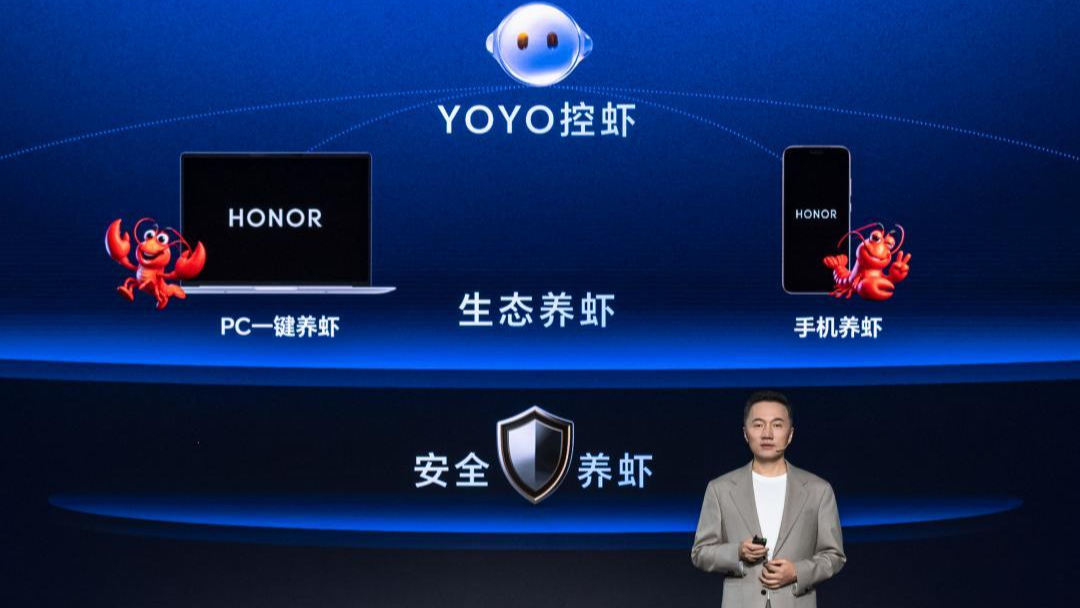
Technology Showcase | Honor Debuts YOYO Claw Lobster Technology, Creating a New Category of "Lobster Ben", Saving 50% on Word Element Consumption, and ushering in the Era of Everyone Raising Shrimp!

The "ChiNext Series ETF China Tour" gathers in Chengdu to discuss new opportunities for index investment


 WeChat registration or login


 Subscribe
