

Economic Observer Follow
2026-04-13 09:36



In the first quarter of 2026, the global capital market fluctuated amidst geopolitical changes, while the Hong Kong IPO (initial public offering) market emerged as an independent market with a total fundraising amount of HKD 109.927 billion, a year-on-year increase of 488.81%.
Specifically, in the first quarter, the Hong Kong IPO market experienced a historic outbreak driven by the "A+H" dual listing boom, with 40 companies successfully listing on the Hong Kong Stock Exchange, an increase of 25 compared to the same period last year; The Hong Kong Stock Exchange's fundraising scale of over HKD 100 billion not only exceeded HKD 109.054 billion in the first half of 2025, but also topped the global charts in one fell swoop. According to Wind data, Nasdaq, which ranks second, had 37 IPOs (excluding special purpose acquisition companies) in the first quarter, raising approximately $6.219 billion (approximately HKD 48.712 billion).
Unlike last year when consumer stocks led IPOs, in the first quarter of this year, TMT (Technology, Media, and Telecommunications) and manufacturing became the main force in Hong Kong stock IPOs, with more than half of new economy enterprises and cutting-edge industries flocking to Hong Kong.
Fu Yifu, a special researcher at Su Shang Bank, believes that the reason for this popularity is firstly due to the strong financing demand of mainland enterprises. As a highly internationalized financing platform, Hong Kong stocks provide efficient and convenient listing channels for mainland enterprises; Secondly, in recent years, the Hong Kong Stock Exchange has continuously optimized its listing system and attracted new economy enterprises to list in Hong Kong, effectively enhancing market vitality and attractiveness; Finally, the global liquidity environment is relatively loose, and the willingness of international capital to allocate to the Hong Kong stock market has significantly increased.
At the same time, with Chinese securities firms increasing their international business investment and upgrading their cross-border investment banking capabilities, the IPO sponsorship pattern of Hong Kong stocks is also accelerating its restructuring.
At present, there are still a group of companies waiting to knock on the door of the Hong Kong Stock Exchange. According to Wind data, as of April 9th, there were 387 companies in line for IPO on the Hong Kong Stock Exchange (excluding those with "invalid" review status and secret submission), including well-known companies such as Luxshare Precision (002475. SZ), Shenghong Technology (300476. SZ), and Mindray Medical (300760. SZ) with a latest A-share market value exceeding 100 billion yuan. These enterprises cover multiple industries such as semiconductors, media, biomedicine, and non-ferrous metals.
New industries are trending towards Hong Kong
On April 5th, the Financial Secretary of the Hong Kong Special Administrative Region, Paul Chan, reviewed the Hong Kong stock IPO market in the first quarter and pointed out that more and more companies listed in Hong Kong are from emerging industries such as artificial intelligence, semiconductors, autonomous driving, and biotechnology. At present, there are over 500 applications waiting for listing in Hong Kong.
According to statistics from Deloitte China Capital Market Services, TMT and the manufacturing industry became leaders in the Hong Kong IPO market in the first quarter of this year. Among them, the TMT industry accounted for 50% of new shares and 54.2% of total fundraising. Last year during the same period, consumer stocks led the Hong Kong stock market in terms of the number of new shares and financing amount. In addition, out of 40 new stocks, a total of 15 "A+H" new stocks were listed, accounting for over 60% of the total financing amount.
Chen Maobo believes that the global competition in cutting-edge technologies such as artificial intelligence has entered a white hot stage, requiring massive financial support for core technology research, development of upstream and downstream industrial chains, and exploration of broader application scenarios. It is crucial for relevant enterprises and industries to obtain smooth, stable, sustainable, and efficient financing. Hong Kong listed platforms are playing a key role in this regard, serving the country's technological development and modern industrial system construction, as well as attracting global capital to converge towards these future industries.
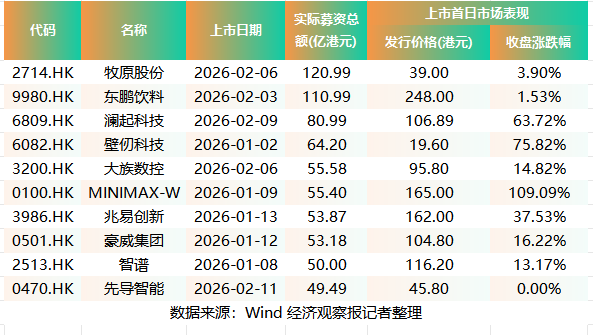
From the perspective of fundraising amount, the top five IPOs of Hong Kong stocks in the first quarter were Muyuan Holdings (02714. HK), Dongpeng Beverage (09980. HK), Lanqi Technology (06809. HK), Biren Technology (06082. HK), and Dazu CNC (03200. HK), raising approximately HKD 12.099 billion, HKD 11.099 billion, HKD 8.099 billion, HKD 6.42 billion, and HKD 5.558 billion, respectively. In the first quarter of 2025, the "first stock" to raise funds through Hong Kong IPO is Honey Snow Group (02097. HK), with an actual total fundraising amount of HKD 3.972 billion.
Although the geopolitical situation in the Middle East has triggered global market volatility and short-term risk aversion, more importantly, it has catalyzed a profound structural transformation. We are observing a strategic reallocation of global funds - investors are shifting from short-term tactical operations to long-term structural diversification layouts in the Asian market. "said Ren Shaowen, Managing Partner of Deloitte China Capital Market Services' listed business in North and West China. This trend consolidates Hong Kong's position as the preferred financing engine for China's iconic technology and artificial intelligence (AI) companies, providing highly attractive value propositions for investors pursuing sustainable returns.
Ren Shaowen further stated that a large number of Chinese companies with strong financing needs and a willingness to expand overseas are building a solid foundation for the Hong Kong IPO market in 2026. According to the prediction of Deloitte China Capital Market Service Department, with the support of more than 500 companies applying for listing, there will be about 160 new shares listed in Hong Kong in 2026, raising no less than HK $300 billion. Most of the listing applicants are Chinese leading enterprises, existing A-share issuers, and companies seeking overseas development.
The pattern of sponsorship has changed
The IPO sponsorship market for Hong Kong stocks in the first quarter showed a distinct pattern of "Chinese led, foreign elite", with the head effect and echelon differentiation highlighted simultaneously.
From the number of sponsors, Chinese securities firms have begun to form an absolute advantage in the Hong Kong IPO market.
According to Wind data, China International Capital Corporation (CICC) ranks first with 15 recommended projects, with a market share of nearly 20% and a corresponding total fundraising amount of HKD 52.813 billion, accounting for nearly half of the entire market. CITIC Securities and Huatai Securities each followed closely behind CICC with 7 sponsorship projects, raising a total of HKD 23.21 billion and HKD 27.931 billion respectively.
Guotai Junan's Hong Kong subsidiary and Haitong Securities' Hong Kong subsidiary participated in a total of 7 IPOs, which is on par with CITIC Securities and Huatai Securities.
In addition, China Merchants Securities has also made significant efforts. There were 4 Hong Kong IPO projects in the first quarter, and only 1 for the whole year of 2025.
From the number of Hong Kong IPO projects by foreign investment banks, UBS and Morgan Stanley each sponsored 4, while Goldman Sachs and Citigroup each sponsored 2. However, in terms of fundraising scale, foreign investment banks have achieved "less wins more" through large-scale projects. The total fundraising amount of the projects sponsored by UBS and Morgan Stanley reached HKD 30.057 billion and HKD 32.676 billion respectively, both second only to CICC and higher than other Chinese securities firms.
It is worth noting that currently, many large-scale benchmark IPO projects in Hong Kong stocks are jointly sponsored by "Chinese and foreign capital", thus forming a competitive situation of "backward quantity and strong profits". For example, in the first quarter of the Hong Kong stock market's top three IPO projects, Muyuan Holdings was jointly sponsored by Goldman Sachs, Morgan Stanley, and CITIC Securities, Dongpeng Beverage was jointly sponsored by UBS, Huatai Securities, and Morgan Stanley, and Lanqi Technology was jointly sponsored by UBS, Morgan Stanley, and CICC.
Since 2025, securities firms have been intensively investing funds in international business, such as Huatai Securities' plan to issue HKD 10 billion H-share convertible bonds to support international business, and China Merchants Securities' plan to increase capital to China Merchants International in installments not exceeding HKD 9 billion. In addition, small and medium-sized securities firms are accelerating their entry, with newly established Hong Kong subsidiaries such as Northeast Securities and Western Securities, and intensive capital increases in Hong Kong platforms such as Hua'an Securities and Shanxi Securities.
In this capital feast, the IPO sponsorship pattern of Hong Kong stocks is clear: three Chinese securities firms, CICC, CITIC, and Huatai, dominate the top three in terms of sponsorship quantity, while Guotai Haitong and China Merchants Securities have risen rapidly, followed closely by foreign investment banks such as UBS and Morgan Stanley, forming differentiated competition with "large projects and high fundraising". Small and medium-sized Chinese securities firms find it difficult to get a share in the fierce competition.
This pattern is a microcosm of the cross-border rise of Chinese securities firms and the competition among global investment banks. At a time when the Hong Kong Stock Exchange has repeatedly emphasized strict control over the quality of Hong Kong stock IPOs, Chinese securities firms' Hong Kong stock IPO projects are also shifting from "quantity led" to "quality led".
Sun Ting, Chief Analyst of Non bank Finance at Dongwu Securities, analyzed that Chinese securities firms have long been deeply bound to domestic customers, familiar with industry logic and the real needs of enterprises. They can provide full lifecycle cross-border investment banking services through integrated platforms at home and abroad, and effectively link with Chinese background funds. They have strong issuance guarantee capabilities in cross-border financing, and their investment banking business has natural advantages in serving local enterprises. Therefore, they are expected to fully benefit from the trend of Chinese enterprises going global.
With the comprehensive upgrading of securities firms' overseas strategy and continuous capital injection, Chinese cross-border investment banks are standing at a historical turning point: only by deeply cultivating local advantages, breaking through foreign investment barriers, and filling in the gaps in capabilities can they break through in the fierce competition and truly grow into international investment banks with global competitiveness.

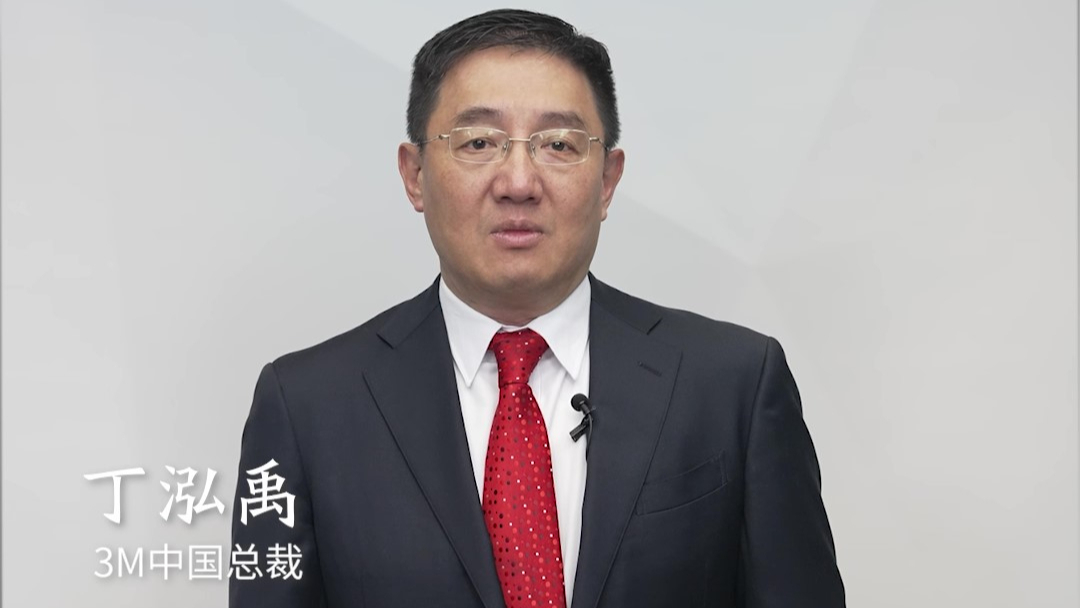
3M China President Ding Hongyu: 25 years on the same frequency as the times
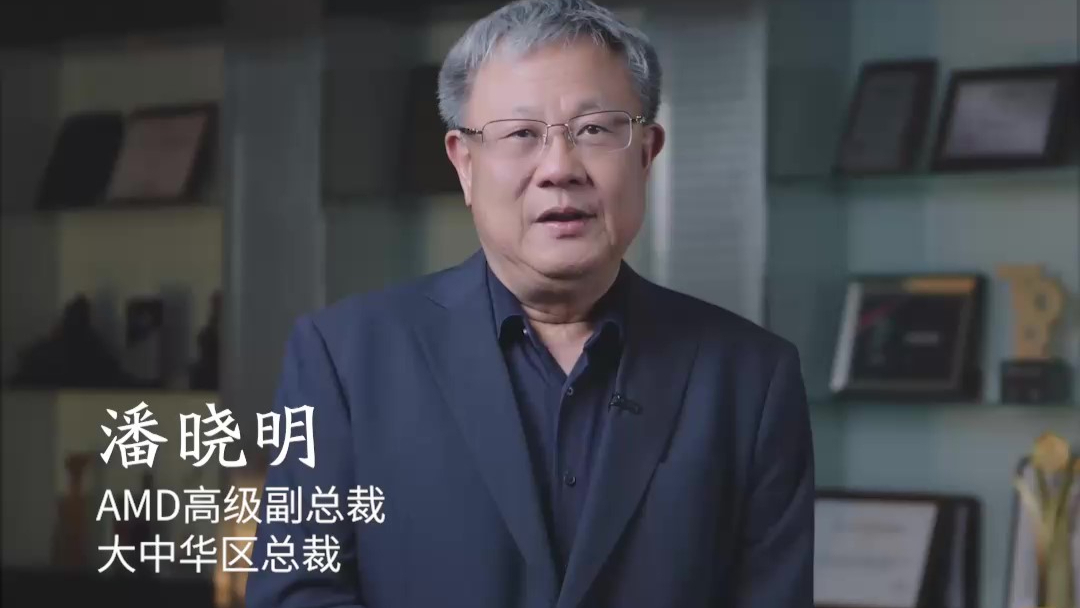
AMD Senior Vice President and President of Greater China, Pan Xiaoming: Keenly Capturing the Pulse of China's Economic Development
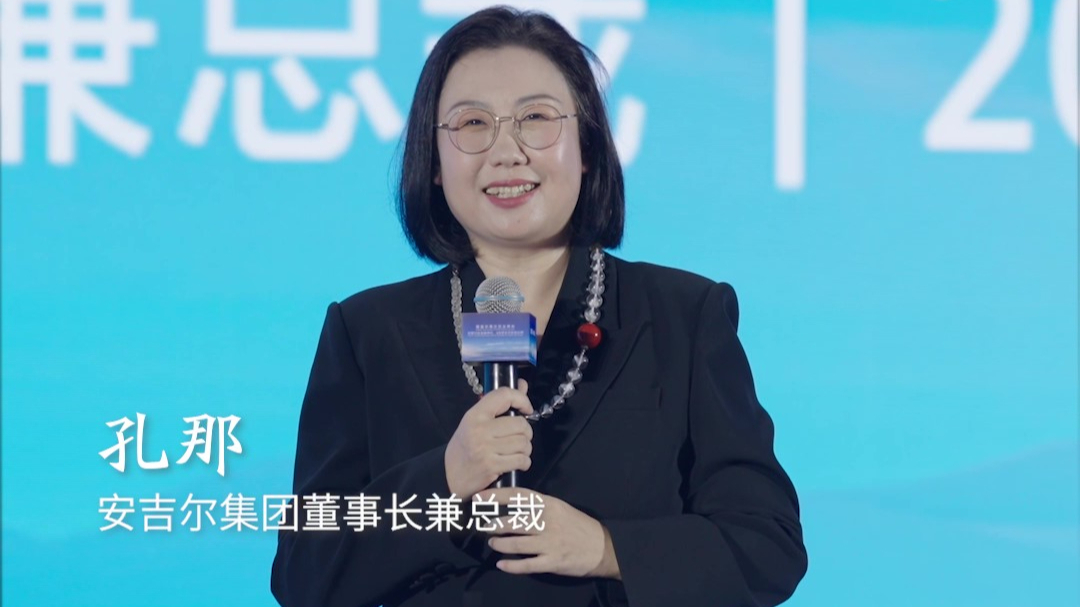
Kong Na, Chairman and President of Angel Group: Supporting the Upgrading of the Real Economy to a Brand Economy


 WeChat registration or login


 Subscribe
