2026-04-06 09:30


Standing at a new starting point in the beginning of the 15th Five Year Plan, commercial health insurance is entering a position worth redefining its own value.
This year's Government Work Report explicitly proposed for the first time to "accelerate the development of commercial health insurance", sending a clear signal that the importance of commercial health insurance is no longer limited to cost compensation outside of basic medical insurance, but is being viewed in the broader context of building a multi-level medical security system, promoting the coordinated development of medical and pharmaceutical industries, and improving the quality and upgrading of people's livelihood security. It can be said that the industry is at a critical turning point from scale expansion to high-quality development.
But opening the policy window does not mean that the problem has been solved. Returning to reality, commercial health insurance still faces many structural challenges. For a long time, the industry has mainly taken on the role of backend compensation, and its participation in the "three medical" collaborative system has not been deep enough. It is difficult to truly realize the value of resource allocation and risk management, and it is also difficult to effectively respond to the growing multi-level health security needs of residents.
This is increasingly reflected in both the supply and demand sides. On the one hand, the innovation of biopharmaceuticals such as innovative drugs and advanced treatments continues to accelerate, but the characteristics of high investment, high risk, and long cycle determine that such achievements cannot truly move towards large-scale accessibility without a more stable and sustainable payment acceptance mechanism. On the other hand, the public's demand for health security is no longer limited to "reimbursing a sum of expenses", but is more concerned about whether they can truly obtain good medicines, good services, and a more convenient and certain security experience.
In this sense, the next question that commercial health insurance needs to answer is no longer whether to transform, but how to truly enter the lives of patients. It should be closer to the medical and pharmaceutical scene to enhance the accessibility of innovative achievements; We also need to be closer to the real needs of users, moving from single compensation to coordinated protection and services.
1? From 'compensable' to 'obtainable'
Commercial health insurance needs to play a better role, and the accessibility of innovative drugs is an unavoidable entry point.
But 'accessibility' has never been a single point issue. For commercial health insurance, it is not only related to whether patients can "afford" it, but also to whether drugs and services are "accessible". From the perspective of risk management and actuarial logic, this is essentially a systems engineering that requires a continuous search for a balance between cost, risk, and service efficiency.
Firstly, the high investment, high risk, and long-term nature of innovative drugs determine that relying solely on personal payments is difficult to support their wider application. The value of commercial health insurance lies precisely in transforming the uncertainty costs faced by individuals into manageable and sustainable payment arrangements at the group level through risk sharing and cost allocation. This is not only related to reducing patient burden, but also to whether innovative achievements can enter the real world faster and form more effective clinical and market transformation.
But payment arrangements alone are not enough. If patients still face problems such as difficulty in finding medication, complicated settlement, fragmented processes, and discontinuous services, it is difficult for guarantees to truly translate into a sense of gain. Because of this, the capability boundary of commercial health insurance is being redefined: it should not only stay at "compensation coverage", but should further extend to "service accessibility", so that protection truly falls into scenarios that patients can perceive and use.
In recent years, the industry has formed more and more practical explorations around this direction. For example, by incorporating innovative drugs and rare disease drugs into a richer security system, introducing a risk sharing mechanism, and helping patients reduce payment pressure; For example, through the construction of service capabilities such as drug delivery, direct payment settlement, and medical association, the efficiency of guarantee fulfillment can be improved. Similar explorations have shown that the true value of commercial health insurance is not just to help patients "share a cost", but to drive "payment ability" and "service ability" forward together.
2? Moving from 'single supplement' to 'layered protection'
If the accessibility of innovative drugs solves practical problems for key populations and scenarios, then the construction of a multi-level medical security system determines whether commercial health insurance can go further and more steadily.
From the perspective of risk distribution, there are significant differences in health risks among different groups of people. However, traditional commercial health insurance has long preferred low-risk populations and has insufficient coverage of high-risk, chronic disease, and carriers in underwriting, pricing, and supply protection. This imbalance not only affects the guarantee of fairness, but also limits the long-term stability of the risk pool and the sustainable development of the industry.
In recent years, the development of inclusive products such as Huiminbao has provided important exploration for expanding coverage. Through the combination of government guidance and market mechanisms, it has achieved wide coverage with relatively low thresholds, playing a positive role in consolidating basic guarantees and expanding the scope of risk cooperation. However, in the long run, Huimin Insurance mainly undertakes the function of "basic support", and its protection depth, responsibility boundary, and actuarial carrying capacity are still limited.
Therefore, what the industry needs more in the future is a clearly layered and functionally complementary product system: to solidify the underlying basic protection with products such as Huimin Insurance, to provide more comprehensive risk coverage with standardized products such as million dollar medical insurance, and to develop more targeted differentiated products and services around special populations such as chronic diseases and patients with illnesses. Only by forming a more reasonable connection between different levels can commercial health insurance expand its coverage while balancing fairness, affordability, and sustainability.
Of particular note is that product innovation around chronic diseases and people with illnesses is becoming an important breakthrough in the industry. The population that was difficult to cover by traditional business models in the past is gradually being incorporated into more refined protection frameworks with the improvement of data modeling capabilities, tiered pricing capabilities, and dynamic risk management capabilities. This is not only product innovation, but also a substantial expansion of industry boundaries.
3? From "Product Homogenization Competition" to "System Capability Competition"
Whether it is improving the accessibility of innovative drugs or promoting the construction of a layered security system, ultimately it cannot be separated from more solid underlying capability support.
The long-term competition of commercial health insurance ultimately boils down to who has more product names and wider channels, but who can accurately identify risks, price risks, and manage risks. In other words, what truly determines the future of the industry are actuarial ability, data ability, and long-term operational ability.
With the continuous maturity of technologies such as artificial intelligence and privacy computing, commercial health insurance is undergoing an important capability leap. More and more industry practices have shown that, under the premise of compliance and privacy protection, secure collaboration of multi-party data, medical behavior analysis, and cost structure modeling can help the industry more accurately identify risk characteristics, optimize product design and pricing logic, reduce adverse selection and moral hazard, and enhance operational stability.
At the same time, technology is also changing the relationship between insurance and users. In the past, insurance was often more like an after the fact payout tool; Today, with the gradual embedding of capabilities such as rule analysis, claims coordination, health consultation, and medication services into digital scenarios, commercial health insurance is moving from a "compensation touchpoint" to a "service entrance". For users, this means a lower threshold for understanding, shorter usage paths, and a more perceptible guarantee of user experience; For the industry, this means that service efficiency and risk management capabilities have the opportunity to form a better positive cycle.
In this process, industry participants like Magnesium Health are also continuously exploring the collaborative path of "payment+service+technology" around scenarios such as claims review, responsibility analysis, health consulting, and innovative drug services. Its value lies not only in improving the efficiency of a single link, but also in promoting commercial health insurance to be closer to real medical scenarios and patients' daily lives.
It can be foreseen that in the future, the focus of competition for commercial health insurance will increasingly shift away from surface products and channels, and focus more on actuarial foundations, service capabilities, and long-term operations themselves. Whoever can achieve more accurate pricing and robust management in complex risk structures is more likely to expand coverage while maintaining the bottom line of sustainable development; Whoever can truly integrate payment ability, service ability, and technological ability will have a greater opportunity to establish long-term value in a multi-level medical security system.
The next step for commercial health insurance is not to be further away from patients, but to be closer to them; Not only appearing on the settlement end, but also deeply integrated into the entire process of medical treatment, medication, and health management.
Only by truly entering the lives of patients can commercial health insurance have a more solid foundation for development and play a greater role in safeguarding people's livelihoods, supporting innovation, and promoting collaboration.
(The author is Lang Liliang, Senior Vice President and Chief Business Officer of Shanghai Magnesium Health Technology Group Co., Ltd.)

ST Qingyue fined 172 million yuan for suspected fraudulent issuance and illegal letter disclosure
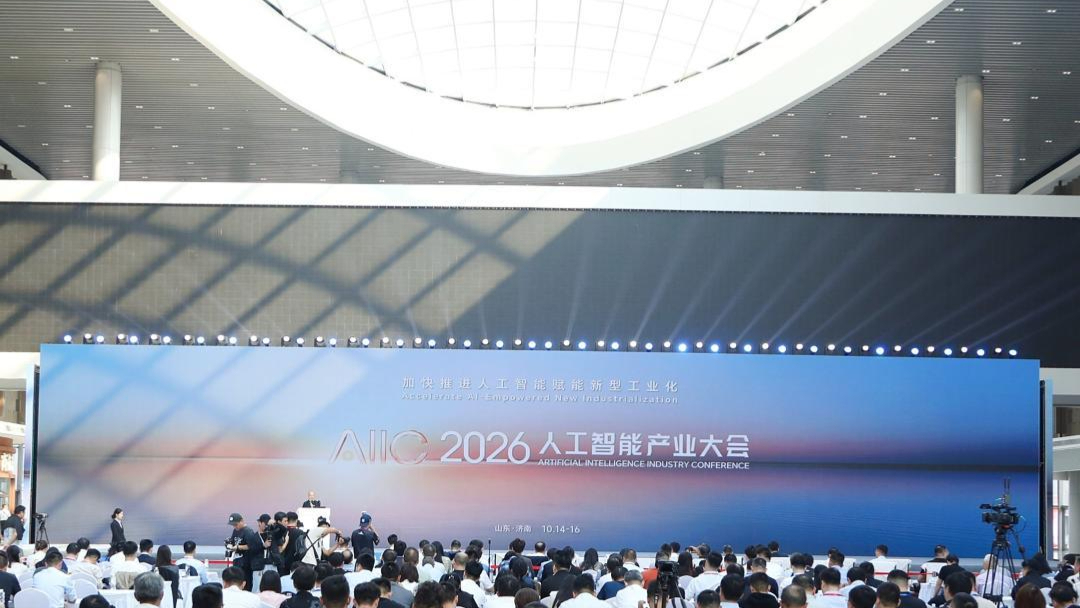
Focusing on "Artificial Intelligence Empowering New Industrialization", the 2026 Artificial Intelligence Industry Conference opens in Jinan

Can Traveler 7 take care of both commuting on weekdays and mountain trips on weekends? This time, the all-new Jetour Traveler 7 will focus on its "Keyo" # Smart Beauty Travel Champion Box # Kecheng Keyo Keyo Travel # 7 Series Square Box New Benchmark # New Traveler 7 Renewal Surprise Price Starting from 125900 yuan