Economic Observer Follow
2026-04-04 13:18


Economic Observer reporter Zhang Rui
Hey Siri, good morning. ?
On the morning of April 1st, Li Na sent the above "command" to her phone in her bedroom. At almost the same time, the bedroom curtains automatically open, and the floor lamps and wall lamps in the living room light up synchronously.
This' instruction 'is not simple. It needs to simultaneously connect three different smart systems: Apple phones, Xiaomi smart speakers, and IKEA light bulbs, which precisely hits the pain point of the industry where smart device manufacturers generally find it difficult to interconnect.
Li Na told the Economic Observer reporter that as an intelligent "novice", the reason for promoting her to start a smart life is that when renovating her home, she found that smart products are very friendly to her parents' "age appropriate" life. For example, during this year's Spring Festival, her father did not like to turn off the lights at night due to his declining vision, but this also affected her mother's sleep. I installed voice controlled lights for them, so no one has to look for switches when they wake up at night, "she said.
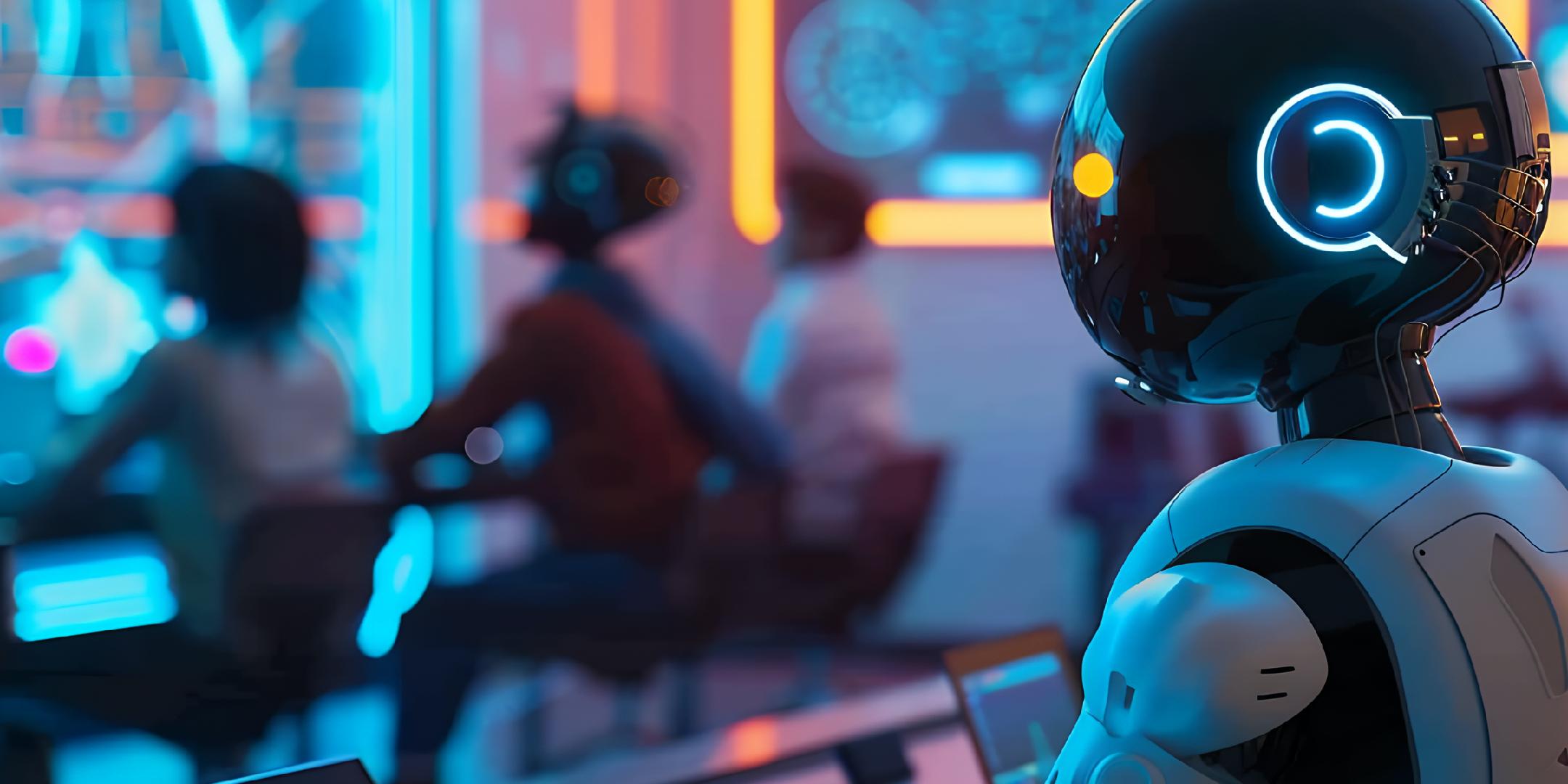
The changes in Li Na and her family are not accidental: AI (artificial intelligence) has quietly integrated into daily life, and "robots" are presented in different forms of intelligent devices, gradually taking over household affairs.
Over the past week, reporters from the Economic Observer have visited sales stores of companies such as Midea, Xiaomi, Huawei, and DJI, and noticed that the smart home market with home appliances as the entry point is rapidly expanding and maturing, and fierce competition among top manufacturers has fully opened up.
Direct confrontation between household appliances and non household appliances
Both the journalist's on-site visits and data statistics from the market point to a phenomenon: in the field of smart homes, the growth momentum of non-traditional home appliance companies is stronger than that of traditional home appliance companies.
On the one hand, the pressure on the traditional home appliance market is clear: according to research and calculations by third-party consulting firm OvCloud, the number of household appliances in the Chinese home appliance market has exceeded 4 billion units, with an average household ownership of over 8 units. The industry has entered a stage of stock red ocean from incremental expansion.
Several home appliance sales personnel told Economic Observer reporters that in the past few years, the growth of the home appliance market has largely relied on the promotion of the "national subsidy" policy, but users' consumption behavior has generally tended to be conservative and cautious. Both enterprises and consumers are increasingly valuing the intelligence of home appliances.
As of April 2nd, Midea Group (000333. SZ), Haier Smart Home (600690. SH), Hisense Home Appliances (000921. SZ), TCL Smart Home (002668. SZ), and Skyworth Group (00751. HK) have successively released their 2025 annual performance reports. Among them, Midea Group, Haier Smart Home, Skyworth Group, and TCL Smart Home all maintained positive growth in operating income and net profit attributable to shareholders of listed companies, with Midea Group showing the largest increase; Hisense Home Appliances showed a slight year-on-year decline in the aforementioned two data points.
The reporter also noticed that the five companies mentioned above unanimously expressed their emphasis on AI strategy in their annual reports, and the growth trend of related intelligent products is clear under the overall pressure of the industry. On March 30th, Midea Group told Economic Observer reporters that the company is transforming into an "AI+" global technology group; Haier Smart Home stated that the company will fully embrace AI technology and integrate intelligence into every aspect of research and development, sales, and more.
On the other hand, the rise of Xiaomi Group (01810. HK) in the home appliance market is a consensus in the industry, while Huawei's growth advantages are gradually emerging.
On March 24th, Xiaomi Group released its 2025 performance report, which showed that the company's air conditioning shipments exceeded 8.5 million units in 2025, setting a new historical high and increasing by 24% year-on-year; The shipment of washing machines exceeded 2.3 million units, a year-on-year increase of 18%; The overall revenue of smart home appliances increased by 23.1% year-on-year.
Taking air conditioning products as an example, Xiaomi's growth rate far exceeds the overall industry level. According to a statistical report by third-party consulting firm Aiken Home Appliances Network, the total shipment volume of air conditioning in the domestic market is expected to be approximately 103.7 million sets in 2025, with a year-on-year growth rate of only 1.67%.
As an important gateway to smart homes, Xiaomi's smart speakers also have a prominent market share. According to reports from multiple third-party consulting firms, Xiaomi's smart speakers account for between 40% and 60% of the Chinese smart speaker retail market, firmly ranking first in the industry, followed by Baidu, Alibaba's Xiaodu, and Tmall Genie.
On April 2nd, a reporter from the Economic Observer noticed on the official website of Xiaomi Group that the company's name had added the phrase "people, cars, and home ecosystem". In addition to Xiaomi, Huawei's growth momentum in the smart home field can also be seen from the changes in the Huawei Smart Life Pavilion.
Huawei's financial report from 2023 to 2025 shows that by the end of 2025, the number of smart living halls with an area of over 500 square meters worldwide will increase from 300 to 480. A staff member who upgraded from a Huawei authorized store to a Huawei Smart Life Pavilion in 2025 told the Economic Observer that the biggest change in the store is "focusing on cars, mobile phones, and smart home appliances, with the entire store area divided into three parts". Among them, there are dedicated staff responsible for the smart home area, mainly undertaking engineering projects and providing a complete set of smart solutions for the whole house.
According to the "2025 Annual Report on the Fine Decoration Market" released by OviCloud, Huawei will achieve a breakthrough leadership in the fields of smart home systems and smart switches in the fine decoration market by 2025; In 2025, Huawei's market share in smart home systems will be 44.7%, a significant increase from 26% in 2024.
In addition, a report released at the 2026 China Home Appliances and Consumer Electronics Expo (AWE) in March this year showed that companies in the fields of embodied intelligence, automobiles, and smart travel, such as Yushu Technology and BYD, are actively exploring application scenarios related to home or smart life, and launching products such as "home service robots" and "human car home ecology".
In his speech at the AWE opening ceremony, Zhang Chonghe, President of the China Light Industry Federation, stated that by 2025, the production of service robots will reach 18.58 million sets, a year-on-year increase of 16.1%; Products in segmented scenarios such as elderly care, cleaning, and companionship are rapidly developing.
Getting smarter but 'not compatible'
In March of this year, Shang Zhe, General Manager of Midea Group's Whole House Intelligence, stated at the company's 2026 Whole House Intelligence Strategy Conference that Whole House Intelligence has approached maturity in terms of technology. "It can be said that everything is ready, the only thing lacking is that devices have not truly achieved interconnection and interoperability.
Currently, Li Na's smart life is also constrained by this. She told the Economic Observer reporter that in 2019, she purchased her first smart speaker "Xiaodu" (an AI voice assistant under Baidu), mainly used for daily listening to music and as an alarm clock.
Since 2025, Li Na has been using Doubao and DeepSeek more and more frequently in her daily life and work. She has started searching for a "24-hour online, intelligent" physical AI assistant, and her first choice is the latest generation "Super Power Xiaodu". However, after comparing the four smart speakers under Baidu, Xiaomi, Huawei, and Alibaba, Li Na ultimately chose the Xiaomi smart speaker with an official price of 199 yuan.
Li Na said that another reason she chose Xiaomi's smart speaker is that Xiaomi's smart ecosystem can "connect" with other products at home, such as IKEA floor lamps and Apple phones.
In addition, Li Na recently replaced the smart feeder for her pet cat at home from the Panasonic brand to the Midea brand. The new model has more camera functions than the old one, and the reason for choosing Midea is that we already have Midea smart electronic scales and electric fans at home, and we don't want to download more apps. ?Li Na said that currently, the smart devices at home are mainly managed by two apps, Mi Home (owned by Xiaomi) and Midea Residence (owned by Midea).
The Economic Observer also observed during the visit that major manufacturers have not yet reached a consensus on the "interconnectivity" between systems. For example, sales personnel from massage chair manufacturer Aosheng and drone manufacturer DJI stated that their intelligent massage products and robotic vacuum cleaners are currently not connected to third-party intelligent systems and need to be independently managed by their own apps; In the cooperation models between Midea Group, Huawei, and BYD's "People Car Home", the intelligence level of the "Car Control Home" varies due to the different permissions granted by the car companies to third-party systems.
In January of this year, the China Household Appliance Service and Maintenance Association released a report titled "2026 Forecast of Development Trends in the Home Appliance Service Industry and Emerging Markets", stating that the home appliance market will enter a new cycle of "weak recovery+structural growth" in 2026.
The report also believes that the three emerging growth engines in the home appliance market have been identified, including whole house intelligent systems, AI displays, and service robots. In terms of whole house intelligent systems, it is expected that the market size will reach 280 billion yuan by 2026, with a penetration rate exceeding 35%. Moving from "single product intelligence" to "spatial cognition" will become the core carrier of home intelligence.
Li Na said she can feel that AI is becoming smarter and smarter. For example, she has purchased voice controlled switches and adjustable electric fans for her parents, as well as the "smart scene" setting she is currently researching. In this scene, when the parents open the door, the lights and curtains automatically turn on without the need for voice commands.
The interoperability between smart devices is gradually opening up, but it requires careful research to discover, "she said.
Challenges of Cost and Privacy Security
Professor Sun Fuchun from the Department of Computer Science and Technology at Tsinghua University stated at the 2026AWE public forum that the landing of service robots faces five major challenges. Among them, the issues of safety, ethics, and cost popularization are prominent. For example, if a robot weighing tens of kilograms accidentally operates (such as pinching children or hitting elderly people), the responsibility definition is not clear; Robots equipped with cameras and sensors are active at home 24 hours a day, posing a risk of data leakage. In addition, the price of high-end companion robots is generally around 10000 yuan, which is difficult for ordinary families to afford.
During a reporter's visit, a humanoid robot R&D engineer working for a leading home appliance company stated that his team started developing humanoid robots as early as 2016. In the early stages of R&D, the entire industry's supply chain was immature and the cost was particularly high. "The cost of one robot is close to 5 million yuan, and it cannot be applied on a large scale. Nowadays, with the maturity of the supply chain and technological iteration, the cost of a robot still exceeds 100000 yuan.
The engineer said that there is still a gap before robots can truly enter households on a large scale, and cost remains a key bottleneck that restricts the industry from "industry" to "household chores".
A staff member in charge of whole house intelligence at Huawei Smart Life Center told reporters that they have been involved in providing a complete set of whole house intelligence solutions since the decoration stage. "The budget for the entry-level complete solution is also about 100000 yuan or more
The Huawei staff mentioned above stated that users can also choose some smart devices to reduce costs. If it is only partial intelligence, there is no need for a complete solution.
In addition, data privacy and security are even more difficult invisible barriers to overcome. In December 2025, the Consumer Rights and Interests Protection Committee of Jiangsu Province released the "Survey Report on Consumption of Smart Home Appliances", which pointed out that some smart home products lack comprehensive network security measures and may illegally obtain consumer permissions such as cameras and microphones, posing a risk of privacy leakage.
Consumer concerns are not unfounded. Li Na told the Economic Observer reporter that she was very cautious about the camera when she first used Xiaodu, so she kept it high all year round and the lens was facing the wall. She believes that although it is impossible to confirm whether smart devices at home are operating illegally or stealing data, industry regulation is still relatively weak at present. Her approach is to turn off all functions with cameras and perform physical coverage when she is at home. Even if it's turned off, I'm afraid the backend will open it on its own, so I still use sticky notes to cover it up
Li Na's seemingly "primitive" protective measures reflect the deep distrust of the public towards the security of smart home devices. The above-mentioned consumer survey report in Jiangsu Province also shows that among the respondents who reported encountering more problems when using smart speakers, 42.60% suspected privacy breaches, daily conversations being monitored or recorded.
An engineer responsible for the development of whole house intelligence told Economic Observer that the company adopts a layered design in privacy protection: "Data should be kept locally as much as possible, user authorization is required for cloud deployment, and we have established a non reverse traceability mechanism." He believes that this design aims to reduce data upload risks from the source, while giving users the right to know and choose.
However, Li Na covered the camera with a sticky note and expressed her concern in the simplest way: how to make household AI both "smart" and "reliable" is still an unfinished test.

The robot rental market has exploded, and by 2026, the scale of China's robot rental market will exceed 10 billion yuan
Ministry of Education: Compulsory education schools strictly prohibit the establishment of key classes, experimental classes, and fast/slow classes
The US electric vehicle market is experiencing a downturn. Car companies: The trend towards electrification will not change


 WeChat registration or login

 Subscribe