2026-01-12 16:44


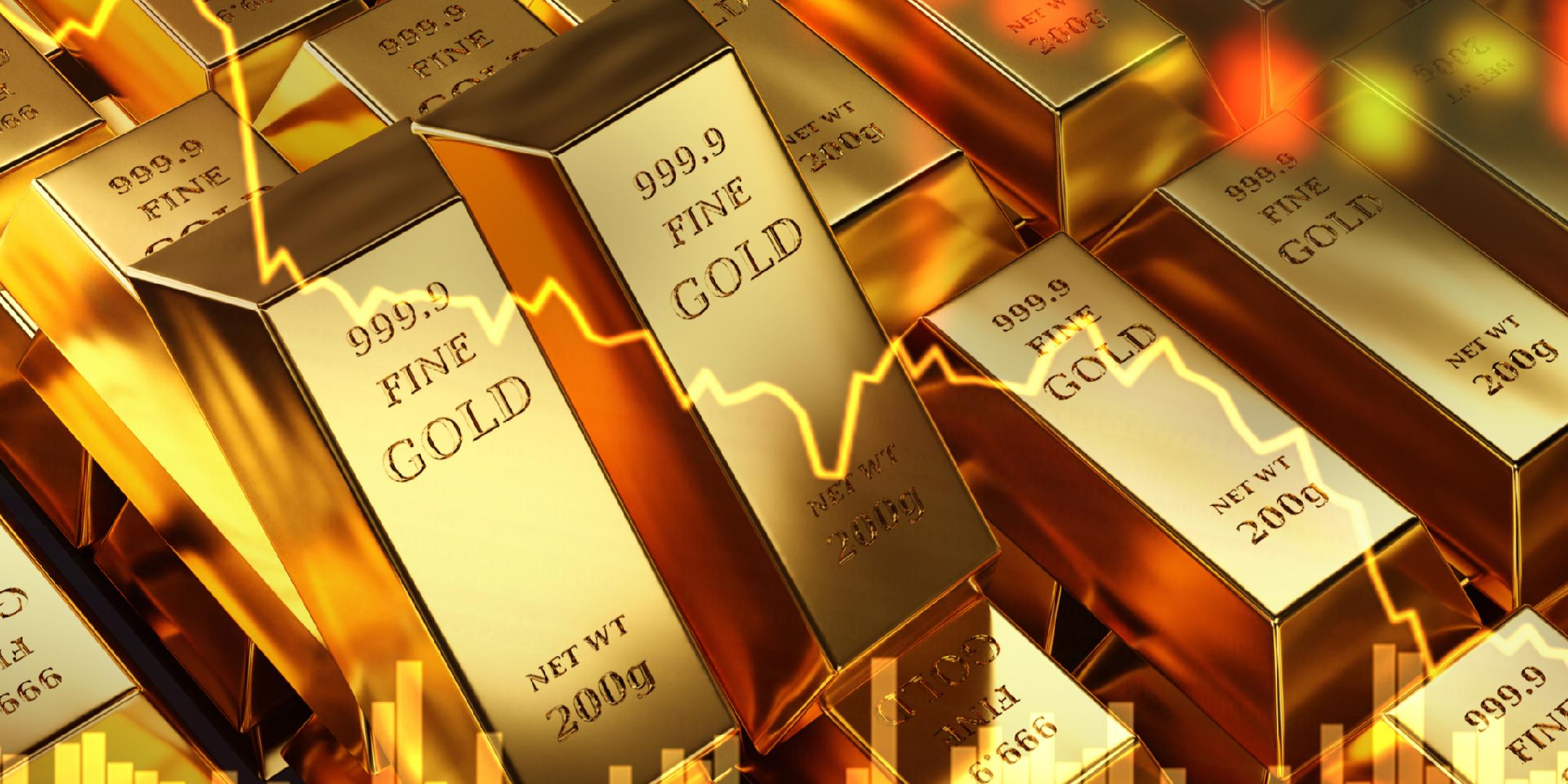
On the morning of January 12th, COMEX gold prices broke through $4600 per ounce, reaching a record high of $4612; Silver surged synchronously, breaking through $84/ounce at one point during trading, with a daily increase of over 6%. This round of rise is driven by multiple factors: the United States' geopolitical intervention in Venezuela, the Department of Justice's criminal investigation into Federal Reserve Chairman Powell triggering a crisis of institutional trust, coupled with the weakening of the US dollar and rising global risk aversion.
For ordinary investors, the gold price has far exceeded the historical valuation center. At this moment, standing at the $4600 level, should we chase after the high and enter, patiently wait for a pullback, or proactively exit to lock in risk? The answer does not depend on short-term fluctuations, but on personal financial goals, risk tolerance, and asset allocation discipline. This bull market in precious metals is testing the investment determination of every ordinary person.
The three main drivers behind $4600
Gold and silver will continue the bull market trend of 2025 in 2026. Qu Rui, Senior Deputy Director of Research and Development Department at Dongfang Jincheng, and Bai Xue, Senior Deputy Director of Research and Development Department at Dongfang Jincheng, believe that both gold and silver reached new highs today, possibly due to the US Department of Justice launching a criminal investigation into Federal Reserve Chairman Powell regarding the renovation of the Federal Reserve's Washington headquarters. Powell subsequently issued a statement stating that this move was unprecedented and should be viewed in the context of Trump's continued threat to the Federal Reserve. Market concerns about political factors interfering with the independence of the Federal Reserve have resurfaced, causing the US dollar index and US stock futures index to weaken, leading to new highs in international gold and silver prices. Combined with the current high global geopolitical risks, the market's risk aversion has been boosted, supporting the upward trend of precious metal prices. The recent military intervention by the United States in Venezuela, as well as its control over its oil, means that the disruption of the international order by the United States further increases geopolitical risks.
Secondly, the fiscal risks in the United States continue to accumulate. The large-scale tax cuts and spending expansion promoted by the Trump administration have brought the federal debt close to $40 trillion and the fiscal deficit ratio to 6.8%. According to a research report by Huafu Securities, the volatility of US bond yields has intensified, and the marginal attractiveness of US dollar assets has decreased. Gold, as a physical asset without counterparty risk, has become a common choice for institutions and retail investors.
Thirdly, the central bank's gold purchases have entered a stage of strategic normalization. The strong willingness of global central banks to allocate gold has also become a core factor affecting gold prices. Next year, the global macroeconomic and order structure will continue to transform, especially with the Trump administration's policies and their variability, leading to increased economic uncertainty. Central banks around the world will strengthen their gold reserve layout based on strategic security and asset allocation needs. Global central banks' net purchases of gold will exceed 1000 tons by 2025, and UBS expects it to increase to 950 tons by 2026. Shenwan Hongyuan Securities believes that this reflects the transformation of gold from a trading tool to a cornerstone of the national balance sheet under the background of "de dollarization".
Liao Bo, the co chief macro analyst of Zhejiang Merchants Securities, suggested that the central bank's increase in holdings is not only the medium-term logic of gold price upward, but also an important amplifier of the phased foam. Once the trend trading is crowded, the sensitivity of gold prices to traditional factors will further decline, but the sensitivity to emotion and liquidity will significantly increase. More importantly, the impact of the central bank's increase in holdings on gold prices is not only about how much it buys, but also about how it changes the liquidity structure of the market. The central bank's allocation usually has a longer term and is less sensitive to short-term price fluctuations, which is equivalent to continuously draining the freely circulating marginal supply; When the gold price breaks out of the trend with official buying support, ETF? Asset management, hedge funds, and the private sector are more likely to follow the trend, thereby amplifying the originally biased reserve reallocation market into stronger asset price fluctuations. In other words, the central bank's increase in holdings is not only the medium-term logic of gold price's upward movement, but also an important amplifier of phased foam. Once trend trading is crowded, the sensitivity of gold price to traditional factors will further decline, but the sensitivity to emotion and liquidity will significantly increase.
The real dilemma of ordinary investors
Will gold prices continue to soar?
The Office of the Chief Investment Officer (CIO) of UBS Wealth Management believes that the continued increase in gold holdings by the central bank, the increase in ETF investment inflows, and the strengthening demand for physical items such as gold bars and coins provide solid support for the upward trend of gold prices. The target price for March, June, and September 2026 has been raised from $4500 per ounce to $5000 per ounce, and is expected to slightly decline to $4800 per ounce by the end of 2026 (after the US midterm elections). If political or financial risks further increase, gold prices are expected to soar to $5400.
Faced with the current gold price of $4600, ordinary people's reactions are highly divided. On the one hand, the opening of bank deposit accounts has surged; On the other hand, there are frequent cases of "chasing after high prices and being trapped" on social media. Some people bought for $3800 and now have a considerable floating profit, while others encountered a 5% intraday correction as soon as they entered the market.
The question is not whether the gold price will reach $5000, but whether you can withstand a possible 20% pullback in the middle. After peaking in 1980, gold prices entered a period of low consolidation lasting about 20 years, during which the largest decline was nearly 70%. Even in this bull market, there was a deep adjustment of 12% per month in 2024.
For ordinary families, gold should not be a speculative tool, but a safety pad for asset allocation. Several professional institutions suggest that the proportion of gold in financial assets should be controlled between 5% and 10%. Beyond this ratio, if the gold price fluctuates sharply, it may disrupt the overall financial planning.
Three choices, three strategies
If you choose "chase": it must be clear that you are using idle money that does not need to be used within 3-5 years, and adopt the strategy of "building warehouses in batches". For example, buy multiple times in the range of $4580-4620 to avoid making a one-time bet. Prioritize choosing gold ETFs or bank deposits with low fees and good liquidity to avoid craft premiums of up to 30% on gold jewelry.
If "wait" is selected, technical or fundamental triggering conditions can be set. For example, if the gold price rebounds to the support band of $4300-4400, or if the US real interest rate turns positive and the central bank's gold purchases significantly slow down, it is considered a safer entry window. Waiting is not passive, but discipline.
If you choose 'withdraw': applicable to two types of people. Firstly, for those who have previously held heavy positions with substantial floating profits, they can partially take profits to lock in profits; The second is to mistake gold for a short-term profit tool and for those who cannot withstand volatility, leaving at this time is actually a rational stop loss.
It is worth noting that Standard Chartered Bank's 2026 global outlook recommends "over allocation of gold", but also emphasizes the need to build a diversified portfolio with stocks and bonds. The value of gold lies in hedging tail risks, rather than creating excess returns.
UBS has raised its gold price target for the third quarter of 2026 to $5000, but also warns of two major risks: one is that if the Federal Reserve unexpectedly turns hawkish due to inflation rebound, it may trigger a sell-off of precious metals; Secondly, if ETF funds are redeemed on a large scale (as seen in the 2021 scenario), it will weaken market liquidity support.
In addition, investors need to pay attention to changes in the correlation between gold and other assets. Recently, strategic metals such as copper, platinum, and rare earths have followed suit, reflecting the spreading narrative of "supply chain security". But this does not mean that all metals have equal investment value. Palladium, tin, and other metals are still dominated by supply and demand, which is different from the logic of gold prices.
Standing at $4600 in gold is not the end, but rather a mirror that reflects everyone's attitude towards risk, return, and uncertainty. For ordinary investors, the real opportunity lies not in guessing the next high point, but in establishing a clear investment framework: allocating with idle money, controlling positions, rejecting leverage, and holding for the long term. Whether you ultimately choose to chase, wait, or retreat, remember: in the financial market, living long is more important than running fast. When others are discussing how much more gold can rise, smart investors are already asking, "Can my portfolio withstand the next black swan?" This is the precious inspiration that $4600 per ounce of gold leaves for ordinary people.


 WeChat registration or login

 Subscribe